You have a new sewing machine with embroidery capabilities, or you’re thinking about buying one. But where do you actually start? The built-in manual shows you how to thread the needle, but it doesn’t teach you which stabilizer works for stretchy fabric or how to hoop a t-shirt without puckering. That gap between owning a machine and making something you’d actually wear or give as a gift is where most people get stuck.
| 1st Pick | ||||
|

|

|

|

|
| Brother Brother SE700 Sewing and Embroidery Machine, Wireless… | Krause Publications Embroidery Machine Essentials: How to Stabilize, Hoop… | Brand: Open Chain Pub Singer Instructions for Art Embroidery and Lace… | Poolin PooLin EOC03 Embroidery Machine 4x4 & 4x9.25… | New brothread New brothread Tear Away Embroidery Stabilizer 8"x8"… |
| See on Amazon | See on Amazon | See on Amazon | See on Amazon | See on Amazon |
A few smart purchases can close that gap fast. The right combination of a capable machine, a practical reference book, and good-quality supplies means you spend less time guessing and more time stitching. You don’t need a classroom or a mentor if you have the right tools and a clear path forward.
This roundup covers five products that serve different parts of the learning journey. You’ll find a versatile combo machine for sewists who want to add embroidery, a dedicated beginner machine with two hoop sizes, two very different books (one modern reference, one historical technique manual), and a pack of precut stabilizer that removes the biggest headache for new embroiderers. Together, these picks cover the essentials.
Here is a quick comparison of the key specs.
| Features | Brother SE700 | Embroidery Essentials | Singer Art Embroidery | PooLin EOC03 | New brothread Stabilizer |
|---|---|---|---|---|---|
| Type | Sewing & embroidery combo | Instructional book | Historical technique book | Beginner embroidery machine | Tear-away stabilizer sheets |
| Hoop Size | 4×4 inch | N/A | N/A | 4×4 & 4×9.25 inch | Fits 4×4 & 6×6 hoops |
| Built-in Designs | 135 designs, 103 stitches | N/A | N/A | 130 designs, 8 fonts | N/A |
| Wireless Transfer | Yes (Wi-Fi, app) | N/A | N/A | Yes (Wi-Fi) | N/A |
| Best For | Sewists adding embroidery | Learning modern techniques | Artistic / lace work | Absolute beginners | First projects on woven fabrics |
Brother SE700 Machine
Brother
Brother SE700 Sewing and Embroidery Machine, Wireless…
- Sewing and Embroidery in One: The SE700 Brother sewing and embroidery machine is the ideal machine to start your sewing and embroi…
- Wireless Lan Enabled: Transmit embroidery files from your PC to your embroidery sewing machine via the free downloadable software…
- Artspira Mobile App for Customization: Make custom embroidery patterns by drawing on your mobile device, or download patterns from…
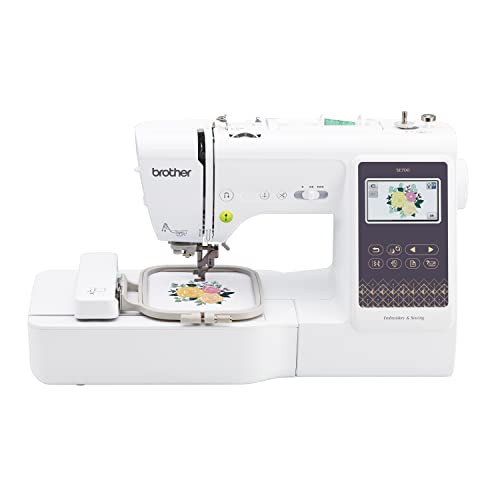
The Brother SE700 is for someone who already sews and wants to add embroidery without buying a second machine. It sews well on its own—103 built-in stitches cover everything from straight stitching to decorative edges. Then you switch to embroidery mode, attach the included 4×4 hoop, and you’re working with 135 built-in designs. It’s a two-in-one setup that keeps your sewing table simple.
The wireless LAN feature sets it apart. You can send embroidery files from a PC using the free Design Database Transfer software, or draw patterns on your phone through the Artspira mobile app and send them straight to the machine. No USB stick required. The 3.7-inch color touchscreen lets you preview and edit designs before stitching, which saves you from wasting fabric on mistakes.
What holds it back? The 4×4 hoop is small. You cannot embroider large designs in one go—think shirt pockets or small tote bags, not jacket backs. If you plan to make bigger projects, you’ll need to resize or split designs, which adds complexity. The machine also costs more than a dedicated beginner embroidery machine. But for someone who wants one machine that does both jobs well, it earns its place.
- Sewing and embroidery in one unit, no extra machine needed
- Wireless file transfer from PC or mobile app
- 4×4 inch hoop with included embroidery arm and 8 sewing feet
- 135 built-in designs and 103 built-in stitches
- 3.7-inch color LCD touchscreen with on-screen editing
Best for: Home sewists who want to start embroidering without giving up their sewing machine or buying a second one.
Embroidery Machine Essentials
Krause Publications
Embroidery Machine Essentials: How to Stabilize, Hoop…
- QUILTING BOOK AND PROJECTS
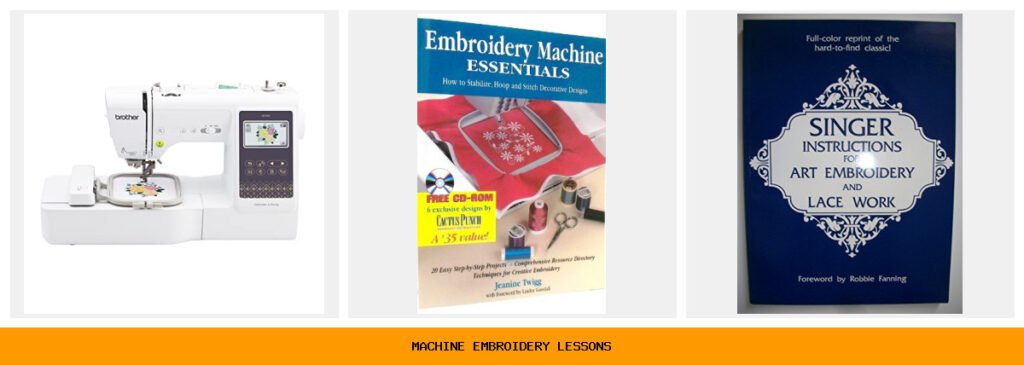
This book solves a specific problem: you have a machine, you’ve threaded it, but your first project came out wavy and puckered. Embroidery Machine Essentials by Krause Publications is a reference manual that explains stabilizers, hooping techniques, and design placement. It does not teach you how to digitize or run a business—it teaches the physical process of getting good results stitch after stitch.
The projects inside are simple: towels, tote bags, baby onesies, pillowcases. Each one walks you through choosing the right stabilizer weight and type (tear-away, cut-away, wash-away) and shows you how to hoop the fabric so it stays flat. The photos are clear, and the instructions assume you are a beginner. No jargon that requires a class to understand.
Limitation? This is not a design idea book. If you want inspiration for artistic embroidery or complex lacework, you will not find it here. It is strictly about technique. The book is also compact—about 50 pages—so it covers the essentials but does not go deep into topics like digitizing or multi-hoop designs. For a learner who just wants their first ten projects to look good, it is exactly right.
- Focuses on stabilizer selection, hooping, and stitch quality
- Step-by-step projects for beginners (towels, bags, onesies)
- Clear photos of hooping and fabric preparation
- Written for home embroidery, not commercial production
- Covers tear-away, cut-away, and wash-away stabilizers
Best for: Beginners who have a machine but need practical, hands-on guidance to avoid puckered stitches and wasted fabric.
Singer Art Embroidery
This book is a reprint of a classic 1911 manual from Singer. It teaches hand-guided art embroidery and lace work on a sewing machine—techniques that predate computerized embroidery. If you want to understand the roots of machine embroidery and learn manual control, this is a unique resource. It covers chain stitch, satin stitch, eyelet work, and drawn thread work, all done by guiding fabric under a standard presser foot.
Why would a modern embroiderer care? Because these techniques give you creative control that computer designs cannot replicate. You can create custom lace trims, monograms with a hand-stitched look, and decorative borders without buying any digitizing software. The book is a window into a slower, more deliberate approach that many contemporary embroiderers are rediscovering.
The catch: the instructions assume you are using an old Singer straight-stitch machine, not a modern computerized model. You may need to adapt steps for a machine with a drop feed or variable stitch length. The language is period-appropriate (some terms have changed), and there is no color photography. It is a reference for enthusiasts, not a quick-start guide. If you are only interested in push-button embroidery, skip this. But for someone who wants to expand their skills beyond built-in designs, it is a treasure.
- Reprint of 1911 Singer manual for art embroidery and lace work
- Covers manual techniques: chain stitch, satin, eyelet, drawn thread
- No digitizing required—all work is done by guiding fabric
- Best for creative embroiderers who want to go beyond computerized designs
- Includes patterns and project ideas for trims, doilies, and monograms
Best for: Experienced sewists or embroidery enthusiasts who want to master manual machine techniques and create custom lacework.
PooLin EOC03 Machine
Poolin
PooLin EOC03 Embroidery Machine 4x4 & 4x9.25…
- Beginner Friendly - Designed for first-time embroidery users. The Institch system keeps operation simple so beginners can learn qu…
- Easy System - The Institch operating system provides clear navigation and simple controls. Select designs, edit patterns, and star…
- Creative Sizes - Includes two embroidery sizes: 4x4 and 4x9.25 inches, giving more flexibility for home DIY projects such as T-shi…
The PooLin EOC03 is built for someone who has never embroidered before and wants the simplest possible start. The Institch operating system uses a straightforward menu and clear buttons—no multi-layered touchscreen gestures. You select a design, edit its size or rotate it, and hit start. The machine includes 130 built-in designs and 8 fonts, so you can personalize gifts on day one without downloading anything.
What separates it from other beginner machines is the dual hoop size. You get a 4×4 inch hoop for smaller projects like shirt pockets and a 4×9.25 inch hoop for longer items like towels or bag straps. That extra width is rare at this price point. Wi-Fi design transfer works with the free software, so you can send your own digitized patterns wirelessly. The starter kit includes bobbins, needles, and a seam ripper—small things that save a trip to the store.
Trade-offs? The machine is not as fast as higher-end Brother or Janome models. The maximum stitch speed is lower, so large designs take longer. It also lacks a large touchscreen preview—you edit on a smaller LCD panel. For a learner who wants to make a dozen monogrammed towels and a few custom t-shirts, the speed difference will not matter. For someone aiming to produce dozens of items per week, it might feel slow.
- Two hoop sizes included: 4×4 and 4×9.25 inches
- 130 built-in designs and 8 fonts for immediate use
- Institch operating system designed for first-time users
- Wi-Fi design transfer with free software
- Comes with starter kit: bobbins, needles, seam ripper
Best for: Absolute beginners who want a dedicated embroidery machine with two hoop sizes and a simple interface, at a lower price than the Brother SE700.
New brothread Stabilizer
New brothread
New brothread Tear Away Embroidery Stabilizer 8"x8"…
- ▶TEMPORARY STABILIZER: It provides temporary support for embroidery projects. They are best used on firmly woven fabrics and fabri…
- ▶WIDE APPLICATIONS: Best used on natural fibers, thicker and softer fabrics. Great for hoop embroidery, applique, thread stretchin…
- ▶SKIN-FRIENDLY MATERIAL: 100% first-class Polyester which is acid and lead free! No any itching worries even you use our tear away…
This is the least glamorous product on the list—and the one that will save you the most frustration. Tear-away stabilizer supports stitches so they do not sink into soft fabric and cause puckering. These 8×8 inch precut sheets from New brothread are medium weight (1.8 oz), which works for most light to medium stitch densities. You hoop the stabilizer together with your fabric, stitch, then tear away the excess.
The precut size is a big deal for learners. Instead of buying a roll and cutting pieces yourself (which never come out square), you get 100 identical sheets that fit 4×4 and 6×6 hoops perfectly. The material is polyester, acid-free and lead-free, so it is safe for garments that touch skin. It works best with firmly woven natural fiber fabrics like cotton, linen, and denim. That covers most beginner projects: t-shirts, tote bags, kitchen towels.
One limitation: medium weight tear-away is not suited for very dense or heavy satin stitches. If you are embroidering thick lettering or dense fills, you might need two layers or a cut-away stabilizer. Also, tear-away stabilizer leaves a slight stiffness behind if you can’t tear close enough to the stitches—cut-away is better for items that will be washed repeatedly. For practice and simple designs, this pack is perfect.
- 100 precut sheets, 8×8 inches, medium weight 1.8 oz
- Sized for 4×4 and 6×6 hoops
- Polyester material, acid-free and lead-free
- Works best on natural fiber fabrics: cotton, linen, denim
- Tears away easily in any direction around the stitches
Best for: Beginners who want a fuss-free stabilizer supply for practice and light to medium density designs on woven cotton fabric.
How We Chose These Products
I started by looking at the biggest pain points for people learning machine embroidery. The top three complaints I hear: not knowing which machine to buy, finishing a design only to find it puckered because of wrong stabilizer, and having no idea what to actually make. Each product here addresses one of those problems directly.
I prioritized products that are usable right out of the box with minimal setup. That means machines with clear interfaces, books that do not require a teacher, and supplies that come ready to use (precut, pre-packaged). I avoided anything that forces you to buy extra accessories or software before you can stitch your first design. All prices and availability were verified at the time of writing, but check the current price on Amazon since inventory changes.
The books were chosen for contrast. One is a modern technique manual that teaches practical stabilizer and hooping skills. The other is a historical resource that expands your creative understanding of what a sewing machine can do. Both are valuable in different ways, and depending on your learning style, one might suit you better. The stabilizer was picked because it is the most commonly used type for beginner projects, and the precut format removes a common frustration.
Buying Guide: What Really Matters
Do not start with the machine. Start with the stabilizer. Seriously—before you buy any embroidery machine, understand that the quality of your finished work depends more on stabilizer choice than on the machine brand. A $2,000 machine will produce puckered designs if you use the wrong stabilizer. A $300 machine with the correct stabilizer can produce salon-quality results. That is why the New brothread sheets are on this list. Master stabilizer first, then worry about machine features.
When choosing a machine, consider the hoop size and how it matches the projects you actually want to make. A 4×4 hoop is fine for shirt pockets, small monograms, and patches. But if you want to embroider the back of a denim jacket or a large tote bag, look for machines that offer larger hoops (4×9.25 like the PooLin, or 5×7 on higher-end models). The Brother SE700 is limited to 4×4, which is a real constraint.
Wireless design transfer is a nice convenience, but not essential when you are starting out. Built-in designs and fonts are enough for dozens of projects. Wait until you are comfortable with basic hooping and stitching before you start downloading custom patterns. Similarly, do not worry about digitizing software until you have completed at least ten projects. The learning curve is steep, and it is easier to learn the physical process first.
For books, look for ones that show clear photos of hooping technique and stabilizer application. Avoid books that are purely pattern collections—they do not teach you how to avoid mistakes. The best learning resource is one that explains why you do each step, so you can adjust when something goes wrong.
Our Top Recommendation
For most learners, the smartest combination is the PooLin EOC03 machine plus the Embroidery Machine Essentials book and a pack of New brothread stabilizer. The PooLin gives you two hoop sizes and a simple interface at a lower price than the Brother, which means you have money left for supplies and a reference guide. The book teaches you how to use that stabilizer correctly, and the stabilizer itself is precut and ready for your first project.
If you are already a sewer and want one machine for everything, go with the Brother SE700. It handles both sewing and embroidery well, and the wireless app makes it easy to add custom designs. Just keep the 4×4 hoop limitation in mind—you will need to plan projects accordingly. Avoid the Singer Art Embroidery book as your first read; save it for after you have a solid foundation.
For someone on a tight budget: start with the stabilizer and the Embroidery Machine Essentials book, even if you do not own an embroidery machine yet. Read the book first. You will learn enough about stabilizers and hooping to make a confident machine purchase later without wasting money on supplies that do not fit your needs.
Frequently Asked Questions
Can I learn machine embroidery entirely from a book, or do I need a class?
Yes, you can learn from a good technique book like Embroidery Machine Essentials, provided you have a machine and a few basic supplies. Online video tutorials help fill the gap for visual learners. The main thing a class gives you is real-time feedback on your hooping tension and stabilizer choice—but you can get that by posting photos in embroidery forums or asking a local sewing shop. The books in this list cover the concepts well enough to get you started.
Why do I need both a 4×4 and a 4×9.25 hoop? Is one enough?
One hoop size is enough if you only ever embroider items that fit within it. A 4×4 hoop works for shirt pockets, small patches, and monograms on collars. A 4×9.25 (or larger) hoop lets you do longer designs on towels, bag straps, and the center of pillowcases without repositioning. If you plan to make a variety of gifts, the second hoop size is worth having. If you only make patches and badges, stick with 4×4.
Can I use the Singer Art Embroidery book on a modern computerized machine?
Yes, but you will need to adapt the instructions. The book assumes a vintage Singer with drop feed and a hand wheel. Most modern machines have a feed dog drop lever and a speed control, which makes free-motion embroidery much easier. You can treat it as a guide to stitch types and design concepts, then experiment with your own machine’s settings. Expect some trial and error—that is part of the fun.
How many sheets of stabilizer should I buy for a beginner’s first ten projects?
One pack of 100 sheets is more than enough. Most beginner projects (monogrammed hand towel, basic tote bag, a few patches) use one sheet each. You will also waste a few sheets while learning to hoop correctly. Having 100 sheets lets you practice without worrying about running out. After you finish those, you will know exactly what type and weight you prefer for your typical projects.