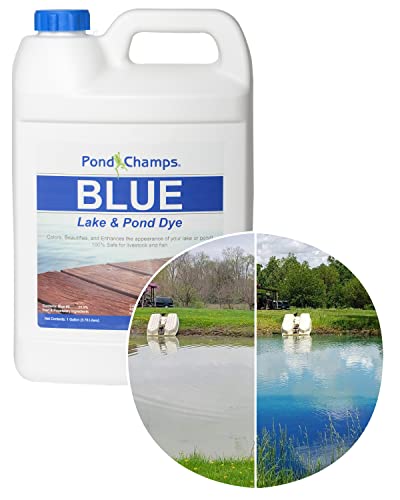
Blue Pond Dye: Product Labels, Limits and Textile-Staining Precautions
Check the exact aquatic dye label, intended use and restrictions, and distinguish pond colourants from textile dyes.
On this page
Blue pond dye is a water-treatment product category, and its intended use must be checked against the exact product label. The words blue lake pond dye do not identify one universal formula, dose or environmental claim. This guide explains how to identify the product, read its limits and distinguish aquatic colourants from textile dyes. It does not promise that every blue dye is safe for every pond or water use.
Start with an identifiable aquatic product
Record the product name, manufacturer and formulation shown on the container. Compare the container with the manufacturer’s current label and supporting documents. Do not assume that two products with a similar blue colour have the same concentration, ingredients or permitted use.
For example, SePRO publishes a specific Aquashade label. That document belongs to Aquashade. Its directions cannot automatically be transferred to another product called pond dye, Blue Lake or aquatic colourant.
| Identify | Why it matters |
|---|---|
| Exact name and formulation | A similar name is not proof of an equivalent product. |
| Intended water body | Check whether the label addresses the pond or other setting you have. |
| Intended water uses | Read the restrictions relevant to people, animals, irrigation and other uses. |
| Claimed purpose | Distinguish a colour effect from a supported plant-control claim. |
| Application reference | Use the current directions for that formulation rather than a generic online dose. |
Separate appearance from a treatment claim
Ask what the product actually claims to do. A change in water appearance is different from a documented claim to control a particular plant or algae problem. Do not treat a darker colour as proof that the water has been disinfected, purified or made suitable for drinking.
The Aquashade label describes a blend of dyes that absorbs selected light wavelengths and explains limits to its underwater plant-growth effect. It does not claim control of floating algae mats or emergent shoreline vegetation. Those product-specific limits illustrate why an article should not promise that any pond dye eliminates all algae.
When comparing products, write down the outcome you need before comparing the price. If you cannot match that outcome to a supported product claim, ask the manufacturer or a qualified local water-management adviser rather than assuming that a colourant is an all-purpose treatment.
Use the actual label for application decisions
This guide does not prescribe a universal number of bottles per pond or an automatic reapplication interval. Establish the information the manufacturer requires and use the current directions for the exact item you hold. Instructions copied from another concentration can lead to a different treatment from the one intended.
Prepare the label, the product identity and your description of the water body before requesting advice. Ask which measurements and local conditions are relevant. Record the answer against the exact product so that it is not later applied to a similarly named replacement.
Keep treatment records with the label version used: date, product, relevant site description and the instructions followed. A later comparison is more useful when it identifies the actual conditions rather than simply saying that blue dye worked or failed.
Avoid blanket environmental and wildlife guarantees
The earlier version of this article described pond dyes generally as natural, non-toxic and harmless to fish. Those blanket claims are not established for every formulation, dose, water body or use and have been withdrawn.
Read the relevant restrictions before use. The cited Aquashade label, for example, limits its application setting and says not to apply to water intended for human consumption. It also discusses permits in some circumstances. Check the actual product and local requirements rather than using this example as a complete rule for every location.
If the intended use is unclear, resolve the uncertainty before application. A recommendation from a retailer should identify the product and the relevant label provisions; a general statement that pond dyes are safe does not answer a specific site question.
Handle the concentrate as directed and protect clothing
Follow the actual label’s handling and protective-equipment instructions. Do not infer those requirements from the appearance of diluted water. If a spill occurs, use the manufacturer’s directions and relevant professional advice rather than an improvised remedy.
The Aquashade label warns that concentrate can stain fabrics and other porous surfaces. This is the main textile connection discussed here: incidental staining does not make an aquatic product a suitable garment dye. A product intended for water treatment should not be substituted for an identified textile dye.
For a fabric-colouring project, begin with the fibre, the intended finish and a dye explicitly intended for that material. The fabric specification guide provides background for identifying the material, while application directions must come from the relevant textile product.
Frequently asked questions
Is “blue lake pond dye” enough information to choose a dose?
No. Identify the exact formulation and use its current directions. This phrase alone does not establish concentration or treatment rate.
Does a blue colour establish that water is safe to drink?
No drinking-water suitability can be inferred from a colour change. Check the product restrictions and appropriate water-quality advice.
Can any pond dye be recommended as safe for all fish?
This article does not make that guarantee. Any claim must be evaluated for the actual product, labeled use and circumstances.
Can I use it to dye a garment?
Do not substitute an aquatic treatment for a product intended for the textile and process you are using. A stain on clothing is not evidence of a controlled textile-dyeing result.
Source: SePRO’s Aquashade product label, checked 22 October 2026. It is used as a named example, not as a universal specification or an endorsement of an unidentified “Blue Lake” product.