
Best 5×7 Embroidery Machine: Dedicated Embroidery or a Sewing Combo?
The best 5×7 embroidery machine should fit your designs, your construction workflow, and the items you can actually hoop. A larger field than 4×4 can.
This guide has Amazon links. If you buy through them we may earn a small commission, at no extra cost to you.
On this page
The best 5×7 embroidery machine should fit your designs, your construction workflow, and the items you can actually hoop. A larger field than 4×4 can reduce compromises, but it does not remove placement and material requirements. This guide compares dedicated and combination options, explains both field dimensions, and covers design files, stabilization, access, and operating costs so you can choose a practical setup for medium-size embroidery projects at home confidently.
As an Amazon Associate, Practical Textile earns from qualifying purchases. Product links may earn us a commission.
Quick Answer
Compare the Brother PE900 for dedicated 5×7 embroidery and the SE2000 if ordinary sewing must share the same machine. The Janome MC9850 is a larger-field combination alternative, not a model with an identical 5×7 specification. Verify the exact design dimensions and item access before deciding; a hoop accessory cannot override the machine’s maximum field.
This guide compares published specifications and project fit; it does not report hands-on testing.
Brother PE900

A separate embroidery role when construction is handled by another machine.
Brother SE2000

Compare one-machine construction and embroidery against separate stations.
Janome Memory Craft 9850
A 6.7×7.9 combination option to compare when the project needs additional room.
What a 5×7 Field Allows—and What It Does Not
A 5×7 embroidery field describes the maximum stitched extent available in a compatible single-hooping setup. It is not the outside measurement of the hoop or the maximum size of fabric you can bring to the machine. A large item can sometimes carry a small motif, while a physically small item can be difficult to position and secure.
Check width and height together. A design that is longer than seven inches or wider than five inches does not fit merely because one dimension falls within the limit. Rotation may help some designs when the software and machine support the intended setup, but it cannot make an oversized rectangle fit by wishful measurement.
A 5×7 field can be a useful step beyond 4×4 for medium-size motifs and suitable lettering. It remains a defined limit. If your usual designs are large squares or long panels, compare a genuinely larger field instead of planning every project around splitting and realignment.
| Machine | Embroidery role | Maximum field considered here | Ordinary sewing |
|---|---|---|---|
| Brother PE900 | Dedicated embroidery | 5×7 inches | No |
| Brother SE2000 | Combination machine | 5×7 inches | Yes |
| Janome MC9850 | Larger-field alternative | Approximately 6.7×7.9 inches | Yes |
Brother PE900: Dedicated Embroidery With a Clear Role

The PE900 makes sense when you want a separate embroidery machine and already have construction covered. A dedicated station can remain set up for embroidery without requiring you to switch the same machine back to ordinary sewing. That can be useful when you frequently alternate between preparing an item and decorating it.
It does not sew ordinary construction seams. If you need to shorten a garment, insert a zipper, or construct a bag, another suitable machine is required. This distinction should be part of the initial budget, especially if product photographs make the embroidery machine look similar to a multipurpose sewing model.
Brother lists design-transfer and editing conveniences for the model, but compatible transfer is not the same as creating a design from artwork. Establish how you will obtain a usable stitch file and check current device or software requirements for the route you plan to use. A familiar wireless label should not replace that compatibility check.
Our PE900 review considers the model in greater detail. Choose it for a suitable dedicated workflow rather than assuming a separate embroidery machine automatically provides commercial throughput.
Brother SE2000: Combine Sewing and 5×7 Embroidery

The SE2000 adds ordinary sewing to the 5×7 embroidery role. It is worth comparing when you have space for one machine and expect both functions to earn their place. Garment makers who embroider suitable components before final assembly may find that combination convenient.
The tradeoff is shared operating time and setup. The machine cannot sew a construction seam while it is embroidering another item. Consider the order of operations and how often you would change between modes. Separate machines can be more convenient if one person constructs items while another decorates them, or if you want the construction station available during embroidery.
Its sewing stitch count does not expand the embroidery field. Likewise, built-in embroidery lettering is different from the alphanumeric sewing selections on some general-purpose machines. Read the exact function descriptions instead of treating every reference to letters or decorative stitching as equivalent.
See our SE2000 review for the broader combination role. Our Brother machine comparison can help you decide whether a combination or dedicated setup fits the room and workload.
Janome MC9850: An Alternative With More Room
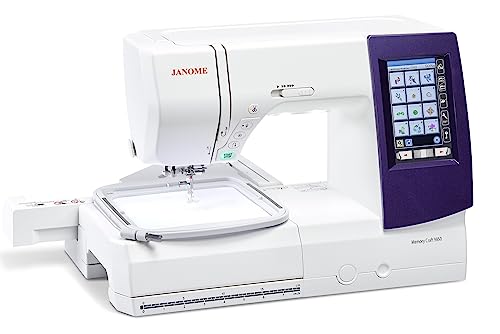
The Memory Craft 9850 is included as a larger-field combination alternative. Its approximately 6.7×7.9-inch area is not an identical specification to 5×7. Consider it when the additional width and height are useful for actual designs and the sewing side also has a recurring purpose.
Compare the design files and transfer workflow for the exact model. A file prepared for one brand’s machine should not be assumed compatible with another model simply because its physical dimensions fit. Keep the original source file and use an appropriate export or preparation process when necessary.
More field area also needs appropriate support, hooping, and design preparation. It does not guarantee that a finished pocket or narrow sleeve can be accessed. Our Janome combination guide and Janome model comparison explain the broader equipment choices.
Five Useful Buying Distinctions
- Dedicated embroidery and combination sewing serve different workflows.
- Both field dimensions are considered before purchase.
- The larger-field alternative is identified accurately.
- Design preparation is separated from file transfer.
- Item access is checked alongside the design’s size.
Two Limits
- A 5×7 field is not a route to unrestricted large-format embroidery.
- None of these domestic roles should be treated as a multi-needle commercial system.
Use Real Designs to Check Fit
Make a shortlist of designs you expect to stitch repeatedly. Record the actual stitched dimensions from a reliable file preview, not the dimensions of a promotional image. Include lettering and any border that belongs to the final embroidery. A design that fits without its text may exceed the field once the complete composition is assembled.
Check the machine’s compatible hoop and file requirements. If you resize a design, inspect the result in suitable software and test it. Stitch density, detail, underlay, and lettering can behave poorly when a design is resized beyond a sensible range. Fitting the outline inside the field is only the beginning of determining whether it will stitch well.
For designs that do not fit, compare a larger-field machine with the time and alignment work of a compatible split-design process. Multi-position methods can be useful, but they should not be described as automatically equivalent to stitching the whole design in one field.
Check Item Access Before Counting Design Possibilities
A flat fabric panel is usually easier to position than an already assembled bag, narrow sleeve, or pocket. The machine needs to stitch the intended layer without accidentally catching another part of the item. Arrange the garment or accessory so unrelated layers remain clear throughout the entire movement.
A design can fit the field and still be impractical on a particular finished item. Test the position and access using a suitable sample before buying equipment for that application. A free-arm-style commercial embroidery arrangement and a domestic flat-bed setup should not be assumed interchangeable.
Structured caps introduce a separate driver, frame, clearance, and design-preparation question. A 5×7 flat field does not establish suitability for cap production. If caps are the recurring goal, start by evaluating the appropriate cap system rather than selecting a flat-field machine first.
Stabilization Determines Whether the Extra Space Is Useful
Choose support according to the fabric and design. A stretchy shirt and a stable woven panel can require different preparation even when the motif is the same size. The design’s stitch density and intended appearance also matter. One stabilizer type should not be treated as a universal solution.
Secure the material using the method appropriate to the hoop, machine, and project. Distorting the fabric during hooping can produce a result that looks acceptable in the hoop and puckers when released. Check alignment and support before starting, then inspect a test after removing the hoop and finishing the stabilizer as directed.
Keep a project record with the fabric, support, needle, thread, file version, and result. Successful settings become a useful starting point for a repeated item. They do not automatically apply to a different garment or to the same design at a significantly different size.
Budget for the Complete Design Workflow
Reserve funds for compatible bobbin supplies, embroidery thread, appropriate needles, stabilizer, and test material. Confirm what the exact seller package includes. Additional hoops or software may be useful, but should follow a clear requirement rather than a desire to collect every accessory at the outset.
If custom artwork is central to the purchase, plan digitizing separately. A machine may import a compatible file without creating one from an image. A professional service can be a sensible choice for occasional designs, while suitable software and training may fit someone who wants to learn repeated design creation.
Check current offers through the AAWP boxes rather than relying on a fixed price quoted in article text. Compare the complete working setup and the seller’s warranty and return terms. A lower machine price can lose its advantage if essential accessories or accessible support are missing.
Older 5×7 Models Need an Inspection-Based Decision
A used or remaining-stock 5×7 machine may be worth evaluating, but it is a different purchase from a new current model. Confirm the exact identity, condition, operating accessories, transfer method, and service availability. Ask for a full stitch-out rather than accepting power-on as proof that the machine works.
Our PE800 buying guide provides an older-model perspective. Account for missing hoops, an embroidery unit where relevant, and the cost of any required service. Confirm return arrangements before relying on a private seller’s assurance.
Do not buy an older model solely because it says 5×7. The field is one requirement among several. A reliable, supportable machine with the correct workflow is more useful than an inexpensive unit that cannot accept your files or complete a test design consistently.
What to Ask for in a Demonstration
Bring a compatible design and representative fabric if the seller allows it. Observe setup, transfer, placement, color changes, and the finished stitch-out. Check both sides, remove the support as appropriate, and assess the result away from the hoop rather than judging only while the fabric remains stretched in place.
Try the interface yourself and ask how routine problems are handled. Understand the support route, training, and maintenance instructions. The best model for you should make the whole process understandable, not merely produce an impressive prepared sample in an experienced demonstrator’s hands.
Frequently Asked Questions
Which featured machine is embroidery-only?
The PE900 is dedicated embroidery equipment. The SE2000 and MC9850 combine sewing and embroidery. Choose according to whether ordinary construction is already covered by another machine.
Can a 5×7 machine stitch a seven-inch square design?
Not in a single ordinary 5×7 field. Both dimensions must fit the permitted area. A seven-inch square exceeds the five-inch side, even though its other dimension matches the longer side.
Does a larger hoop increase the machine’s maximum field?
No. The maximum field is determined by the machine and supported setup. Compatible multi-position techniques are separate workflows, not a simple enlargement of the single-hooping area.
Is the MC9850 an exact 5×7 model?
No. It is a larger-field alternative with an approximately 6.7×7.9-inch maximum area. It is included for comparison when additional room and a sewing-combination role suit the projects.
Is 5×7 enough for a small embroidery business?
It depends on the designs, item access, quantities, color changes, and delivery requirements. A suitable field does not establish production capacity. Test the actual orders and calculate the complete workflow before deciding.
Final Recommendation
Choose the PE900 for a suitable dedicated station, the SE2000 when sewing and embroidery should share one machine, or the MC9850 when its larger field and combination role solve a clear requirement. Confirm design fit, item access, support, and the complete budget before buying. The right field is the one that fits the work you will actually repeat.
