The best sewing machine for paper crafts is usually chosen for control, visibility, and suitable settings rather than industrial power. Greeting cards and stitched collage also differ from fabric sewing because needle holes remain in the paper. This guide compares household machine controls, explains the limits of paper-craft recommendations, and helps you plan a project without confusing decorative stitching, needle-punched artwork, bookbinding equipment, or an electronic cutting machine with sewing.
As an Amazon Associate, Practical Textile earns from qualifying purchases. Product links may earn us a commission.
Quick Answer
For a manufacturer-permitted paper-craft project, compare the Brother XR9550 for speed limiting, the Singer 4423 for direct mechanical settings, and the Singer 9960 for electronic conveniences. These are control-based candidates, not a blanket manufacturer approval for every paper, coating, adhesive, or stack. Confirm the exact machine’s instructions and project suitability before buying specifically for paper.
This guide compares published specifications and project fit; it does not report hands-on testing.
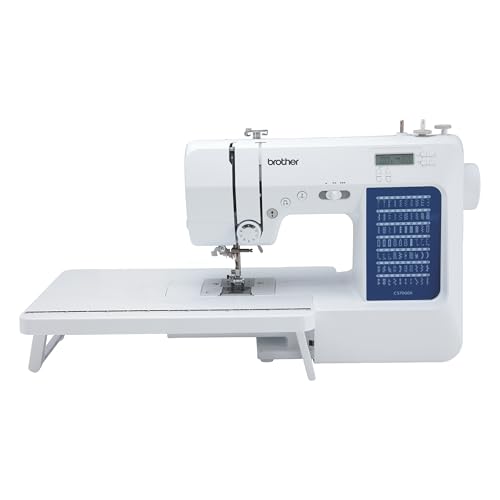
Brother XR9550
Compare speed limiting and visibility for an approved craft project.
Singer Heavy Duty 4423
Test control and adjustable settings; the label is not a paper-capacity rating.
Singer Quantum Stylist 9960

Consider useful controls without assuming dense stitches suit paper.
Check Price on AmazonThis offer bundles the Singer 9960 with a SteamCraft Plus 2.0 iron. Other 9960 offers may not include the iron.
Paper-Craft Shortlist: What You Are Comparing
| Candidate | Control-based reason to compare | What this does not establish |
|---|---|---|
| Brother XR9550 | Speed limiting and electronic selection | Approval for every cardstock or coating |
| Singer 4423 | Direct mechanical settings and ordinary sewing versatility | An industrial bookbinding or paper-stack capacity |
| Singer 9960 | Electronic controls and broad decorative selection | That dense decorative patterns will preserve paper strength |
Paper crafts cover several different processes. Stitching a simple border on a card is different from sewing a thick booklet, perforating a design without thread, or attaching a fabric panel to a card. Define the project before choosing equipment. A machine suitable for one version should not be presented as the best answer for every use of the word paper.
There are published maker projects using sewing in cards and collage, including Brother’s free-motion greeting-card tutorial. Such a project demonstrates a defined technique and setup. It does not establish unlimited permission for every machine or material. If your machine’s instructions do not resolve the intended use, ask its manufacturer before committing to a paper-only purchase.
Brother XR9550: Compare Pace and Visibility
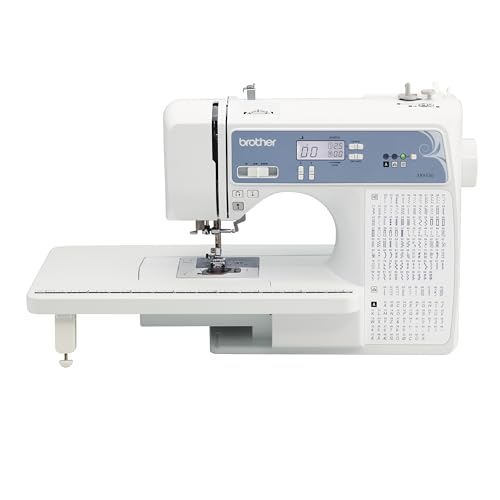

The XR9550 is worth investigating when electronic speed limiting is important. Short borders and planned turns can benefit from a controlled pace, particularly for someone learning to guide a craft piece. A speed slider does not guide the card or prevent damage if the chosen material and stitch are unsuitable.
Use a representative project sample only after confirming that the intended material and method are appropriate. Test starts and stops near marked points, then inspect both sides of the work. Do not judge only how quickly the machine crosses a flat scrap. The craft result may depend on precise placement and a clean underside.
The machine can also serve ordinary household sewing, which may make more sense than purchasing a unit used only for occasional cards. Our Brother sewing machine comparison explains that broader role. Its sewing lettering is not automatic hoop embroidery, and the table does not provide a rated paper-stack capacity.
Five reasons to compare it:
- Speed limiting can help with a deliberate craft pace.
- Electronic selection displays useful settings.
- Ordinary sewing functions add versatility outside paper projects.
- The table can support suitable work beside the needle.
- A clearly identified model makes manual and accessory checks easier.
Two limitations:
- Controls do not establish compatibility with every paper or adhesive.
- Decorative density and repeated holes can damage a fragile craft piece.
Singer 4423: Direct Mechanical Settings
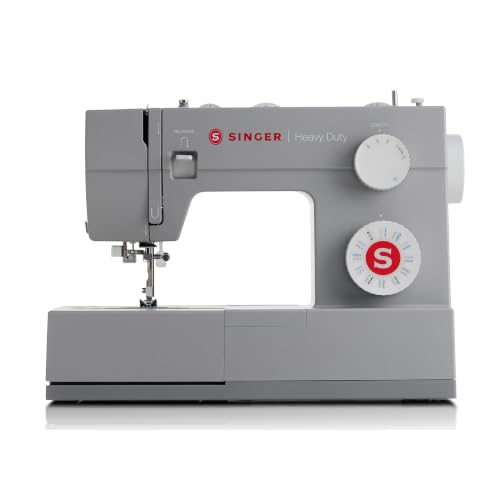
The Singer 4423 offers a different operating approach for buyers who prefer direct dials. Adjustable stitch settings and familiar utility sewing can be useful for a mixed craft room. The heavy-duty label should not be interpreted as permission to sew thick cardboard, rigid coated sheets, or bound stacks.
Test the foot controller at a comfortable slow pace. A machine with a high advertised maximum speed can still be an unsuitable choice if you cannot control short runs easily. For a card border, predictable stopping may matter more than speed. Compare the physical position of your hands, visibility of the marked line, and the work support.
Our 4423 review explains its household role. If the planned project is mostly fabric sewing with an occasional paper embellishment, judge the machine’s primary fabric use first. Buying specifically for an unconfirmed material application creates an avoidable mismatch.
Five reasons to compare it:
- Direct dials offer a straightforward interface.
- Stitch adjustments can be evaluated visibly on a sample.
- Ordinary household sewing supports a wider craft workflow.
- Mechanical operation may suit an existing sewing preference.
- Its clear model identity supports manual and parts research.
Two limitations:
- It has no separate electronic speed-limit slider.
- Its household construction is not a rating for paper binding or arbitrary stacks.
Singer 9960: Electronic Convenience Needs a Project Purpose
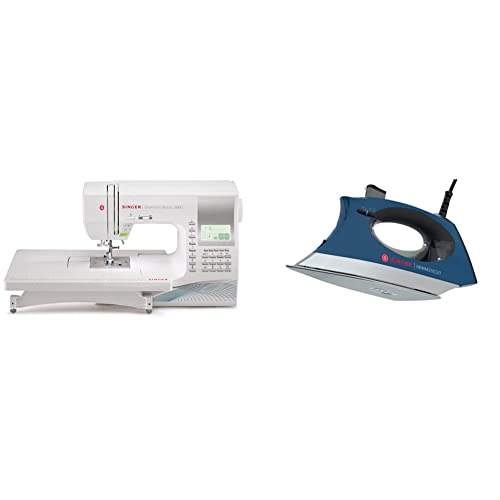
The Quantum Stylist 9960 provides electronic conveniences and an extensive stitch selection. Compare it if those functions also benefit your ordinary sewing. A large decorative menu is not automatically an advantage on paper: a dense pattern can place many holes close together and weaken the material.
Start by identifying a few suitable simple stitches for the approved craft method. Ask how to adjust and return to those settings. A machine that performs an elaborate demonstration may offer little additional value if your finished cards use only a plain line and an occasional open zigzag.
Needle positioning can help with a planned corner, but pivoting a stiff card still needs appropriate clearance and careful handling. Automatic thread cutting is another finishing convenience to evaluate according to the project’s instructions. It does not decide the best way to secure or conceal thread tails on a particular paper construction.
Five reasons to consider it:
- Electronic speed control supports a measured workflow.
- Needle positioning assists planned stopping points.
- Automatic cutting can be useful in suitable sewing operations.
- A broad utility selection supports fabric projects.
- Visible settings can help record repeatable craft samples.
Two limitations:
- Extra decorative choices may be unnecessary for occasional paper work.
- Dense patterns can be unsuitable even when the machine can form them.
Paper Is Not Fabric: Plan for Permanent Holes
Fabric can often recover somewhat after a seam is removed; paper retains the punctures. Closely spaced holes can create a tear line. For that reason, stitch length and design density should be evaluated on an offcut of the actual material rather than copied blindly from a fabric setting.
Use simple practice shapes and inspect the paper after handling it. A line may look attractive immediately yet separate when the card is folded or flexed. The finished object matters more than the appearance under the presser foot. Avoid prescribing one universal setting for every paper weight, coating, and project.
Coatings, foil, glitter, adhesive, and laminated surfaces introduce separate questions. Do not assume that a product sold for craft use is suitable to pass through a sewing machine. Follow the machine and project instructions and keep incompatible or uncertain materials out of the mechanism. A scrap test cannot override an explicit restriction.
Plan the Card Before Stitching
Decide which part will be stitched and how the underside will appear. A separate decorated front panel can allow thread ends and construction details to be concealed when the panel is mounted to the card. That is a design choice, not a requirement to sew through an entire folded card.
Draw the seam path and identify corners, changes in direction, and the final stop. Keep embellishments clear of the machine’s path. A button or dimensional decoration added at the wrong stage can obstruct the foot or prevent the work from lying flat. Plan the assembly order instead of forcing a finished decorated piece under the machine.
Prepare several matching offcuts. Change one variable at a time and label successful samples with the material, needle, thread, stitch, and settings. This is more useful than trying random adjustments on the final card. If the paper tears or the machine struggles, stop and reconsider the method rather than pulling the piece through.
Separate Stitching, Free-Motion Work, and Cutting
Guided stitching uses the machine’s feeding arrangement with the operator directing the work. Free-motion techniques use a different setup and appropriate compatible foot. Brother’s greeting-card project uses a free-motion-capable machine and model-compatible equipment; it should not be read as proof that every basic model supports the same technique.
Needle-punched artwork without thread is another process. A project using punctures for a design does not automatically establish the same settings or material suitability as threaded sewing. Similarly, a tutorial using an embroidered fabric piece attached to a card is not evidence that the card itself passed through an embroidery machine.
An electronic cutting machine cuts or otherwise processes material with its own tools. It does not replace threaded sewing. Brother ScanNCut and Singer craft-cutting products appear in paper searches, but their material ratings should never be transferred to sewing machines. Choose the tool for the actual operation you want.
Will This Be a Shared Fabric and Paper Machine?
If most work is fabric, prioritize the fabric projects and treat paper as a limited confirmed craft method. Compare threading, buttonholes, stretch seams, and work support as appropriate. Our garment machine guide helps prevent an occasional decorative project from deciding the wrong primary purchase.
Follow the manual for cleaning and needle replacement after craft work. Paper debris and adhesive residue are different issues from an ordinary cotton sewing session. Do not improvise solvents or oiling procedures inside the machine. Keep any craft-specific needles identified so their condition can be checked before returning to fine fabric.
For another mechanical comparison, see our Brother GX37 review. The operating-style guide and Janome comparison offer further context. These are machine-selection references, not blanket paper approvals.
Questions to Settle Before Buying
Ask whether the intended paper project is supported, which accessories are appropriate, and how the use affects care and coverage. Keep the exact model and material description in the question. A general answer about crafts may include fabric, cutting, and embroidery rather than the threaded paper work you mean.
Compare total cost, instruction, return terms, and primary sewing suitability. If paper crafts are rare, a suitable existing machine and confirmed method may be more sensible than a new purchase. If the job is repeated thick booklet binding, seek equipment designed for that process instead of scaling up a greeting-card technique.
A Project Check Before You Commit
A separate decorated panel also allows a failed sample to be discarded before it becomes part of the final folded card. Plan enough matching offcuts for trials, and keep the successful combination with the finished project notes. The purpose is to preserve a repeatable craft method, not merely discover that the needle can puncture the material once.
If the intended job grows into repeated booklet production or thick stacks, stop extending the card-making method and investigate equipment designed for that process.
Frequently Asked Questions
Can every sewing machine sew paper?
No universal approval should be assumed. Check the exact machine, material, and project method. Published card projects demonstrate particular setups and do not establish permission for all paper weights, coatings, adhesives, or stacks.
Which feature matters most for stitched cards?
Controllable pace, visibility, adjustable settings, and suitable material handling are useful comparison points. They do not replace confirmation that the intended use is appropriate for the machine.
Why can paper tear along the stitching?
Closely spaced needle holes can create a perforated line. Evaluate stitch length and design density on matching scraps, then handle and flex the finished sample before committing to the final project.
Is a cutting machine the same as a paper sewing machine?
No. Cutting and threaded stitching are different operations. A cutting machine’s material specification does not establish the capacity or approved uses of a sewing machine.
Do I need hundreds of decorative stitches?
Usually the project determines that need. A simple border may require only a few controllable settings. A dense decorative pattern can be less suitable for paper even when it looks attractive on fabric.
Final Recommendation
Choose paper-craft equipment by the confirmed method and useful controls. Compare XR9550, 4423, and 9960 as household sewing candidates with different interfaces, not universal paper machines. Validate the intended use, practice on matching material, and prioritize a sound finished craft over stitch-count marketing.