
Bernette Sewing Machine Reviews: B35, B38 and the Embroidery Distinction
Bernette sewing machine reviews are most useful when they separate mechanical sewing, computerized controls, and dedicated embroidery. Those roles are.
This guide has Amazon links. If you buy through them we may earn a small commission, at no extra cost to you.
On this page
Bernette sewing machine reviews are most useful when they separate mechanical sewing, computerized controls, and dedicated embroidery. Those roles are not interchangeable simply because the machines share a brand. This guide compares the b35 and b38 approaches, explains why b70 DECO belongs in a different category, and shows how to evaluate fabric samples, accessories, and service so your choice follows actual projects rather than a brand-wide promise about universal performance.
As an Amazon Associate, Practical Textile earns from qualifying purchases. Product links may earn us a commission.
Quick Answer
Compare the b35 if mechanical operation fits your household sewing, and the b38 when its computerized conveniences solve recurring tasks. The b70 DECO is dedicated embroidery, not a sewing-machine upgrade. Confirm the exact model, seller package, and support. Amazon boxes are clearly labeled by model; the Janome comparison is a different brand and role.
This guide compares published specifications and project fit; it does not report hands-on testing.
Bernette B35 bundle

Check the exact bundle and compatible bonus accessories.
Bernette B70 DECO bundle

A separate equipment category, not ordinary seam construction.
Janome Memory Craft 9850
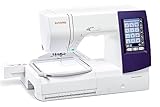
Compare only when both sewing and embroidery are required.
Options organized by use
| Option | Reason to compare | Practical selection note |
|---|---|---|
| bernette 35 | Mechanical household sewing | The documented 23-stitch model uses physical controls and a one-step buttonhole. |
| bernette 38 | Computerized household sewing | Compare the electronic interface, cutting and actual stitch menu with your projects. |
| bernette 70 DECO | Embroidery-only comparison | Relevant only when decoration is required; it does not construct ordinary seams. |
Compare the bernette models by their actual operating roles before pricing a bundle. A mechanical b35, computerized sewing model, and embroidery-focused configuration solve different needs. Ask for the exact model label, required feet, instruction, and complete accessory inventory so the delivered purchase matches the project you planned.
Begin with the function the machine must perform
A sewing machine and an embroidery machine can appear in the same brand range while serving different tasks. Confirm ordinary sewing capability, imported-design embroidery and any required unit before comparing models.
If your plan is garment construction, the sewing models are the relevant first comparison. If it is a digitized motif, the embroidery category matters. A broad brand search should not make an embroidery-only machine look like a substitute for the household seams, zippers and openings you need.
Compare the relevant equipment categories using the sewing machine buying guide.
35 versus 38 is mainly a control and workflow comparison
The mechanical and computerized models should be tried on the same fabric operations. Select a stitch yourself, sew a curve, stop at a mark, and make a buttonhole sample. Compare how easily you understand and control each machine.
The computerized model’s total includes varied stitch functions. A large count is useful only when the menu contains operations you need. The mechanical model may be attractive when direct physical controls suit you. Neither category should be ranked universally without a relevant hands-on comparison.
For related sewing preparation and problem-solving, see the sewing techniques and troubleshooting.
Thread cutting, pressure and memory have specific roles
Convenience features should be tied to repeated work. A cutter can affect cleanup at the end of a seam, pressure adjustment can be relevant to feeding, and memory can support a suitable pattern sequence. Confirm the exact model’s function and demonstrate it rather than assuming every bernette provides the same feature.
For fine clothing, test your lightest fabric as well as the thickest join. For quilting, compare a measured piecing seam and a layered sample. The better purchase is the one that handles the project comfortably, not the one that accumulates the most unrelated feature points.
Explore accessory categories in our sewing machine parts and accessories; use the exact manufacturer manual for compatibility and maintenance.
Compare the supplied feet and service arrangement
Check the exact package against your project list. If a useful foot is supplied, it may reduce a separate purchase. If an accessory is missing or incompatible, the total cost can change. Physical resemblance is not proof of compatibility.
Ask the dealer about instruction, service and the correct manual. If buying through a marketplace, confirm model, voltage, condition and seller terms. A dealer-supplied unit and an overseas or refurbished listing should not be assumed equivalent simply because their titles share a model number.
Keep the embroidery comparison separate
The 70 DECO is a dedicated embroidery machine and belongs in the comparison only when imported designs are part of the plan. Its field, frames and file support require a separate evaluation from the sewing controls of the 35 or 38.
If a combination model is desired, obtain its own current specification and demonstrate both modes. Do not add sewing capability to an embroidery-only machine in a review, or infer logo-file support from a computerized sewing model’s lettering stitches.
Five advantages and two limitations
Advantages
- Distinct control styles support personal workflow comparisons.
- Exact model identification prevents sewing/embroidery confusion.
- A documented foot package makes setup costs clearer.
- Dealer instruction can make complex features easier to assess.
- Model-specific support routes improve accessory checking.
Limitations
- The brand range includes different functions that are not interchangeable.
- A large stitch count does not establish superior fabric handling.
Check the exact listing and documentation
bernette 35:
bernette 38:
bernette 70 DECO:
A Brand Comparison Needs the Same Sample on Each Machine
Prepare one ordinary sample and one demanding but appropriate construction from your actual projects. Include the intended lining, interfacing, or batting where relevant. Use the same sample design when comparing models so you are not judging one machine on easy cotton and another on a difficult folded intersection.
Ask to perform setup and sewing yourself. Threading, bobbin insertion, foot changes, and low-speed control should feel understandable. A prepared demonstration can show a machine’s possibilities without revealing whether its daily operation suits you.
Inspect repeated results rather than a single good seam. Check the underside, fabric distortion, and the way layers meet. If the goal is a precise finished dimension, measure the completed sample after the appropriate pressing and handling. A foot name or decorative count is not a substitute for that result.
When the B38’s Convenience Features Have Practical Value
The b38 adds a computerized workflow with features such as automatic thread cutting, pattern-combination memory, speed regulation, and adjustable presser-foot pressure. These are separate functions. Decide which one removes a real interruption rather than assuming that the entire feature list will improve every seam.
Memory for stitch combinations is useful when your projects repeat an appropriate decorative sequence. It is not the same as importing arbitrary embroidery artwork. Test the actual sequence, spacing, and readability before making it a reason to buy.
Likewise, thread cutting can streamline some operations while leaving others better handled by another method. Follow the machine instructions for suitable thread and use. A convenience feature should become part of a reliable routine, not an automatic step applied to every material without checking.
When a Mechanical B35 Is the More Focused Purchase
A b35 comparison makes sense if you prefer direct controls and mostly need ordinary household utility operations. The decision should follow your own trial of the dials and pedal. Someone who comfortably uses a mechanical machine does not need to adopt a screen merely because their projects become more sophisticated.
Allow for the accessories and instruction required by the work. A simpler machine can still need a compatible specialty foot for a particular operation. The relevant question is the whole usable setup, including service, rather than whether the initial machine has fewer features.
For another mechanical perspective, read our Singer 4423 review. Our interface comparison helps explain why mechanical and computerized should be evaluated as operating choices rather than skill levels.
Make a Separate Plan for B70 DECO Embroidery
The b70 DECO is dedicated embroidery equipment with a maximum field of 260×160 millimeters. Both dimensions matter when checking a design. A physically large hoop or fabric panel should not be confused with the stitched area permitted by the machine.
Plan compatible files, stabilizer, thread, hooping, and placement before treating the machine as ready to decorate every item. A design that fits can still be difficult to position on a finished pocket or narrow sleeve. Item access is a separate requirement from field size.
Read our b70 DECO guide for the equipment role. Our bernette embroidery overview can help separate older and different model names. Do not assume that a historical machine mentioned in a brand guide has the same file or support workflow as a current offer.
When a Sewing-and-Embroidery Combination Is the Right Comparison
If you need ordinary construction and hoop embroidery in one machine, compare an actual combination model rather than choosing between a sewing-only b38 and an embroidery-only b70 as though either does both. Clarifying the operation prevents buying a second machine immediately to fill an overlooked gap.
A combination setup saves the need for two separate machine positions, but its functions share operating time and require mode changes. It cannot sew a garment seam while embroidering another item. Consider how that affects your construction and decoration sequence.
Our Janome combination guide supplies a different-brand perspective. Compare the field, sewing controls, transfer route, and service separately instead of reducing the decision to the total number of built-in designs.
Compare Support and Keep the Exact Model Record
Confirm where service is performed and what training or orientation comes with the purchase. Ask about compatible parts, accessory availability, and the warranty for the exact sales channel. Brand reputation does not identify the support arrangement for an individual seller bundle.
Keep the model label, accessory inventory, manual, and purchase documents together. This helps when ordering a replacement foot or explaining a problem. A generic request for a bernette accessory may not be specific enough for safe compatibility.
For broader comparisons, our Brother machine guide and Janome model overview organize equipment by role. Use those categories to ask better questions about the bernette you are considering, not as a reason to assume all brands provide identical functions.
Before deciding, reproduce one sample after rethreading and resetting the machine yourself. This checks whether the successful demonstration depends on a routine you understand. Keep the setup notes, then use them as a reference for the first project at home.
Check the selected variation at checkout, particularly when several bernette models share a listing or bundle description. The final order should identify the exact sewing or embroidery machine, condition, and included parts. A photograph of a related model is not enough to establish what will arrive.
A Project Check Before You Commit
Ask the seller to demonstrate the exact bernette model rather than a more expensive machine with similar styling. Thread it, select an ordinary stitch, make the appropriate buttonhole, and change a foot yourself. The point is to evaluate the controls and operations you would receive, not the broader capabilities available elsewhere in the brand.
For combination or embroidery-focused models, identify the additional module, hoops, software, and accessories separately. Confirm what is included and what remains optional. If you already own a suitable sewing machine, a dedicated embroidery option may create a different workflow from replacing both functions with one unit. Compare that practical arrangement before deciding which package offers the best value.
For a used machine, confirm that the matching controller and essential covers are included. An attractive model price can change substantially once missing model-specific parts, inspection, and delivery are added to the purchase.
Frequently Asked Questions
Is bernette 35 computerized?
No. The manufacturer identifies it as mechanical sewing.
Does bernette 38 load embroidery designs?
It is a computerized sewing model; do not infer hoop embroidery from its electronic interface or sewing alphabets.
Does 70 DECO sew ordinary seams?
No. It is embroidery-only.
Should I buy the model with the most stitches?
Compare needed operations, controls, accessories and support. Unused stitches add little practical value.
What should I check in an Amazon offer?
The exact model, package, voltage, condition and seller terms. A cached listing identity is not a live stock or price check.
Final Recommendation
Choose the bernette category first: mechanical household sewing, computerized sewing, or a genuine embroidery role. Then compare exact models on your real samples and the complete service arrangement. The b35 and b38 address different control preferences, while a b70 DECO belongs on the shortlist only when dedicated embroidery is the intended job.
