
Best Sewing Machine for Intermediate Sewers: 3 Upgrade Paths
The best sewing machine for intermediate sewers should remove a limitation you already understand. Perhaps your current machine makes slow curves.
This guide has Amazon links. If you buy through them we may earn a small commission, at no extra cost to you.
On this page
The best sewing machine for intermediate sewers should remove a limitation you already understand. Perhaps your current machine makes slow curves difficult, offers too little support for patchwork, or lacks the controls you use repeatedly. Buying more stitches will not necessarily solve those problems. This guide compares three different upgrade paths and explains when a versatile computerized machine, a focused straight-stitch specialist, or a mechanical model makes practical sense next.
As an Amazon Associate, Practical Textile earns from qualifying purchases. We may receive a commission when you purchase through our product links.
Quick Answer: Choose the Upgrade That Solves Your Bottleneck
The Brother XR9550 is our starting point for a versatile computerized home-sewing shortlist. Consider the PQ1600S when straight stitching dominates your work and you can retain another machine for zigzag and buttonholes. Consider the ST371HD when you specifically prefer mechanical controls. These choices represent different workflows, not a measured ranking of stitch quality or durability.
This is a specification-based buying guide. We have not performed hands-on comparisons, speed measurements, or endurance testing.
Brother XR9550
Compare it for clothing, piecing, and useful speed control.
Brother PQ1600S

A specialist option when you already know which stitches you can give up.
Brother ST371HD

Consider its specific functions rather than reading Heavy Duty as unlimited capacity.
First Decide Whether Your Machine Needs Replacing
An intermediate sewist has enough experience to identify recurring frustrations, which makes this a good time to buy deliberately. Write down three tasks your current machine handles poorly. Be specific: inconsistent slow starts, difficult pivots, inadequate support for a quilt, or an accessory limitation describes a problem. Wanting something more advanced does not yet describe the solution.
Next, separate maintenance and setup from equipment limits. A fresh appropriate needle, correct threading, a clean bobbin area, suitable thread, or a service visit may improve a machine that otherwise meets your needs. Replacing a machine will not automatically correct a habit of pulling fabric or using an unsuitable needle on every material.
Finally, decide whether you are replacing your only machine or adding a second one. A straight-stitch specialist can be an excellent addition and an inconvenient sole machine for garment work needing zigzag or buttonholes. The same purchase can be sensible in one sewing room and frustrating in another.
Intermediate Sewing Machine Comparison
| Model | Main role | Useful distinction | Main compromise |
|---|---|---|---|
| Brother XR9550 | Versatile computerized home sewing | Speed control, LCD selection, and built-in lettering | Ordinary domestic working-space and material limits still apply. |
| Brother PQ1600S | Dedicated straight stitching | Knee lifter, thread cutting, and specialized feed adjustments | No zigzag or buttonholes. |
| Brother ST371HD | Mechanical home sewing | 37 stitches and a nonstick foot in the listed foot set | Do not assume computerized convenience or industrial feeding. |
There is no universal intermediate specification. Garment sewists, quilters, bag makers, and occasional repair sewists can all have intermediate skills while needing different equipment. Compare the operation you perform most often, then examine the less frequent operations you cannot afford to lose.
Brother XR9550 Review: The Versatile Computerized Path
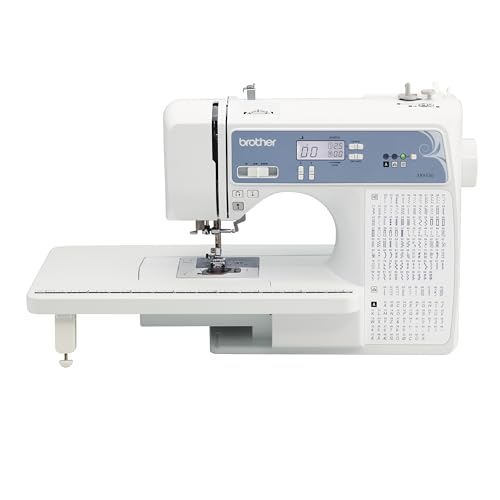

The XR9550 is worth comparing when you want computerized selection, controlled speed, and a wider range of ordinary sewing options. Its advertised 165 selections include 55 alphanumeric characters, so the total should not be interpreted as 165 different utility stitches. The included wide table supports fabric beside the machine.
For an intermediate garment sewist, its strongest case is versatility. You can move between construction seams, an appropriate buttonhole, and a decorative detail without changing machine categories. The speed-control slider can also be helpful during careful curves and topstitching, where maintaining a manageable pace matters more than finishing at maximum speed.
Check which features are genuinely new compared with your current machine. If you already have similar controls, more stitch selections alone may not justify a replacement. If your main frustration is limited arm space while quilting a large sandwich, the extension table improves external support but does not enlarge the opening inside the machine.
XR9550 strengths and cautions
- Consider it for: varied household sewing and a preference for computerized control.
- Useful feature: independent speed limitation can make precise work easier to manage.
- Limitation: built-in letters are not imported hoop embroidery.
- Buying check: verify the exact included feet, table, cover, and seller terms.
Our Brother sewing machine guide compares this role with other models. Choose the workflow rather than treating the computerized label as evidence of unlimited fabric capability.
Brother PQ1600S Review: The Straight-Stitch Specialist

The PQ1600S takes a narrower approach. It is a straight-stitch machine with controls and accessories oriented toward that work, including a knee lifter, thread cutting, and feed adjustments. This is a different proposition from a domestic computerized machine with many decorative selections.
For repeated piecing, long construction seams, or a dedicated quilting station, a focused workflow can be attractive. A knee lifter may reduce how often you move a hand away from the work to lift the presser foot. Thread cutting may simplify repeated finishing steps. Whether those controls help you is best judged through the sequence of a real project.
The important compromise is the stitch type. You still need another suitable method for buttonholes, zigzag, and other operations outside straight stitching. Keep a versatile existing machine if those tasks remain part of your sewing. Do not sell your only general-purpose machine before discovering that the specialist cannot complete the garment you planned.
Also consider speed management and physical space. A high advertised maximum is not a requirement to sew quickly, and pedal feel still matters. Arrange adequate support for large work and try the controls before buying when possible. A specialized machine should make the sewing sequence more comfortable, not simply replace a larger stitch count with a larger speed number.
PQ1600S strengths and cautions
- Consider it for: a second station dominated by straight stitching.
- Useful distinction: controls are focused on repeated sewing and quilting operations.
- Limitation: it cannot replace a full stitch menu when the project needs one.
- Buying check: verify the current US package and compatible specialty feet.
Brother ST371HD Review: The Mechanical Path

The ST371HD provides a mechanical home-sewing approach with 37 built-in stitches, a one-step buttonhole, and a listed six-foot package that includes a nonstick foot. It is relevant when you prefer direct selection and want to compare a utility-focused machine rather than expand into computerized controls.
Heavy Duty naming needs careful interpretation. It does not make this an industrial walking-foot machine, and a nonstick foot does not establish that every leather, vinyl, or dense assembly can be sewn safely. Surface friction and seam density are different problems. Match the actual material, needle, thread, and construction to the machine’s instructions.
For an intermediate owner of a similar mechanical machine, this may be a change of model rather than a meaningful upgrade. Compare the specific control or handling issue you want to solve. If you need a separate speed limiter, automatic cutting, or a larger working area, verify those requirements directly rather than assuming the brand’s tougher-sounding name covers them.
ST371HD strengths and cautions
- Consider it for: a deliberate preference for mechanical home sewing.
- Useful inclusion: the listed foot set covers several common operations.
- Limitation: it does not provide specialized industrial feeding.
- Buying check: use a representative sample for any unusually demanding material.
Choose by the Projects You Want to Finish
Clothing and alterations
Keep zigzag, stretch-seam options, buttonholes, and zipper access on the checklist if you want one machine for varied clothing. Check the way you control speed and position the needle when working near a pocket, curved seam, or visible topstitching line. An upgrade should improve those repeated actions.
Garment access also matters. Try the free-arm arrangement with a realistic sleeve or trouser opening, and check visibility around the needle. A very small cuff may still require a different construction method. No general-purpose feature list eliminates the need to keep unintended layers clear of the sewing area.
Quilt piecing and larger quilts
For piecing, test repeatable seam allowance and the handling of small fabric units. Sew a sample, press it, and measure the completed unit. An accurate setup repeated across many blocks matters more than decorative choice or how quickly a machine can make a long seam.
For quilting, evaluate the space inside the arm and the support around the machine separately. A large table can prevent drag but cannot expand the interior opening. The method you use to manage a quilt sandwich may become the practical limit before motor speed does.
Bags, canvas, and dense intersections
Bring the actual seam stack to a demonstration if this is your main workload. Include the seam allowances, interfacing, webbing, or folded sections that create the difficult area. A machine sewing two flat layers in a showroom does not prove that it handles your densest construction.
If material will not feed or the needle meets resistance, stop rather than applying more power. Consider different construction techniques or specialized equipment. Our Singer 4423 review gives another domestic-machine comparison, with the same need to distinguish a product label from an unlimited capacity claim.
What to Test Before Buying an Upgrade
- Reproduce your bottleneck: bring the operation that frustrates you on the current machine.
- Check slow control: sew a curve, stop near a mark, and restart without rushing.
- Inspect both seam sides: examine feeding, puckering, skipped stitches, and the relevant seam behavior.
- Try routine setup: thread the machine, load the bobbin, change the foot, and select another stitch where applicable.
- Assess the workspace: place fabric where it will sit during a real project.
- Confirm what you lose: a specialist may omit functions your old machine quietly supplied.
Keep the finished sample and written settings. A successful demonstration is most useful when it can be reproduced after delivery. For unusual materials, ask which needles and threads were used rather than assuming the result came from the bare machine alone.
Budget for the Complete Sewing Setup
Compare machine cost with the accessories and furniture you actually need. Suitable feet, needles, bobbins, a stable table, lighting, and fabric support may affect the experience more than the difference between two decorative stitch totals. Avoid buying a bundle of accessories that do not fit your projects or exact model.
Check warranty coverage, return conditions, service access, and electrical suitability for the specific US-market offer. For a used machine, request a relevant sewing demonstration and verify the controller and essential accessories. A low purchase price can be misleading if several necessary parts are missing.
For other category comparisons, read our Janome model comparison and Singer 4452 review. If automatic embroidery is the new skill you want, our Poolin embroidery guide explains a different workflow that ordinary sewing stitches do not provide.
Frequently Asked Questions
What makes a sewing machine suitable for intermediate sewers?
It should solve a limitation you can identify and support the projects you are ready to attempt. Useful control, workspace, stitch options, and accessory compatibility matter more than an intermediate label. Start with your recurring tasks rather than a universal stitch-count target.
Is a computerized sewing machine always an upgrade?
No. It can add convenient selection and other controls, depending on the model, but may not improve the specific feeding or space problem you have. Compare the actual controls with your current machine before deciding.
Can the PQ1600S be my only sewing machine?
It can serve work that requires straight stitching, but it does not provide zigzag or buttonholes. If your garments or repairs need those operations, retain or obtain another suitable machine. A specialist is often easier to justify as a second station.
Should I upgrade my machine or buy better accessories?
Identify the cause of the difficulty first. A compatible foot, better support, correct needle, or service may solve some problems. Accessories cannot add an enlarged arm opening or turn a domestic feed system into an industrial one.
How many stitches does an intermediate sewist need?
There is no fixed number. List the stitches your projects require, then evaluate control and handling. A machine with fewer relevant functions may be a better fit than one with many decorative choices that you rarely use.
Final Recommendation
Begin with the XR9550 if versatile computerized home sewing addresses your next step. Investigate the PQ1600S when dedicated straight stitching will do substantial work beside another machine. Compare the ST371HD when mechanical operation is the preference rather than the feature you are trying to move beyond.
The right intermediate upgrade makes a specific part of sewing easier to control or more practical to complete. Identify that improvement, test it on relevant material, and buy around the projects you want to finish.
