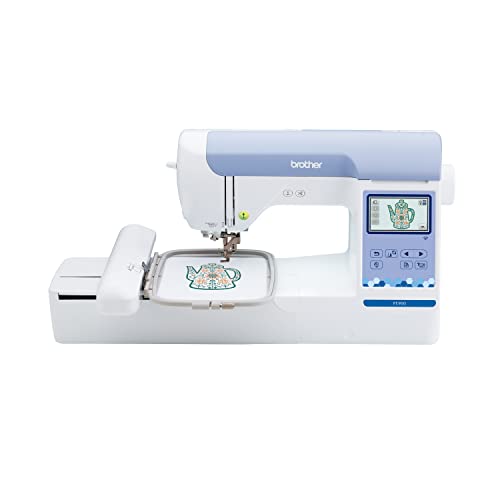
The PE900 is worth considering for home embroidery when a 5 × 7 field and newer file-and-trimming workflow match your projects. It remains an embroidery-only machine. Choose it for a specific bottleneck rather than expecting onboard conveniences to solve digitizing or stabilization problems. The discussion below separates documented capabilities from practical selection considerations for your work. Its purpose is to support an informed comparison of suitable equipment, not promise universal results.
Who should consider it?
A home embroiderer moving beyond small motifs while keeping a separate sewing machine.
Documented features and important limits
| Item | Documented detail |
|---|---|
| Maximum field | 5 × 7 inches |
| Built-in designs | 193 |
| Fonts | 13 |
| Transfer | Wireless and USB |
| Listed workflow features | Color sorting and jump-stitch trimming |
| Ordinary sewing | No |
Confirm the exact model’s features and accessories in the manufacturer information.
- ARTSPIRA MOBILE APP: Access 50 free embroidery designs, make custom embroidery patterns by...
- WIRELESS LAN ENABLED: Transmit embroidery files from your PC to your embroidery machine...
- 5" x 7" EMBROIDERY FIELD: PE900 has a generous 5” x 7” maximum embroidery area perfect...
- COLOR SORT and JUMP STITCH TRIMMING: Stitch efficiently with Advanced Color Sort, which...
- 193 BUILT-IN DESIGNS: Featuring 193 built-in embroidery designs including scrollwork...

The 5 × 7 field is useful only if your designs fit
Choose several real files before choosing the machine. Record their stitch dimensions, color sequence, and intended material. This reveals whether a larger field is enough or whether you are already planning designs outside it.
A wider field can reduce the need to split some motifs, but it does not remove access problems on finished garments. A large flat design area on paper may be awkward to position inside a narrow sleeve or near a bulky seam. Evaluate the blank and its opening as well as the file dimensions.
Compare the relevant equipment categories using the embroidery machine buying guide.
What trimming and color sorting change
Workflow conveniences can reduce some manual intervention in an appropriate design. They do not make every file stitch in the ideal order, and they should not override necessary layering in an appliqué or other sequential design. Inspect the edited sequence before a trial stitchout.
Consider the time after the machine stops. A sample with fewer manual thread cleanups can be attractive, but finished-product quality also depends on placement, backing removal, pressing where appropriate, and final inspection. Judge the whole workflow rather than treating a single advertised feature as a measured productivity gain.
Plan design files and project sizes with the embroidery designs and file guide.
PE900 versus PE800 and SE2000
For a working PE800 owner, identify what you need to improve: file delivery, cleanup, or another recurring operation. If your complaint is the field size, moving between machines in the same field category will not necessarily resolve it. Try the relevant workflow before buying an upgrade.
The SE2000 comparison becomes important when one machine must also sew ordinary seams. That adds construction capability but introduces mode changes during a mixed project. A dedicated embroidery setup may be more convenient if another sewing machine is already available, especially when you want to prepare the next item while embroidery runs.
Connect construction and decoration steps using the sewing and embroidery project guide.
Plan the first demanding project
Begin with a stable sample of the intended material and a design sized for the field. Mark placement and stitch a complete test before committing a finished garment. Examine registration, small lettering, puckering, and thread cleanup after releasing the hoop.
If the result is poor, change one variable at a time. A different machine is not the first explanation for every embroidery defect. Digitizing, material support, thread, and needle suitability are separate decisions. Record the working setup so a successful result can be repeated later.
Five advantages and two limitations
Advantages
- The 5 × 7 field accommodates many larger home motifs.
- Wireless and USB routes provide file-delivery options.
- Built-in lettering supports initial personalization.
- Jump-stitch trimming can reduce some cleanup in suitable designs.
- Dedicated operation complements an existing sewing machine.
Limitations
- It cannot construct garments with ordinary sewing seams.
- Field size and finished-item access still limit possible projects.
Buying and demonstration checklist
| Step | What to check |
|---|---|
| 1 | Test your longest intended name and largest motif. |
| 2 | Inspect design order before using sorting features. |
| 3 | Check current computer-transfer requirements. |
| 4 | Compare a complete sample with your existing machine’s workflow. |
Named alternatives to compare
Brother PE545 is a separate comparison model. The link below is not represented as the reviewed machine.
Brother SE2000 is a separate comparison model. The link below is not represented as the reviewed machine.
A cached Amazon listing confirms product identity for this draft. It does not confirm current stock, price, seller, warranty or the present AAWP data response.
Frequently asked questions
Does the PE900 sew seams?
No. It is embroidery-only.
Does it have a 5 × 7 field?
Yes, that is the manufacturer’s maximum embroidery field specification.
Can color sorting be used for every design?
Do not rearrange required sequencing blindly. Layered and appliqué designs may depend on their original order.
Will it automatically fix a poorly digitized logo?
No. File preparation and fabric suitability remain separate from transfer and trimming conveniences.
Is it always worth upgrading from PE800?
No. Compare the repeated workflow problem you want to solve and the cost of the new setup.
Related Practical Textile guides
- Brother sewing and embroidery comparison
- machine parts, needles and accessories
- embroidery machine category
Explore sewing, embroidery, dyeing, printing and other fabric topics at Practical Textile.
Sources and research method
Manufacturer pages, product documentation and exact listing identities were checked on 2026-10-13. Feature-based recommendations are editorial judgments; they are not measured performance results. Availability, software requirements, packages and lifecycle can change.