A useful Singer Heavy Duty 4423 review should explain what happens at the sewing table, beyond the stitch count on the box. This mechanical machine suits everyday repairs, straightforward clothing, and occasional heavier seams, but choosing it requires understanding its limits. Here is how its controls, buttonhole system, fabric handling, and accessory needs fit real projects, so you can decide whether it deserves a place in your home sewing space.
As an Amazon Associate, Practical Textile earns from qualifying purchases. Buying through a product link may earn us a commission.
Quick Answer: Is the Singer 4423 Worth Considering?
Yes, if you want mechanical controls for general home sewing and do not need a separate speed limiter or embroidery. Its adjustable presser-foot pressure and one-step buttonhole give you useful control beyond basic straight stitching. However, the Heavy Duty name does not make it an industrial upholstery machine. For learning slowly, dense multilayer work, or precision quilting, compare the controls and feeding arrangement with your actual project before buying.
This is a research-based buying review using manufacturer specifications and project requirements. We have not conducted hands-on durability, noise, or fabric-penetration tests.
Singer Heavy Duty 4423
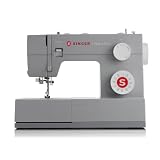
Consider it for repairs, woven garments, and occasional denim projects with a suitable setup.
Brother XR9550
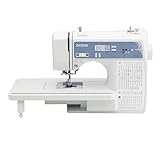
Compare this alternative if a speed-control slider and on-screen stitch selection matter more.
Singer Heavy Duty 4423: What You Are Buying
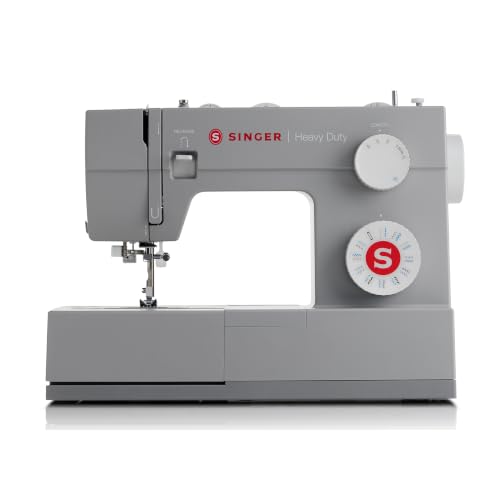
- VERSATILE STITCHING WITH 97 APPLICATIONS: Get versatile performance with 23 built-in...
- AUTOMATIC NEEDLE THREADER SEWING MACHINE: After following the threading path printed right...
- HIGH-SPEED SEWING MACHINE: The Singer 4423 Sewing Machine has a maximum sewing speed of...
The 4423 is a domestic mechanical sewing machine: you select stitches and settings with physical controls. Singer lists 23 built-in stitches, a top-loading bobbin, an integrated needle threader, and a one-step buttonhole. Its advertised 97 stitch applications describe techniques available from those stitches; that number does not mean there are 97 separate stitch patterns.
That distinction matters when comparing listings. A longer applications list does not automatically produce stronger seams or easier feeding. For a garment sewist, repeatable seam allowances, controllable starts, and the right stitch for the fabric usually matter more than a large decorative menu. Decide which operations you actually perform before using the headline number to judge value.
The interior metal frame and stainless steel bedplate describe construction features, not a guarantee that every component is metal or that every thick material will feed successfully. Treat this as a versatile household machine with limits. A bag maker sewing dense intersections all day has a different requirement from someone shortening jeans a few times a year.
Controls, Speed, and the Learning Curve
Mechanical selection keeps adjustments visible
Dial controls can be appealing if you want to see the selected stitch and make changes directly. They also require you to learn which settings belong together. Before moving from a straight seam to a stretch stitch or buttonhole, stop and consult the model instructions rather than assuming that changing one dial completes the setup.
Keep a small sample notebook while learning. Sew on a doubled scrap from each project and record the needle, thread, stitch choice, length, width, and tension that produced an acceptable seam. This gives you a repeatable starting point next time. It is more useful than copying a universal setting from a video made with different fabric.
Maximum speed is different from beginner-friendly control
The standard 4423 relies on the foot controller for sewing speed and does not provide a separate maximum-speed slider. A fast machine can still sew slowly, but the feel of the controller and your ability to maintain gentle pressure matter. Someone who finds pedals difficult should try this arrangement before committing, or compare a model with an independent speed limit.
For early practice, make long straight seams on stable woven cotton before attempting tight curves. Stop with room to reposition the fabric instead of trying to steer aggressively while the machine is moving. At a bulky crossing, use the handwheel only as directed in the manual and stop if you feel resistance. More pedal pressure is not the right response to a blocked needle.
The buttonhole feature needs preparation
A one-step buttonhole reduces the number of manual stages, which is useful for shirts, simple jackets, and home accessories. It still requires the correct foot, button placement, buttonhole lever position, and fabric support. Make a full test buttonhole through the same fabric layers and interfacing as the finished garment before cutting an opening.
Also test the actual button through that sample. A neat-looking buttonhole can still be inconvenient if the opening is too tight for a thick button. Mark consistent placement, leave enough room from bulky seams, and avoid treating an automatic sequence as a substitute for accurate preparation.
What Can You Realistically Sew?
Everyday woven clothing and household repairs
This is the most sensible starting use for the 4423: seams, hems, zipper installation, and repairs in manageable garment-weight fabrics. The free arm can help with accessible tubular sections, although very small cuffs may still be easier to sew flat. A suitable presser foot and clear seam guide are more relevant here than decorative stitch variety.
For curtains and long panels, support the material beside and behind the machine. Fabric hanging off the table can pull against the feed and distort your work even when the stitch settings are correct. Arrange the workspace so the machine feeds the material while your hands guide direction without tugging.
Denim and occasional bulky seams
Denim work deserves a cautious yes rather than an unlimited promise. A flat seam in garment denim is different from a folded hem crossing a thick side seam. Select an appropriate denim needle and compatible thread, reduce unnecessary bulk where the construction allows, and test the exact layer combination on scraps.
If the presser foot tilts sharply at a crossing, keeping it level with an appropriate leveling aid may help the feeding arrangement. That does not increase the machine’s capacity. If the needle will not move freely, the motor labors, or the material cannot feed normally, stop. For repeated dense seams, reassess the equipment instead of forcing the job.
Stretch fabric and delicate material
Stretch stitches are available, but knit success depends on more than having a stretchy-looking symbol. Choose a needle suited to the knit, test seam stretch and recovery, and avoid pulling the garment while sewing. A seam that looks fine at rest can still break when a neckline or cuff is stretched over the body.
Adjustable presser-foot pressure is useful to investigate when material feeds poorly, but change one setting at a time and follow the manual. Delicate fabric may also need a different needle, shorter handling intervals, or removable support. There is no single tension number that solves every lightweight fabric problem.
Quilting, leather, and upholstery limits
Quilt piecing involves assembling manageable fabric pieces, while quilting involves moving a larger sandwich. Those are different demands. The 4423 can be considered for basic piecing and appropriate domestic quilting setups, but its arm space and feeding system still determine how comfortable larger work will be. Lowering the feed dogs alone does not make free-motion quilting effortless.
For leather or upholstery, evaluate the entire construction: density, surface friction, seam intersections, needle system, thread requirement, and feeding needs. Do not buy solely because the casing says Heavy Duty. Continuous work with thick leather, webbing assemblies, or upholstery stacks may require specialized equipment and an in-person sample evaluation.
Practical Comparison: 4423 or a Computerized Alternative?
| Decision point | Singer 4423 | Brother XR9550 | Why it matters |
|---|---|---|---|
| Stitch selection | Mechanical dials | LCD selection | Choose the interface you understand comfortably. |
| Separate speed limit | No independent slider | Speed-control slider | A capped maximum can help with gradual learning. |
| Buttonholes | One-step buttonhole | Eight one-step styles | More styles help only if your projects use them. |
| Presser-foot pressure | Adjustable | Do not assume the same adjustment | Check a specific control rather than comparing broad labels. |
| Hoop embroidery | No | No | Neither replaces an embroidery machine. |
| Main buying question | Do you prefer direct mechanical controls? | Do you want computerized convenience? | Neither feature list proves better stitching in every fabric. |
This comparison describes controls and project fit, not measured stitch quality. For a broader view of the Brother options, read our guide to Brother sewing machines for home sewing. There is no reason to pay for lettering or many buttonhole styles if you mainly repair straight seams.
Singer 4423 Pros and Limitations
Reasons to consider it
- Direct controls suit sewists who prefer a mechanical workflow.
- Adjustable foot pressure offers another fabric-feeding adjustment.
- The one-step buttonhole simplifies a common garment operation.
- Top-loading bobbin access makes routine checks straightforward.
- Its utility functions cover many ordinary household projects.
Reasons to choose differently
- No independent speed-limit slider on the standard 4423.
- Heavy Duty branding can encourage unrealistic expectations about thick stacks.
- No computerized lettering or hoop embroidery.
- Large quilting projects still require careful support and space management.
- Bundles and accessory compatibility need checking before purchase.
First-Project Setup and Troubleshooting
Start with the complete thread path
Before changing tension in response to loose stitches, rethread according to the manual, with the presser foot in the specified position. Check that the bobbin is the correct type, inserted in the correct orientation, and threaded through its intended path. A missed thread guide can imitate a tension problem and make repeated dial changes unhelpful.
Fit a fresh needle appropriate to the fabric and ensure it is installed fully and correctly. A bent, damaged, or unsuitable needle can cause skipped stitches or breakage. If a jam occurs, stop and disconnect power before removing trapped material or working near the needle area. Follow the manufacturer’s cleaning and servicing instructions rather than applying oil indiscriminately.
Evaluate the seam rather than the sound of speed
Inspect both sides of a test seam. Look for balanced formation, consistent feeding, puckering, skipped stitches, and a seam that behaves correctly when handled. For garment seams, gently stress the sample in the direction it will be worn. For a zipper, practice the final approach and turning points before working on the garment.
Keep the offcut until the project is finished. If a problem appears halfway through construction, that sample lets you compare settings without sacrificing another visible area. This is particularly useful when changing from flat seams to hems, topstitching, or thicker intersections in the same garment.
Know when accessories will not solve the problem
A compatible walking foot can be useful for certain layered projects, but it does not turn a domestic machine into a compound-feed industrial model. Likewise, a larger needle does not automatically make an unsuitable thread or material suitable. Buy an accessory to solve a specific diagnosed need, and verify the part against the exact model before ordering.
Alternatives and the Buying Checklist
The XR9550 is worth comparing when speed limitation, on-screen stitch selection, or built-in lettering would improve your workflow. It is an alternative control system, not a blanket upgrade in penetration or durability. If you want hoop embroidery, start with a sewing-and-embroidery category instead; neither of these two models provides that function.
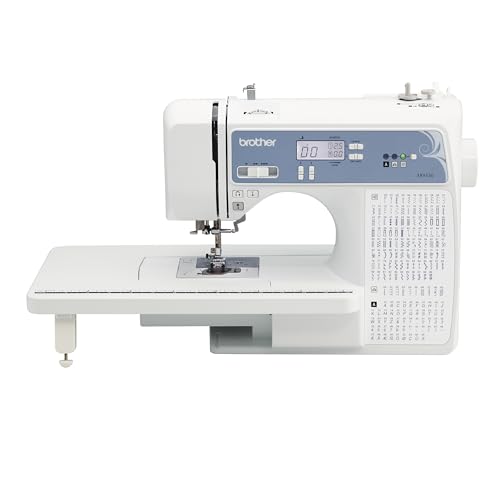
- 165 unique built-in stitches: The Brother XR9550 computerized machine includes...
- Automatic needle threader and drop-in top bobbin: The Brother fast needle threading system...
- Included accessories: Included with the XR9550 quilting and sewing machine is a protective...

If you are deciding between closely related Singer models, our Singer 4452 buying review gives you another model-specific starting point. Compare the current bundle and controls, rather than assuming that a higher model number guarantees a better result for your fabric.
- Confirm the exact machine: 4423 and 4523 are different models. Do not transfer a newer model’s speed-control claim to the older one.
- Read the bundle contents: verify which feet, cover, tools, bobbins, and instructions are actually supplied by the seller.
- Check the electrical version: choose the appropriate US-market machine and follow its labeled electrical requirements.
- Consider service: check warranty terms, proof-of-purchase requirements, return conditions, and local repair availability.
- Budget for project supplies: suitable needles, quality thread, and practice fabric belong in the initial cost.
- Arrange a realistic demonstration: if thick materials are the main reason for buying, ask to see your intended seam construction before relying on a generic capability claim.
Frequently Asked Questions
Is the Singer 4423 a good sewing machine for beginners?
It can be suitable for a beginner who wants mechanical controls and is willing to practice pedal control. The main consideration is the absence of a separate speed limiter. If very slow, capped operation is important, compare a machine with a dedicated speed-control slider before deciding.
Can the Singer 4423 sew jeans?
Consider it for appropriate garment-denim projects, with the correct needle, thread, and a tested seam setup. Do not assume every folded denim intersection will feed comfortably. Stop if the machine struggles, and evaluate a more suitable machine for frequent very dense seams.
Does the Singer 4423 have 23 stitches or 97 stitches?
Singer lists 23 built-in stitches and 97 stitch applications. Applications are techniques using the available stitches, not 97 separate stitch patterns. When comparing machines, distinguish actual stitch patterns from marketing counts of possible uses.
Can you use the Singer 4423 for embroidery?
It does not provide computerized hoop embroidery or load embroidery designs. Decorative sewing and carefully guided free-motion work are different processes. If your goal is automatic logos, names, or repeated hoop designs, choose equipment intended for embroidery.
Does the Singer 4423 need a walking foot?
Not for every project. Begin with the correct included foot for the operation. If the layers shift in a particular construction, investigate a compatible accessory and test it. A walking foot is a project aid, not a guaranteed fix for poor setup or material beyond the machine’s capacity.
Final Recommendation: Buy for the Work You Actually Do
The Singer Heavy Duty 4423 makes the most sense as a mechanical household machine for repairs, woven clothing, and occasional more demanding seams approached carefully. Its useful adjustments deserve attention, but its name should not outweigh your need for controlled speed, suitable feeding, and a workable sewing area.
Choose it because the controls and supported operations match your routine. Compare the XR9550 if computerized convenience would make sewing easier, and look beyond both when industrial materials or automatic embroidery are central to the job. Check the exact current listing before ordering; prices, bundles, and seller terms can change.