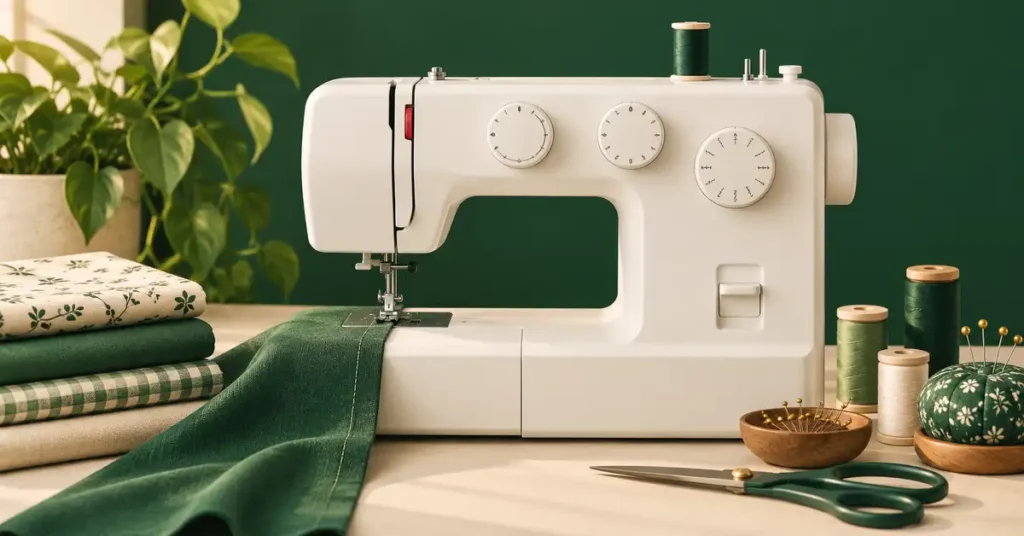
The bernette b35 is a mechanical sewing machine for buyers who prefer direct controls and practical household sewing over computerized menus. Its value depends on your projects, operating preferences, and the exact package available from the seller. This review explains the machine's role, buttonholes, accessory choices, fabric tests, and ownership checks so you can decide whether its straightforward approach fits your sewing room before paying for features you might overlook.
As an Amazon Associate, Practical Textile earns from qualifying purchases. Product links may earn us a commission.
Quick Answer
The bernette b35 deserves comparison if you want mechanical controls, a one-step buttonhole, and ordinary household utility sewing. Choose it after trying the controller and relevant fabric samples. It is not a computerized embroidery machine, and a higher presser-foot lift does not establish unlimited thickness capacity. Check the exact seller bundle; the AAWP listing here includes bonus bobbins.
This guide compares published specifications and project fit; it does not report hands-on testing.
Bernette B35 bundle

Check the machine and bonus-bobbin package against the exact listing.
Brother GX37
Compare operating feel and local support rather than stitch totals alone.
Brother CS5055
A different selection interface for buyers still choosing their preferred controls.
Who Should Consider the Bernette B35?

The b35 is relevant to someone who wants a conventional mechanical interface for ordinary home sewing. Its appeal is not that mechanical machines are automatically better than computerized models. The useful distinction is whether you prefer setting the stitch through physical controls and whether the available operations match the projects you intend to make.
Consider it for appropriate household repairs, woven garments, simple home accessories, and learning construction. Do not begin with an assumption that a straightforward interface means the machine requires no setup knowledge. Threading, needle selection, stitch settings, pressing, and fabric handling remain essential parts of producing a good result.
This is a research-based review using the documented model role and original buying analysis. It does not report hands-on testing or measured performance against the alternatives. The strongest next step is a demonstration on your own material, followed by a comparison of the exact package and service terms.
Features That Matter More Than the Marketing Summary
The b35’s useful specification is a small set of practical sewing functions organized through mechanical controls. It supplies a one-step buttonhole and manually operated thread-cutting and needle-threading aids. Those are distinct from the automatic cutting and computerized interface offered by some more elaborate machines.
Look at the actual stitch patterns in the manual and match them to your work. For clothing, straight sewing, suitable utility stitches, and a satisfactory buttonhole are more relevant than selecting a machine by the largest decorative count. For a project needing hoop embroidery or coverstitch, this model belongs to the wrong equipment category regardless of how many utility patterns it offers.
| Area | Practical interpretation | Buying check |
|---|---|---|
| Mechanical controls | Direct physical selection without a computerized menu | Try changing the stitch and returning to a previous setup |
| One-step buttonhole | An available closure operation for suitable garments | Test the complete interfaced fabric stack |
| Manual thread handling aids | Convenience without an automatic thread-cutting system | Learn the exact threading and cutting method |
| Domestic sewing role | Useful for appropriate household construction | Test bulky crossings rather than assuming capacity |
Mechanical Controls: A Preference to Test Personally
A dial-based machine can make the relationship between the selected setting and the control position easy to see. Some learners appreciate that directness; others find a screen and buttons clearer. Neither preference says anything about a person’s sewing ability. Try the interface yourself rather than relying on someone else’s claim that one category is simpler.
Set up a straight stitch, sew a sample, change to an appropriate utility stitch, and then return to the original setting. Note whether the control labels and manual make that sequence understandable. If you expect to repeat a particular project, keep a setup note rather than assuming you will remember every setting after putting the machine away.
Pay particular attention to low-speed starts and stopping near a mark. Maximum advertised speed does not establish how comfortable the controller will feel during careful work. The demonstration should include a curve and a short seam, not only fast stitching across a long, easy strip.
Evaluate Buttonholes on the Garment’s Actual Layers
A one-step buttonhole is useful, but the machine still needs an appropriate preparation and compatible setup. Use the actual fabric, interfacing, and button for a test. A buttonhole that looks good on a single flat scrap may behave differently near a seam or through an uneven placket.
Inspect the beginning, sides, and end before opening the test buttonhole. Confirm the opening suits the button and the garment’s overlap. Practice placement and spacing separately from the machine operation. The equipment can form the stitch without deciding where the closure belongs on the finished garment.
If your main work is shirtmaking, compare several samples rather than one successful attempt. Check whether you can repeat the result comfortably and whether the relevant foot handles your construction appropriately. Buttonhole convenience should be judged as part of a realistic workflow, not only as a feature label.
Accessories: Separate the Standard Kit From a Seller Bundle
The manufacturer describes a practical selection of feet for common operations. A seller may add bobbins or other extras, as in the bundle represented by the main AAWP box here. Check the exact listing before paying; a familiar model name does not guarantee that every seller supplies the same package or support.
Confirm that bonus bobbins are the correct type for the model. Similar appearance is not sufficient evidence of compatibility. The machine manual should control the bobbin and needle system you use. A large accessory count has little value if parts do not fit or if the projects do not require them.
For additional presser feet, match the exact model and attachment arrangement. Do not assume compatibility because a foot is described for a related brand or another mechanical machine. A correct fit includes safe needle clearance and an appropriate stitch for the attachment, not simply the ability to fasten it onto the shank.
Test Light, Ordinary, and Bulky Construction Separately
A fabric label such as cotton or denim covers a wide range of density, finish, and thickness. Prepare a sample from the actual material and reproduce the folded seam used in the project. The thickest crossing is often more informative than the smooth panel that makes up most of the garment.
For lighter fabrics, examine puckering, seam appearance, and how readily the layers move. For bulky crossings, check whether the foot can remain appropriately supported and the material advances normally. Stop if the machine strains, the needle deflects, or stitches repeatedly fail. Forcing the sample is not evidence of a successful demonstration.
A higher foot lift helps you position suitable work, but it does not establish an unlimited material range. Available clearance and reliable sewing capacity are different things. If your recurring projects involve dense reinforced assemblies, evaluate the appropriate equipment class before assuming a household machine will be sufficient.
Where It Fits in Garment Sewing
For an ordinary woven garment, the b35 should be evaluated as one part of the construction process. Accurate cutting, suitable seam allowances, appropriate needle and thread, and pressing all affect the finished result. The machine does not correct a poorly fitting pattern or an incorrect grain alignment.
Consider the closures and finishes in the patterns you use. A zipper operation may need a particular foot, and a discreet hem requires appropriate preparation and stitch selection. Test the intended operation on scrap before committing an expensive garment. Construction order can also make an operation easier to access.
For knit clothing, assess the elasticity required by the seam and choose an appropriate setup. A straight seam that looks neat when flat may restrict movement or break when stretched. A household utility stitch and a dedicated coverstitch finish are different formations. Decide whether your projects justify another machine rather than expecting one model to reproduce every ready-to-wear detail.
Mechanical Alternative: Compare the Brother GX37
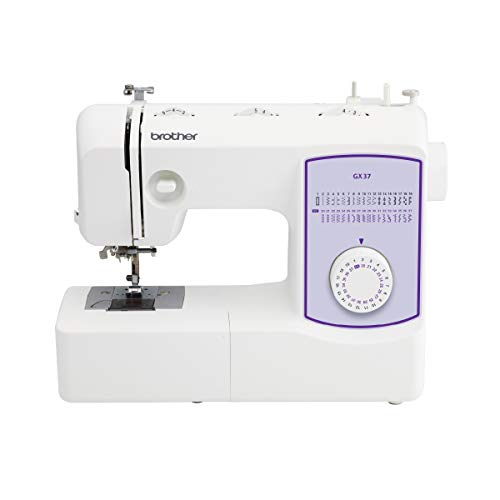

The Brother GX37 is an alternative for buyers who remain interested in mechanical operation but want to compare another control layout and support arrangement. Try both models on the same prepared sample where possible. The useful comparison concerns operation, stitch results, accessories, and service, rather than which machine has the larger pattern count.
Include threading, bobbin insertion, a controlled start, and a buttonhole in the demonstration. Ask about the exact return terms and warranty for the seller. A modest purchase-price difference may be less important than accessible instruction or a service provider who can support the machine.
Our Brother model comparison provides a wider picture of household options. Use it to distinguish a mechanical alternative from computerized sewing, embroidery-only equipment, and specialist straight-stitch machines.
Computerized Alternative: Compare the Brother CS5055
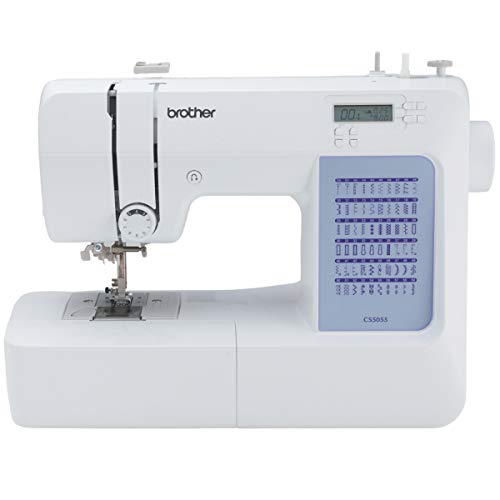
The CS5055 provides a different selection interface if you are uncertain about mechanical controls. It should not be assumed to have every computerized convenience: an independent speed slider, automatic thread cutter, and start/stop sewing button are not included on this model. Compare the actual controls rather than the electronic category alone.
For many household projects, either interface can be workable. Our computerized versus mechanical guide helps organize that decision. The beginner computerized guide is useful if learning the interface is part of your buying process.
If adjustable pressure and mechanical operation are priorities, also read our Singer 4423 review. Treat it as another model to test rather than assuming that a heavy-duty name establishes a superior result on every fabric.
Five Reasons to Consider the B35
- Mechanical controls for buyers who prefer a direct interface.
- A practical household role without an embroidery system to learn.
- One-step buttonhole capability for suitable garment work.
- A useful range of common accessory operations.
- A clear basis for comparing instruction, service, and seller packages.
Two Limitations
- It does not provide computerized automation or hoop embroidery.
- Domestic material limits and exact accessory compatibility still require checking.
A Practical Ownership Checklist
Before buying, identify where the machine will be serviced and whether an orientation lesson is available. Confirm warranty and return conditions for the exact sales channel. Do not assume that a bonus-accessory bundle carries the same support arrangement as a local dealer purchase.
Budget for suitable needles, thread, cutting tools, pressing equipment, lighting, and a stable surface. These are part of making the machine useful. A machine with a modest feature set can produce careful work when the surrounding process is sound, while a larger accessory collection cannot compensate for an unstable table or poorly prepared material.
Maintain the machine according to its manual, including the specified cleaning and lubrication guidance. Do not copy maintenance instructions from another model. If reliable setup no longer produces an acceptable stitch, seek model-specific support rather than continuing through repeated failure.
For a broader brand perspective, read our existing bernette sewing machine guide. If your interest is actually automatic decoration, the bernette b70 embroidery guide concerns a different machine role and should not be confused with the b35.
Frequently Asked Questions
Is the bernette b35 computerized?
No. It uses mechanical controls. Choose it because that operating style suits you, not because mechanical machines are automatically easier or more capable than every computerized alternative.
Can the b35 do automatic embroidery?
It is an ordinary sewing machine, not a hoop embroidery system. Utility and decorative stitch patterns should not be confused with importing and stitching an embroidery design on a hooped project.
Does every B35 listing include the same accessories?
Do not assume so. Sellers can offer different bundles, including bonus bobbins. Check the exact package and confirm that every extra is compatible with the model rather than relying only on the product title.
Is the b35 suitable for beginners?
It is worth comparing if a beginner prefers mechanical controls and has access to clear instruction. Try threading, slow sewing, and a simple project sample. No machine eliminates the need to practice setup and handling.
Should I choose the b35 over a computerized model?
Choose after testing both interfaces and the operations you need. Compare actual controls, sample results, service, and the complete purchase cost. The right interface is the one that supports your work comfortably.
Final Recommendation
The bernette b35 is a focused option for practical household sewing with mechanical controls. Compare it with a mechanical alternative and a modest computerized model before deciding. Let a representative seam sample, comfortable operation, and a clear support arrangement determine the purchase, and check the exact bundle before relying on the listed extras.