Baby Lock sewing machine reviews are most useful when they compare the controls and projects of specific models. The Joy and Jubilant offer two different routes into household sewing, while Baby Lock embroidery and longarm machines serve other purposes. This guide explains the mechanical and computerized choices, highlights buttonhole and cutting differences, and shows how to evaluate a dealer package before paying for features that will not improve your work.
As an Amazon Associate, Practical Textile earns from qualifying purchases. Product links may earn us a commission.
Quick Answer
Compare the Baby Lock Joy for mechanical simplicity and the Jubilant for electronic speed control and needle positioning. The Joy uses a four-step buttonhole; the Jubilant offers one-step styles. Neither should be confused with an embroidery machine. The Amazon boxes identify different-brand alternatives only, not purchase listings for Baby Lock models.
This guide compares published specifications and project fit; it does not report hands-on testing.
Brother GX37
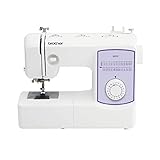
Compare this separate model with the Joy using your own samples.
Brother XR9550
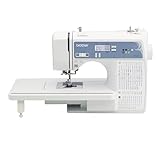
Check controls, accessories, and support against the Jubilant offer.
Juki HZL-F300
No verified Amazon offer is linked for this model; read the buying checks below.
Consider useful conveniences and optional accessory costs.
Baby Lock Joy vs Jubilant: The Useful Differences
| Feature | Joy BL25B | Jubilant BL80B |
|---|---|---|
| Operating style | Mechanical | Computerized |
| Total stitches | 19 | 80 |
| Buttonhole | Four-step | Eight one-step styles |
| Thread cutting | Manual | Manual |
| Main comparison | Direct controls for basic sewing | Speed control and needle-stop convenience |
Begin with the operating style you prefer. A mechanical dial gives a direct relationship between a setting and the stitch selected. Electronic controls can add useful conveniences without making the machine an automatic sewing system. Neither approach prepares the fabric, supports the project, or chooses every suitable setting on your behalf.
Baby Lock also sells machines for embroidery, serging, and longarm quilting. A positive review of one category should not decide a purchase in another. If your goal is importing a logo and stitching it in a hoop, a Joy or Jubilant review does not answer that requirement. If your goal is mending trousers, buying an embroidery-focused model may add cost and complexity you do not need.
Baby Lock Joy Review: A Mechanical Learning Option
The Joy BL25B offers 19 built-in stitches, a needle threader, a drop-in bobbin, and a free arm. Its four-step buttonhole requires the operator to carry out the sequence rather than treating it as a one-step automatic cycle. That can be learned, but it is an important distinction for someone planning repeated buttonholes on shirts or dresses.
The Joy’s appeal is a focused set of ordinary sewing functions. For simple woven projects, direct stitch selection may be enough. Ask a dealer to show a straight seam, reverse stitching, a zigzag, and the complete buttonhole sequence. Then perform the same steps yourself. Ease of watching a demonstration is different from ease of operating the machine.
Its thread cutter is manual. This means you use the cutter as a finishing aid; the machine does not automatically trim both threads at the end of every seam. Product descriptions using words such as convenient or built-in can obscure that distinction. If automatic cutting is a reason for upgrading, compare a model that explicitly provides that function.
For small garments and repairs, check whether the opening fits the free arm and whether the foot gives sufficient visibility. A machine marketed for beginners still needs the right needle, thread, and preparation. The most useful beginner feature may be a clear lesson on threading and fabric guidance rather than another decorative selection.
Five Joy advantages:
- Mechanical stitch selection provides a direct interface.
- The basic selection supports common household projects.
- A drop-in bobbin makes loading accessible.
- The free arm helps with suitably sized tubular work.
- A needle threader assists a repetitive setup task.
Two Joy limitations:
- The four-step buttonhole asks more operator involvement than a one-step sequence.
- Buyers wanting electronic speed limiting or automatic trimming need another comparison.
Baby Lock Jubilant Review: Convenience for Mixed Household Sewing
The Jubilant BL80B adds a computerized interface, 80 total stitches, eight one-step buttonhole styles, needle up/down, and variable speed control. These are practical differences for someone who repeatedly turns corners, joins small pieces, or wants to restrict sewing speed while learning. A larger stitch count alone is a less compelling upgrade reason.
Speed control can be useful during a short seam where a sudden fast start would be awkward. Test the slider together with the controller rather than assuming the control will feel the same as another machine. Needle positioning can help preserve a pivot point, but the operator still needs to stop and reposition the work appropriately.
The Jubilant’s cutter is also manual. Its sewing lettering and decorative options, where relevant to a chosen stitch, should not be mistaken for automatic hoop embroidery. Likewise, drop feed provides a setup option for suitable free-motion techniques; it does not make free-motion stitching automatic or remove the need for practice.
Walking-foot requirements deserve a separate check. Do not assume that a machine associated with quilting includes a walking foot or that any low-shank accessory is guaranteed to fit. Ask for the correct compatible part and whether it is included or optional. Price it before comparing packages if layered sewing is an important part of your work.
Five Jubilant advantages:
- Variable speed control helps manage sewing pace.
- Needle up/down assists pivoting and repositioning.
- One-step buttonhole styles suit varied clothing projects.
- The LCD makes selected settings visible.
- Its utility and decorative selection supports mixed household work.
Two Jubilant limitations:
- Thread cutting remains a manual operation.
- Optional accessories and working space still need checking against the intended projects.
Choose the Model Around Your Regular Sewing
For occasional mending, the Joy may supply the basic functions you need if its handling suits you. Try the same repair sequence you expect at home: position the fabric, begin near an edge, secure the seam, and stop precisely. Our pants repair guide helps separate simple seam repair from a project requiring more access or reinforcement.
For buttoned clothing, compare the buttonhole processes in a sample with the correct interfacing. The Joy’s four-step operation may be perfectly acceptable for occasional work, while the Jubilant’s one-step options can be more convenient for repeated use. Judge the opened buttonhole, not just the stitched outline on a stiff demonstration scrap.
For quilt piecing, evaluate seam guidance and controllable starts. Electronic needle positioning can be useful, but accurate cutting and pressing remain part of the result. For larger layered quilting, working space and a supported table become more important. Neither a high stitch count nor a small extension surface proves comfortable handling of a bulky quilt.
For stretch clothing, use a sample of the intended fabric and check seam recovery after stitching. A conventional sewing machine can perform some stretch construction, but a serger or coverstitch machine serves different operations. Our garment machine guide explains why the material and seam matter.
What a Good Dealer Package Should Explain
Ask what instruction is included and whether it covers your exact model. A short general sales demonstration is different from a lesson that lets you thread the machine, make a buttonhole, change a foot, and solve a basic setup problem. Find out how follow-up questions are handled and whether you must bring the machine to a particular location.
Separate the machine warranty from any optional service membership. Maintenance programs can have value, but their coverage, duration, exclusions, and participating locations need to match your circumstances. A program is less convenient if the nearest service point is too far away or if the work you expected is excluded.
Compare written accessory inventories. Ask about the correct bobbins, controller, cover, table, and feet. Generic photographs and phrases such as complete quilting package are not enough to identify contents. If a seller adds a lesson or accessory, record that alongside the cost so you can compare the offer fairly with another dealer.
Brother GX37: A Separate Mechanical Comparison
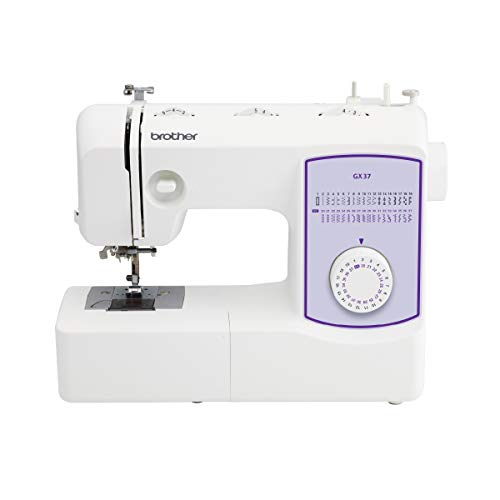

The GX37 is a different-brand mechanical option. Compare it with the Joy when direct controls and routine household sewing are the main goals. Differences in buttonhole operation, accessory package, and instruction may matter more than the number of available decorative stitches. Do not treat its Amazon box as a Baby Lock purchase link.
Our GX37 review explains that model. Also read the mechanical versus computerized comparison before paying for electronic conveniences. A clear preference for the interface you will actually use is a better reason to choose than a general claim that one operating style is always more durable.
XR9550 and Juki F300: Different Electronic Packages
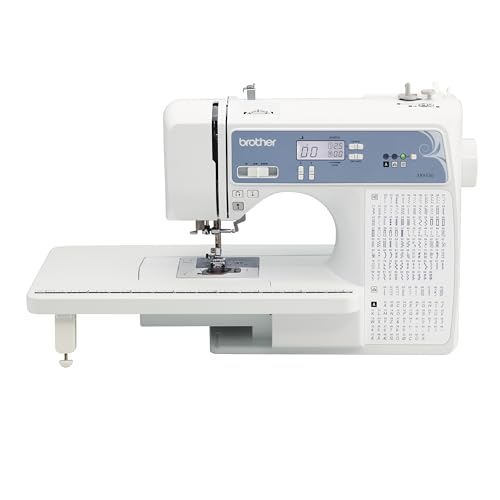
The XR9550 provides a speed slider and a table in its sewing and quilting package. Check its actual accessory inventory rather than assuming all quilting feet are equivalent. In particular, a spring-action quilting foot and walking foot serve different purposes. Our Brother range comparison separates the household categories.
The Juki F300 is another comparison when automatic cutting and other electronic conveniences are useful to your workflow. Its wide table and knee lifter are optional unless bundled, so calculate the complete station cost. An attractive bare-machine price does not include every accessory shown in a retailer’s lifestyle photograph.
Cross-brand shopping should solve an identified problem: easier speed control, useful instruction, appropriate work support, or a needed finishing function. For another approach, our Janome comparison adds context. Keep the same project samples across demonstrations to avoid comparing one well-prepared seam against another machine’s unsuitable setup.
Check the Machine During the Return Period
Complete a small project that uses the controls influencing your decision. Wind and load a bobbin, change stitches, make a buttonhole, and use the supplied feet according to their instructions. Check that the machine sits securely on your actual table and that the controller is comfortable from your normal chair.
Save a successful sample with its needle, thread, and setting notes. If a later seam becomes inconsistent, return to that known setup before changing several adjustments. Rethreading and checking needle condition can resolve problems that otherwise look like tension faults. A clear record also helps a dealer understand a persistent issue.
A Project Check Before You Commit
Ask a Baby Lock retailer to separate instruction, service membership, and machine warranty on the quote. Each can provide value, but they are different arrangements with different terms. Confirm which location provides support, whether appointments are required, and what happens if you move or purchase the machine used.
For the machine comparison itself, make a practical sample containing a basic seam, a turning point, and the appropriate buttonhole. Perform the steps yourself after the demonstration. A learner may find the Joy’s direct controls comfortable, while another may value the Jubilant’s pace and needle-position controls. The useful result is a setup you can repeat confidently, supported by clear instructions and a complete accessory inventory.
Frequently Asked Questions
Is Baby Lock Joy computerized?
No. Joy is a mechanical household sewing machine with direct stitch selection. Jubilant offers a computerized interface and additional control conveniences. Choose by the actual model rather than assuming every machine under the brand operates the same way.
Does Joy have a one-step buttonhole?
No. Joy uses a four-step buttonhole. Jubilant offers one-step styles. Ask to perform the full process on the intended fabric and interfacing so you can decide whether the difference matters for your garments.
Does the Jubilant automatically cut thread?
Its cutter is manual. A needle threader and a thread cutter are different features, and neither should be interpreted as automatic trimming unless the model’s specification explicitly identifies that function.
Can Joy or Jubilant embroider a downloaded logo?
They are sewing machines rather than computerized hoop embroidery machines. Decorative stitching and free-motion techniques are different from importing an embroidery file and having the machine position the hooped item.
Is buying from a dealer worth more than a lower online price?
It can be when the included instruction and service address your needs. Compare the written package, accessibility of support, return terms, and complete cost. Dealer involvement by itself does not establish identical coverage or value across every offer.
Final Recommendation
Compare Joy when a mechanical interface and basic household work are the priorities. Compare Jubilant when speed control, needle positioning, and one-step buttonholes are worth paying for. In either case, test your samples, identify included accessories, and choose a support arrangement you can actually use.