The best BERNINA sewing machine depends on the operations you repeat, the working space you need, and the exact model generation on offer. A compact sewing model, a quilting-focused station, and a sewing-and-embroidery system are different purchases. This guide compares those roles and explains demonstrations, accessories, stitch regulation, support, and ownership costs so you can choose a useful configuration rather than treating the entire brand as one interchangeable feature set.
As an Amazon Associate, Practical Textile earns from qualifying purchases. Product links may earn us a commission.
Quick Answer
Compare the current B335 for a compact household role, B570 QE for its quilting-oriented controls and feeding, and B790 PRO when its advanced sewing-and-embroidery workflow has a clear purpose. Confirm model generation and exact accessories. The Amazon boxes below are explicitly different-brand alternatives; they are not BERNINA listings.
This guide compares published specifications and project fit; it does not report hands-on testing.
Juki HZL-F600

Compare a household computerized role; this is not a BERNINA model.
Check Price on AmazonThis is a specific HZL-F600 bundle. Confirm the seller’s included equipment and warranty.
Janome Memory Craft 9850
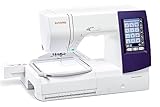
Evaluate a separate sewing-and-embroidery role with its own field and controls.
Choose the Equipment Role Before the Brand Level
A BERNINA purchase should answer a concrete sewing question. Do you need a compact general station, more working room for quilts, a particular control system, or genuine hoop embroidery? These requirements point to different models and configurations. A higher series number does not explain the benefit by itself.
List three projects you expect to repeat and the operation your current setup cannot handle comfortably. That limitation might involve access, feeding, support, or a specialist function. A larger decorative menu will not solve all of those problems, and a premium purchase does not replace fitting, cutting, or pressing.
This is a research-based brand comparison rather than a report of hands-on testing. Model generations and packages can change. Use current documentation for the exact unit and a demonstration of the work you actually plan before making the final choice.
| Model role | Candidate | Reason to compare | Key check |
|---|---|---|---|
| Compact household sewing | Current B335 | Touchscreen controls in a compact station | Exact generation and supplied equipment |
| Quilting-oriented sewing | B570 QE | Working room and model-specific feeding controls | BSR and accessory inclusion for the actual package |
| Advanced combination workflow | B790 PRO | Sewing, quilting, and compatible embroidery functions | Module, hoops, software, and setup requirements |
B335: Confirm the Generation, Then Evaluate the Compact Role
The current US B335 information describes a color touchscreen, speed slider, adjustable foot pressure, and approximately 160 millimeters of space to the right of the needle. Older B335 documentation shows a different interface. That makes generation identification an important buying step rather than a minor naming detail.
For ordinary household sewing, try stitch selection, setup, a controlled start, a corner, and a relevant buttonhole. A compact station can be useful without needing every function of a larger model. Check whether the available space and controls suit your usual garment or accessory work.
If buying used, do not apply the current model’s feature list to an older unit. Ask for the exact manual and demonstrate the actual machine. The model label, interface, parts, and package should agree before you compare price or assume that an accessory is included.
B570 QE: Evaluate the Quilting Features Separately
The B570 QE is a quilting-oriented model to compare when its controls and working arrangement address a recurring requirement. Current US information describes approximately 8.5 inches of space to the right of the needle and BERNINA Dual Feed. Those features should be evaluated on the intended fabric and technique.
Dual feed and stitch regulation are different functions. Feeding appropriate layers from above and below does not automatically regulate free-motion stitch length. If BSR is part of the reason for buying, confirm the exact machine compatibility, supplied foot or optional equipment, and the setup you will use.
Try a pieced unit and a layered sandwich as separate tests. Measure the piecing after pressing and inspect both faces of the sandwich. A good result in one stage does not establish comfort with a large quilt or the behavior of a different batting.
B790 PRO: Buy the Advanced Workflow for a Defined Purpose
The B790 PRO is the relevant category when advanced sewing and compatible embroidery functions have recurring value. Its documented working area and controls create a different comparison from a compact household machine. The purchase should follow the actual operations rather than an assumption that every experienced sewer needs the flagship role.
Confirm the exact embroidery module, hoops, software functions, and accessories in the offer. A machine being embroidery-capable does not establish every item included in a particular package. Identify the designs and materials you want to use and demonstrate their preparation, placement, transfer, and stitch-out.
Specialized positioning and quilting-design functions still require a suitable file and project setup. They do not remove the need for correct support, item access, or inspection after the work leaves the hoop. Compare the whole routine, including learning and mode changes, before deciding that the additional functions justify the investment.
BSR, Dual Feed and Ordinary Sewing Controls Are Different
BERNINA Stitch Regulator is a model-specific free-motion system used with the appropriate compatible setup. Do not describe it as a feature of every BERNINA or assume that a machine with quilting stitches includes it. Check the exact generation, accessories, and instructions.
Dual Feed addresses a different aspect of material movement. Needle up/down, foot lifting, thread cutting, and a speed slider each serve other operating tasks. Separating these functions makes a demonstration more useful because you can identify which one improves the work.
Ask the dealer to show each required operation and then let you repeat it. A feature becomes valuable when you can operate it appropriately. Do not infer an automatic result from the presence of several convenience controls on the same machine.
Accessories Need Exact Model Compatibility
Check the supplied feet, stitch plates, bobbins, and any required adapters for the exact unit. BERNINA model and generation information matters when selecting accessories. A similar-looking foot from another machine should not be assumed compatible.
If a demonstration uses an optional plate or foot, add that item to the quotation. A machine-only price and a complete configuration for your project are different purchases. Confirm needle clearance and permitted stitches whenever the instructions require those checks.
Do not confuse BERNINA with bernette simply because names or model numbers look related. Our bernette comparison concerns a separate product range and should not supply a BERNINA model’s features or purchase link.
Bring a Sample That Can Answer the Buying Question
Prepare a normal fabric sample and the most demanding appropriate construction you expect to repeat. Include lining, interfacing, batting, or folded allowances where relevant. Use the same test sequence when comparing candidate machines.
For clothing, include a curve and a closure. For quilting, separate piecing and layered work. For embroidery, inspect the compatible design on the intended material after support is finished as directed. A smooth prepared display sample does not answer every one of those questions.
Record settings, thread, needle, foot, and materials. Inspect repeated results rather than one ideal run. The goal is a usable routine that you understand, not merely a demonstration that an experienced operator can make an attractive sample.
Working Room Includes the Whole Station
The distance beside the needle is only one part of project handling. A quilt or large panel also needs support around the machine so its weight cannot drag against the work. Plan space to turn and reposition the actual item.
For embroidery, compare both field dimensions and the compatible hoop. A finished sleeve, bag, or pocket can be inaccessible even when a design fits the stated field. Check item access independently from the machine’s larger dimensions.
Try the chair, pedal, knee control where used, lighting, and storage arrangement. A substantial purchase should fit daily operation as well as the available floor plan. If the machine must be moved often, include a realistic handling and protection plan.
A Different-Brand General Sewing Comparison
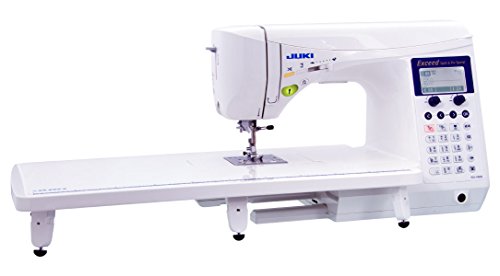
The Juki F600 is a different-brand household alternative to compare when ordinary utility sewing and operating conveniences are the main requirement. It is not a BERNINA substitute listing. Use the same material and operation checklist to compare actual controls and sample results.
A buyer can reasonably choose different equipment depending on preferred interface, local instruction, service, and the features that actually contribute. Our control-system guide and Brother comparison add other category perspectives.
A Different-Brand Sewing-and-Embroidery Comparison
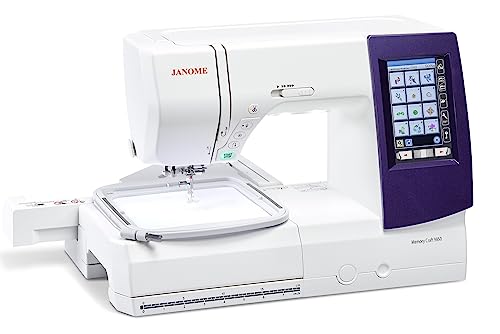
The Janome MC9850 provides another combination role when sewing and hoop embroidery both matter. It has its own field, file workflow, controls, and accessories. A lower or higher price does not make two combination machines functionally identical.
Our Janome combination guide and Janome overview help organize that comparison. Confirm the operations required rather than deciding from decorative counts or a broad brand reputation.
Five Useful Reasons to Compare the Range
- Distinct compact, quilting-oriented, and combination roles.
- Model-specific controls that can improve a defined workflow.
- Accessory configurations that can be matched to actual projects.
- A dealer demonstration route for suitable samples.
- A clear opportunity to compare instruction and service with the hardware.
Two Limits
- Features and accessory inclusion vary by model, generation, and package.
- Brand and price do not guarantee an appropriate result on every material.
Compare the Complete Ownership Arrangement
Ask about orientation, service location, parts access, warranty, return terms, and any software or accessory requirements. Get the exact configuration in writing. A substantial feature list does not identify the support route for a particular sales channel.
For a used machine, demonstrate the actual unit and verify its generation before assigning value. Confirm which modules, licenses, or accessories transfer with the sale. Missing equipment or service can change the apparent saving.
Follow the model’s maintenance guidance and keep a reference sample and setup record. Do not borrow another machine’s lubrication routine or make unfamiliar adjustments when a basic correct setup remains unreliable. Appropriate support is part of the purchase decision.
Before signing off the comparison, ask the dealer to identify the single feature that most directly addresses your stated limitation and demonstrate it on your sample. That keeps the recommendation connected to the work instead of turning the appointment into a tour of functions you may never use.
A Project Check Before You Commit
When comparing Bernina generations, put the exact model designation and production version at the top of each quote. Ask the dealer to identify which manual, firmware, feet, and optional modules apply to that unit. A familiar model number can conceal differences between an earlier machine and a current revision, particularly in used listings.
Try the controls yourself during a small project rather than watching only an experienced demonstration. Check threading, bobbin handling, speed control, pivots, and the finishing functions important to your work. Record the accessory inventory and instruction included with the price. If an embroidery module or other major option matters, require a demonstration of that exact configuration. Do not infer the complete package from a photograph or a nearby model’s specification.
Frequently Asked Questions
Which BERNINA is best for every sewer?
There is no universal choice. Compare the operations, working area, controls, accessories, and support needed by your projects. A compact household role and an advanced combination station solve different requirements.
Are all B335 generations identical?
No. Current and older documentation can describe different interfaces and features. Confirm the exact generation, manual, and unit before applying a specification list, especially when buying used.
Is Dual Feed the same as BSR?
No. They address different operations. Check model compatibility and exact accessory inclusion for each function rather than assuming that one quilting-related feature establishes the other.
Does embroidery-capable mean every accessory is included?
No. Confirm the module, hoops, file workflow, software functions, and supplied equipment in the exact package. Compatibility and inclusion are separate buying questions.
Are the Amazon alternatives BERNINA products?
No. They are explicitly named Juki and Janome comparisons with different specifications and roles. They should not be presented as exact purchase links for a BERNINA model.
Final Recommendation
Choose BERNINA equipment from a specific workflow and exact generation. Compare B335 for a compact household role, B570 QE for a relevant quilting configuration, and B790 PRO when its advanced combination functions earn their place. Prove the intended operation through samples and include accessories, instruction, workspace, and service in the final decision.