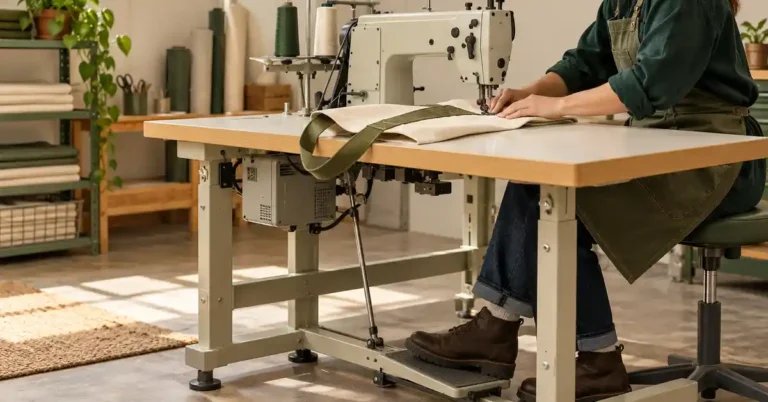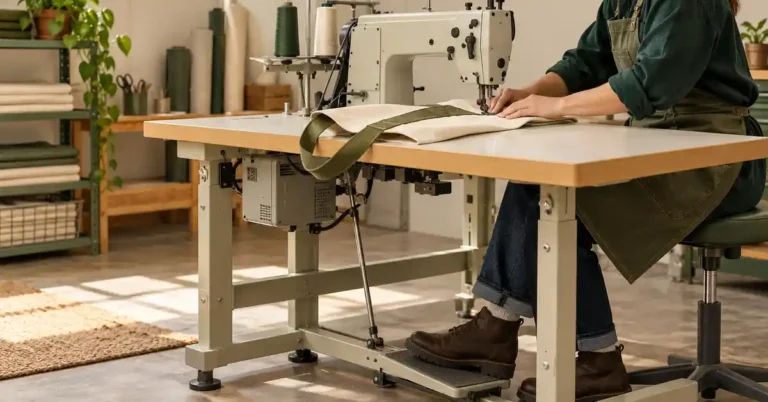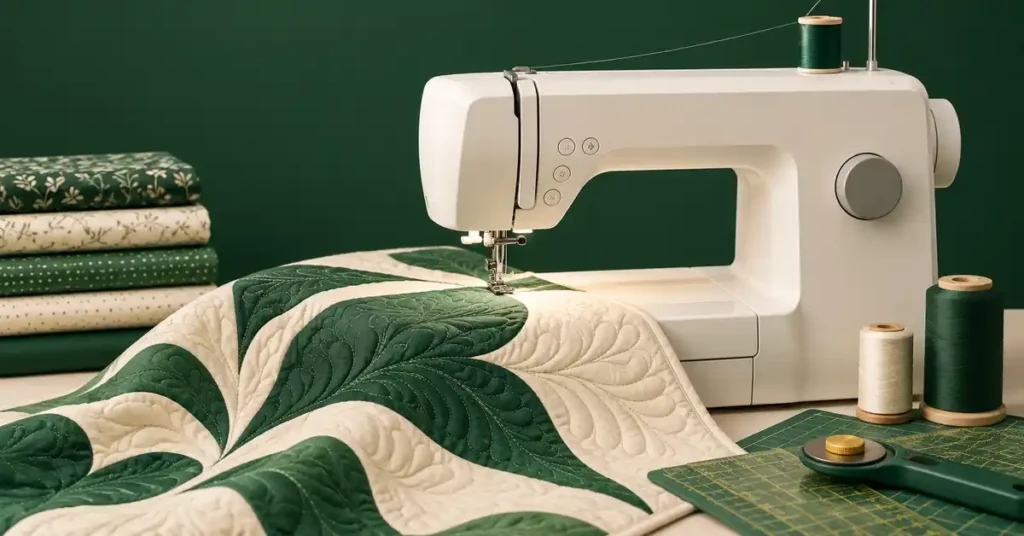
The best sewing machine for free-motion quilting helps you coordinate fabric movement with needle speed without fighting the work. Stitch count is a secondary issue because your hands guide the quilting path. This guide compares three different machine roles, explains why arm space and fabric support are separate considerations, and shows how to evaluate controls, feet, tension, and practice samples before choosing equipment for your next quilt sandwich at home.
As an Amazon Associate, Practical Textile earns from qualifying purchases. We may receive a commission through product links.
Quick Answer: Which Machine Should You Consider?
Investigate the Brother PQ1600S for a dedicated straight-stitch quilting station, the XR9550 for versatile computerized sewing with an appropriate free-motion setup, and the Singer 4423 if you deliberately prefer mechanical home sewing. None produces even free-motion stitches merely because the feed dogs can be lowered. Without a supported stitch-regulation system, coordinating machine speed and hand movement remains the operator’s task.
This is a feature-based buying guide, not a hands-on quilting comparison. We have not measured stitch consistency, vibration, or quilt-handling capacity.
Brother PQ1600S

A specialist to compare when another machine can handle zigzag and buttonholes.
Brother XR9550
Compare a general-purpose option with controlled speed and external fabric support.
Singer Heavy Duty 4423
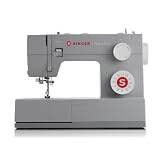
Assess the compatible quilting foot and controller feel before choosing.
What a Free-Motion Quilting Machine Needs to Do
In free-motion work, you move the quilt in the desired direction rather than asking the feed system to advance it in the normal straight-seam way. The machine must support the setup described in its instructions, with an appropriate compatible foot and feed arrangement. Lowering the feed dogs is only one part of preparing that process.
Stitch length depends on the relationship between needle cycling and your movement. Moving the fabric faster at the same needle speed makes a different stitch from moving slowly. A large decorative menu does not solve that coordination problem, and a general speed-control slider is not the same as stitch regulation.
Before buying, identify whether you need a machine for quilting only or for the whole sewing process. A dedicated straight-stitch model can serve quilting and piecing while leaving buttonholes and zigzag to another machine. A versatile domestic model may be easier to justify when it must also handle clothing and repairs.
Compare the Three Machine Roles
| Model | Role | Relevant buying consideration | Main limitation |
|---|---|---|---|
| PQ1600S | Dedicated straight stitching | Quilting-focused controls and working-space arrangement | No general zigzag or buttonhole menu. |
| XR9550 | Computerized general sewing | Speed limiting, included table, and listed quilting foot | Table support does not enlarge the arm opening. |
| 4423 | Mechanical general sewing | Drop-feed setup and compatible accessories | No separate maximum-speed slider. |
These are suitability categories rather than measured performance results. The right choice depends on the quilt size, workstation, controller feel, and other sewing jobs you need the machine to do. Ask to try a small quilt sandwich instead of judging the choice from stitches on a single flat fabric layer.
Brother PQ1600S Review: A Dedicated Quilting Station


The PQ1600S is relevant when straight stitching dominates the workload. Its published setup includes a knee lifter, thread cutter, feed adjustments, and an external table. Those controls address repeated actions in a sewing or quilting station rather than expanding the machine into many stitch types.
The most important buying distinction is the specialization. If your current general-purpose machine remains available, the PQ1600S can occupy a separate role. If it will be your only machine, list every operation you expect to perform. Zigzag, stretch-stitch options, and buttonholes need another suitable solution.
For free-motion work, examine the compatibility and operation of the intended foot, access to the work, and the way your hands rest on the sandwich. Try starting and stopping without an abrupt change in control. A machine’s high maximum speed is less relevant than whether you can comfortably coordinate it with your movement.
Reasons to shortlist it
- Your sewing room can support a dedicated straight-stitch station.
- You want controls that reduce repeated interruptions during sewing.
- You can evaluate the actual workspace with the quilt sizes you plan.
Reasons to compare another category
If you want one versatile machine for occasional quilting and frequent garment work, a specialist may complicate the setup. Do not buy it merely because fewer stitches sound more professional. Choose it because the focused workflow solves a real need.
Brother XR9550 Review: Quilting Beside Everyday Sewing
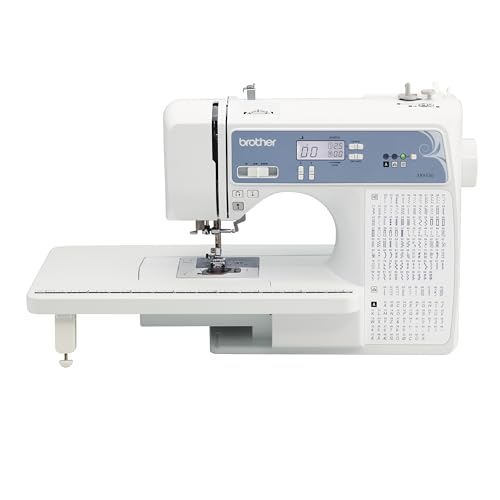
The XR9550 provides a general home-sewing approach with a speed-control slider, drop feed, and a listed spring-action quilting foot. Its included wide table can support material beside the needle. These are reasons to investigate it for a mixed sewing room rather than assuming the decorative stitch total is the relevant quilting feature.
The speed limit can help you choose a manageable operating range, but your hands still control movement and stitch spacing in free-motion work. Practice coordination on a small sandwich before increasing speed or attempting a complex motif. Consistent movement is a skill, not a guaranteed consequence of selecting a control position.
Check whether the available arm opening suits the work you intend to manage. The table prevents some external drag but does not provide more interior clearance. A small practice piece can feel easy while a larger quilt becomes difficult because its weight and bulk interact with the furniture and machine.
For other Brother roles, our Brother sewing machine guide distinguishes versatile home models from straight-stitch and embroidery categories. The right compromise depends on how often each role matters.
Singer Heavy Duty 4423 Review: A Mechanical Alternative
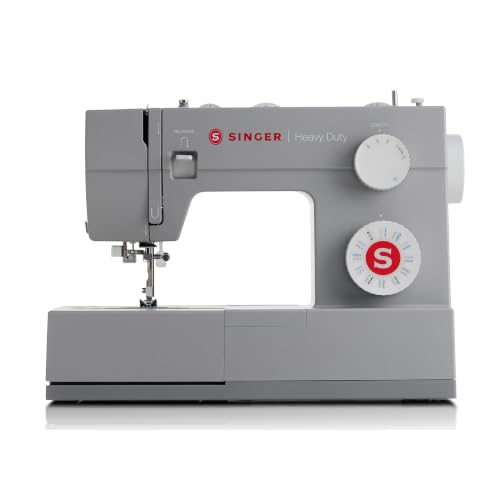
The 4423 can be considered when mechanical home sewing is the preference and the instructions support the intended free-motion setup. Verify a compatible foot and how it is installed. Do not assume that the standard accessory kit includes every quilting aid you want.
The lack of a separate speed-limit slider is a meaningful comparison for this technique. Try the pedal and assess whether maintaining your chosen speed feels comfortable. A fast advertised maximum does not determine whether slow coordinated movement is easy for a particular operator.
Heavy Duty branding does not enlarge the arm space or regulate the stitch length while you move the quilt. For an occasional quilter who also makes household repairs, a general machine may be sufficient. For a dedicated quilting station, compare how much of the budget is solving the actual quilting requirements.
Our Singer 4423 review discusses its broader project fit. Our Singer 4452 review provides another reference for checking accessory packages rather than assuming related models ship with identical equipment.
Arm Space, External Support, and Operator Comfort
Measure the real workstation
Interior clearance and outside support solve different problems. Space to the right of the needle determines where quilt bulk must pass. The table around the machine supports the remaining weight. Improving one does not automatically solve the other.
Arrange the quilt so it can move in every intended direction without catching on a chair, table edge, wall, or loose item. A small snag can interrupt hand movement and change stitch length even when the machine operates normally. Keep the work supported rather than pulling against the needle to overcome drag.
Evaluate posture and visibility
Check chair height, foot-controller position, shoulder comfort, and your view of the needle. A technically capable machine can still feel awkward if the table forces your arms upward or makes you lean forward. Plan furniture and lighting as part of the quilting setup.
Take practice intervals seriously. Fatigue can change grip and movement before you notice it. Stop periodically to reposition the quilt and assess the work. More arm space may help a large project, but it does not remove the need for an organized and comfortable workspace.
Practice Samples and Troubleshooting
Use a representative quilt sandwich
Practice with the top fabric, batting type, and backing you intend to use. A single fabric layer cannot show how that sandwich behaves. Baste and prepare the sample appropriately, and begin with simple paths that let you coordinate movement before attempting dense decorative motifs.
Inspect both sides. Look at stitch spacing, loose loops, puckering, and how easily the sample moves. Keep the test piece with the needle, thread, settings, and batting information. A useful sample is a setup you can reproduce, not simply a scrap that looked acceptable once.
Separate tension from movement problems
Uneven stitch length can come from changing hand speed relative to needle speed. Loose loops may need thread-path, bobbin, needle, or tension investigation. Do not change every setting at once or assume that all irregularities share the same cause.
Rethread according to the manual, inspect the needle, and check the intended foot and feed setup before making broader adjustments. If material becomes trapped or a needle repeatedly breaks, stop. Disconnect power as directed before clearing the area, and seek qualified help for persistent mechanical trouble.
Do not buy an accessory as a universal cure
A compatible free-motion foot is part of the setup, but the word quilting on an accessory package does not establish that it serves the technique you intend. A walking foot and a spring-action free-motion foot have different roles. Check the exact part and model compatibility before ordering.
For other machine categories, our Janome sewing comparison helps organize mechanical and computerized choices. Our Janome 2030DC guide gives another model-specific reference to assess against the controls you need.
Advantages and Tradeoffs of This Shortlist
Useful strengths
- It separates a dedicated straight-stitch station from general sewing.
- Each option has a documented route to a relevant quilting setup.
- The choices let you compare mechanical and computerized control preferences.
- General-purpose options retain utility functions for other household projects.
- The specialist can be evaluated beside an existing versatile machine.
Important tradeoffs
- None should be assumed to regulate free-motion stitch length automatically.
- Large quilts still need a suitable workspace and a handling method you can manage.
These strengths describe the roles in the shortlist rather than tested superiority over every alternative. If your main frustration is moving a large sandwich through a small opening, compare machines with genuinely different working space before buying another model that changes only the controls.
Buying Checklist for Free-Motion Quilting
- Confirm the manufacturer’s supported free-motion setup for the exact model.
- Verify the compatible foot, feed arrangement, and included accessories.
- Try a representative sandwich and inspect the finished sample.
- Compare interior arm clearance with external fabric support separately.
- Assess pedal feel and any speed-limiting controls without assuming stitch regulation.
- Check service access, seller terms, condition, and electrical suitability.
- Budget for support furniture, lighting, suitable needles, and practice materials.
For a used machine, request the relevant demonstration rather than an empty-machine speed test. Confirm the controller and essential accessories are present. Compare the total cost of making the station usable with the cost of another supported offer.
Frequently Asked Questions
Do I need a special machine for free-motion quilting?
You need a model that supports the appropriate setup, a compatible foot, and a workable way to move the sandwich. A dedicated quilting station may help, but the machine category should match quilt size, other sewing needs, and your workspace.
Does lowering the feed dogs make stitches even?
No. In ordinary free-motion work without a supported regulating system, you coordinate hand movement with needle speed. Lowering the feed changes how the material is moved; it does not automatically regulate stitch length.
Is a speed-control slider the same as stitch regulation?
No. A speed limit manages operating speed, while stitch regulation concerns the relationship between movement and stitch formation. Do not assume a general computerized sewing machine has regulation because it offers a slider.
Will a large extension table make a machine suitable for large quilts?
It can improve external support but does not enlarge the arm opening. Quilt bulk, available clearance, furniture, and the handling method all matter. Test a realistic arrangement before buying around the table alone.
Can a straight-stitch machine be used for other sewing?
It can perform suitable straight-stitch tasks, but buttonholes, zigzag, and other operations require another method or machine. Consider what your whole project needs before replacing a versatile machine with a specialist.
Final Recommendation
Compare the PQ1600S when a dedicated straight-stitch station makes sense, the XR9550 when versatility and speed limitation are priorities, and the 4423 when mechanical control is a deliberate preference. Verify the intended foot and setup for each exact offer.
Choose around the sandwich, space, controls, and support you will actually use. A successful representative sample and a comfortable workstation are more useful buying evidence than a long stitch list or a maximum-speed headline.