The Husqvarna Viking Onyx 30 deserves a model-specific review because nearby Onyx machines and mechanical Viking models do not share every feature. Electronic speed control, needle positioning, cutting, and programming can be useful when they match repeated sewing tasks. This guide explains how to evaluate those conveniences, compare complete offers, and connect the machine to garment construction instead of paying for a feature count that will not improve your work.
As an Amazon Associate, Practical Textile earns from qualifying purchases. Product links may earn us a commission.
Quick Answer
Compare Onyx 30 when its documented computerized controls and finishing functions solve recurring tasks in your sewing. Confirm the exact model and package rather than borrowing Onyx 25 or Emerald specifications. The Amazon offers below identify separate-brand alternatives; they are not Onyx listings or relabeled product images.
This guide compares published specifications and project fit; it does not report hands-on testing.
Singer Quantum Stylist 9960

Compare the actual controls and supplied equipment.
Check Price on AmazonThis offer bundles the Singer 9960 with a SteamCraft Plus 2.0 iron. Other 9960 offers may not include the iron.
Juki HZL-F300
No verified Amazon offer is linked for this model; read the buying checks below.
Include optional accessories in a complete-cost calculation.
What to Evaluate on the Exact Onyx 30
| Function | Useful demonstration |
|---|---|
| Speed control | Repeated short seams at a comfortable pace |
| Needle positioning | A marked corner and controlled pivot |
| Thread cutting | The documented finishing sequence |
| Programming | The exact repeated selection you intend to use |
| Stitch counts | Separate ordinary patterns from totals including fonts |
Electronic Convenience Should Change a Repeated Task
The Onyx 30 belongs in a computerized household comparison. Its pace and needle-position controls can be useful for short seams, curves, and planned turning points. The buyer should try them independently rather than assume that a long salesperson demonstration proves the interface will be comfortable at home.
Make a small sample with several starts, stops, and changes in direction. Then switch to another appropriate stitch and return. The useful result is a sequence you can repeat confidently. If most projects are long straightforward seams, a control that saves repeated setup elsewhere may be less valuable to you.
Cutting and Programming Are Separate Functions
Automatic cutting can reduce a finishing motion, but it does not decide whether the seam must be secured or how thread tails should appear on a particular project. Ask the seller to show the complete operation and inspect the finished sample away from the machine.
Programmed selections deserve an exact example. A stored decorative sequence is different from digitizing a logo, and ordinary sewing lettering is different from computerized hoop embroidery. If embroidery is the requirement, compare a documented embroidery model rather than assuming programming means automatic design positioning.
Keep counts understandable. Some descriptions combine ordinary stitches and fonts differently. Identify which selections actually support your projects instead of comparing the largest totals without checking what is being counted.
Use Garment Samples to Judge the Purchase
Bring a curve, a supported closure, and an edge from the planned garment. Test the fabric with its lining or interfacing where relevant. A stiff demonstration scrap can hide the handling difficulty of a soft skirt or blouse material.
Inspect the result after pressing and normal handling. Check whether the seam lies flat, whether the closure is usable, and whether the settings can be reproduced. Fabric choice and preparation can change the outcome more than another decorative selection on the machine.
Five Advantages and Two Limitations
- Pace control supports deliberate sewing.
- Needle positioning assists planned pivots.
- Automatic finishing functions can reduce repeated motions.
- Electronic selection makes settings visible.
- Programming can serve suitable repeated sequences.
Two boundaries remain: these functions do not turn ordinary sewing into automatic hoop embroidery, and household feed and space do not establish unlimited heavy-material capacity. Keep the intended operation explicit.
Compare Complete Electronic Packages
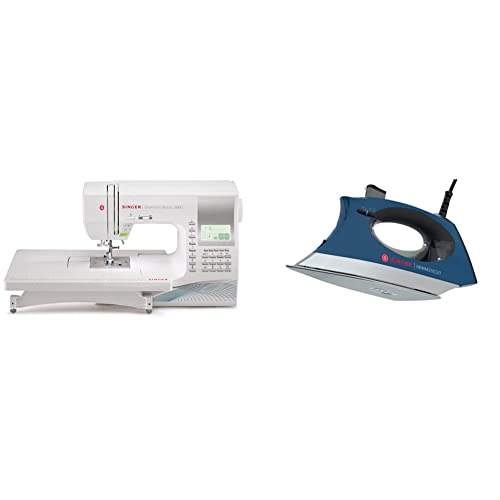
The 9960 and F300 are separate products with their own interfaces and accessories. Compare them with Onyx 30 using the same samples and a written inventory. A bare machine and a package with table, feet, and instruction are not equivalent until missing items are priced.
For another approach, see the Janome comparison and Brother range. Our operating-style guide explains the mechanical alternative. Use the skirt guide and garment machine guide to define a useful test.
Project Preparation and a Repeatable Sewing Setup
Skirt construction provides a useful test of the Onyx workflow because it includes shaping, waist preparation, closures, and finishing. These checks help turn an electronic-feature comparison into a project sequence you can actually sample.
Plan a mini skirt with movement in mind
A mini skirt needs a sitting and movement check as well as a standing length check. The waist position, body shape, and fabric recovery affect how it behaves. Choose the intended coverage and comfort during fitting rather than assuming a fixed measurement from a generic tutorial suits every wearer.
Check whether the pattern is drafted for stretch or woven material. Substituting a stable fabric into a close-fitting stretch design can change dressing access and movement. A zipper or lining does not automatically correct that mismatch. Use the required fabric behavior or make a deliberate tested pattern adaptation.
Consider the closure and hem bulk. A deep hem or heavy facing can change the way a short skirt hangs. Sample the finish and inspect it while worn. A small garment does not necessarily have simpler finishing; the proportions can make an uneven edge or bulky detail more noticeable.
Understand pleated-skirt volume
Pleats use extra fabric folded into a controlled arrangement. Their depth, number, direction, and release point affect both the waist measurement and the appearance below it. A box pleat and a knife-pleat arrangement are not interchangeable layouts. Follow the actual pattern marks rather than distributing extra fabric by eye.
As an illustrative arithmetic check, a section that occupies two inches at the seam line but uses additional fabric folded behind it needs more than two inches of cut width. The exact amount depends on the pleat construction. Calculate from the pattern’s fold and placement lines, including seam allowances, rather than multiplying a finished measurement by an assumed universal ratio.
Test whether the fabric holds the intended fold or falls softly after release. Pressing, fiber, weave, weight, and care all influence that behavior. A sharply pleated photograph does not prove that a very different fabric will retain the same appearance. If maintaining a crisp fold is essential, check the material and care requirements before cutting.
Choose waist construction and closures
A shaped waistband, facing, elastic casing, and exposed elastic create different fitting and assembly tasks. Check whether the skirt must pull on over the hips or has a separate opening. An elastic band can stretch while the attached woven fabric remains too small to pass over the widest dressing point.
For a zipper, choose the method and compatible foot specified by the instructions. Sample the opening and check needle clearance before sewing. For button or hook arrangements, test the complete supported waistband thickness. A closure should be assessed after interfacing and finishing are present, not only on an unfinished fabric edge.
If changing the waist method, account for the pattern shape and required access. Replacing a fitted waistband with elastic is not always a simple measurement change. It can require more fabric circumference and a different approach to darts or pleats. Make the adaptation on paper and in a sample before cutting the final cloth.
Read fabric quantity and layout carefully
Check the pattern’s quantity for your size and the usable width of the actual fabric. Directional prints, stripes, checks, nap, and large motifs can require a different layout or additional material. A listed quantity for plain fabric should not be treated as a guarantee that every print can be matched within the same amount.
Prepare the fabric as its care instructions and project plan require. Keep grainlines consistent and label similar panels. When cutting a pleated or multi-panel skirt, preserve all fold, placement, and balance marks. A missing pleat reference can be difficult to reconstruct after the paper is removed and the cut pieces are stacked.
For a first version, a stable manageable fabric can make it easier to evaluate fit and seam accuracy. If the final skirt relies on very fluid or slippery material, make a representative test of the relevant seams and hem as well. A firm fitting sample can answer shape questions without proving every detail of the final drape.
Find and verify a downloadable pattern
Use an authorized designer resource and read the actual files and instructions. Mood’s free-pattern library includes a skirt category that can be a starting point for browsing. Check the current style, size range, fabric recommendation, and level of instruction rather than assuming every listed skirt answers the same project need.
Print the scale test first and use the specified settings. Confirm whether seam allowances are included and how pages or size layers should be handled. A free file is useful when its scale and information are correct; an incomplete repost or incorrectly printed copy can create avoidable fitting problems.
Fit, finish, and record the result
Baste or make intermediate fit checks before enclosing the waistband and committing to the final hem. Test the closure, sit, walk, and examine the side and back. Look for pulling, an uneven waist position, or a hem that changes because of a fit problem. Correct the cause where possible rather than trimming the bottom repeatedly.
Keep a short record of the pattern version, size, adjustments, fabric, and successful finish. A future skirt can begin from that information while still being sampled for a different material. Separate a length change from a fit change so the next version does not accidentally lose an adjustment that made the first one comfortable.
Make a movement checklist for the chosen skirt
Write the intended waist position, wearing length, shoes, underlayers, and walking access beside the pattern. For a maxi, check stride and stairs in the fitting arrangement. For a mini, include sitting and reaching. For pleats, examine how the release and fold arrangement move rather than judging only the pressed flat appearance.
If the hem is uneven, first check whether the waist and main fit are correct. Trimming the bottom can hide a hanging problem temporarily while losing length. A change at the waist or side seam may alter the way the skirt falls, so establish those areas before the final leveling step.
Keep the cutting allowance and the finished hem depth recorded separately. A change from a narrow hem to a deep facing uses different material and can change drape. Sample the new finish in the actual cloth rather than assuming it is only a decorative substitution.
For the next version, compare one planned change at a time. A successful A-line skirt can be a useful reference, but adding length, changing fabric, and replacing the waistband simultaneously creates a new fitting and construction problem rather than a simple repeat.
Check the Delivered Machine Against the Offer
Match the model label, supplied controller, feet, cover, and other accessories with the written package. Obtain the matching manual and confirm the US electrical configuration. If buying used, do not use a nearby model’s product page as proof of the offered machine’s controls.
During the acceptance period, complete a modest garment or craft project using the features that justified the purchase. Keep the settings and successful sample together. If a problem appears later, begin with that known setup and check threading and needle condition before changing multiple adjustments.
Frequently Asked Questions
Are Onyx 25 and Onyx 30 interchangeable?
No. Compare the exact model and documented features. A nearby number or similar casing does not establish the same controls, accessories, or package.
Does programming mean automatic embroidery?
No. Sewing sequences and lettering differ from importing a stitch design and automatically moving a hooped item. Choose a documented embroidery category when that is the requirement.
Will automatic cutting secure every seam?
Cutting and securing are different parts of the process. Follow the model and project instructions and inspect the sample to confirm the finish required for your construction.
Who should compare Onyx 30?
A sewer who can identify useful electronic conveniences in recurring work. Test the controls and compare a complete supported offer instead of upgrading solely for a larger selection total.
What should instruction cover?
Routine setup, adjustments, pace control, needle positioning, cutting, any programming used, and a complete sample. A general lesson on another model does not establish the exact operating sequence.
Final Recommendation
Compare Onyx 30 for useful computerized household sewing, with its exact controls demonstrated on real projects. Confirm the model, package, instruction, and complete cost. Choose it because the workflow fits you, not because a broad feature description suggests capabilities from another machine category.