Pfaff and Elna sewing machine reviews become useful when they identify the exact models instead of assigning one reputation to an entire brand. The Pfaff ambition 620 and Elna eXperience 550 provide different computerized sewing packages. This comparison explains their feeding systems, working space, finishing controls, and accessories, then shows how to evaluate each with the same project samples before choosing a machine and support arrangement for your sewing room.
As an Amazon Associate, Practical Textile earns from qualifying purchases. Product links may earn us a commission.
Quick Answer
Compare the Pfaff ambition 620 when integrated IDT feeding, working space, and automatic thread snipping address your needs. Compare the Elna eXperience 550 for its computerized household controls and included table package. These are specific model comparisons, not a claim that every Pfaff or Elna is alike. Amazon boxes below show different-brand alternatives only.
This guide compares published specifications and project fit; it does not report hands-on testing.
Juki HZL-F300
No verified Amazon offer is linked for this model; read the buying checks below.
Compare finishing controls and complete accessory cost.
Singer Quantum Stylist 9960

Evaluate useful functions instead of the largest stitch total.
Check Price on AmazonThis offer bundles the Singer 9960 with a SteamCraft Plus 2.0 iron. Other 9960 offers may not include the iron.
Brother XR9550
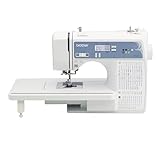
Check the complete sewing and quilting offer.
The Two Models at a Glance
| Decision point | Pfaff ambition 620 | Elna eXperience 550 |
|---|---|---|
| Operating category | Computerized sewing | Computerized sewing |
| Published stitches | 136 | 50 |
| Needle-to-tower space | 200 mm | 170 mm |
| Notable distinction | Original IDT integrated dual feed and auto snip | Included extension table and seven feet |
| Thread trimming | Automatic snip function | No automatic thread cutter in the 550 specification |
These specifications define questions to test rather than a universal winner. More space may help with a bulky project, while an included table can make an otherwise incomplete station usable. The important distinction is that the table supports work outside the machine; the needle-to-tower measurement describes the space through which part of the project must pass.
Pfaff Sewing Machine Review: ambition 620
The ambition 620 offers Pfaff’s Original IDT system, a speed slider, needle up/down, and automatic thread snipping. Its 136 stitches include options beyond basic seams, but the feeding and finishing controls are a more useful reason to investigate this model if you already know what slows down your sewing.
IDT is an integrated dual-feed system used with compatible feet. It should not be confused with industrial compound or unison feed. An integrated household feed aid can help manage particular materials, but it does not establish capacity for any thickness of leather, upholstery stack, or production thread. Test the construction you intend to sew instead of translating a feed-system name into a universal heavy-duty claim.
Compatibility matters when changing feet. Ask the dealer to identify which supplied and optional feet work with IDT and demonstrate engagement and disengagement. A buyer who uses zippers, narrow topstitching, and decorative stitches needs to understand how the feed setup changes across those operations. An attractive accessory bundle is less useful if the required foot is incompatible or absent.
The 200-millimeter needle-to-tower space is a concrete comparison point. It may provide more room for certain projects than the Elna 550’s 170 millimeters, but both remain household sewing configurations. A bulky quilt still needs support and planned repositioning. Measuring space does not predict how comfortably a particular person will manage a large layered project.
Automatic snipping can save repeated finishing motions, particularly when sewing many short seams. Learn the correct finishing sequence and check the sample after trimming. A cutter does not choose whether a seam needs securing or prevent every loose tail from requiring attention. Convenience is valuable when it removes a task you actually repeat.
Five ambition 620 advantages:
- Integrated IDT offers a model-specific feeding option.
- Speed limiting supports controlled starts and detailed work.
- Needle up/down assists pivoting.
- Automatic snipping reduces a repetitive finishing task.
- The published 200-millimeter working space is worth comparing for project handling.
Two limitations:
- IDT does not replace an industrial compound-feed machine for every heavy operation.
- Compatible feet, instruction, and complete dealer-package costs need careful checking.
Elna Sewing Machine Review: eXperience 550
The eXperience 550 is a computerized sewing machine with 50 stitches, a speed slider, needle positioning, and an automatic lock-stitch function. Elna lists an extension table and seven feet in its standard package. The exact 550 designation matters because nearby eXperience models have different features. Do not copy the cutter or stitch count from a 560 or 570 into a 550 review.
The 550 specification does not include an automatic thread cutter. Automatic lock stitch and automatic thread cutting are separate functions. A locking operation helps secure a stitch sequence; it does not mean the machine trims both threads afterward. This is an important distinction for someone comparing it with the ambition 620’s automatic snip feature.
Elna lists 170 millimeters of sewing space and manual presser-foot pressure adjustment. The included table helps support material, while pressure adjustment offers another way to tune fabric handling. Neither control replaces suitable preparation. A slippery lining and a thick quilt sandwich should be evaluated separately rather than treated as one generic difficult-fabric test.
The standard foot selection includes tools for ordinary seams, zippers, blind hems, buttonholes, and quarter-inch work. Confirm that the particular seller supplies the stated package. The right accessories can make a machine useful immediately, but an inventory should be checked against operations rather than added up as a count of free extras.
A computerized interface may suit someone who likes visible settings and direct function buttons. Try selecting a basic stitch, adjusting length, and returning to a familiar setting. The ease of those routine actions is more useful than watching an elaborate decorative demonstration that does not resemble your sewing.
Five eXperience 550 advantages:
- Electronic speed control supports varied sewing pace.
- Needle positioning helps with corners and appliqué.
- A lock-stitch function adds a useful finishing option.
- The listed extension table supports work beside the needle.
- Manual foot-pressure adjustment adds fabric-handling control.
Two limitations:
- The 550 does not provide the automatic cutter found on some nearby models.
- Its 170-millimeter working space may constrain bulky projects despite the external table.
Compare Them for Garments and Fine Fabrics
Bring the fabric used in a real garment, including its interfacing or lining where relevant. Test a seam near an edge, a curve, and a buttonhole. A machine demonstrated on firm cotton may behave differently on a soft blouse fabric. Judge the finished sample after removing it from the machine rather than relying on how smooth it appeared under the foot.
For matched stripes or checks, mark reference points on both layers and inspect alignment after sewing. This is a more informative feed comparison than a claim that one machine never slips. Different fabrics, presser feet, basting methods, and pressure settings can change the result. Ask the seller to explain the setup that produced the sample.
Our garment machine guide helps identify the relevant operations. If a project includes stretchy necklines or hems, test recovery as well as appearance. Neither integrated dual feed nor a computerized display makes every knit seam suitable without the correct stitch and preparation.
Compare Them for Piecing and Quilting
For piecing, stitch several strips, press them, and measure the joined result. This tests seam guidance with your own thread and fabric. An advertised quarter-inch foot is helpful, but the finished block measurement decides whether the setup works for the pattern. Accurate cutting and pressing remain part of that result.
For layered quilting, use a representative sandwich and test handling in more than one direction. Keep its weight supported. Observe whether the table suits your chair and arm position, and whether the project fits comfortably to the right of the needle. A working-space advantage on paper should still be evaluated through actual movement.
For free-motion techniques, follow the specific model and foot instructions. Needle positioning is useful, but stitch consistency depends on operator coordination. Our quilting machine guide separates piecing, layered feeding, and room for the project. Do not buy either model expecting automatic quilt-frame movement.
Juki F300: A Different-Brand Control Comparison
The F300 offers box feed, automatic cutting, speed control, and needle positioning. Compare its complete station if these features address your work. Its table and knee lifter are optional unless a seller bundles them, so a bare-machine price is not directly comparable with a package already containing the work support you need.
A feed mechanism should be judged on the same samples across machines. Avoid comparing a carefully stabilized fabric on one model with an unsupported sample on another. Make notes on the needle, thread, foot, pressure, and sewing speed used. Those details help explain the outcome and make the comparison reproducible.
Singer 9960: More Functions Require a Purpose
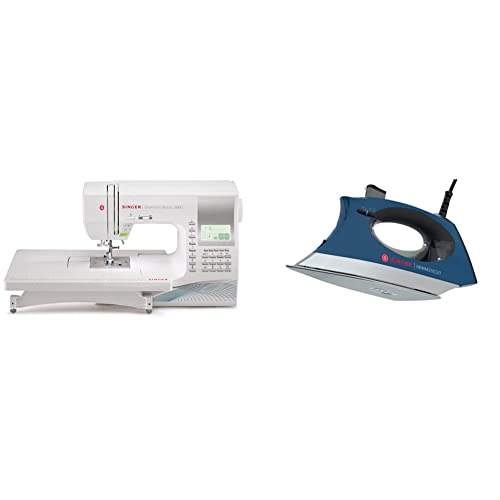
The Quantum Stylist 9960 provides a broad stitch selection and electronic conveniences. It is worth comparing when its actual controls and package fit your tasks. A larger stitch total should not outweigh an interface you find awkward or a support arrangement you cannot use. Ask to select and adjust the few stitches you expect to use most often.
For a mechanical alternative perspective, see the Singer 4423 review. Some buyers prefer direct dials even after trying electronic machines. Others find speed limiting and needle positioning worth the extra complexity. The comparison should reflect your own operating preference, not a general rule about which category is superior.
Brother XR9550: Compare the Whole Package
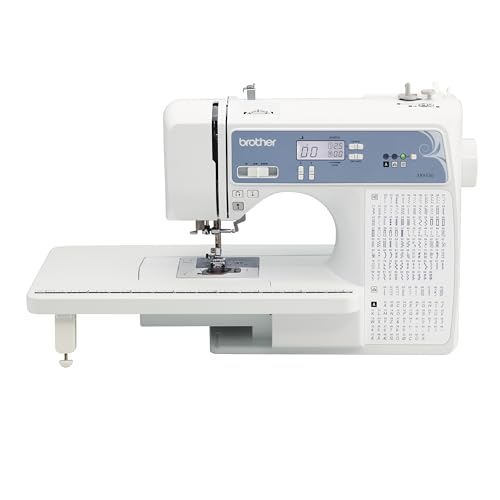

The XR9550 combines computerized sewing, speed control, and a table package. It is a separate model rather than a direct substitute for IDT. Check included feet carefully and distinguish sewing lettering from automatic hoop embroidery. Our Brother comparison explains those category boundaries.
Also consult our Janome comparison and operating-style guide when narrowing the shortlist. These comparisons are useful when they resolve a specific question about control, project handling, or total cost. Adding more names without defining the requirement usually makes choosing harder.
Questions to Settle Before Payment
Request the exact model, US electrical specification, supplied feet, cover, table, controller, and instruction in writing. Clarify whether a demonstration machine or open-box unit has the same terms as a new machine. Keep manufacturer warranty coverage separate from a dealer’s service promise or optional maintenance plan.
During the acceptance period, sew a modest real project and use the functions that influenced the purchase. Check threading, bobbin winding, buttonhole operation, and each finishing control. Save a successful sample with its settings. That gives both you and a service provider a useful reference if a later setup behaves differently.
A Project Check Before You Commit
If feeding is the reason for comparing these models, keep a marked pair of matching layers from each demonstration. Check the alignment after sewing and pressing rather than judging only the motion beneath the foot. Record the foot, pressure, thread, and preparation used.
This separates the mechanism from the surrounding setup. One well-prepared sample should not be compared with another machine using unsuitable support or a different seam. A useful test produces a result you can reproduce at home, not just a persuasive showroom impression.
Frequently Asked Questions
Are all Pfaff machines equipped with IDT?
No brand-wide assumption should be made. This comparison concerns the ambition 620, which specifies Original IDT. Check the exact model and compatible feet rather than extending that feature to every Pfaff sewing machine.
Does the Elna eXperience 550 automatically cut thread?
The 550 specification does not include an automatic thread cutter. Its automatic lock-stitch function serves a different purpose. Nearby models can differ, so confirm the exact designation and demonstrate the function before buying.
Which model has more working space?
The listed needle-to-tower measurements are 200 millimeters for the ambition 620 and 170 millimeters for the eXperience 550. An extension table provides outside support and does not change this internal measurement.
Can either machine embroider a downloaded design in a hoop?
They are sewing machines, not computerized hoop embroidery models. Decorative sewing, lettering, and free-motion work should not be confused with importing a design and automatically moving a hooped item through it.
Which is the better overall buy?
Choose by the controls you use, sample results, complete package, and accessible support. The Pfaff deserves comparison for IDT and automatic snipping; the Elna deserves comparison for its specific household controls and included work-support package.
Final Recommendation
Shortlist the ambition 620 if integrated feeding and automatic finishing solve recurring problems. Shortlist the eXperience 550 if its controls and complete package suit your household projects. Test both using the same materials and compare the delivered station, instruction, and support before deciding.