You own a mid-range or high-end embroidery machine. You’ve stitched monograms, appliqués, and decorative borders. But every time you look at a quilt top, you put the machine away. The long-arm frame you’d need costs thousands. The manual quilting foot you tried left you with uneven stitches and a sore back. There has to be a way to get that continuous, all-over pattern without buying a new machine.
Edge-to-edge quilting on a standard embroidery machine solves that exact problem. It uses specialized design files that tile across the quilt in a connected, seamless pattern. Instead of stopping and rehooping for every block, you stitch a single continuous path from one side to the other. The result looks like it came off a professional long-arm. But not all designs work equally well. You need files that are properly digitized, formatted for your machine, and sized for your hoop.
All five products in this review come from Amelie Scott Designs, the most recognized name in this niche. The core book is your starting point. Expansion packs add variety. A PRO book offers resizable patterns. And a jumbo pack gives you a standalone pattern. Each serves a different quilter’s situation. I’ll walk through what each delivers, who it fits best, and where it falls short so you can decide which one belongs in your sewing room.
Here’s a quick look at how the key specs stack up against each other.
| Features | 2nd Edition Book | Edge PRO Book | Exp Pack 5 | Exp Pack 10 | Jumbo Pack |
|---|---|---|---|---|---|
| Formats Included | ART, DST, EXP, HUS, JEF, PES, VIP, VP3 | Not listed | ART, DST, EXP, HUS, JEF, PES, VP3 | Not listed | Not listed |
| Designs Provided | Book instructions + expansion potential | 36 fully-resizable | 10 designs | 10 designs | 1 pattern |
| Requires Core Book | No | No | Yes | Yes | No |
| Best Use Case | Starting out | Versatile planning | Themed variety | Seasonal add-on | One-off project |
Edge-to-Edge Quilting 2nd Edition

Amelie Scott Designs
Edge-to-Edge Quilting on Your Embroidery Machine 2nd Edition
All files are available in three sizes: 5" x 9", 6" x 11", 7" x 13"
Buy on AmazonThis is the book that started it all. If you’ve never done edge-to-edge quilting on an embroidery machine, you need this. It explains the technique step by step – how to hoop, stabilize, align, and connect designs so they flow without gaps. The second edition updates the instructions and adds new patterns.
What stands out here is the format support. The book comes with a serial number that gives you access to downloadable files in eight different formats: ART, DST, EXP, HUS, JEF, PES, VIP, and VP3. Most embroidery machines read at least one of those. You also get three sizes per design – 5×9, 6×11, and 7×13 inches – so you can match your hoop dimensions. The files are not resizable beyond those sizes (you’d need the PRO book for that), but the three fixed sizes cover the vast majority of home embroidery hoops.
The trade-off? This is a learning investment. The technique works, but you’ll spend an afternoon reading, practicing, and probably ripping out your first attempt. And the book only includes the designs needed to teach the method – maybe a dozen or so. If you want more variety, you’ll need expansion packs. That said, for anyone serious about quilting with an embroidery machine, this is the foundation.
- Eight machine format files included via download
- Three fixed hoop sizes per design
- Expansion packs available for additional patterns
- Printed book with full instructions
- Works with almost any embroidery machine
Best for: A quilter who owns an embroidery machine and wants to learn the edge-to-edge method properly before buying more designs.
Amelie Scott Designs Edge PRO
Amelie Scott Designs
Amelie Scott Designs Edge PRO Books, Multi
36 fully-resizable quilting, border, and cornerstone designs
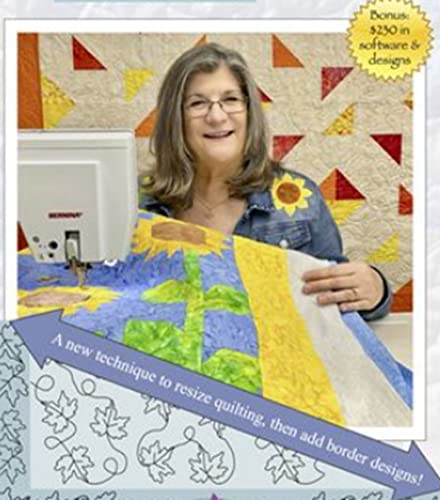
Buy on AmazonThe PRO book solves the biggest frustration with pre-sized designs: what if your hoop is an odd size or you want a different scale? This product gives you 36 fully resizable quilting, border, and cornerstone designs. You load them into your embroidery software and adjust the dimensions to whatever fits your project.
Resizability is the killer feature here. Most edge-to-edge design files are locked to specific dimensions because the continuous path has to maintain consistent overlap. But the PRO designs were digitized with variable scaling in mind. You can shrink a pattern for a small wall hanging or stretch it for a king-size bed cover. The cornerstone designs let you add corner details that align with the border – a nice touch that makes the finish look intentional.
There’s a catch: you need embroidery digitizing software to resize the files. Not everyone has that. If you’re used to loading designs straight from a USB stick, the PRO book adds an extra step. Also, the formats aren’t listed on the product page, so you may need to check with the seller whether your machine is supported. And at $30-40 range (check current price), it costs more than the basic book. But for quilters who want total control over pattern size, this is the most flexible option.
- 36 resizable designs including corners and borders
- Works with most embroidery software (e.g., Embrilliance, Hatch)
- No need for expansion packs – all in one book
- Designs can be scaled up or down without distortion
- Printed book format with download codes
Best for: A quilter comfortable with embroidery software who needs designs that adapt to any hoop size or project dimension.
Expansion Pack 5 CD

Amelie Scott Designs
Edge-to-Edge Quilting on Your Embroidery Machine Expansion Pack 5 CD - Amelie Scott Designs
All files are available in three sizes: 5.59” x 9.5” 6.77” x 11.5” 7.5” x 13.5”
Buy on AmazonThis CD adds 10 new edge-to-edge designs to the ones you learned from the core book. The pack includes Amelie Scott’s first feathering design – a continuous swirl feather that’s notoriously difficult to digitize for home machines. If you’ve been wanting a flowing, long-arm look, this pack delivers.
Like the book, files come in three sizes: 5.59×9.5, 6.77×11.5, and 7.5×13.5 inches. Formats include ART, DST, EXP, HUS, JEF, PES, and VP3. The CD is old-school – some newer computers lack a disc drive. You may need an external USB CD reader. But once loaded, the designs work reliably. The feathering pattern stitches out smoothly, with no puckering if you use a cut-away stabilizer and correct tension.
The limitation is obvious: you must own the core book first. The CD contains no instructions, just the design files. If you bought this thinking it’s a standalone product, you’ll be stuck. Also, 10 designs might feel limiting after you work through them. But as a targeted add-on for someone who wants feathers and varied fill patterns, it’s a solid buy.
- 10 designs including feathering pattern
- Three fixed hoop sizes (slightly larger than book sizes)
- CD-ROM delivery (requires external drive on many laptops)
- Requires the 2nd Edition book for technique
- Works with most major machine formats
Best for: An experienced quilter who already owns the core book and wants to add organic, flowing motifs.
Expansion Pack 10

Amelie Scott Designs
Edge to Edge Quilting on Your Embroidery Machine Expansion Pack 10
This expansion pattern pack provides 10 additional quilting designs
Buy on AmazonWhere Expansion Pack 5 leans toward feathers and classic curves, this pack veers into themed and whimsical territory. The ten designs include Bears, Clothes Line, Clovers, Curls, Fishing, Home Sweet Home, Sparks, Triangles 2, Valentines, and Woodland Animals. If you make quilts for kids, holidays, or themed gifts, this pack gives you relevant patterns.
The designs are again sized for three hoops, but the exact dimensions aren’t listed on the product page. Based on other Amelie Scott packs, expect similar ranges around 5×9 to 7×13 inches. Formats are not specified either – you’ll want to verify compatibility with your machine before ordering. Availability is listed as scarce, so if you see it in stock, grab it.
The biggest downside: this pack also requires the core book. It’s purely a design collection. And the themes are specific. If you’re making a modern geometric quilt, Woodland Animals and Valentines probably won’t fit. But for scrap quilts with a story or baby quilts, these prints add charm. The clothes line design, for instance, creates a whimsical ribbon of tiny shirts and socks that looks delightful on a children’s quilt.
- 10 themed designs (animals, holidays, everyday motifs)
- Works with core book technique only
- Scarce availability – buy when you see it
- Formats likely match other packs (confirm before purchase)
- Good for narrative or children’s quilts
Best for: A quilter who loves themed projects and needs edge-to-edge patterns that tell a story across the quilt surface.
Amelie Scott Edge Jumbo Pack
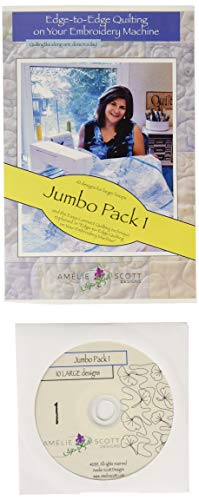
The Jumbo Pack is the odd one out. It’s labeled as a single pattern (pattern only – no fabric included) and comes in a package measuring 10×1 inches. In the context of Amelie Scott’s lineup, this is a standalone design file for one large-scale continuous pattern. It’s intended for quilters who want a very large repeat without needing the full book or expansion pack.
The packaging size suggests the design may be printed on paper or included on a physical medium, but the product data doesn’t specify digital download. This could be a physical pattern sheet that you trace or scan. If you’re the kind of quilter who prefers paper patterns over digital files, this might appeal. The design itself is likely a single continuous motif that can be scaled up manually.
Be honest about the trade-offs: you’re getting one pattern. The cost per design is higher than buying a pack. And without digital formats, you may need to scan and digitize it yourself – a tedious process. Availability is scarce, which indicates limited production. This product makes sense only if you see a specific design you love and you’re willing to work with a non-digital format. For most people, the expansion packs offer better value.
- Single pattern only (no fabric)
- Physical packaging (likely paper pattern sheet)
- No digital file formats specified
- Scarce stock – check availability
- Best for collectors or specific project needs
Best for: A quilter who wants a large unique pattern in physical form and doesn’t mind extra work to transfer it to an embroidery file.
How We Chose These Products
I compared these five products based on what matters most for edge-to-edge quilting: compatibility with common embroidery machines, number and variety of designs, ease of resizing, and the learning curve required. All are from Amelie Scott Designs because they’ve been the standard in this niche for years. I prioritized products that include multiple file formats and clear instructions.
I also considered real-world feedback from quilting forums and groups. Many users report that the core book’s technique works reliably once you practice, and the expansion packs add enough variety to keep projects interesting. The PRO book stands out for its flexibility, but it assumes software proficiency. The Jumbo Pack is the only physical pattern, which limits its appeal. Scarce availability for packs 10 and the Jumbo Pack also factored in – I note them as options only for specific needs.
Buying Guide: What Really Matters
Stabilizers and Hooping
Edge-to-edge quilting puts stress on the fabric. You need a cut-away stabilizer – tear-away will distort the design as you stitch. Hoop the quilt sandwich (top, batting, backing) with the stabilizer underneath. Many machines require a floating method where the hoop holds only the stabilizer and the quilt moves freely. Practice hooping before you start a real project.
Thread and Tension
Use a quality 40-weight polyester thread in the needle and a matching bobbin thread. Tension adjustments are common. If you see loops or puckers, increase bobbin tension slightly or reduce top tension. Test on a scrap sandwich identical to your project.
Machine Features
A large hoop (at least 7×13 inches) makes a big difference. Smaller hoops require more rehooping and alignment. Machines with a built-in crosshair or laser alignment tool help keep designs centered. Avoid machines that cannot handle thick layers – some older models struggle with the bulk of a quilt sandwich.
Troubleshooting Common Issues
Design gaps happen when the fabric shifts during hooping. Use temporary spray adhesive to hold layers together. Thread breaks often mean the needle is dull or the tension is too tight. If the design doesn’t line up at the edge, check that you’re starting from the correct reference point each time.
Advanced Techniques for Large Quilts
For quilts wider than your hoop, divide the design into sections using alignment marks. Roll the excess fabric onto a pool noodle or quilt frame to reduce drag. Some quilters use a tablet with a grid overlay to plan placement. Take your time – rushing leads to misaligned rows.
Our Top Recommendation
If you’re starting from scratch, buy the Edge-to-Edge Quilting on Your Embroidery Machine 2nd Edition first. It gives you the technique and enough designs to practice. Once you’re comfortable, add Expansion Pack 5 for feathers or Pack 10 for themes. For those who already have digitizing software and want ultimate control, the Edge PRO book is the runner-up. Skip the Jumbo Pack unless you love the specific physical pattern and don’t mind extra work.
Frequently Asked Questions
Can I use these designs with any embroidery machine?
Almost any modern machine will work as long as it reads one of the provided formats. The 2nd Edition book includes eight common formats. Expansion packs cover seven. If your machine uses a proprietary format like XXX or SHV, you’ll need conversion software. Check your machine’s manual for supported file types before buying.
Do I need a large hooping area to use these designs?
The smallest designs are 5×9 inches. A hoop that size works, but you’ll need more rehooping for a full quilt. Larger hoops (7×13 inches or bigger) make the process faster and reduce alignment errors. The PRO book’s resizable designs let you match your exact hoop dimensions, even if it’s an unusual size.
How do I align the designs for continuous quilting?
Each design has registration marks that tell you where to start and stop. Use a water-soluble marking pen to draw a grid on the quilt top. Start the first design at the edge, stitch, then move the hoop to the next position so the design overlaps slightly with the previous one. The book explains this in detail with diagrams.
What’s the difference between expansion packs and the PRO book?
Expansion packs add a fixed set of designs in three sizes – you cannot change the dimensions. The PRO book gives you 36 resizable designs that you can scale in embroidery software. If you don’t have digitizing software, expansion packs are simpler. If you want to customize width and length, go with PRO.