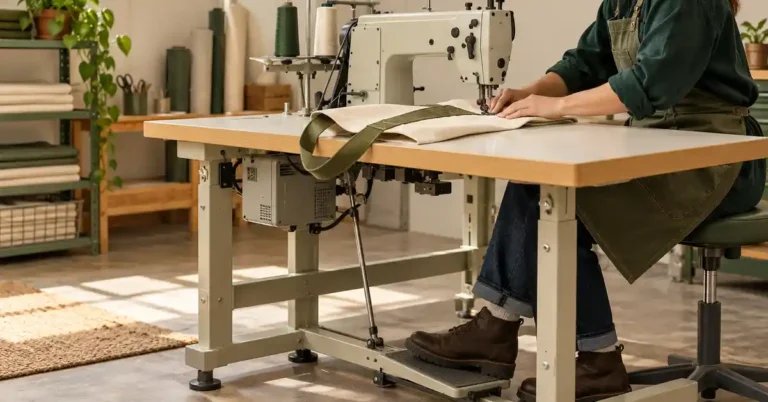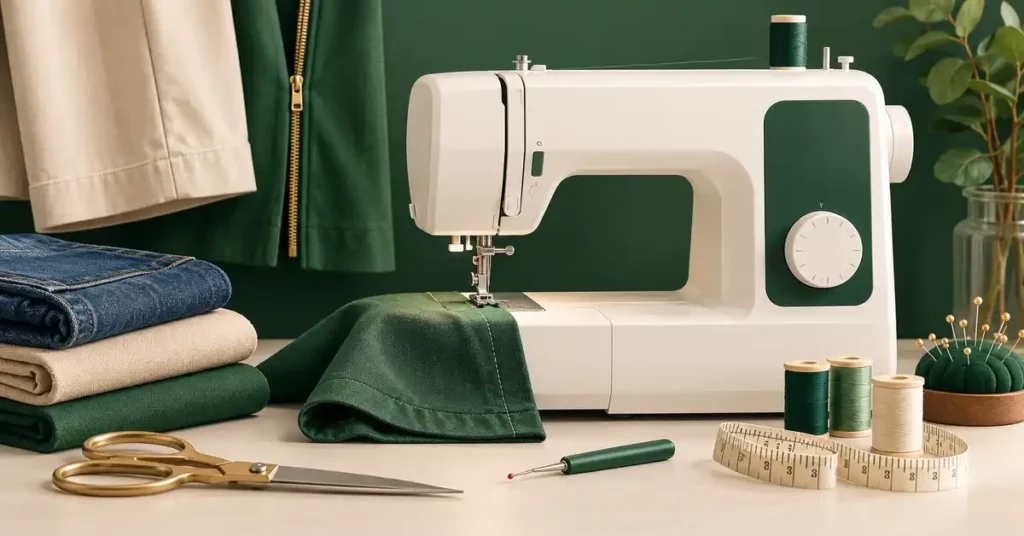
The best sewing machine for alterations should handle the garments you actually repair and give you enough control to work near finished edges. Shortening trousers, replacing a zipper, adjusting a seam, and hemming stretch fabric are different tasks. This guide compares three household options, explains when specialized finishing equipment matters, and helps you evaluate access, stitch choice, speed, and setup before choosing a machine for practical clothing repairs at home.
As an Amazon Associate, Practical Textile earns from qualifying purchases. We may receive a commission through product links.
Quick Answer: Which Machine Fits Home Alterations?
Compare the Brother XR9550 when speed limitation and versatile computerized sewing are useful, the Singer 4423 when mechanical control and foot-pressure adjustment matter, and the Brother CS5055 for a simpler computerized selection workflow. None automatically replaces a serger, coverstitch, or specialist blind-hemming machine. Match the equipment to the seam and finish required by the garment.
This is a research-based buying guide. We have not tested alteration samples side by side or measured handling on identical garments.
Brother XR9550
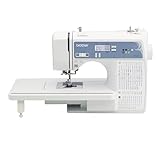
Compare its speed-control workflow for careful garment work.
Singer Heavy Duty 4423
Assess pedal feel and fabric handling on representative seams.
Brother CS5055
Check its actual controls rather than assuming every computerized convenience is included.
Define the Alterations Before Choosing a Machine
Make a list of the repairs you perform repeatedly. Hemming woven trousers, shortening a stretch top, replacing a zipper, and taking in a lined garment involve different materials and construction access. A suitable machine helps perform the seam, but it does not decide the fitting change or expose a hidden seam for you.
Also decide whether the work is occasional household sewing or a repeat service. A domestic machine may fit the first routine while specialized equipment becomes useful for a narrow repeated operation. Buying a general machine because it advertises many stitches is not the same as selecting a finishing workflow.
Inspect the garment’s original construction. Some finishes can be recreated through a suitable domestic method, while others come from a different machine category. Choose the intended result consciously rather than promising an identical factory finish from any household machine.
Compare Three Household Alteration Workflows
| Model | Why investigate it? | Control distinction | Important limit |
|---|---|---|---|
| XR9550 | Varied repairs and garment sewing | Computerized selection with speed limitation | Does not replace every specialized finishing process. |
| 4423 | Mechanical household sewing | Direct dials and foot-pressure adjustment | Pedal feel matters without an independent speed slider. |
| CS5055 | Computerized stitch selection for general sewing | LCD-based selection without every premium control | Verify the exact features you need. |
The comparison does not establish measured superiority on finished garments. Try accessible hems, a zipper sample, and the difficult material you expect to handle. A basic flat-seam demonstration can miss the access and control problems common in real alterations.
Brother XR9550 Review: Versatility with Controlled Speed
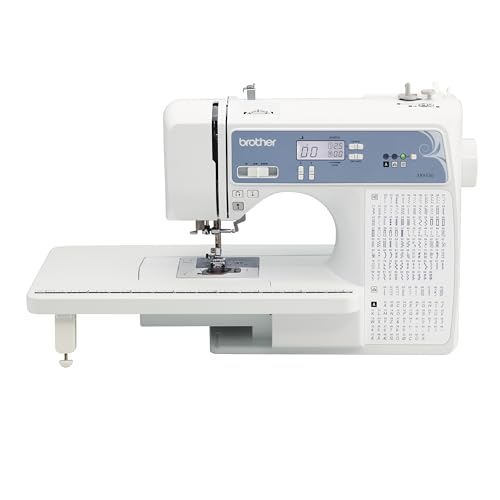

The XR9550 is relevant when you want general garment functions and a separate speed limit. Working near a zipper end, small corner, or visible topstitching line may be easier to manage at a deliberately chosen pace. That is a workflow reason to investigate it rather than a claim of automatically better stitching.
Check the actual foot and stitch for each operation. A zipper foot, blind-stitch setup, and ordinary zigzag foot serve different purposes. Computerized selection does not make an incorrectly installed accessory suitable or verify clearance for a chosen width.
For accessible tubular sections, assess the free-arm arrangement with a realistic garment. Some sleeves and cuffs remain too small or awkward. Support the garment and keep unintended layers clear rather than assuming the feature can accommodate every opening.
Our Brother sewing guide compares this general role with other models. Buy the controls that solve a repeated difficulty, not a decorative selection total that contributes little to your repairs.
Singer 4423 Review: A Mechanical Household Alternative
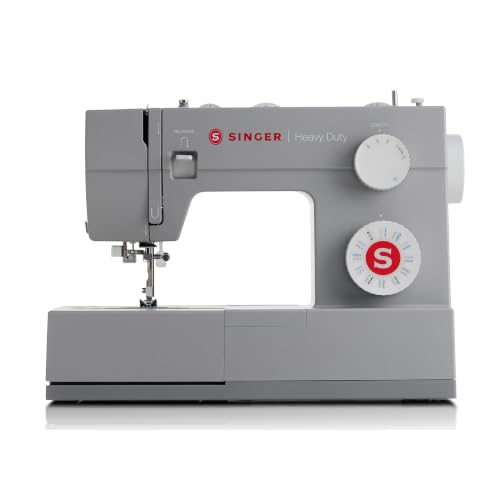
The 4423 is worth comparing when you prefer mechanical operation and want to investigate foot-pressure adjustment for varied materials. A clear view of the controls can suit someone who likes direct selection, but the machine still needs the correct stitch, needle, thread, and fabric support.
Try the foot controller during careful work. The standard model does not have an independent maximum-speed slider, which can matter to someone making short visible seams or approaching a bulky intersection. A high maximum speed is not a reason to choose an alterations machine if the slow-control feel does not suit you.
Do not select it solely for Heavy Duty branding. A folded denim hem across a side seam is different from an ordinary flat garment seam. Test the complete construction and stop if the machine struggles rather than forcing an unsuitable stack through.
Our Singer 4423 review explains those limits. The Singer 4452 guide offers another reference for comparing accessories and seller packages.
Brother CS5055 Review: Computerized Selection Without Every Extra
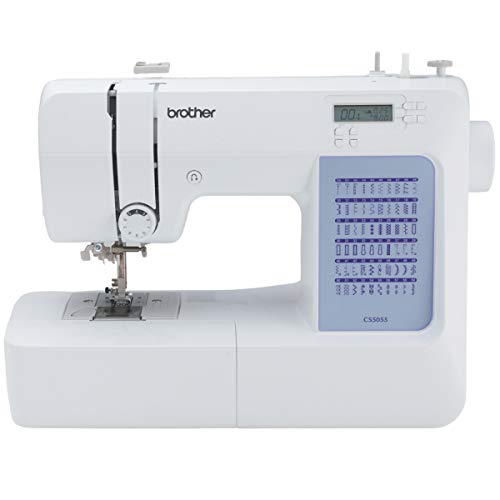
The CS5055 provides computerized stitch selection for general home sewing. It is a candidate when that interface and its actual utility range cover the alterations you do. Do not assume every computerized model includes an automatic cutter, needle-position control, start/stop button, or independent speed limiter.
Compare the specific feature that matters to you with the exact manufacturer specification. A screen can make selection convenient without changing how you operate the pedal or handle a small garment opening. The useful purchase is the one whose controls fit the task.
For straightforward repairs, an appropriate needle, correct foot, good lighting, and organized fabric support can matter more than a long menu. Check the total cost of the machine and the compatible accessories you need rather than judging the listing by the word computerized alone.
Hems and Trouser Repairs
Check the intended appearance
A visible topstitched hem, a domestic blind-stitch method, and a specialized factory finish are different results. Decide which is appropriate for the garment and wearer. Test a complete sample or an inconspicuous equivalent rather than assuming one setting reproduces every existing hem.
For trousers, measure while the garment is arranged as it will be worn. Mark both legs carefully and account for the intended fold and finish before removing material. A machine cannot correct a length decision that was measured inaccurately.
Manage thick crossings
A folded hem crossing a side seam creates a dense area that deserves separate attention. Use an appropriate needle and compatible thread, reduce unnecessary bulk where the construction permits, and test the exact stack. An appropriate foot-leveling method may help the approach but does not increase machine capacity.
Support the garment and let it feed normally. Stop if the needle encounters resistance or the machine labors. For repeated dense seams, investigate different equipment or a different construction method rather than treating more pedal pressure as a solution.
Zippers, Seam Adjustments, and Fitting
Plan access to the seam
Inspect lining, pockets, topstitching, and neighboring seams before opening an area. A straightforward outer seam may be connected to other construction that needs careful handling. Determine the order of operations before unpicking a finished garment.
For zipper work, verify the suitable foot and needle position. Check clearance before sewing near teeth, hardware, or a narrow foot opening. Practice the approach and stopping point on a sample where the material is unfamiliar.
Keep fitting separate from machine capability
Taking in a garment changes more than a stitch line when shaping, balance, or movement is involved. Baste and assess the fit before making a final seam or trimming an allowance. A powerful machine does not determine how much material can be removed while preserving the intended fit.
For valuable or complicated items, establish the method before making irreversible changes. Some alterations are constrained by the original seam allowance, fabric condition, and construction. The right machine can sew the chosen method but cannot remove those design limits.
Stretch Fabric and Specialized Finishes
A knit hem needs enough flexibility for the garment’s use. Test the seam under the stretch it will receive in wear. A neat line on the table can still break or distort when pulled over the body. Use an appropriate needle and seam method and avoid stretching the material as it feeds.
An ordinary sewing machine can perform some useful knit operations, but it is not automatically a serger or coverstitch machine. Those categories serve distinct finishing workflows. If one repeated finish defines your work, compare the specialized process rather than expecting a larger decorative menu to create it.
Our Janome model comparison helps separate general sewing categories. If decoration rather than construction is the aim, our embroidery guide explains another process that should not be confused with alterations.
Setup, Samples, and Troubleshooting
Before working on the garment, establish a baseline seam on a representative scrap. Follow the model’s threading and bobbin instructions, install a fresh suitable needle, and select the correct foot. Inspect both sides and check how the seam behaves when handled.
When a seam becomes irregular, investigate thread routing, bobbin insertion, needle condition, and fabric support before changing several settings. A setup mistake can resemble a tension problem. Change one variable at a time and retain a working sample for comparison.
Keep the garment’s other layers away from the needle path through the entire operation. Recheck after turning a corner or repositioning a bulky item. Stop promptly for a jam or repeated breakage, and disconnect power as directed before clearing material near the needle.
Also organize the workspace. A stable table, suitable lighting, and a convenient place for pins and tools can reduce avoidable handling mistakes. The garment should not drag off the edge or catch on furniture while you work near a visible seam.
Advantages and Tradeoffs of This Shortlist
Useful strengths
- All three candidates retain varied household sewing functions.
- The shortlist distinguishes different computerized control sets.
- A mechanical option provides another interface and adjustment preference.
- Each can be evaluated through relevant repair samples.
- The choices can serve new construction as well as suitable alterations.
Important limitations
- None automatically reproduces every specialized factory finish.
- Garment access, fitting, and dense stacks can limit the job independently of stitch count.
Buying Checklist for Alteration Work
- List the actual garments, materials, and repeated finishes.
- Try slow control, zipper access, and a representative hem.
- Verify the required feet and needle clearance.
- Check whether the garment can be positioned safely.
- Confirm the exact model’s controls rather than relying on broad category labels.
- Compare condition, included equipment, electrical suitability, service, and returns.
- Budget for suitable needles, thread, lighting, and support space.
For a used purchase, ask for a relevant sewing sample rather than a video showing only the motor. Missing accessories or uncertain service can change the real value. Check the current seller’s offer instead of relying on an old price quoted in a review.
Frequently Asked Questions
What sewing machine is best for basic clothing alterations?
Choose a model whose actual stitches, controls, and access fit the garments you repair. Slow control, suitable feet, and a good sample are more useful than a large decorative count. The XR9550, 4423, and CS5055 represent different household approaches to compare.
Do I need a heavy-duty machine for trouser hems?
Not every trouser hem is demanding, but a dense folded crossing needs a realistic sample. Match the needle, thread, and seam stack to the machine. Heavy Duty branding does not establish a universal denim-layer capacity.
Can an ordinary sewing machine replace a coverstitch machine?
It can perform some useful knit-sewing methods, but coverstitch is a distinct process. Decide which finish is acceptable and test seam flexibility. Do not assume another decorative selection reproduces specialized equipment.
Is a free arm necessary for alterations?
It can help with accessible tubes, but not every sleeve or cuff fits it. The garment’s size and construction determine the method. Evaluate a realistic item before buying around the feature name alone.
Why do my repaired knit seams break?
Check whether the seam method provides the stretch required in wear, along with needle, thread, and handling. Test a representative sample under that movement. A neat seam at rest is not sufficient evidence of suitable flexibility.
Final Recommendation
Compare the XR9550 for controlled versatile sewing, the 4423 for mechanical preferences and adjustment, and the CS5055 for a simpler computerized selection workflow. Test the actual alteration rather than only an easy flat seam.
Choose specialized finishing equipment when a repeated operation justifies it, and keep fitting and garment access central to the plan. A suitable alterations machine helps execute a sound method; it does not replace the method itself.