The best sewing machine for hemming depends on whether you need visible topstitching, a discreet blind hem, or an elastic finish for knits. Buying more stitches will not automatically solve uneven folds or bulky side seams. This guide compares three practical machine options and explains fabric preparation, stitch choice, fit checks, and feeding control so you can shorten everyday clothing with a finish appropriate to the garment and its fabric.
As an Amazon Associate, Practical Textile earns from qualifying purchases. Product links may earn us a commission.
Quick Answer
The Brother XR9550 is a useful starting point for mixed household hems, the Singer 4423 suits buyers who prefer mechanical controls and adjustable foot pressure, and the Brother PQ1600S deserves consideration only for a dedicated straight-stitch workflow. A household sewing machine can handle many woven and knit hems, but it does not reproduce every coverstitch or industrial blind-hemming operation.
This guide compares published specifications and project fit; it does not report hands-on testing.
Brother XR9550
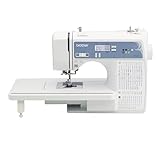
Compare controlled speed, stitch choices, and free-arm access for household alterations.
Singer Heavy Duty 4423
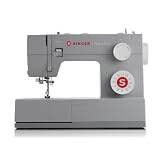
Evaluate adjustable foot pressure and the actual folded seam stack.
Brother PQ1600S

Consider a separate station for repeat straight hems, with other finishes handled elsewhere.
Start With the Hem You Want to Produce
Hemming is a family of operations rather than a single stitch. A visible row around cotton pants, a nearly concealed finish on dress trousers, and the flexible lower edge of a jersey shirt ask different things of the machine. Decide what the finished garment should look like before comparing models. Otherwise, a machine can be perfectly functional and still fail to create the appearance you expected.
For a conventional double-fold woven hem, reliable straight stitching and manageable feeding matter most. For a blind hem, you need the appropriate stitch, a compatible foot, and an accurately folded edge. For a knit hem, the seam must stretch enough for dressing and movement. A straight-only machine does not supply these other stitch formations simply because it sews quickly or accepts a different presser foot.
| Hem project | Useful capability | Important limitation |
|---|---|---|
| Cotton pants and woven skirts | Controlled straight stitching and consistent folding | Crossed seams can be much thicker than the panel |
| Dress trousers | Suitable blind-hem stitch and compatible guide foot | Visibility depends on fabric, adjustment, and folding |
| Jersey tops | Appropriate stretch stitch or supported twin-needle method | A regular straight seam can restrict the garment |
| Repeated straight woven hems | Dedicated straight-stitch workflow and good support | A specialist does not replace zigzag or coverstitch |
Brother XR9550: A Flexible Household Starting Point
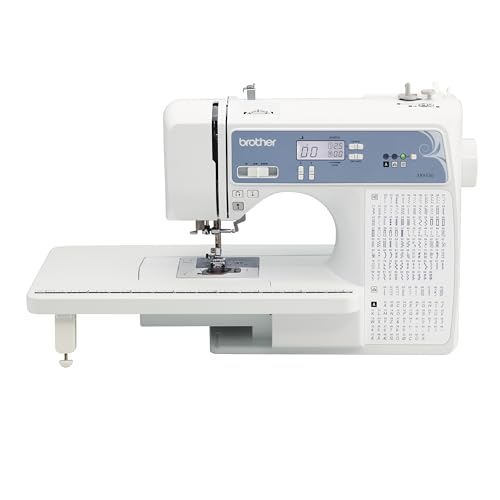

The Brother XR9550 is the most broadly applicable option here for someone shortening several types of everyday clothing. Its computerized stitch selection and speed control support a workflow that alternates between preparation, a short seam, and inspection. A beginner can focus on guiding a folded edge at a manageable pace instead of treating maximum sewing speed as a purchasing priority.
Brother lists 165 stitch selections for this model, including alphanumeric selections. That total should not be interpreted as 165 different hemming solutions. For this job, look closely at the straight, zigzag, and relevant utility stitches, then consult the manual for the correct setup. A few well-understood settings are more valuable than a large menu you cannot match to the fabric.
The removable accessory area provides free-arm access for some trouser legs and sleeves. It does not guarantee that a narrow cuff will fit around the machine. Measure the opening, and consider sewing around the inside of the tube with the rest of the garment kept clear. If a bulky seam will not move through the machine normally, stop rather than force the layers under the foot.
Choose this model when hemming is part of general household sewing. It also makes sense for a workspace that needs buttonholes, repairs, and other ordinary garment operations. For a broader comparison of related options, see our Brother sewing machine guide. Do not assume that every Brother model has the same feet, adjustment range, or needle instructions.
Singer Heavy Duty 4423: Mechanical Adjustment and Familiar Controls
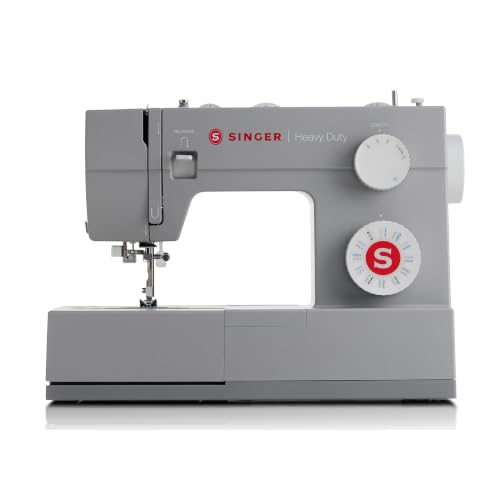
The Singer 4423 is an alternative for buyers who prefer mechanical stitch selection and want adjustable presser-foot pressure. Pressure adjustment can help you evaluate how a suitable material moves under the foot, but it must be used with an appropriate needle, stitch, and handling technique. It does not transform the machine into a universal solution for thick denim hems or delicate stretch fabrics.
This model has 23 built-in stitches; the larger stitch-application figure used in marketing is a different count. For hemming, assess the actual utility stitches rather than assuming that an application total represents additional stitch patterns. Use the machine manual to identify the recommended stitch and a compatible blind-hem foot if you want a less visible woven finish.
The controller deserves attention if most of your work involves slow movement across folded intersections. The 4423 does not offer a separate computerized speed slider. Before buying, evaluate how comfortably you can start, stop, and guide the machine at the pace your work needs. A model advertised for fast sewing is not automatically the easiest choice for a first pair of careful trouser alterations.
Read our full Singer 4423 review for the broader machine role. Our Singer 4411 comparison is also useful when weighing a simpler mechanical alternative. Differences in stitch selection and buttonhole operation matter more for general sewing than for a single straight hem.
Brother PQ1600S: A Specialist for Repeated Straight Seams

The Brother PQ1600S belongs on this list as a specialist rather than a default recommendation for every home. It is a straight-stitch machine. If you regularly make woven items and repeatedly sew long straight hems, a separate straight-stitch station may fit your workload. Its table, needle-area access, thread cutter, and knee lifter can be relevant to that kind of organized production.
However, the PQ1600S does not provide zigzag, an ordinary blind-hem stitch, or a coverstitch seam. Do not buy it expecting accessories to supply a different stitch formation. A dedicated straight machine can complement another machine that handles flexible edges and utility work, but it creates a narrower equipment role than an all-purpose domestic model.
For occasional pants shortening, the additional investment and workspace may be difficult to justify. For repeat woven construction, compare the complete setup, including table support and a plan for finishing raw edges. The decision should follow your recurring operations rather than a general belief that a faster machine must produce a better hem on every material.
What These Choices Offer
- A clear distinction between general sewing and straight-stitch specialization.
- Options for computerized or mechanical operating preferences.
- Useful household capabilities beyond a single alteration.
- Different approaches to speed and fabric handling.
- A practical basis for testing the complete folded fabric stack.
What to Watch
- None of these machines should be treated as a dedicated coverstitch machine.
- Heavy seam intersections and narrow openings still require a realistic access test.
How to Prepare a Woven Hem Before Sewing
Wash and dry the garment according to its care instructions before setting a permanent length when shrinkage remains possible. Press out the existing crease if it would interfere with marking. Check the desired length while the garment is worn with the footwear and waist position that will actually be used. A perfectly straight stitched line cannot correct a length chosen under the wrong wearing conditions.
Mark the finished edge before cutting away fabric. Leave the allowance needed for the intended finish, including enough material to enclose a raw edge where appropriate. Compare both legs or both sides of a skirt, but do not assume that matching an old cut edge will create a level result on the wearer. Body position, garment balance, and previous alterations can affect the reference points.
Use pressing, temporary marking, and a suitable seam guide to establish the fold. Pins and clips are preparation tools, not substitutes for a stable crease. Remove them before they reach the needle. Begin with a test made from comparable material and the same number of folded layers. Inspect the top and underside before continuing around the garment, particularly when the lower thread will be visible.
What Makes a Blind Hem Look Discreet?
A blind hem works by taking small catches into the visible garment while securing the folded allowance. It will not be equally invisible on every fabric. A smooth lightweight solid can reveal a catch that disappears in a textured wool blend. Thread color, stitch adjustment, needle size, and the amount caught by each stitch all affect the result.
Follow the folding method in the machine manual and test the stitch on a prepared sample. Adjust the guide so the needle catches the intended edge rather than biting deeply into the outer layer. Open the fold and inspect it under ordinary light. If the outer face shows a pronounced row of dots, improve the setup before committing to the finished garment.
A specialized industrial blind-hemming machine uses a different mechanism from a domestic utility stitch. There is no reason to promise an identical finish from either of the general-purpose models here. For many home garments, a well-executed domestic blind hem is appropriate. For a valuable garment with an exact finish requirement, compare a professional alteration service with the equipment and practice your project would require.
Hemming Knit Tops Without Restricting Stretch
Start by determining how far the hem must extend during normal use. A loose jersey shirt and a fitted athletic garment do not require the same seam elasticity. Test a suitable stretch-capable stitch on a sample that has been folded and pressed in the same way as the real hem. Gently stretch the finished sample enough to reflect wearing needs, then inspect for broken stitches and distortion.
Do not pull the fabric behind the presser foot to help it move. That can distort the seam, interfere with feeding, and put unnecessary force on the needle. Support the garment so its weight does not drag from the table. Use a needle suited to the fabric and the machine. Our Brother needle-size guide provides context, with the exact model manual controlling compatibility.
A twin needle can produce two visible rows with bobbin-thread zigzag underneath on compatible machines and suitable materials. It is not the same stitch as coverstitch. Confirm the permitted needle width, threading route, foot, needle position, and machine settings before use. Turn the handwheel through a complete cycle to check clearance as directed by the manual. Never assume that every straight-stitch specialist accepts this operation.
Crossing Side Seams and Keeping the Hem Level
A trouser hem can be manageable around most of its circumference and difficult at one intersection. Test that thickest location rather than only the flat panel. The foot should remain able to support and feed the stack normally. Use a compatible leveling aid if appropriate and follow its instructions. Pressing and sensible construction can reduce an uneven transition, but neither makes an oversized stack safe for a machine.
Avoid starting with unusually thick thread as an attempted cure for skipped stitches. Needle selection, thread suitability, stitch formation, and fabric feeding must work together. If stitches fail, recheck threading and the needle before repeatedly changing tension. Our tension adjustment guide explains a systematic approach for supported Brother setups.
Stop when the motor strains, the needle deflects, the layers cannot advance, or the stitch becomes unreliable. Hand turning does not make an unsuitable material stack acceptable. A reinforced workwear hem may be better handled by equipment selected specifically for that seam or by a qualified alterations provider. The cost of repairing a damaged garment can outweigh the benefit of finishing it at home.
A Practical Hemming Workflow for Repeatable Results
Keep a small record of the setup that worked: fabric type, needle, thread, stitch, fold depth, and any compatible foot. Record the garment result rather than only a dial number. Two fabrics sold under the same broad label can behave differently. A successful setup is a useful starting point, not a universal instruction for every future project.
Organize the workspace so marking, pressing, and sewing each have a clear place. For pants, check that the other leg will not become trapped under the needle. For a skirt, support the excess circumference so it cannot pull the fold out of alignment. For lightweight material, handle the edge gently and avoid repeated unpicking that can damage the weave.
Finish by examining the hem from both sides and trying the garment on again. Check length, drape, seam flexibility, and whether the edge twists after pressing. Machine selection helps establish a workable process, but preparation and inspection determine whether the alteration succeeds. Our computerized versus mechanical comparison can help you choose the control style you will use comfortably.
Frequently Asked Questions
Do I need a special machine to hem pants?
Many ordinary woven pants can be hemmed with a suitable household sewing machine. The folded fabric, seam intersections, desired finish, and opening size determine suitability. Heavy workwear and specialized finishes may require different equipment or professional alteration.
Can a regular sewing machine make an invisible hem?
A compatible blind-hem stitch can create a discreet result, but complete invisibility is not guaranteed. Fabric texture, thread matching, fold accuracy, and stitch adjustment affect how much of the catch shows on the outside.
Is a serger enough for all hemming?
No. A serger primarily handles particular edge and seam formations. Some models and settings can produce rolled edges, but that does not make every serger a coverstitch machine or a replacement for a conventional folded garment hem.
Which machine here is best for stretchy T-shirt hems?
The general-purpose models offer more relevant stitch options than the straight-only PQ1600S. Test the exact fabric and suitable setup. If you specifically want the familiar ready-to-wear coverstitch appearance, evaluate a dedicated coverstitch machine separately.
Should I choose the fastest machine for alterations?
Usually, control and suitability deserve more attention than maximum speed. Short seams, narrow openings, and bulky transitions often benefit from careful handling. Choose a machine that lets you guide and inspect the work comfortably.
Final Recommendation
For mixed everyday hems, begin by comparing the Brother XR9550 with the Singer 4423 according to your preference for computerized or mechanical controls. Consider the PQ1600S when repeated straight woven sewing genuinely warrants a separate station. Bring a sample of the most demanding folded seam to any demonstration, and choose the equipment that produces the required finish without forcing the material through.