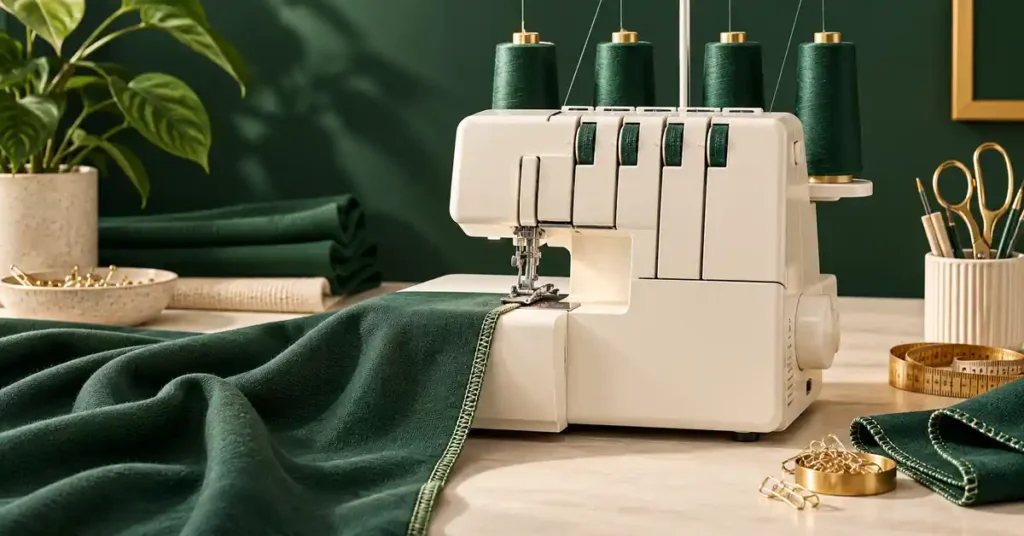
The best overlocker sewing machine should match the seams and edge finishes you need, not simply offer the highest thread count. A serger complements ordinary sewing, while coverstitch is a separate capability that only some combination machines provide. This guide compares three options and explains threading, differential feed, conversion, sample tests, and ownership costs so you can choose a useful finishing station without expecting every overlocker to perform identical operations.
As an Amazon Associate, Practical Textile earns from qualifying purchases. Product links may earn us a commission.
Quick Answer
Compare the Brother 1034D for a 3/4-thread overlock role, the Juki MO-654DE for a 2/3/4-thread comparison, and Singer Professional 5 14T968DC when supported coverstitch functions also matter. The Singer adds a conversion workflow; it is not evidence that every serger does coverstitch. Keep ordinary straight sewing, closures, and other garment operations in the equipment plan.
This guide compares published specifications and project fit; it does not report hands-on testing.
Brother 1034D

Compare threading, differential feed, and actual fabric samples.
Juki MO-654DE
Evaluate required stitch formations and comfortable setup.
Check Price on AmazonThis is a specific MO-654DE bundle. Confirm the seller’s included equipment and warranty.
Singer Professional 5 14T968DC

Test the actual conversion and the intended finishing operation.
Choose a Stitch Formation Before Choosing a Machine
Overlocker and serger are commonly used for the same broad equipment category. These machines form particular edge and seam stitches, often trimming the allowance as they sew. They should not be treated as ordinary sewing machines with a larger stitch menu. Decide which formation your garments need before comparing models.
A conventional overlock seam, a rolled edge, and a coverstitch hem are different results. Thread count alone does not tell you that all three are available. Read the exact model’s stitch chart and identify the needle, looper, and conversion setup required for each operation you intend to use.
Keep a general sewing machine in the plan for appropriate straight stitching, closures, and other construction. A serger can streamline certain seams and finishes without replacing the entire sewing room. This review compares documented roles and buying questions rather than reporting a hands-on speed or durability test.
| Model | Role to compare | Important distinction |
|---|---|---|
| Brother 1034D | 3/4-thread overlock | Not a coverstitch machine |
| Juki MO-654DE | 2/3/4-thread overlock | Additional thread formations do not create coverstitch automatically |
| Singer 14T968DC | Overlock with supported coverstitch functions | Converting between operations is part of ownership |
Brother 1034D: A Defined Overlock Starting Point


The 1034D is worth comparing if the required job is a suitable three- or four-thread overlock operation rather than coverstitch. Its differential feed and color-coded threading guides belong in a practical demonstration. The useful test is whether you can set up and repeat the stitch on your own materials.
Color coding is an instruction aid, not automatic threading. Learn the exact order and paths from the manual, including the looper sequence. A machine left pre-threaded by a seller is convenient, but you still need to recover from a broken thread or change to the intended setup later.
Try a woven edge and a knit sample if both are part of your sewing. Inspect the seam after it leaves the foot and, for suitable stretch work, test the required extension. Do not assume one setup produces the right finish on every material.
Our Brother equipment guide helps separate ordinary sewing, embroidery, and specialist roles. Check the exact 1034D manual rather than transferring settings from another serger with a similar appearance.
Juki MO-654DE: Compare the Formations You Will Use
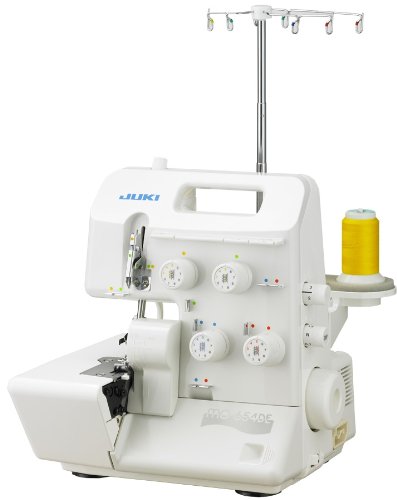
The MO-654DE supplies a two-, three-, and four-thread overlock comparison with differential feed and rolled-hemming functions. The additional formation options matter only when you have a project that uses them. A larger thread-range description should not become a generic claim that the machine does every garment finish.
Ask to thread the relevant operation and change to another one you expect to use. Check the parts required and whether the written offer includes them. The demonstration should leave you understanding the routine rather than only seeing an attractive prepared sample.
It is not a coverstitch machine. If parallel-row ready-to-wear-style hems are central to the purchase, compare an actual coverstitch capability separately. A narrow or rolled edge is not the same finish, even when both are described casually as hemming.
Compare the seller’s orientation and service arrangements alongside the hardware. A serger introduces a different setup from an ordinary lockstitch machine, so clear model-specific instruction can have practical value even for an experienced sewer.
Singer Professional 5 14T968DC: Add Coverstitch Deliberately

The 14T968DC is a different comparison because Singer specifies coverstitch functions as well as overlock operations. Confirm the complete stitch chart and test the formation you actually want. Do not use its capability to imply that every five-thread or similarly styled machine supplies identical functions.
The tradeoff is the conversion process. Changing between overlock and coverstitch involves the exact model’s setup steps, parts, and threading. Try that sequence yourself. A combination can save the need for a separate machine position while still taking time to change roles.
Consider how often your projects alternate between seams and hems. If conversions would repeatedly interrupt the work, separate stations might be more convenient. If the operations can be grouped and space is limited, a combination may fit well. The answer depends on the actual construction sequence.
Read our Singer 4423 review for an ordinary sewing-machine role. The 4423 and this serger should not be compared as interchangeable ways to perform every operation.
Five Useful Reasons to Add an Overlocker
- Appropriate seam and edge formations for repeated garment work.
- Differential feed to evaluate on suitable materials.
- A defined finishing station beside ordinary sewing.
- Rolled or other supported edges when the project requires them.
- A clear choice between overlock-only and conversion-based coverstitch roles.
Two Limits
- Thread count does not establish every stitch formation.
- Threading, conversion, trimming, and setup still require instruction and practice.
Differential Feed Is Not Thread Tension
Differential feed changes the relationship between the front and rear feed sections. It can help address certain waves or puckers on suitable fabrics when used according to the model’s instructions. It is different from adjusting the pressure of a presser foot or changing the balance of the thread paths.
Begin with the manual’s appropriate starting setup and sew a sample. Change one variable at a time and compare the result after the material relaxes. Do not copy a numerical setting from another machine or fabric and assume it is universally correct.
Read the specific restrictions for dense non-stretch materials and other applications. A useful adjustment can be inappropriate in another context. The goal is a suitable finished seam, not the largest differential setting or the fastest run through the machine.
A Threading Demonstration Should Start From the Beginning
Ask the instructor or seller to explain the complete sequence, then repeat it yourself. Identify each needle and looper path, the correct thread order, and the steps required after a thread breaks. Keep the exact manual available while the routine becomes familiar.
Use compatible thread, needles, and any converters required by the chosen formation. Do not assume a part from another serger fits. Similar-looking components can have different installation or clearance requirements.
For the first learning samples, contrasting thread colors can make it easier to understand which path forms each part of the stitch, when the manual and intended test permit that setup. Move to the final thread choice after the formation and adjustments are understood.
Test Knit Seams for Real Wearing Needs
Use the actual fabric and an appropriate seam formation. After sewing, inspect both faces and test the extension needed during normal use. A neat-looking seam while flat may still be unsuitable if it restricts movement or breaks under the required stretch.
Do not pull the material to help it feed. Support the garment and use the model’s suitable adjustments. Review how the pattern expects the seam to be finished and secured. The presence of a cutting blade does not decide the correct allowance or construction sequence for you.
For broader garment context, our ordinary sewing-control guide and Janome machine comparison explain other station roles. A general sewing machine and overlocker can complement each other without either becoming unnecessary.
Trimming Makes Preparation Important
A serger’s knife can remove seam allowance during an operation. Confirm alignment, the intended seam line, and the correct setup before stitching the final item. Practice on scrap so the cutting action does not become a surprise during an important garment seam.
Keep unrelated material, pins, and unsuitable hardware away from the cutting and needle path. Follow the exact instructions for knife position and supported techniques. Do not improvise around moving parts or treat a blade as a general-purpose tool for every bulky stack.
For a garment that needs fitting, consider the appropriate construction and trial process before permanently trimming allowances. A tidy narrow finish is not valuable if the garment still needs adjustment that the remaining allowance cannot accommodate.
Combination or Separate Stations?
List the operations in a typical project and note when you change between them. A maker who constructs several items before hemming may be able to group a combination machine’s conversions. Someone who alternates repeatedly between a single seam and a hem may value separate stations more.
Include furniture, storage, maintenance, and setup time in the comparison. Two machines need more space but can remain ready for different tasks. One combination saves a machine position while introducing changeover. Neither arrangement is universally more economical or convenient.
Make the comparison with an actual project sequence rather than an idealized plan. Ask to see the required conversion parts and try the routine during the purchase evaluation, particularly if coverstitch is the main reason to choose the Singer model.
Check the Complete Offer and Service Route
Confirm model identity, condition, accessories, thread supplies, converters, controller, warranty, return terms, and training. A bundle photograph is not a written inventory. For a used unit, request a complete demonstration of the stitch formations you need.
Follow the model-specific cleaning and lubrication instructions. Serging creates trimmings and lint that need appropriate routine care. Do not copy maintenance advice from an unrelated sewing machine or perform unfamiliar mechanical adjustments instead of seeking service.
Our Singer household comparison and computerized sewing guide add context when deciding which ordinary sewing station remains alongside the overlocker. The equipment plan should cover the whole garment, not only one edge finish.
A Project Check Before You Commit
Ask to thread the overlocker from the beginning rather than accepting only a prethreaded demonstration. Then change to another documented stitch configuration and return to the first. This reveals whether the machine’s threading route, diagrams, and instructions feel manageable to you.
For knits, inspect the seam after gentle stretching; for wovens, inspect the trimmed edge and fabric feeding. These are different tests. Save the successful samples with thread paths and settings recorded. A fast overlocker is useful only when you can set it up consistently and recognize whether an unsatisfactory result comes from threading, preparation, or a setting that needs adjustment.
Frequently Asked Questions
Is an overlocker the same as a serger?
The terms commonly refer to the same broad category. Compare the exact model’s stitch formations, thread arrangements, and functions rather than relying on the label alone.
Can the Brother 1034D do coverstitch?
No. It supplies its specified overlock and related edge operations, not a coverstitch system. A rolled edge is not the same as a coverstitch hem.
Does the Juki MO-654DE replace a coverstitch machine?
No. Its two-, three-, and four-thread overlock role does not establish coverstitch capability. Check a genuine coverstitch or supported combination option when that finish is required.
Why consider the Singer 14T968DC?
It includes specified coverstitch functions alongside overlock operations. Test the conversion and exact formations before buying. Shared hardware does not mean both roles are ready simultaneously.
Do I still need an ordinary sewing machine?
Many garment workflows still need straight sewing, closures, and other operations outside the chosen serger’s role. List the whole project’s requirements and keep suitable equipment or methods available for those tasks.
Final Recommendation
Choose the stitch formations first. Compare 1034D and MO-654DE for their defined overlock roles, then evaluate 14T968DC when its coverstitch capability and conversion routine fit your work. A useful purchase should leave you with an understood threading process, reliable samples, appropriate support, and a complete plan for the rest of garment construction.