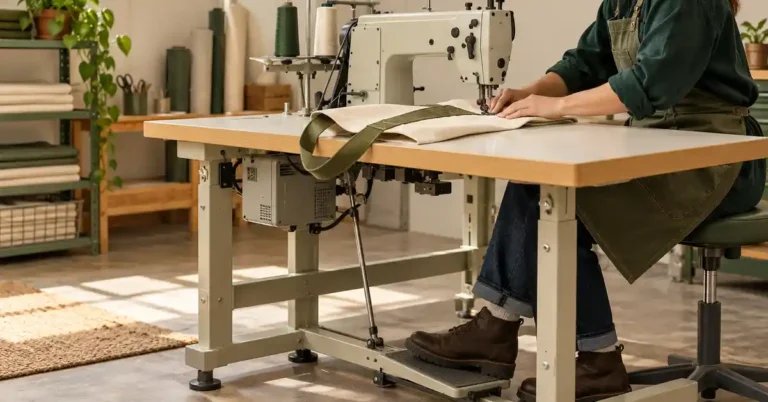
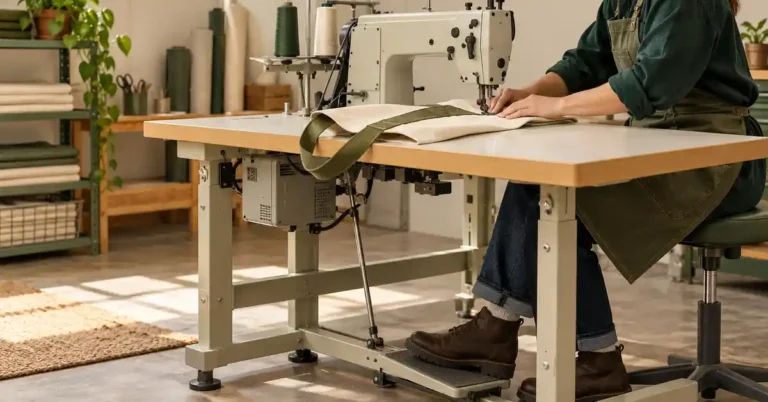
The best sewing machine for fursuits should match the backing, seam construction, and access required by the parts you plan to make. Long pile can hide a poor seam as easily as a good one. This guide compares household machine roles, separates serging from ordinary construction, and explains sample preparation, feeding, pile management, and workspace so you can choose equipment through the actual assembly rather than the fabric's furry appearance.
As an Amazon Associate, Practical Textile earns from qualifying purchases. Product links may earn us a commission.
Quick Answer
Compare the Singer 4423 or Brother ST371HD for compatible household construction, then consider a Brother 1034D only for an appropriate overlock role proved on the actual backing and seam. A serger is not automatically required or suitable for every faux-fur assembly. Thick reinforced parts and difficult access may need another method or equipment class.
This guide compares published specifications and project fit; it does not report hands-on testing.
Singer Heavy Duty 4423
Evaluate backing, pressure adjustment, and the complete folded seam.
Brother ST371HD

Compare appropriate utility work on the actual faux-fur sample.
Brother 1034D

Test whether a permitted overlock process suits the specific backing and construction.
The Backing and Construction Matter More Than Pile Length Alone
Faux fur can have different backing structures, stretch, density, and surface behavior. Two fabrics that look similar from the pile side may demand different needles, stitches, and handling. Evaluate the backing and the complete seam rather than assuming that all long-pile material presents the same sewing problem.
List the parts you plan to construct and the operations each one needs. A broad body panel, a narrow curved feature, a lining, and a reinforced attachment can create very different access and layer demands. The best equipment for one operation is not automatically the only machine or method needed for the whole project.
This review compares practical machine roles and documented operating features. It does not claim hands-on fursuit testing or a universal machine capacity. A complete sample made from your actual materials is the most useful next step before buying or committing expensive fabric.
| Option | Role to evaluate | Important boundary |
|---|---|---|
| Singer 4423 | Suitable household construction with mechanical controls | Pressure adjustment is not industrial compound feed |
| Brother ST371HD | Mixed household utility sewing | Do not assume adjustable pressure or universal fur capacity |
| Brother 1034D | Appropriate overlock operations | The cutting and stitch formation may not suit every part |
Singer 4423: Evaluate a Controlled Mechanical Setup
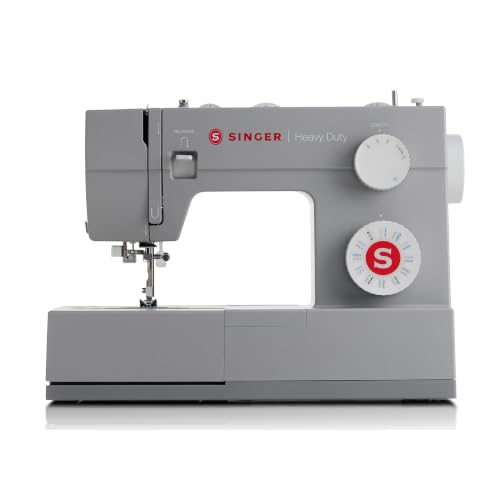
The 4423 is worth comparing when you want ordinary household construction and mechanical controls. Its adjustable presser-foot pressure is a setup variable to assess on suitable material. It does not replace the need for a correct needle, thread, stitch, and way of managing the pile.
Try a straight sample, a relevant curve, and the hardest appropriate junction from the design. Test slow starting and stopping rather than focusing on advertised maximum speed. Short curved seams can require more control than a long flat sample.
The machine does not have a separate computerized speed slider. If that control is important to the way you work, compare a model that actually provides it. Do not assume that a heavy-duty name settles the control or material question.
Our Singer 4423 review provides broader model context, while the 4432 comparison explains another related household option. Additional stitch choices do not establish a higher safe seam thickness.
Brother ST371HD: Compare the Actual Utility Operations


The ST371HD offers another mechanical household role for suitable construction and ordinary utility work. A fursuit project may include lining, closures, and other fabrics as well as faux fur, so test those recurring operations too. The right machine should fit the whole applicable workflow.
Do not assume adjustable presser-foot pressure is present on this model. Its supplied nonstick foot is also not a powered upper-feed mechanism. Choose an accessory only for a problem it can address, and confirm compatibility with the exact machine and stitch.
Our Brother machine comparison helps distinguish household, computerized, specialist, and embroidery categories. A machine’s ordinary decorative patterns do not create automatic character artwork or imported embroidery.
Use the same complete samples when comparing the ST371HD with the Singer. Inspect both faces and the backing after the pile has been released appropriately. A surface that looks fluffy can conceal uneven feeding or an unreliable stitch underneath.
Brother 1034D: A Separate Role, Not an Automatic Requirement

The 1034D is a three- or four-thread serger. It is relevant only when an appropriate overlock operation suits the particular backing and construction. Do not assume that every faux-fur seam should be run through a serger or that an overlocker replaces all ordinary construction work.
The knife and stitch formation introduce different preparation and clearance requirements. Follow the exact manual and test the intended operation on scrap. Long pile, loose material, or a complicated junction should not be forced into a process that cannot handle it normally.
Differential feed is not presser-foot pressure or thread tension. Use the model’s instructions and restrictions for the actual material. A numerical setting copied from a knit garment tutorial does not establish the right setup for a different faux-fur backing.
Keep a suitable ordinary sewing machine or method available for operations outside the serger’s role. The equipment decision should follow the seam rather than a belief that more machines automatically produce better construction.
Five Useful Selection Priorities
- Judge the backing and complete seam stack.
- Test curves and access as well as flat sections.
- Compare slow operation and visible control.
- Use accessories for a defined feeding problem.
- Keep overlock and ordinary sewing roles separate.
Two Limits
- A fluffy surface can hide a poor seam rather than prove its quality.
- No household label establishes suitability for every reinforced or awkward assembly.
Build a Sample That Represents the Finished Part
Use the actual fur and any lining, support, or reinforcement that meets at the seam. Reproduce the curve and layer stack rather than only a straight strip. The sample should answer whether the intended construction can be completed reliably with the machine and method you plan to use.
Check the backing’s stretch and recovery before choosing the stitch. A seam may need flexibility for the intended movement, while another part needs a stable construction. The visible pile does not tell you which formation is appropriate.
Inspect the finished sample on both sides and handle it in the way the part will be used. Look for distortion, missed stitches, layer movement, and pile trapped in the join. Record the setup that worked instead of assuming a successful result transfers to every fur in the project.
Manage Pile Without Confusing It With the Seam Line
Identify the backing, pile direction, and intended seam line during preparation. A directional surface can make matching and alignment important even when the pattern pieces appear symmetrical. Follow the fabric and pattern instructions, and make a small practice piece before cutting a complicated part.
Keep the pile managed away from the seam as appropriate to the construction. Do not force hands or tools near moving parts to recover a trapped strand while the machine is operating. Stop and position the work according to the safe handling routine in the manual.
After stitching, assess how the seam looks once the material is released and the pile is arranged appropriately. A sample that looks acceptable under the foot can reveal distortion or trapped fibers afterward. Finishing is part of the evaluation, not an optional cosmetic step.
Layer Control Needs a Specific Diagnosis
If layers shift, consider the backing’s stretch, surface friction, unsupported weight, pressure where adjustable, and the chosen foot. Change one variable at a time and compare labeled samples. Increasing thread tension is not a universal way to fix feeding.
A compatible walking-foot attachment can help some household layer-control tasks. It is not a conversion to industrial compound feed, and not every attachment fits every model. Our Brother walking-foot guide helps frame those questions.
Manufacturer integrated or powered dual-feed systems are model-specific too. The fact that a brand describes a particular accessory for faux fur does not establish that it fits the household machines listed here. Check the exact compatibility and operating instructions before purchasing.
Plan Curves, Narrow Parts, and Assembly Order
A flat piece can become difficult to guide after it is joined into a narrow shape. Read the construction sequence before sewing and identify which operations are easier while the work remains open. A machine cannot create access simply because it has a large stitch menu.
Test the tightest relevant curve and the stage where bulk accumulates. Do not pull the work around the needle or force a stiff part into an unsuitable position. Hand construction or a different supported method may be appropriate for some details.
For reinforced or functional attachments, use a sound design and evaluate the intended use. A neat seam does not establish a load rating. Avoid changing essential construction solely to make it fit a smaller machine.
Choose Needle and Thread for the Backing and Machine
Use the needle system specified for the exact model and select a suitable point and size for the backing and thread. Do not choose a leather needle merely because the fabric looks like an animal surface; faux fur is not automatically leather.
Our Brother needle guide provides context for applicable machines. Confirm the exact setup in the manual and test it. A damaged needle or incompatible thread can cause problems that will not be resolved by a different decorative stitch.
If the stitch becomes unreliable, stop and recheck threading, needle condition, and material movement. Our tension guide supports systematic checks for relevant models. Seek appropriate service when a correct basic setup still fails.
Workspace and Cleaning Are Part of the Equipment Plan
Support larger pieces so their weight cannot drag against the needle area. Leave room to reposition the work without catching pile or another layer. A stable table and good task lighting can improve control more than an unused collection of decorative patterns.
Follow the machine’s cleaning instructions for lint and loose fibers, isolating power when directed. Do not copy maintenance or lubrication advice from an unrelated model. A project that sheds material deserves a deliberate cleanup routine within the manufacturer’s guidance.
Our interface guide helps compare control preferences. If a project repeatedly exceeds domestic feeding or access limits, evaluate the appropriate specialized equipment rather than continuing to force an unsuitable setup.
A Project Check Before You Commit
Use an offcut containing the actual backing and pile length, then inspect the seam from both sides after the pile is released as the construction requires. A seam can look sound underneath while trapping enough pile to leave an obvious line on the outside. The demonstration should evaluate the finished visible surface as well as the machine’s ability to form stitches.
Plan the cleaning interval according to the manual and the lint generated by the project. Keep loose pile away from the mechanism and store a successful seam sample with its needle and thread notes. If the chosen construction combines fur with another material, test that transition separately rather than extending the result from a fur-only sample.
Frequently Asked Questions
Does a fursuit require an industrial machine?
Not every part requires one, but the complete construction determines suitability. Dense reinforced seams, difficult access, or production demands may justify specialized equipment. Test actual samples rather than making the decision from pile length alone.
Can I use a serger for every faux-fur seam?
No universal recommendation applies. The backing, seam, trimming process, and machine limits must suit the operation. Test a permitted setup and keep another method available for work outside the serger’s role.
Is a leather needle always right for faux fur?
No. Choose according to the backing, thread, and machine’s permitted needle system. Faux fur is not automatically leather, and an inappropriate point can damage the backing.
Does a walking foot solve every feeding problem?
No. It can help some compatible household layer-control tasks. Confirm exact fit and operating restrictions, and distinguish an attachment from integrated or industrial feed systems.
What should I inspect after sewing a sample?
Inspect the backing and both seam faces after releasing and arranging the material appropriately. Check stitch formation, distortion, layer alignment, trapped pile, and the movement needed by the finished part.
Final Recommendation
Choose a fursuit sewing setup from the backing, complete seam, and assembly access. Compare 4423 and ST371HD for suitable household construction and 1034D only for a proven overlock role. A realistic finished sample and an understood handling routine are more useful than a promise that one heavy-duty machine can sew every furry component.