The best sewing machine for shoe making depends on which part of the shoe you need to sew. Closing uppers, reaching shaped sections, repairing finished footwear, and attaching soles are different operations. This guide compares relevant industrial machine types, explains why a domestic heavy-duty label is insufficient, and provides a sample-based buying checklist so you can select equipment for a footwear process instead of expecting one machine to manufacture everything.
As an Amazon Associate, Practical Textile earns from qualifying purchases. Product links may earn us a commission.
Quick Answer
Choose a shoe-making machine by operation and access: compare a suitable post-bed setup for shaped upper work, a compatible cylinder-bed machine for tubular sections, and a flat-bed machine for accessible panels. Sole attachment is a separate requirement. The Juki Amazon box below is a flat-bed industrial comparison, not a universal shoe machine or a listing for the post-bed and cylinder-bed models.
This guide compares published specifications and project fit; it does not report hands-on testing.
Juki DNU-1541
No verified Amazon offer is linked for this model; read the buying checks below.
Consider only for accessible layered straight seams; it is not a sole-stitching machine.
Choose the Operation Before the Model
| Footwear task | Machine type to investigate | Main question |
|---|---|---|
| Shaped upper closing | Appropriate post-bed machine | Can the assembly rotate and remain supported? |
| Tubular and curved sections | Suitable cylinder-bed configuration | Does the item fit around the cylinder? |
| Flat upper panels | Appropriate flat-bed machine | Do the feed and needle/thread range suit the seam? |
| Finished-shoe repairs | Operation-specific repair machine | Can the foot and arm reach the seam? |
| Sole or outsole attachment | Dedicated process-specific equipment | Does the construction match the machine’s intended operation? |
A shoe pattern can include several sewing stages before the upper becomes a three-dimensional object. Equipment that joins the early flat pieces may not reach the last seam after assembly. Map the order of construction first. This prevents buying a machine that handles the material thickness but cannot physically access the required stitching line.
Post-Bed Option: Evaluate Upper Access and Feed
A post-bed supports the sewing area above the surrounding surface. This can help an operator maneuver shaped footwear components around the needle. It does not make every post-bed machine equivalent: feed arrangement, needle configuration, presser equipment, and intended material range still need to match the operation.
Juki’s PLH-981 and PLH-982 instruction material identifies post-bed bottom-feed lockstitch machines for leather applications including shoes. That is a useful category example, not a recommendation to purchase any used unit bearing a similar name without inspection. The exact variant and its accessories determine the practical sewing arrangement.
Ask a footwear-equipment dealer to demonstrate the upper seam you need, including curves, overlapping reinforcements, and visible topstitching. Check whether the feed marks the finished surface and whether the operator can maintain an even distance from the edge. A seam that forms on a flat leather scrap does not establish comfortable upper-closing performance.
Do not assume a post-bed automatically includes unison feed. Juki’s PLH manual and other industrial families describe different mechanisms. A model name should lead to a specific manual and feed specification. Avoid treating the height of the bed as evidence of how the machine moves multiple layers.
Five reasons to investigate a suitable post-bed:
- Raised support can improve access to shaped components.
- The operator can evaluate turning around the sewing point.
- Model-specific feet may support particular upper operations.
- A dedicated station can be configured around repeat work.
- Relevant industrial documentation helps identify the intended application.
Two limitations:
- Feed types and variants differ across post-bed machines.
- A post-bed upper machine does not automatically perform sole attachment.
Cylinder-Bed Option: Juki DSC-240 Family
Juki describes the DSC-240 family as single-needle unison-feed lockstitch machines with a small-diameter cylinder for tubular items, including bags and shoes. This makes the family relevant when access around a cylindrical bed is central to the operation. It does not establish that every DSC variant supplies identical trimming, hook, or accessory features.
Confirm the complete designation, such as the exact DSC-246 configuration, rather than buying on the shortened family name. Suffixes can change functions, and a machine advertised as a head may lack the motor, stand, or table needed for operation. Ask the seller to list the complete station and demonstrate it assembled.
Use the actual component to check clearance. Its opening must fit around the cylinder while allowing the seam to reach the needle. A photograph of the bare machine cannot establish access through a finished upper, narrow opening, or reinforced curve. Ask to reposition and turn the work yourself during a demonstration.
Surface appearance matters as much as penetration. Inspect foot and feed marks after sewing the same material used on the visible shoe exterior. The correct configuration may require suitable feet, needle point, thread, and adjustment. Do not accept an assurance that any leather that fits under the foot will produce an acceptable footwear seam.
Five reasons to compare a suitable cylinder-bed:
- The cylindrical bed can provide tubular access.
- A compatible unison-feed setup addresses layered movement.
- Curved components can be evaluated through a realistic sample.
- Specific variants offer different production conveniences.
- A dedicated setup can complement a flat-panel machine.
Two limitations:
- Clearance depends on the real component, not the category name.
- Variant, station, and accessory differences can change total cost substantially.
Flat Panels: Juki DNU-1541 as a Different Role
The DNU-1541 is a flat-bed industrial unison-feed machine. It can be a comparison for accessible layered straight seams, but it should not be presented as the universal best machine for constructing or repairing every shoe. A flat bed that supports an open panel can become an obstacle after that panel is assembled into a narrow three-dimensional shape.
Our DNU-1541 guide explains its category and package checks. Confirm the exact model suffix and whether the offer includes a motor, table, stand, and setup. Features belonging to a related automatic variant should not be assigned to the base machine.
For a workshop already using a flat-bed machine, map which footwear seams can be completed before assembly restricts access. This can identify whether an additional specialist machine is necessary or whether construction order can solve the problem. Do not redesign a load-bearing or critical seam merely to suit a machine without understanding the footwear construction.
Repair Machines and Sole Machines Are Separate Decisions
A patcher-style repair machine may reach areas inside finished footwear that a conventional flat bed cannot. That reach does not prove it is the best choice for precise repeated upper production. Ask how the work is fed, what thread and needle range is supported, and whether the resulting stitch and surface appearance match the repair.
Sole stitching is a different process from closing an upper. The construction may involve specific attachment methods and specialist machinery. Do not buy a general leather sewing machine expecting it to attach every outsole. Describe the shoe construction to a qualified equipment supplier and have the actual operation demonstrated.
Used machines require particular care because labels, motors, and tables may have been changed over time. Request the manufacturer’s identification, matching manual, parts availability, and a sample from the assembled unit. A hand-crank machine in a marketplace photo should not be assumed ready for precise work without setup or suitable support.
Leather, Textiles, Thread, and Surface Quality
Shoe uppers can combine different materials, reinforcement, lining, and folded edges. Test the complete seam stack rather than judging only the outside material. A flat section and an intersecting reinforcement present different feeding and penetration conditions. Note which construction produced the sample so the result is meaningful for your pattern.
Needle system and size are separate questions. Use the system specified for the exact industrial machine, then select an appropriate size and point for the material and thread within the manufacturer’s range. A household needle with a familiar size number is not automatically interchangeable with an industrial system.
Inspect holes, skipped stitches, edge distance, underside formation, and surface marks. Leather retains needle holes, so trial seams belong on matching offcuts. Removing a seam from the actual upper can leave permanent visible damage. Record a successful combination of needle, thread, foot, and settings before repeating it across a batch.
Our leather construction guide and bag assembly guide provide related context for access and layered seams. Bags and shoes are not identical products, but both show why flat material capacity alone does not decide final-assembly suitability.
Build a Dealer Demonstration Around Your Operation
Bring several copies of the component and a marked stitching line. Ask the seller to start near an edge, turn the tightest curve, cross the thickest transition, reverse or secure the seam appropriately, and remove the piece. Watch the whole sequence rather than accepting a pre-sewn sample.
Evaluate the operator’s view and hand position. A specialized foot may improve access while changing visibility or edge guidance. Try the setup from your own chair height. If the machine is intended for long sessions, comfort and consistent guidance can matter more than its maximum advertised speed.
Time loading, positioning, sewing, thread handling, and unloading. A fast mechanism does not guarantee fast finished components. Small curves and careful placement may determine output. If several operations require changing feet or guides, include that changeover in the comparison rather than timing only the easiest continuous seam.
Budget for a Working Footwear Station
List the head, motor, controller, table, stand, feet, guides, needles, bobbins, delivery, setup, training, and service. Confirm the electrical configuration for the US location. A head-only offer may be appropriate for an equipped workshop but can be a misleading starting price for a first industrial purchase.
Ask a local technician whether they support the exact model and where parts come from. Older specialist machines can be useful, but a missing proprietary component may change the economics. A written parts and service plan is more valuable than a vague statement that industrial machines last forever.
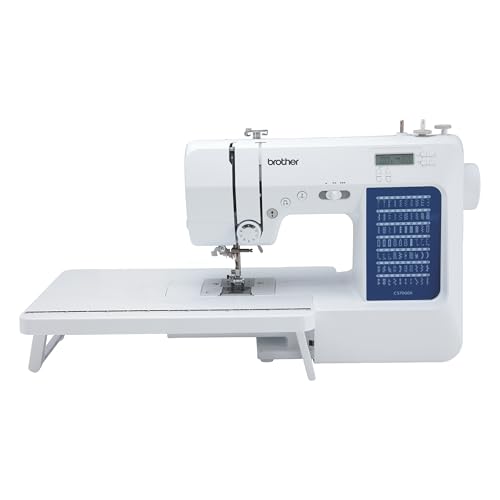
For a general household comparison, see our Singer 4423 review and Brother guide. These are different categories. Their presence here is to clarify that ordinary household versatility should not be confused with specialized footwear access or production capability.
A Project Check Before You Commit
Create an operation list from the pattern before contacting an equipment dealer. Mark which pieces remain flat, which seams close a tube, and which areas become inaccessible after assembly. Bring that sequence with the samples so the recommendation addresses the whole process.
A machine selected for one upper-closing seam may still need complementary equipment for another stage. Understanding those boundaries before purchase prevents an apparently capable machine from becoming a bottleneck when the project reaches final assembly.
Frequently Asked Questions
Can a household heavy-duty machine make shoes?
It may perform some suitable textile or light panel seams, but that does not establish capacity for complete footwear construction. Define the materials, seam stack, access, and operation before deciding whether a household machine has a useful role.
Is post-bed or cylinder-bed better for shoe making?
The required access decides. A raised post and a cylindrical arm support different ways of maneuvering shaped components. Have the actual operation demonstrated on the exact machine rather than choosing a bed type in isolation.
Can a Juki DNU-1541 stitch shoe soles?
It should not be recommended as a general sole-stitching machine. It is a flat-bed unison-feed straight-sewing comparison for accessible work. Sole attachment requires equipment matched to the construction and process.
What should I bring to a machine demonstration?
Bring the actual material stack, shaped component, thread requirement, and marked seam, including the tightest curve and thickest transition. Ask to see loading and unloading as well as stitching, because access may be the deciding limitation.
Is a used footwear machine a good investment?
It can be if the exact model, condition, complete station, parts, and service fit the job. Inspect a stitched sample and calculate setup costs before comparing the used offer with a supported alternative.
Keep an approved sample from the demonstration with its settings and material identification. Use it as an acceptance reference when the delivered station is installed, rather than judging the shipment only by whether the motor runs.
Final Recommendation
Buy a shoe-making machine for a defined operation. Investigate a suitable post-bed or cylinder-bed for shaped upper access, and keep flat-panel sewing, repair access, and sole attachment separate. The best choice is the complete station that demonstrably produces your required seam with acceptable appearance and support.