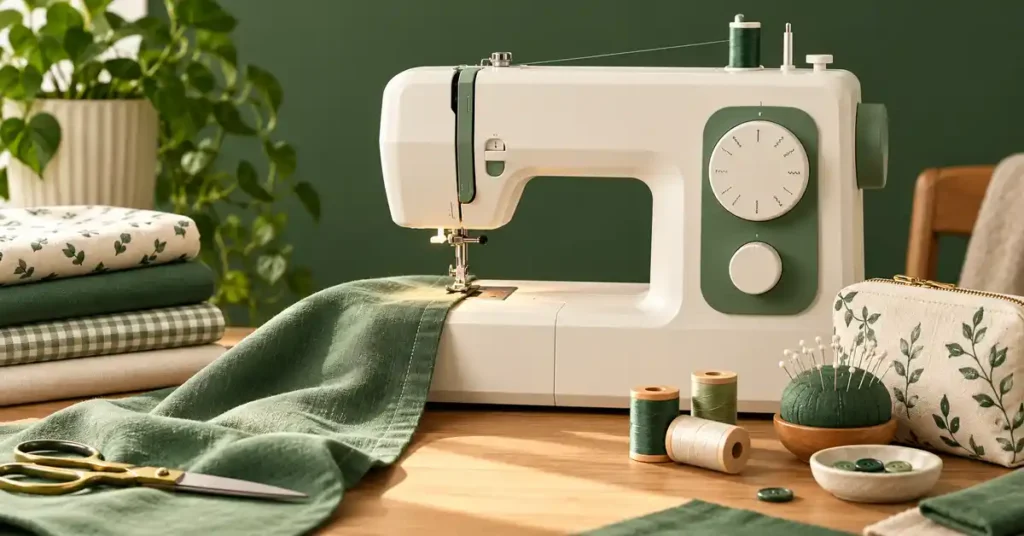
The best sewing machine under $200 should provide dependable basic functions without leaving essential purchases outside the budget. New, refurbished, and used offers can look similar while including different accessories and support. This guide explains a realistic shortlist, the controls that deserve attention, and a first-project plan so you can compare a usable sewing setup rather than choosing the smallest price attached to the longest list of advertised stitch applications.
As an Amazon Associate, Practical Textile earns from qualifying purchases. Product links may earn us a commission.
Quick Answer
Start by checking the Brother CS5055’s complete current offer, then compare a qualifying GX37 or a demonstrably sound used mechanical machine. Include tax, delivery, essential supplies, and missing accessories in the limit. Other products discussed are comparisons, not a promise that every offer qualifies below $200.
This guide compares published specifications and project fit; it does not report hands-on testing.
Brother CS5055
Verify the delivered total and avoid assuming advanced automation.
Brother GX37
Compare only an offer that fits the full budget and support needs.
What Should a $200 Setup Provide?
| Priority | Why it matters |
|---|---|
| Basic seams and suitable zigzag | Common learning and repair work |
| Usable buttonhole process | Clothing beyond open seams |
| Correct controller, bobbins, and feet | A complete working purchase |
| Clear manual and return terms | Independent setup and fault resolution |
Brother CS5055: Compare the Real Controls
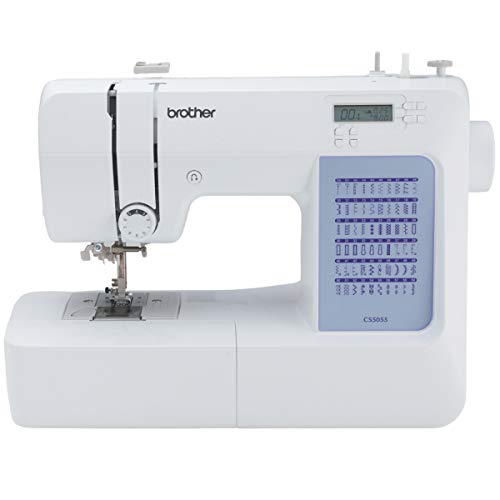

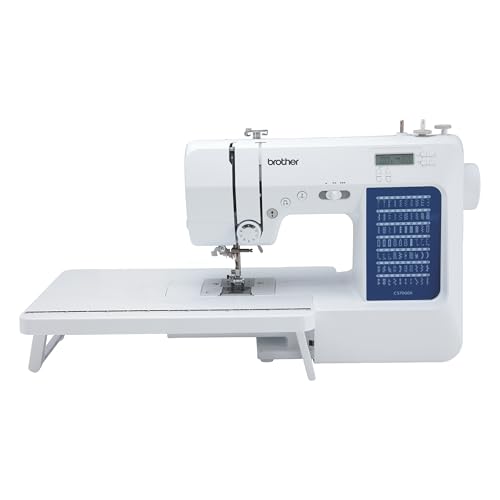
The CS5055 provides electronic stitch selection and a display. The manufacturer’s checked offer places it in the budget conversation, but the exact seller and final total still decide whether it fits your ceiling. Do not freeze a past advertised price into a permanent claim.
Electronic selection does not mean a speed slider, start/stop button, automatic cutter, or memorized needle-stop key. Those are not the reasons to choose this model. Compare it for its actual stitch-selection approach, ordinary household functions, and complete offer.
A learner should thread it and change between the few stitches needed for the first project. If those actions feel understandable, the display may be useful. If the main requirement is electronically limiting the pace, identify a different model with that feature rather than paying for the word computerized.
Brother GX37: A Different Mechanical Route
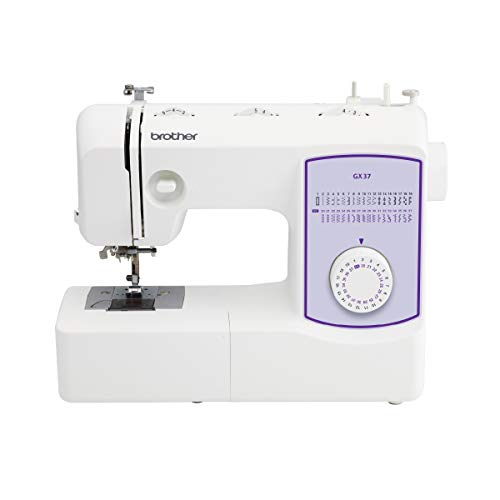
The GX37 offers mechanical operation. Compare a qualifying offer when direct dials suit the buyer and the full package stays inside the budget. Check condition and return terms; a new listing, refurbished unit, and incomplete used machine are not the same purchase.
Practice a slow start and the buttonhole sequence with appropriate support. A machine recommended for beginners still needs suitable needles, thread, preparation, and instruction. A direct interface can be helpful without eliminating the learning process.
A Used Machine Can Be Value or a Repair Project
A local used offer can be sensible when demonstrated, complete, and supported. Ask to wind a bobbin, thread the machine, sew forward and reverse, and make the required buttonhole. A light that turns on is not an adequate sewing demonstration.
Price the correct controller, missing feet, inspection, and transport before deciding. A low untested price should not be compared with a complete supported machine as though both provide equal confidence. Reserve part of the budget for essentials instead of spending every dollar on the unit.
Five Budget Benefits and Two Boundaries
- A focused utility selection can cover useful first projects.
- A complete package reduces immediate accessory shopping.
- Direct controls or a clear display can support learning.
- Basic garment functions broaden use beyond straight scraps.
- A modest investment leaves room to learn actual preferences.
Two boundaries deserve emphasis: this budget does not promise industrial heavy-material capacity, and a small household machine does not become automatic embroidery equipment because it offers decorative stitches.
Read our GX37 review, Brother comparison, and operating-style guide. Use the repair guide and simple bag projects to define a practical first task.
Project Preparation and a Repeatable Sewing Setup
The following starter-project checks help preserve a limited equipment budget. Choose instructions and materials that match the machine, practice the relevant seam, and finish a useful modest item before deciding which additional tools are necessary.
Define a useful first project
Choose something you want to use and whose construction you can describe. A simple accessory, stable woven garment, or straightforward elastic-waist project can teach valuable skills. The best starting point depends on your equipment, materials, and willingness to learn a particular operation. A small garment with tiny curves may be harder than a larger simple shape.
Read the complete instruction sequence before committing. List unfamiliar tasks such as a zipper, lining, buttonhole, fitted sleeve, or delicate hem. Decide whether you want to practice one of those now or choose a different project. A pattern marketed as easy can still include a step that is new to you.
Keep the first material manageable. A stable woven fabric can make marking and seam control easier, but it must still suit the chosen design. Do not substitute it into a stretch pattern just because it seems easier to sew. Learn the skill within a compatible pattern-and-fabric combination.
Find a legitimate free pattern source
Use the designer’s own current resource or an authorized distribution route. Mood’s free-pattern library is one example of a maker-published collection with several garment categories. WeAllSew and Clover also publish project tutorials that identify their patterns or templates. Check the actual project page rather than assuming every image is accompanied by a complete downloadable file.
Read what the download includes. Some resources provide full instructions and multiple print formats, while others assume particular experience or offer only a template. A free pattern may require an email step or another legitimate download process. Confirm the current terms and contents instead of treating an old social-media description as the authoritative source.
Avoid unverified reposts whose files, scale, completeness, and permission are unclear. Keep the designer name, pattern title, version, download date, and instructions together. When sharing the resource, link to the original page rather than redistributing the files as if they were your own creation.
Separate body measurements from clothing labels
Take the measurements requested by the pattern and use its own chart. Ready-to-wear labels vary and do not establish the corresponding sewing-pattern size. Record the units carefully. A conversion error or a measurement taken at the wrong waist position can affect fit before the fabric is cut.
Check finished-garment measurements as a different type of information. They help explain intended ease and the actual size of the completed item. A loose style and a fitted one should not have the same relationship to body measurements. Do not remove ease automatically because the garment number looks larger than the body number.
Include relevant lengths and shape considerations. Bodice length, upper arm room, rise, sleeve length, or skirt length may matter independently of circumference. Choosing one larger overall size does not necessarily correct a length issue or a particular fit difference.
Compare instructions before comparing price
A useful beginner pattern explains the sequence, piece identification, markings, seam allowance, and finishing. Diagrams and written directions should make the task understandable at your current experience level. A free advanced pattern can still be a valuable resource, but it should not be mistaken for a complete first lesson simply because it costs nothing.
Look for material and equipment requirements that are specific enough to act on. A list saying only fabric and thread may leave important questions unresolved if the construction depends on interfacing, elastic, a particular zipper, or lining. Read the project through and make a complete supply list before starting.
Check whether corrections, version notes, or clarifications are available on the original page. Save the current instructions with the pattern instead of printing only the pieces. A pattern file without its accompanying explanation may be much less useful several months later when you return to the project.
Prepare a realistic material and supply list
Use the quantity for the selected size and the actual usable fabric width. Directional prints, nap, stripes, checks, or large motifs may require a different layout. A yardage estimate for plain fabric should not be treated as a guarantee about matching a large repeated design.
Include interfacing, lining, closures, elastic, thread, and any specific foot or tool the construction requires. Check compatibility before buying a large accessory set. An unfamiliar tool should have a clear purpose in the project rather than appearing in the basket simply because it was suggested beside the pattern.
Prepare the materials according to their instructions. Test a seam and the intended pressing method, especially when the fabric is unfamiliar. A removable marking product should be tested too. A fabric can be easy to sew yet react poorly to a mark or heat setting used without a sample.
Make learning samples that answer one question
If the project introduces a zipper, make a small zipper opening sample. If it uses an elastic casing, test the complete channel and elastic join. If it needs buttonholes, sample the intended interfaced stack with the actual button. These small exercises address the difficult operation without risking the whole garment.
Keep each successful sample with the pattern and note the materials and settings. A sample made from very different cloth can show the sequence but may not prove the final behavior. Make a representative version where fabric thickness, stretch, or drape changes the operation.
Change one factor at a time when comparing results. If the foot, needle, thread, stitch, and fabric all change together, it becomes difficult to identify the useful adjustment. A small documented experiment builds a more reliable reference than repeatedly sewing the same unlabeled scrap.
Use a simple first-project worksheet
Write the pattern name, chosen size, body measurements, finished-measurement check, fabric, and one skill you intend to learn. Add the unfamiliar steps and the sample you will make for each. Note the fitting stage before the construction becomes difficult to open or alter.
For an illustrative project, suppose a beginner wants a simple woven skirt with an elastic casing. The worksheet would check the designer’s size and ease, whether the fabric opening can pass over the hips, the elastic’s actual fit and recovery, the casing allowance, and the hem. Those are more useful learning targets than downloading ten unrelated skirt files without reading their instructions.
Use a two-project learning plan
Choose one first project that teaches a small clear operation and one later project that builds on it. For example, an accurate straight-seam accessory can precede a simple garment with a closure or casing. The sequence should suit your interests and equipment rather than a universal ranking that every beginner must follow.
For each resource, keep the source page, complete files, scale test, size information, and supply list together. Read the instructions before printing a large set. If a free file lacks the guidance you need, choose another authorized resource or obtain suitable instruction instead of assuming that more downloads will fill the gap.
After completing the first item, write down one successful setup and one change for the next version. Be specific: adjust a length, practice a zipper sample, or choose a compatible fabric. A note saying that the entire pattern was difficult does not identify the next useful learning step.
For garment projects, include fit and movement in that record without treating a size mismatch as a personal failure. Patterns use different charts and design assumptions. The purpose of a sample is to understand and adapt that relationship before special fabric is committed.
Frequently Asked Questions
Is $200 enough for a useful machine?
A qualifying offer can support basic household work when complete and appropriate. The amount alone does not establish quality, condition, or suitability, so compare the actual package and sample.
Should I buy new or used?
Compare usable total cost, demonstrated condition, documentation, and support. A sound complete used machine can be useful, but an untested unit with missing parts is a different risk and budget.
Do I need many decorative stitches?
For a first repair or simple woven project, useful utility stitches and controlled operation matter more. Buy extra selections only when they support something you plan to make.
What belongs in the budget?
Include delivery, tax, suitable thread, needles, correct bobbins, required feet, and any inspection. A machine-only price can be misleading when those essentials are absent.
When should I spend more?
When a specific necessary control or operation is missing, or when the complete supported alternative is better value. Avoid upgrading only for a larger number on a feature list.
Final Recommendation
Check the CS5055 and a qualifying GX37 offer, then compare any used alternative through a proper demonstration. Keep the purchase complete and the first project realistic. A modest machine you can set up and use independently is the better budget result.