
Best Coverstitch Machines for Clean Knit Hems at Home
A coverstitch machine gives knit hems the flexible, twin-row finish seen on ready-to-wear T-shirts and leggings. We compare four serious home models and explain which features matter for your fabrics, space and sewing volume.
On this page
Quick answer
The Janome CoverPro 1000CPX is the best coverstitch machine for most home sewists because it combines standard cover hems, chain stitching and a roomy flat-bed work area. Choose the Juki MCS-1500 for faster production, the Brother 2340CV for simpler basics, or the Brother CV3550 when you need top-cover decorative finishes.
Key takeaways
- A coverstitch machine hems stretch fabric without popping stitches when the garment is worn.
- Threading, presser-foot pressure and fabric handling matter more than headline stitch speed.
- A wide flat-bed model is easier for hemming bulky T-shirt bodies and activewear.
- Top-cover stitching adds a decorative upper thread but also adds threading complexity.
Contents9 sections
A coverstitch machine is the right dedicated tool for stretch hems on T-shirts, leggings, underwear and activewear. For most home sewists, we would start with the Janome CoverPro 1000CPX: its broad working surface and useful core stitches make it easier to handle real garments, not just small fabric samples.
These are not overlockers with an extra stitch. A coverstitch forms parallel needle rows on the garment face and looper thread on the inside, so the hem can stretch with a knit fabric. The right model depends less on the number of decorative stitches than on the fabrics you sew, the amount you make and how willing you are to thread a more complex machine.
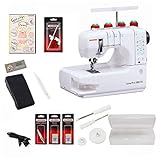
Janome CoverPro 1000CPX
- Wide flat work area
- Chain stitch included
- Core hem stitches

Juki MCS-1500
- High quoted speed
- Cover and chain stitches
- Strong production focus

Brother 2340CV
- Focused basic functions
- Chain stitch included
- Three cover widths
Coverstitch machines at a glance
The four machines below all make proper cover hems, but the Brother CV3550 is the only featured option with a top-cover system for a decorative upper thread.
| # | Photo | Product | Best for | Main drawback | Link |
|---|---|---|---|---|---|
| 1 |  | Janome CoverPro 1000CPX | Most home knit sewists | No top-cover capability | View |
| 2 |  | Juki MCS-1500 | Frequent small-batch sewing | No decorative top cover | View |
| 3 |  | Brother 2340CV | Simple T-shirt hems | Limited decorative options | View |
| 4 | | Brother CV3550 | Activewear and visible trims | More complicated threading | View |
How we chose these coverstitch machines
We chose these machines by their published stitch systems, physical working format, stated sewing speed and practical fit for home or small-batch knit sewing. A coverstitch is sensitive to setup, so we also prioritised models that provide the stitches buyers are likely to use rather than treating a long feature list as automatically better.
Useful stitch system, not stitch-count inflation
A two-needle narrow cover hem, wide cover hem, three-needle cover hem and chain stitch cover most garment work. Narrow spacing works neatly on small hems, while wide and triple rows look at home on T-shirt sleeves, waistbands and activewear. Chain stitch is useful for seams, binding and decorative construction because it unravels from the correct end when you need to remove it.
Top cover is a separate decision. It places an additional thread across the garment face, making the seam more decorative and often more like the visible finish on sportswear. It is valuable when you will use it, but it creates more threading paths and more opportunities for a missed guide or uneven tension.
Fabric support at the needle area
A hem is usually sewn after the garment has become a tube. The fabric must slide around the free arm or flat bed while a folded edge stays at a constant distance from the needles. A larger, flatter work area gives better support for a T-shirt body, a hoodie hem or a long legging leg and reduces the tendency to pull the fabric sideways.
Speed must remain controllable
Published maximum speed tells us about the machine’s production intent, not the speed at which a beginner should hem a neckband. Knit fabric can stretch, curl and shift under the presser foot. Good low-speed control, a marked hem allowance and a test sample are more important than pushing toward a stated maximum stitches-per-minute figure.
Threading and tension access matter every time
Most frustrating coverstitch faults are not proof that the machine is poor. A needle thread outside one guide, a looper thread not seated in its tension discs, a blunt needle, or an incorrect presser-foot setting can cause skipped stitches and loose underside loops. We favour a simpler standard-cover machine for buyers who do not genuinely need top cover.
Parts and consumables should be easy to confirm
Before ordering, check that the listing identifies the needle system, included feet, accessory compatibility and local service support. Buy the correct needles rather than guessing from domestic sewing-machine needles; the needle scarf, shank and length must match the machine. Also check whether the model accepts a clear foot, binder or hemming attachment if those are part of your plan.
Janome CoverPro 1000CPX
Janome CoverPro 1000CPX
Best for: Most home knit sewists
Its wide flat-bed format and core coverstitch options suit the hemming work most home sewists actually do. It is the sensible starting point when you want a dedicated machine rather than a feature-heavy specialty finish.
- Needle positions: 1, 2 or 3
- Stitches: Cover and chain
- Maximum speed: 1,000 spm
What we like
- Wide flat work area
- Chain stitch included
- Core hem stitches
- Straightforward feature set
Watch out for
- No top-cover stitch
- Threading needs care
- Slower than Juki
Skip it if: visible top-cover trim is central to your garment range.
The Janome CoverPro 1000CPX earns the overall place because it focuses on the stitches that solve the central problem: hemming stretchy garments cleanly without breaking a straight-stitch seam in wear. Its 1-, 2- and 3-needle arrangement gives narrow, wide and triple cover options, while the chain stitch adds useful construction flexibility. The broad, flat format is especially appealing when a folded hem has to travel around a larger garment section.
This is a good match for jersey T-shirts, cotton-elastane leggings, sweatshirt knits and underwear, provided the fabric is prepared properly. Press the hem first, typically keeping the fold consistent at about 25 to 30 mm where the pattern allows, and practise on a tube made from the same fabric. A coverstitch has no cutting knife, so you must trim the seam allowance accurately before it reaches the machine.
Check the current listing for included feet, needle pack, cover, waste catcher and compatible binders, since bundles vary by seller and market. Compared with the Juki MCS-1500, the Janome has a lower quoted top speed; compared with the Brother CV3550, it avoids top-cover complexity. That makes it a more balanced purchase for a sewist who wants dependable ordinary hems rather than a specialty visible trim.
Juki MCS-1500
Juki MCS-1500
Best for: Frequent small-batch sewing
The MCS-1500 is built around a conventional coverstitch layout with a notably high quoted sewing speed. It suits makers who sew many knit hems and can justify a machine focused on efficient repeated work.
- Needle positions: 2 or 3
- Stitch types: Cover and chain
- Maximum speed: 1,350 spm
What we like
- High quoted speed
- Cover and chain stitches
- Strong production focus
- Multiple cover widths
Watch out for
- No top-cover stitch
- Fast speed needs control
- Less beginner-oriented
Skip it if: you sew only occasional repairs or need top-cover stitching.
The Juki MCS-1500 is the production-minded standard-cover option in this group. Its quoted maximum of 1,350 stitches per minute is higher than the other featured machines, which matters when you repeatedly sew stable hems on a small apparel run. It still offers the practical cover and chain-stitch family rather than turning the machine into a decorative-stitch sampler.
Fast stitching does not remove the need to control feed. On a lightweight viscose jersey, pulling the garment from behind can lengthen the fabric as it enters the needles, leaving a lettuce-like wavy hem when released. On a dense cotton-spandex rib, several seam intersections can create a thick point; approach it steadily, support the fabric level with the needle plate, and sew a sample over the same number of layers first.
Confirm the supplied presser feet, needle type and current accessory range on the listing before buying. The MCS-1500 makes more sense than the Janome when volume is high enough that its speed is useful, but it does not offer the upper decorative top-cover effect of the CV3550. For occasional T-shirt shortening, the extra production focus may not repay itself.
Brother 2340CV
Brother 2340CV
Best for: Simple T-shirt hems
The 2340CV covers the essential cover-hem and chain-stitch work without paying for a top-cover system. It is a practical fit for sewists who want ready-to-wear-looking knit hems and prefer fewer thread paths.
- Needle positions: 2 or 3
- Stitches: Cover and chain
- Maximum speed: 1,100 spm
What we like
- Focused basic functions
- Chain stitch included
- Three cover widths
- Less complex threading
Watch out for
- No top cover
- Narrower feature range
- Still needs samples
Skip it if: you plan to make visible athleticwear trims or decorative neckline binding.
The Brother 2340CV is the sensible basic choice when you want standard cover hems and chain stitches without a top-cover thread path. It provides 2- and 3-needle work, giving the common narrow, wide and triple-row looks used on knit garments. That is enough for most T-shirt, sleeve, legging and casualwear hemming.
A less complicated thread route is a real advantage for a first dedicated coverstitch machine. Every additional thread must be placed in the right guide, tension unit and take-up route; when it is not, the underside can look loose or the needles can skip. The 2340CV does not eliminate setup practice, but it avoids buying a capability that many home sewists will rarely select.
Check exactly which accessories are in the current package and whether the seller can supply the feet you may later want. Compared with the Janome, choose based on the work area and included package rather than assuming that basic coverstitch quality follows the brand name alone. Compared with the Juki, it trades the higher published speed for a more straightforward, home-focused proposition.
Brother CV3550
Brother CV3550
Best for: Activewear and visible trims
The CV3550 adds a top-cover thread system for a more decorative, commercial-style upper surface. It is the strongest choice here when topstitch appearance matters, provided you will use that feature often enough to accept the more involved setup.
- Needle positions: 2 or 3
- Stitches: Cover, chain, top cover
- Maximum speed: 1,100 spm
What we like
- Top-cover capability
- Decorative visible finish
- Cover and chain stitches
- Useful for activewear
Watch out for
- More thread paths
- Longer changeover
- Higher setup demand
Skip it if: ordinary twin-row hems are all you need.
The Brother CV3550 is the one to consider when the upper face of the seam is a design feature. Its top-cover system can lay a visible thread pattern across the needles’ work, which suits contrast thread on activewear, decorative necklines, children’s clothing and exposed binding. It also remains a conventional coverstitch and chain-stitch machine when you do not need that finish.
Top cover needs a deliberate setup routine. The upper covering thread adds another route, and thread choice becomes more visible because it sits on the outside of the garment. Smooth polyester all-purpose thread is usually the lowest-risk starting point for the needles and looper; decorative thread should be checked against the manual and sampled slowly, because bulky thread can change tension behaviour and pass poorly through guides.
Confirm the available top-cover accessories and included foot in the listing, especially if you plan to bind necklines or apply elastic. This is not automatically the best model simply because it has more functions. If 90% of your work is a plain matching-thread hem, the Janome, Juki or Brother 2340CV gives a simpler route to the result; if visible finish is part of your product identity, the CV3550 justifies its extra setup.
What should you check before buying a coverstitch machine?
The best coverstitch machine is the one that supports your garment fabrics, fits your work surface and has the stitch system you will use every week.
Know what a coverstitch does and does not do
A coverstitch machine does not cut an edge or wrap thread around a raw edge in the way an overlocker does. It is normally used on a pre-folded hem, an edge already enclosed by binding, or a seam construction where the raw edge is dealt with separately. If you need one machine to trim seam allowances and finish woven or knit seams, read our guide to a good overlocker sewing machine first.
Some combination machines include overlock and cover functions, but converting between systems takes time and complete rethreading. A dedicated model makes more sense once you hem knitwear regularly. For a closer look at that choice, see our explanation of a sewing machine with coverstitch.
Match needles, thread and fabric weight
Use the needle system and sizes stated in the manual. Fine single jersey around 140 to 180 GSM generally needs a smaller needle than a dense ponte or sweatshirt knit around 280 to 350 GSM, but the manual and a sample determine the actual choice. Replace a needle after a strike, a bent tip or unexplained skipped stitches; a tiny burr can catch filament yarn and damage the stitch formation.
Thread should run freely from the cone to the tension system. Four cones of similar smooth polyester thread make a stable starting point for a standard cover hem. Woolly nylon or textured thread may be useful in a looper where the manual permits it, because it gives soft coverage, but it changes bulk and tension; do not tune a garment on one thread type and then substitute another.
Check hem width, clearance and fabric handling
Measure the hem position you actually sew. A child’s sleeve or underwear leg opening may need a narrow cover width, while an adult T-shirt hem looks balanced with a wider row. Look at the distance from needle positions to the outer edge of the presser foot and decide whether you can see your folded edge while guiding a tubular garment.
Very light knits tend to curl at the cut edge and stretch under the foot. Pressing, a washable stabiliser where suitable, or a strip of lightweight fusible hem tape specified for stretch fabric can make feeding more controlled; follow the product label and test for stiffness and recovery. Thick fleece, bulky seams and sharply raised elastic joins require a slow approach, because the foot must climb the height change without deflecting the needles.
Plan space, noise and workflow
Leave enough bench space for the machine plus fabric on both sides. A large T-shirt body can pull down from the table edge and distort the feed if it is unsupported. Put the thread stand where cones can feed vertically without rubbing a wall or shelf, and use a stable table: vibration at speed can make a light folding table walk across the floor.
Plan where the overlocker, sewing machine and coverstitch will sit during garment assembly. In a small workroom, a machine that stays threaded and ready often saves more time than a combined machine that must be converted. Keep spare needles, tweezers, a lint brush and a small screwdriver in the same place as the machine.
Expect routine cleaning and adjustment
Clean lint from the needle plate, looper area and feed-dog region at the interval in the manual, and more often after brushed sweatshirt fabric, fleece or heavily shedding knit. Unplug the machine before cleaning or changing needles. Use only the oiling points and oil type specified by the manufacturer; indiscriminate oiling attracts lint and can stain pale fabric.
Change one variable at a time when tuning a stitch. Start with new needles, correct threading and the manual’s default tension settings. Then sew 150 to 200 mm on a double-layer sample with the same hem fold and seam crossing as the garment, inspect both sides while relaxed, and make small tension changes only when you can identify the fault.
- Garment face
- Standard cover: Two or three needle rows
- Top cover: Decorative upper thread
- Garment inside
- Standard cover: Looper thread coverage
- Top cover: Looper thread coverage
- Thread path
- Standard cover: Needles and looper
- Top cover: Needles, looper, top spreader
- Best use
- Standard cover: T-shirts and leggings
- Top cover: Activewear and visible trims
- Setup demand
- Standard cover: Lower
- Top cover: Higher
Choose the stitch system that matches the finish you need.
Make a sample before every new fabric
Coverstitch appearance depends on recovery as well as stitch formation. A hem that lies perfectly flat while held taut can ripple after washing or relax with a loose underside loop. Stretch the sample across the stitch line, release it, turn it over, and look for consistent looper coverage. If you alter needle size, fabric, thread brand, number of layers or presser-foot pressure, sample again.
- Cut two fabric pieces at least 100 mm wide and include a seam crossing if the garment has one.
- Press the same hem allowance used in the garment and mark the fold with a washable marker if needed.
- Thread the machine in the manual’s stated order, with the presser foot raised while seating threads in tension discs.
- Sew slowly for the first 50 mm and guide the fabric without pulling it from the rear.
- Inspect needle rows, underside looper coverage, stretch recovery and any waviness before sewing the garment.
- Press hemPress a consistent 25 to 30 mm turn-up.
- Fit needlesUse new needles specified for the machine.
- Thread machineFollow every guide in the stated order.
- Sew sampleUse the garment fabric and hem thickness.
- Inspect undersideCheck looper coverage and needle loops.
- Hem garmentGuide fabric without pulling it forward.
Make a sample before sewing the garment.
Recognise the common faults
Do not chase a tension problem until you have checked basic threading and needle condition. Needle threads often need to be drawn into their tension discs correctly, while the looper thread needs every guide in its route. If a machine was threaded with the presser foot down, lift the foot and rethread from the spool onward rather than tugging threads into place.
Most skipped stitches start with fabric control or threading.
FAQ
Is a coverstitch machine worth buying for home sewing?
A coverstitch machine is worth buying when you regularly sew knit garments and want flexible, ready-to-wear-looking hems. It is less useful for occasional alterations or mainly woven projects, where a zigzag, twin needle or overlocker may be enough.
Can a coverstitch machine replace an overlocker?
No. A coverstitch machine usually does not trim fabric or enclose a raw edge like an overlocker. Many garment makers use an overlocker for seam construction and a coverstitch machine for hems, binding and selected seam finishes.
Which coverstitch machine is easiest for beginners?
The Brother 2340CV is the simplest featured option because it provides standard cover and chain stitches without a top-cover thread system. Beginners should still allow time for threading practice and samples, since all coverstitch machines need accurate thread paths.
Why does my coverstitch machine skip stitches on knit fabric?
Skipped stitches commonly come from a wrong needle, worn or bent needle, incomplete threading, or fabric that is being pulled as it feeds. Fit new manufacturer-specified needles, rethread completely with the presser foot raised, and test on a scrap matching the garment layers.
Do I need top cover on a coverstitch machine?
You need top cover only if you want a decorative thread on the visible garment face, such as contrast athleticwear seams or exposed trims. Standard two- or three-needle cover hems are enough for most T-shirts, leggings, underwear and casual knitwear.
What thread should I use in a coverstitch machine?
Start with smooth polyester sewing thread in all needle and looper positions unless your manual states otherwise. It handles knit stretch well and makes tension faults easier to diagnose; use textured or decorative thread only after checking manual compatibility and sewing a sample.
Final verdict
Final verdict
Most buyers: Janome CoverPro 1000CPX. Wide flat bed and essential stitches cover most home knit hemming.
Check priceFrequent sewists: Juki MCS-1500. Higher quoted speed suits repeated small-batch hem production.
Check priceActivewear makers: Brother CV3550. Top-cover stitching creates a more visible decorative finish.
Check priceBuy the Janome CoverPro 1000CPX if you want the most balanced dedicated machine for ordinary knit garment hems. Move to the Juki MCS-1500 for frequent fast production, keep the Brother 2340CV simple for core work, or choose the Brother CV3550 only when top-cover styling will earn its place in your sewing.
