
Brother 1034DX Serger Review: Worth Buying in 2026?
The Brother 1034DX is a capable 3/4-thread domestic serger for garment seams, knit edges and rolled hems. We compare it with the established Brother 1034D and faster Juki MO654DE, then explain what matters before you buy.
On this page
Quick answer
The Brother 1034DX serger is a sensible choice for home sewists who want neat 3- or 4-thread overlock seams without moving to a costly professional machine. It suits light to medium garment fabrics best. Choose the Juki MO654DE instead if faster sewing and a more robust mechanical feel matter most.
Key takeaways
- The Brother 1034DX is best suited to home garment sewing with woven and knit fabrics.
- A serger trims, overlocks and feeds fabric in one pass, but it does not replace a regular sewing machine.
- Differential feed matters more than maximum speed when you sew jersey, rib knit or slippery lightweight fabric.
- Threading, cleaning lint from the loopers and changing needles are normal parts of serger ownership.
- The Juki MO654DE is the stronger alternative for frequent, higher-speed sewing.
Contents8 sections
The Brother 1034DX serger is a practical first or second machine for sewing clean garment seams, controlling knit edges and making narrow rolled hems. It is our best overall pick for the buyer searching specifically for this model because its 3/4-thread format covers the work most home sewists actually do. It is not a coverstitch machine, an industrial overlocker or a substitute for a straight-stitch sewing machine.
A serger earns its space when you sew knit clothing, make garments that need durable seam allowances, or want factory-style overlocked edges inside woven clothes. The important question is not whether its stitches look tidy on a sales sample; it is whether you can thread it, tune it on your fabric, clean it and obtain needles, thread and feet locally.

Brother 1034DX
- 3/4-thread versatility
- Differential feed
- Rolled hem capability
Brother 1034D
- Proven model line
- 3/4-thread stitches
- Differential feed
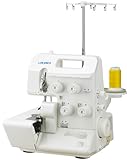
Juki MO654DE
- Up to 1,500 stitches/minute
- 2-thread capability
- Strong mechanical reputation
Brother 1034DX serger at a glance
The Brother 1034DX is a domestic 3/4-thread overlocker aimed at seams, edge finishing and rolled hems, while the two alternatives change the balance of familiarity, speed and thread options.
| # | Photo | Product | Best for | Main drawback | Link |
|---|---|---|---|---|---|
| 1 |  | Brother 1034DX | Home garment sewists | No coverstitch function | View |
| 2 | | Brother 1034D | Value-focused beginners | Older model design | View |
| 3 |  | Juki MO654DE | Frequent confident sewists | Less beginner-oriented setup | View |
How we chose these sergers
We compared the machines by the functions that determine whether an overlocker will sew useful garments rather than merely make an attractive sample seam. Product specifications, machine design and established owner feedback are useful starting points, but buyers should always confirm the current manual, included accessories, warranty terms and regional voltage on the retailer listing.
Thread configurations and stitches
A 4-thread overlock uses two needle threads and two looper threads. It gives a strong seam for T-shirts, leggings, pyjamas and many woven garments because it joins the fabric while enclosing the raw edge. A 3-thread overlock uses one needle and two loopers, so it is better regarded as edge finishing or a less stressed seam.
The Juki’s 2-thread capability adds certain lighter edge-finishing options. That is useful, but it should not outweigh the basics for a new buyer: correct threading, stable tension and differential feed. All three choices can make narrow rolled hems when set up correctly.
Differential feed and fabric control
Differential feed is a pair of feed motions that can move the fabric slightly unevenly before and behind the needles. This is essential on jersey, rib knit, rayon challis and lightweight woven cloth. With the right setting, the machine prevents a knit edge from stretching into a wave or gathers an edge intentionally.
We give it more weight than a headline speed figure. A serger that runs quickly but stretches every viscose jersey seam creates more waste than one that feeds reliably at a moderate pace. Test the setting on a 150 mm to 200 mm offcut before feeding a garment panel under the knife.
Needle, looper and knife access
Every domestic serger asks more of the operator during setup than a regular sewing machine. Four thread paths, tension discs, loopers and needle bars give more places for a thread to miss a guide. Clear colour paths, a readable manual, accessible looper area and a supplied threading tool reduce the learning burden.
The upper and lower knives also matter. The moving knife trims a consistent seam allowance immediately before the thread wraps the edge. Buyers should check whether replacement upper knives, needles and accessory feet are available from a reliable local dealer or the manufacturer in their country.
Speed, structure and realistic workload
Maximum stitches per minute tells us the theoretical top pace, not the pace at which a beginner can guide a curved armhole accurately. The Brother 1034D is commonly specified at 1,300 stitches per minute, while the Juki MO654DE is commonly specified at 1,500 stitches per minute. On home projects, stopping to align seams and lifting the presser foot usually matters more than the difference.
A domestic machine is suitable for regular personal sewing and small batches when maintained. It is not designed around continuous commercial shifts, very heavy multilayer assemblies or unattended use. If your business depends on daily production, ask a dealer about duty cycle, service access and whether a separate industrial overlock better fits the workload.
What the machine cannot do
None of these three is a coverstitch machine. A serger makes the seam and finishes its edge; a coverstitch makes the familiar parallel topstitch lines and looper underside seen at many ready-to-wear T-shirt hems. A serger can finish a hem edge, but it cannot duplicate that stretch hem without another machine or a suitable stretch stitch on a regular sewing machine.
For a fuller explanation of the distinction, see our guide to what a serger does. Understanding this before buying prevents one of the most common disappointments: expecting a single machine to make every seam, hem, buttonhole and decorative stitch.
- Thread system
- Brother 1034DX: 3 or 4 thread
- Juki MO654DE: 2, 3 or 4 thread
- Sewing pace
- Brother 1034DX: Home garment pace
- Juki MO654DE: Higher maximum speed
- Setup focus
- Brother 1034DX: Beginner-friendly layout
- Juki MO654DE: Mechanical durability focus
- Best workload
- Brother 1034DX: Occasional to regular
- Juki MO654DE: Regular high-volume sewing
- Fine edges
- Brother 1034DX: Rolled hem capable
- Juki MO654DE: Rolled hem capable
Relative differences buyers should consider before choosing.
Brother 1034DX
Brother 1034DX
Best for: Home garment sewists
The Brother 1034DX offers the core 3/4-thread serging functions most home sewists need for seams, seam finishing and rolled hems. It is the most direct choice for buyers specifically seeking the newer 1034DX design, provided the listing includes the accessorie
- Thread options: 3 or 4 thread
- Stitch type: Overlock serger
What we like
- 3/4-thread versatility
- Differential feed
- Rolled hem capability
- Compact domestic format
Watch out for
- No coverstitch
- Threading needs patience
- Not for heavy production
Skip it if: you need knit hems made with a coverstitch or need an industrial-duty production machine.
The Brother 1034DX makes the strongest sense for a home sewist whose work centres on clothing and who wants the normal 3- and 4-thread overlock repertoire in a compact domestic format. Use four threads for construction seams where strength matters, such as a sweatshirt side seam or cotton jersey shoulder. Use three threads when finishing a woven seam allowance, provided that seam does not need the structural strength of a four-thread seam.
Its differential feed is the practical feature to learn first. On a stable poplin scrap, begin near the normal setting and inspect whether both fabric plies leave flat. On a stretchy single jersey, increase the feed setting in small increments if the edge exits wavy; reduce it if a lightweight woven exits visibly gathered. Change one variable at a time, and keep a note of thread, needle, fabric and setting that worked.
Before ordering, check exactly which needles, thread nets, spool caps, tweezers, dust cover, waste catcher and feet are in the current package. Also read the current manual for the threading diagram and confirm whether the listing’s voltage matches your electrical supply. Compared with the 1034D, the 1034DX is the more direct choice for someone drawn to the current DX model; compare current package contents rather than assuming every seller provides the same bundle.
The machine is best on normal apparel fabrics: quilting-weight cotton, poplin, lawn, broadcloth, stable ponte, fleece, French terry, sweatshirt knit and many jersey fabrics. It may require more careful testing on slippery satin, open loose knits, thick piled fleece, multiple denim layers and highly elastic swimwear. Let the cutting width and seam construction suit the cloth instead of forcing a thick stack through the knife.
Brother 1034D
Brother 1034D
Best for: Value-focused beginners
The Brother 1034D is the long-established sibling option for sewists who want a familiar 3/4-thread domestic serger format. Compare the included feet, warranty, threading aids and current listing details directly against the 1034DX, because bundles and regiona
- Thread options: 3 or 4 thread
- Maximum speed: 1,300 stitches/minute
What we like
- Proven model line
- 3/4-thread stitches
- Differential feed
- Suitable for rolled hems
Watch out for
- Older design
- No coverstitch
- Accessory bundles vary
Skip it if: you want the newer 1034DX configuration or a machine intended for sustained high-volume work.
The Brother 1034D remains relevant because it is a widely known domestic 3/4-thread serger with the same core purpose: finish raw edges, form overlock seams and make rolled hems. A stated maximum of 1,300 stitches per minute is ample for home garment work. At that rate, fabric control matters: a sharp curve around a neckline or an uneven cut edge can still create a poor seam if fed too quickly.
It is particularly worth considering when the local dealer offers dependable support, a clear manual and an accessory bundle that suits your projects. Do not choose solely by the nameplate. Check whether the package contains the foot you need, whether optional feet are available, and whether the retailer can supply correct needles and replacement blades.
Against the 1034DX, the decision is less about a radically different stitch family and more about the current model, included items, support and your comfort with the machine’s setup information. Against the Juki MO654DE, the Brother is generally the simpler proposition for a first-time owner who does not need 2-thread work or the Juki’s higher stated speed. Neither Brother gives you coverstitch hems, so budget for a regular sewing machine or separate coverstitch if that finish is a requirement.
Thread quality affects both Brother models more than many beginners expect. Cheap, uneven cones shed lint and can snag at guides or tension discs. Buy four matching cones of good polyester overlocking thread for most garment projects, use the thread stand correctly, and do not mix cone sizes without checking that each cone unwinds freely.
Juki MO654DE
Juki MO654DE
Best for: Frequent confident sewists
The Juki MO654DE suits buyers who value a higher maximum sewing speed, 2/3/4-thread flexibility and a robust mechanical-serger reputation. It costs more in many markets, but it makes sense when a serger will see regular garment production rather than occasiona
- Thread options: 2, 3 or 4 thread
- Maximum speed: 1,500 stitches/minute
What we like
- Up to 1,500 stitches/minute
- 2-thread capability
- Strong mechanical reputation
- Rolled hem capability
Watch out for
- Higher learning curve
- Usually costs more
- No coverstitch
Skip it if: you only need occasional seam finishing and want the simplest first-serger purchase.
The Juki MO654DE is the better fit when the serger will work often and the buyer values a mechanically focused machine with 2-, 3- and 4-thread configurations. Its commonly listed maximum speed of 1,500 stitches per minute gives more headroom for long, straight seams once you are comfortable. The extra 2-thread option can be useful for lighter seam finishes and selected fabric treatments, though it does not replace the need for a correctly balanced 3- or 4-thread seam.
This is not automatically the best first serger simply because it has more capability. Beginners should allow time to learn the threading sequence, tension response and differential-feed behaviour. A looper thread placed outside one guide can look close to correct but produce hanging loops, thread breakage or a seam that unravels at the edge.
Choose the Juki over either Brother if you sew frequent garment batches, want the 2-thread option, and are willing to pay attention to setup and maintenance. Choose the Brother 1034DX if you want a more straightforward route to core overlock construction. For additional models and the differences among overlock formats, our overlocker machine comparison can help narrow the field.
Like the Brothers, the MO654DE has practical limits. Thick seams crossing jeans felled seams, jacket seam intersections or several layers of dense fleece can deflect needles and overload the cutting area. Grade bulky seam allowances where the pattern permits, approach intersections slowly and use a new, appropriate needle. Never sew across pins; a pin can damage a knife, needle or looper.
- Read the diagramFollow the machine's threading order exactly.
- Fit fresh needlesUse matching needles and seat them fully.
- Thread the loopersComplete lower looper before upper looper.
- Thread needlesPass thread through every guide and tension disc.
- Test on scrapsCheck loops meet at the cut edge.
- Adjust feedCorrect stretch or puckering before sewing garments.
Use scraps to establish a stable seam before cutting project fabric.
What should you check before buying a serger?
You should check fabric needs, stitch needs, consumables, workspace and service support before buying a serger. The machine itself is only one part of the system: thread cones, needles, blades, cleaning tools and a stable table determine how pleasant it is to use after the first week.
Match the serger to your fabrics
For T-shirts, leggings and children’s knitwear, prioritise a stable four-thread seam and differential feed. Cut two scraps on the grain, place them right sides together and run a sample seam. Stretch it gently after sewing; the threads should recover without breaking, and the seam edge should remain flat.
For woven dresses, shirts and bags, a three-thread overlock can finish seam allowances cleanly, but it is not always a construction seam. A fitted trouser crotch, a shoulder seam under strain or a bag handle needs a suitable structural stitch from a sewing machine, a four-thread overlock, or the construction specified by the pattern. The serger’s knife will cut whatever reaches it, including too much seam allowance, so mark seam lines carefully.
Know the thickness limit in practice
Domestic sergers cope best with apparel-weight layers that can pass evenly under the presser foot and knife. Thickness is not only a millimetre measurement: dense denim, foam-backed fabric, bonded fleece and seams with several folded allowances resist feeding far more than the same physical thickness of soft flannel. Test the exact stack, including seam intersections, before cutting your project pieces.
Do not use the knife as a cure for inaccurate cutting. If you remove a wide strip from every edge, garment pieces can become smaller and seam allowances can become inconsistent. Trim only enough to create a fresh, even edge for the loopers to wrap.
Assess threading and changing colour
Threading is the ownership task buyers most often underestimate. Take a photograph of the factory threading path before removing the first set of threads. When changing to a similar thread colour, many sewists tie new thread tails to old ones and draw them through the guides, but stop before the needle eyes and thread needles manually; follow the machine manual because knots should not be forced through tension discs or loopers.
For a full rethread, follow the stated order exactly. Normally the loopers come before needles because needle threads can obstruct access. Raise the presser foot before seating thread in tension discs, lower it before sewing, and turn the handwheel toward you only as directed by the manual.
Most faults come from threading, tension, needles or differential feed.
Plan for thread, needles and feet
A four-thread seam consumes thread rapidly because all four cones feed at once. Buy cone thread rather than small domestic spools for ordinary garment production, but check the cone stand, spool caps and thread nets supplied with the machine. Polyester overlocking thread is the usual versatile choice; match fibre and thread behaviour to the project when heat, dyeing or special performance is involved.
Use the needle system named in the manual, not a needle that merely looks similar. A slightly bent needle can miss the looper timing point and cause skipped stitches. Replace needles after a strike, after a noticeable run of sewing, or whenever stitches become unreliable; inspect the old needle under good light rather than trying to straighten it.
Optional feet can be useful, but purchase them for an identified job. Elastic application, blind hemming, beading and gathering feet may save time on repeated work. A basic foot and confident differential-feed setup handle the majority of beginner garment seams.
Allow for lint removal and oiling
Sergers produce a surprising amount of lint because the knife cuts at every seam. Brush lint from the knife area, feed dogs, loopers and open covers after each substantial session. Do not blow compressed air into the machine; it can push lint farther into the mechanism.
Oil only at points and intervals specified in the current manual. Keep oil away from tension discs, thread paths and fabric, and place a scrap under the foot before sewing after oiling. For any unusual noise, a damaged knife, timing concern or repeated thread breakage after correct rethreading, use authorised service rather than dismantling the machine.
Give the machine a suitable workspace
Set a serger on a rigid table where all four cones can stand upright and unwind freely. Leave room behind the machine for fabric to exit without pulling downward, and use a bright task light so you can see thread guides and stitch formation. A waste catcher helps contain trimmings, but empty it before the cuttings press into the looper area.
For small-business use, calculate realistic output from the whole operation. A serger may stitch at over 1,000 stitches per minute, but fabric spreading, cutting, pressing, matching panels, checking seams, rethreading and packing set the actual hourly output. Build a sample garment first and note the minutes at each operation before committing to delivery dates.
FAQ
Is the Brother 1034DX serger good for beginners?
Yes, the Brother 1034DX can suit a beginner who accepts that serger threading takes practice. Start with four matching thread cones, follow the manual's threading order, and test on scraps before sewing a garment. It is easier to learn one stitch setup thoroughly than to change every setting at once.
Can the Brother 1034DX sew a T-shirt seam?
Yes, a 4-thread overlock seam is appropriate for many T-shirt seams because it joins and finishes the knit fabric in one pass. Use differential feed to prevent the cut edge from stretching into a wave. Test the seam stretch and recovery on the exact jersey before sewing the shirt.
Does the Brother 1034DX make a coverstitch hem?
No, the Brother 1034DX is a serger rather than a coverstitch machine. It can overlock a hem edge or create a rolled hem, but it does not make the two parallel topstitch lines found on many ready-to-wear knit hems. Use a sewing machine stretch stitch or a separate coverstitch machine for that finish.
What is the difference between the Brother 1034DX and 1034D?
Both are domestic 3/4-thread sergers intended for core overlock seams, edge finishing and rolled hems. The practical buying comparison should focus on the current machine design, package contents, local warranty and available support. Confirm all included accessories on the specific retailer listing because bundles can vary.
Is the Juki MO654DE better than the Brother 1034DX?
The Juki MO654DE is better for buyers who want 2-thread capability, a commonly listed 1,500-stitches-per-minute maximum speed and a machine for frequent sewing. The Brother 1034DX is the more direct choice for a home sewist who wants standard 3/4-thread garment finishing. Neither is automatically better without considering your workload and comfort with setup.
Why does my serger seam make waves on knit fabric?
A wavy knit edge usually means the fabric stretched while passing through the feed system. Increase differential feed gradually and sew another sample using the same fabric grain and number of layers. Also avoid pulling the fabric behind the presser foot, because that can stretch the seam while it forms.
Final verdict
Final verdict
Value-focused beginners: Brother 1034D. Established domestic-serger format with familiar core functions.
Check priceFrequent sewists: Juki MO654DE. Higher speed and 2-thread capability suit regular output.
Check priceThe Brother 1034DX is the sensible best overall choice for home sewists who want capable 3/4-thread garment serging and are prepared to learn proper threading and routine lint removal. Select the 1034D when its current package and local support offer better value, or move to the Juki MO654DE when regular output and 2-thread flexibility justify the more demanding purchase.