
Best Quilting Frames for Home Sewing Machines Compared
A quilting frame keeps the quilt sandwich supported so you can move a home sewing machine with less drag and less strain. We compare compact Grace Q-Zone frames, the expandable Grace Continuum system, and general machine quilting frames to help you match the frame to your room, machine, and quilt size.
On this page
Quick answer
The best quilting frame for most home sewing machines is the Grace Q-Zone Hoop-Frame because it gives a compact, supported quilting area without requiring a long rail system. Choose the Grace Continuum II Frame when you regularly quilt large bed quilts and have dedicated floor space for a longer frame.
Key takeaways
- A quilting frame supports the quilt sandwich; it does not increase a machine’s throat space.
- The Grace Q-Zone Hoop-Frame suits smaller rooms and quilters who want a contained quilting zone.
- The Grace Continuum II Frame makes more sense for repeated large-quilt work and permanent space.
- Check your machine’s carriage compatibility, throat depth, table height, and required frame length before ordering.
- Incorrect loading causes many stitching problems, including puckers, skipped stitches, and uneven density.
Contents8 sections
A quilting frame gives the quilt sandwich a controlled support system, reducing the pile of fabric that normally drags across a domestic sewing table. For most home sewing machines, we would start with the Grace Q-Zone Hoop-Frame: it is the practical compromise between useful quilt support and a home-friendly footprint. The Grace Continuum II Frame is the stronger choice when large quilts are regular work and a dedicated room is available.
A frame will not turn a 6.5-inch throat machine into a long-arm machine. It does, however, keep backing, batting, and quilt top flatter, so you can concentrate on stitch path, thread tension, and speed instead of wrestling fabric weight.
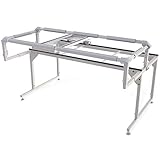
Grace Q-Zone Hoop-Frame
- Compact frame layout
- Made for domestic machines
- Contained quilting area
Grace Continuum II Frame
- Rail-supported workflow
- Suited to larger quilts
- Expandable system concept

Machine Quilting Frames
- Several layout options
- Can match available space
- Choices for domestic machines
Quilting frames at a glance
The right quilting frame is the one that fits your machine, your largest normal quilt, and the space you can leave occupied while you work.
| # | Photo | Product | Best for | Main drawback | Link |
|---|---|---|---|---|---|
| 1 |  | Grace Q-Zone Hoop-Frame | Small-room domestic-machine quilters | Quilt needs repositioning | View |
| 2 | Grace Continuum II Frame | Dedicated large-quilt makers | Large room footprint | View | |
| 3 |  | Machine Quilting Frames | Buyers comparing frame styles | Details vary by listing | View |
How we chose these quilting frames
We chose these quilting frames by comparing their published design, intended machine use, space demands, and the practical factors that determine whether a home sewist can actually use a frame successfully.
First, we considered machine support and compatibility. A domestic machine must sit level and remain stable while the operator guides it. A frame that flexes, an undersized carriage, or a machine positioned off-level can show up as uneven stitches, needle deflection, and operator fatigue. Always check the manufacturer’s current compatibility information for your exact machine model, not simply its brand.
Second, we looked at quilt handling. The real benefit of a frame is controlled management of the layers. A compact hoop system supports one working zone at a time, while a rail frame holds more of the sandwich and lets you advance it in stages. Neither layout is automatically better; the useful one depends on whether you make placemats and lap quilts or repeat bed-size quilts.
Third, we weighed floor area and storage. Measure the usable room rather than the empty-looking room. Allow space for the frame, a chair or standing position, machine access, the operator’s arm movement, and a clear route around the ends. A long frame placed too close to a wall becomes difficult to load, clean, and adjust.
Fourth, we considered loading control. The best frame is one that lets you apply even, moderate tension without stretching the backing. Cotton woven backings can distort if pulled tight, while knit, minky, or loosely woven fabrics can need additional stabilisation and gentler tension. A frame should make the quilt sandwich flat, not drum-tight.
Finally, we considered maintenance and upgrade burden. Rails, carriages, clamps, leaders, screws, and optional automation accessories all add parts that need occasional checking. A simpler setup may be better for occasional quilting; a larger modular system can be sensible when quilting is frequent enough to justify permanent space and more setup discipline.
- Quilt support
- Q-Zone Hoop-Frame: Hoop-supported zone
- Continuum II Frame: Full-width rails
- Room footprint
- Q-Zone Hoop-Frame: Compact footprint
- Continuum II Frame: Longer floor space
- Best quilt size
- Q-Zone Hoop-Frame: Small to medium
- Continuum II Frame: Medium to bed size
- Setup style
- Q-Zone Hoop-Frame: Contained work area
- Continuum II Frame: Dedicated frame station
- Best workflow
- Q-Zone Hoop-Frame: Move quilt sections
- Continuum II Frame: Advance quilt layers
Choose the frame layout before comparing accessories.
Grace Q-Zone Hoop-Frame
Grace Q-Zone Hoop-Frame
Best for: Small-room domestic-machine quilters
Its hoop-style layout gives a practical supported quilting area without committing to a full-length rail frame. It is the strongest starting point for a home sewist who needs a compact, purpose-built setup.
What we like
- Compact frame layout
- Made for domestic machines
- Contained quilting area
- Less room commitment
Watch out for
- Requires quilt repositioning
- Not ideal for king quilts
- Compatibility needs checking
Skip it if: you routinely quilt large bed quilts and have space for a full rail frame.
The Grace Q-Zone Hoop-Frame is the best overall choice here because its hoop-style design addresses the main home-quilter problem: supporting a bulky sandwich without installing a room-length system. It gives the machine and quilt a defined work zone, which can reduce the pull that causes a domestic machine to make short stitches on one side of a curve or hesitate at a seam intersection.
This style works especially well for wall hangings, table runners, baby quilts, throws, and many lap quilts. You quilt one area, then release and reposition the project for the next area. That is slower than advancing a quilt on full rails, but it is often a fair trade for people who sew in a spare room, dining room, or shared studio.
Before buying, confirm the carriage or mounting arrangement is specified for your machine. Check the machine’s base dimensions, feet position, handwheel clearance, power-cord path, and whether the frame accommodates the depth of your machine body. Also check what comes in the package: some frame systems have optional leaders, bungee components, extension pieces, or other accessories that should not be assumed included.
Keep expectations realistic with dense quilting. A small home machine can quilt dense motifs on a frame, but heat, thread lint, needle wear, and limited throat space still set the pace. Use a fresh needle, clean the bobbin area frequently, and pause before the motor becomes hot. For help selecting a machine suited to this work, see our guide to a beginner quilting sewing machine.
Grace Continuum II Frame
Grace Continuum II Frame
Best for: Dedicated large-quilt makers
The Continuum II is the better direction for quilters who want rail-supported handling and an expandable work station. Its larger format can make advancing a bed quilt more orderly than repeatedly managing it in a hoop area.
What we like
- Rail-supported workflow
- Suited to larger quilts
- Expandable system concept
- Dedicated work position
Watch out for
- Needs more floor space
- Longer assembly
- More to align
Skip it if: your sewing space must return to normal use after each project.
The Grace Continuum II Frame is the better pick for larger quilts because its rail-oriented layout supports the full width of the quilt sandwich and lets you advance the layers in a repeatable sequence. That controlled advance is valuable on queen and king projects, where the weight and bulk of cotton batting, backing, and pieced top become difficult to manage on an ordinary table.
With a rail frame, the backing and top are attached to the system and rolled or advanced as each quilting section is completed. The process reduces the risk of trapping an unquilted fold under the needle, but it does not remove the need to check alignment. If the backing is mounted off-grain or one side is tensioned harder, the resulting quilt can skew or develop diagonal puckers after it is removed.
This is a more permanent purchase than a compact hoop frame. Measure from wall to wall, then plan clear working room at both ends. Check the offered frame size, whether extensions are available, the maximum and minimum machine footprint, table or carriage requirements, and which accessories are included. Do not choose a long frame based on quilt width alone; the operator must still be able to stand, sit, load, and service the machine comfortably.
The Continuum II makes the most sense when you quilt often enough to leave the station assembled. A high-speed straight-stitch machine can be a useful partner, but machine fit must be confirmed first. The Brother PQ1500S machine guide explains the sort of high-speed domestic-machine characteristics quilters should assess before matching a machine to any frame.
Machine Quilting Frames
Machine Quilting Frames
Best for: Buyers comparing frame styles
Machine quilting frames cover several layouts, from short hoop frames to long rail frames, so the correct choice depends on machine fit and room dimensions. Treat generic listings carefully and confirm included parts rather than assuming a carriage, leaders, o
What we like
- Several layout options
- Can match available space
- Choices for domestic machines
Watch out for
- Specification quality varies
- Included parts differ
- Fit may be unclear
Skip it if: Skip vague listings that do not state machine compatibility, frame dimensions, and included hardware.
Machine quilting frames are a broad category rather than one uniform product, and the listing details matter more than the category name. Some hold a quilt in a hoop-like working area; others use rails, rollers, clamps, leaders, or a moving carriage. A frame can be sturdy and still be the wrong purchase if it does not fit the machine or the room.
Generic and marketplace listings deserve an extra careful check. Look for a clear manufacturer name, model designation, assembly instructions, warranty terms, replacement-part availability, and a complete included-parts list. “Frame only” can mean no machine carriage, no leaders, no clamps, or no machine platform. Ask the seller directly if any point remains unclear, especially where a listing uses broad phrases such as universal fit.
For fabric work, examine the loading method. Smooth canvas leaders or secure clamp arrangements can make loading more repeatable, while weak clips and narrow contact points can mark delicate fabric or allow layers to creep. If you use flannel, minky, fleece, loose-weave linen, or a slippery satin backing, plan to baste and stabilise more carefully than you would with tightly woven quilting cotton.
What should you check before buying a quilting frame?
Check machine fit, working space, quilt size, loading method, and service needs before buying a quilting frame, because a mismatch in any one of these areas can make a sound frame frustrating to use.
Machine throat, base, and carriage fit
Throat space is the horizontal and vertical opening to the right of the needle. A frame supports the quilt, but it does not make that opening larger. With a smaller throat, you will work in narrower passes and must plan motif scale accordingly; broad pantograph-like curves and large blocks need more repositioning.
Check the machine’s external width, depth, weight, feet, and handwheel side against the frame documentation. The machine needs a stable, level support surface. If the machine rocks, the needle can deflect as it penetrates a seam, which increases the chance of skipped stitches, bent needles, and poor-looking tension.
Room dimensions and operator clearance
Measure the floor with a tape measure, not an estimate. Record the available length, depth, ceiling restrictions if relevant, door swings, radiator clearance, and the path needed to carry a finished quilt away from the frame. Add working clearance around the machine side and frame ends.
| Check | Why it matters | What to measure or confirm |
|---|---|---|
| Machine platform | Prevents rocking and flex | Machine base width and depth |
| Frame length | Determines quilt-width capacity | Assembled length and extensions |
| Working depth | Allows body and arm movement | Frame depth plus clear standing room |
| Access route | Allows loading and cleaning | Space at ends and rear |
| Storage plan | Prevents damage between projects | Whether it stays assembled |
Fabric, batting, and thickness
Most pieced cotton quilts behave predictably when their layers are pressed and properly basted. Problems rise with high-loft polyester batting, thick seams, wool batting, plush backings, or combinations of these materials. The needle must penetrate the whole stack, and the presser-foot system must still form a consistent stitch without pushing the top layer ahead.
Use a quilting needle sized for the thread and fabric, following the thread and machine manufacturer guidance. Fine 50-weight cotton thread commonly needs a different needle choice from heavier 30-weight cotton or 40-weight polyester. Change needles early when quilting through dense seams: a slightly damaged point can pierce fibres poorly, snag thread, and leave inconsistent stitch formation.
Speed, stitch length, and stitch regulation
A domestic machine on a frame still relies on your movement speed unless it has a compatible stitch-regulation system. Move the machine too fast and the stitches lengthen; pause or move slowly and they shorten. Begin with simple meanders, loops, and gentle curves until your hands learn a steady travel speed.
Do not chase extremely small stitches. For many utility and free-motion quilting designs, a visually even stitch length is more important than a specific number. Very short stitches can perforate fabric along a repeated line, while very long stitches can catch or snag during normal quilt use. Make a test sandwich from the actual top fabric, batting, backing, and thread before committing to the quilt.
Loading method and backing allowance
Choose a frame with a loading method you understand, then allow enough backing and batting beyond the quilt top for that method. The required allowance varies by frame and attachment approach, so follow the frame manual rather than cutting close to the quilt top. A backing that is too small is difficult to tension evenly and leaves no margin for basting or attachment.
Square the backing before loading. Woven fabrics can look square when folded yet have a bowed cut edge; use the weave direction and a careful measurement check. Press seams open or to one side consistently, remove clipped threads, and repair weak seams before the project goes on the frame.
- Press layersPress top and backing; remove loose threads.
- Square backingKeep backing grain reasonably straight before attaching.
- Attach backingSecure evenly without stretching the fabric.
- Add battingLay batting flat; avoid compressed folds.
- Position quilt topKeep top smooth and align the centre.
- Baste edgesStabilise outer edges before dense quilting.
Even backing tension matters more than maximum tension.
Cleaning, lubrication, and replacement parts
Lint accumulates quickly when cotton batting and cotton thread are used together. Brush lint from the bobbin area at the interval recommended in the machine manual, and do not blow compressed air into the machine unless the manufacturer specifically permits it. Air can force lint farther into the mechanism.
Wipe rails and carriage contact surfaces with a clean, dry cloth so thread fragments do not impede travel. Check screws, clamps, and fasteners periodically, especially after moving the frame. Use only the lubricant and amount specified by the machine manufacturer; excess oil can migrate onto fabric and permanently mark a quilt.
Common setup mistakes to avoid
The most common mistake is loading every layer too tight. A taut surface may look neat before quilting, but fabric needs a little ability to relax as stitching adds thread and draws layers together. Aim for smooth, even support rather than a drum-like surface.
- Do not stretch the backing to remove wrinkles; smooth and reload it instead.
- Do not force a bulky seam under a low presser foot; use the machine’s recommended approach for thick areas.
- Do not start on the finished quilt without checking tension on a matching test sandwich.
- Do not leave pins, loose threads, or clipped seam ends where they can catch under the quilt.
- Do not ignore a new knocking sound, thread break, or needle strike; stop and inspect the setup.
Check loading and machine setup before changing stitch design.
FAQ
Can I use a regular sewing machine on a quilting frame?
Many quilting frames are designed to hold compatible domestic sewing machines, but compatibility is never automatic. Confirm the exact machine model, base dimensions, carriage requirement, handwheel clearance, and any adapter requirements in the frame manufacturer’s current documentation before ordering.
What size quilting frame do I need for a queen-size quilt?
The required frame size depends on its rail arrangement and how it advances the quilt, not only on the finished quilt width. Check the manufacturer’s stated quilting-width capacity, then allow enough room at the frame ends to load fabric and operate the machine.
Is a quilting frame better than free-motion quilting on a table?
A quilting frame is better when quilt bulk is causing drag, shoulder strain, uneven stitches, or difficulty keeping layers smooth. Table quilting remains a good option for smaller projects, especially when the machine has an extension table and the quilt is well basted.
How tight should a quilt be on a quilting frame?
The layers should be smooth and evenly supported, not stretched tight like a drum. Over-tight backing can distort woven fabric and can contribute to puckers when the quilt is released from the frame.
Do I need a stitch regulator for a quilting frame?
No, but a stitch regulator can help maintain more consistent stitch length while you move the machine. Without one, practise matching hand speed to motor speed on a test sandwich before quilting the finished project.
Can I quilt minky backing on a frame?
Yes, but minky can shift and stretch more than quilting cotton, so it needs careful loading and generous basting. Use moderate frame tension, test your needle and thread on scraps, and follow the fabric and machine manufacturers’ guidance.
Final verdict
Final verdict
Most buyers: Grace Q-Zone Hoop-Frame. Compact support for domestic-machine quilting without a permanent long frame.
Check priceLarge-quilt makers: Grace Continuum II Frame. Rail workflow suits repeated bed-quilt projects in dedicated space.
Check priceCareful comparers: Machine Quilting Frames. Use only when the listing clearly confirms compatibility and included components.
Check priceChoose the Grace Q-Zone Hoop-Frame if you want the most practical quilting-frame entry point for a home sewing machine and limited room. Move to the Grace Continuum II Frame when bed quilts and a dedicated quilting station are part of your regular workflow. In either case, careful machine-fit checks and even loading matter more than buying the largest frame available.
