We earn a commission if you buy through links on this page, at no extra cost to you. Product suggestions are based on dye chemistry, manufacturer instructions and 14 years of industrial dyeing experience, not on hands-on product trials; we may earn a commission from Amazon links.
Quick answer
Let tie dye sit at least 6–8 hours before rinsing, and up to 24 hours for the deepest, brightest colour. This applies to fibre-reactive dye with soda ash at a warm room temperature, above about 21°C (70°F). In a colder room, leave it the full 24 hours. Keep the shirt damp and covered the whole time, because the dye needs alkali, moisture and warmth to bond to cotton.
How long should tie dye sit before rinsing?
For most tie-dye kits and fibre-reactive dyes on cotton, the answer is 6 to 8 hours as a minimum. If you want dark, saturated colours, or you are using black, navy, red or turquoise, leave it 24 hours. Past about 24 hours you gain very little, so there is no point leaving it for two or three days.
Two things change that number: the room temperature and the type of dye. A warm kitchen fixes dye far faster than a cold garage, and an all-purpose dye like Rit does not work the same way as a reactive kit. The table further down gives sit times for each case.
Good to know
"Sit" and "set" mean the same here. Whether you search how long to let tie dye set or how long to leave tie dye before rinsing, you are asking how long the dye needs to fix (bond) to the fibre.
Why tie dye needs time to sit: the chemistry in plain words
Tie-dye kits such as Tulip, and craft dyes such as Procion MX, use fibre-reactive dyes. These dyes do not just stain cotton. They form a real chemical bond with the cellulose in the fibre, which is why a well-made tie-dye shirt stays bright for years.
That bond only forms under three conditions:
- Alkali. Soda ash raises the pH so the cotton becomes reactive. Some kits pre-mix it into the dye; others ask you to soak the shirt in soda ash first. Read more in our guide to how soda ash works in tie dye.
- Time. At room temperature the reaction is slow. It takes hours, not minutes, for most of the dye to lock on.
- Warmth and moisture. Heat speeds the reaction up. Water keeps the dye mobile so it can reach the fibre. If the shirt dries out, fixing stops.
There is also a race going on. While some dye bonds to the cotton, some reacts with the water instead. This is called hydrolysis. Hydrolysed dye can never bond to the fibre, so it just sits in the fabric until you wash it out. After about 24 hours most of the active dye has either bonded or hydrolysed, which is why leaving it longer adds almost nothing.
From my dye-house notes
Craft tie-dye uses the most reactive, cold-type dyes, which fix at 30–40°C with mild alkali. A home at 21–24°C is below that range, so the same reaction that takes under an hour in a dye machine needs many hours on your bench. Fixation also needs a pH of about 10.5–11.5, which is the job of soda ash. Even in industry only around 60–90% of reactive dye fixes on cotton; the rest is washed off with soaping at 80–95°C, and deep shades often need two soaping baths. At home, that unfixed dye is what comes out in your first rinses.
Tie dye sitting time by room temperature and dye type
Use this table as a practical guide. Times assume fibre-reactive dye with soda ash on 100% cotton unless noted.
| Room / dye | Minimum sit time | For deepest colour | Notes |
|---|---|---|---|
| Warm room, 24–30°C (75–86°F), reactive kit | 6 hours | 8–12 hours | Fastest fixing; keep well covered so it does not dry |
| Normal room, 21–24°C (70–75°F), reactive kit | 6–8 hours | 24 hours | The standard kit instruction range |
| Cool room, 15–20°C (59–68°F), reactive kit | 24 hours | 24 hours plus warmth | Move it somewhere warmer if you can |
| Cold, below 15°C (59°F), e.g. a winter garage | Not reliable | Warm it first | Fixing nearly stops; colours wash out pale |
| Rit All-Purpose dye (not reactive) | Follow the label | Longer sitting helps little | No alkali bond; heat and a fixative matter more than time |
Black, navy, red and turquoise benefit most from the full 24 hours.
Rit All-Purpose is a blend of dyes that colour cotton without a strong chemical bond, so it never reaches the wash fastness of a reactive kit no matter how long it sits. If you use it, follow the bottle instructions and expect some fading over time. Our post on putting Rit dye directly on fabric covers this in more detail.

Tulip One-Step Tie-Dye Kit, 18 Colours
A fibre-reactive kit with pre-filled bottles and soda ash already in the mix, so you only add water. Its 6–8 hour minimum sit time fits the chemistry above.
Buy on AmazonHow to keep tie dye damp while it sits
- Wrap it straight away. As soon as you finish applying dye, put the shirt in a zip bag or wrap it tightly in cling film. This stops it drying out.
- Keep it flat. Lay it on a tray so the dye does not pool to one side and bleed into white areas.
- Find a warm spot. Aim for above 21°C (70°F). A warm room, near (not on) a radiator, or a sunny windowsill inside works well.
- Leave it alone. Do not open it to check. Set a timer for 8 hours, or leave it overnight for 24.
Expert tip from Kamrul Islam
In the dye house we never let reactive-dyed fabric dry before wash-off, because dye that dries in place can fix unevenly and give patchy shades. At home, the plastic bag does the same job: it keeps the fabric wet so fixing carries on evenly.

Jacquard Soda Ash Dye Fixer, 1 lb
If you mix your own Procion MX or other reactive powder dye, you need soda ash to supply the alkali. Pre-soak the shirt in it before dyeing, following the label dose.
Buy on AmazonHow to rinse tie dye after it sits
Rinsing order matters more than most people think. Done wrong, loose dye runs into the white areas and muddies your design.
- Rinse cold with the ties still on. Hold the bundle under cold running water. Cold water removes the excess dye and soda ash without spreading colour fast.
- Remove the bands and keep rinsing. Cut off the rubber bands and rinse cold until the water runs much clearer.
- Switch to warm, then hot. Gradually raise the water temperature. Hot water lifts out the unfixed, hydrolysed dye.
- Rinse until nearly clear. A little colour in the water is normal at this stage. Go straight to the wash.
For a full walkthrough, see our guide on how to rinse tie dye without bleeding.
How to wash tie dye for the first time
After rinsing, wash the shirt on its own in a hot wash (as hot as the garment care label allows) with Synthrapol or a regular detergent. Synthrapol is made to hold loose dye in the water so it does not re-deposit on the white parts. For the next two or three washes, wash it alone or with similar dark colours.
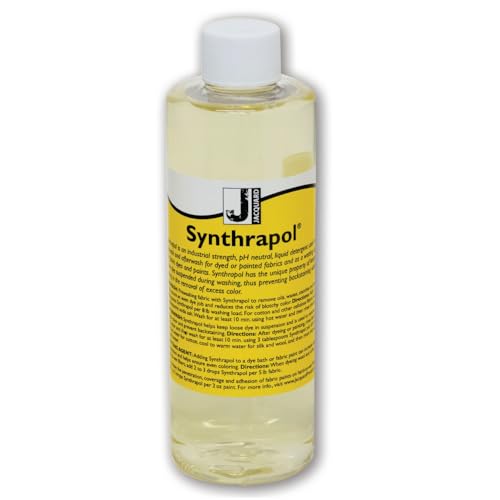
Jacquard Synthrapol Detergent, 8 fl oz
A pH-neutral detergent designed to wash out loose dye and keep it suspended, so it does not stain the white areas of your design.
Buy on AmazonExpert tip from Kamrul Islam
That first hot wash is the home version of soaping in industry. On dark shades we often need two soaping baths to clear all the loose dye, so if your black or red tie dye still bleeds after one wash, simply wash it hot again on its own.
Common mistakes that ruin tie dye colour
- Rinsing too early. Rinsing after 1–2 hours washes away dye that has not bonded yet. Colours come out pale and faded.
- Letting it dry out. Once the fabric is dry, the dye stops reacting. Always bag or wrap it.
- Leaving it in a cold garage or car. Below about 15°C (59°F) fixing slows to a crawl. Bring it indoors.
- Rinsing in hot water first. Hot water at the start spreads loose dye into the white areas. Start cold.
- Washing with other clothes. The first wash always releases some dye. Wash it alone.
- Using polyester or blends. Reactive dye bonds to cotton, not polyester, so blends come out lighter however long they sit. See will tie dye stick to polyester.
Frequently asked questions
How long does tie dye have to sit?
Tie dye has to sit at least 6–8 hours, and up to 24 hours for the deepest colour. Keep it damp and in a room above 21°C (70°F).
How long should tie dye sit before rinsing?
Wait at least 6–8 hours before rinsing. For dark colours like black, navy or red, wait 24 hours so more dye bonds to the cotton.
Can I let tie dye sit for 2 hours?
You can, but the colours will be noticeably paler because most of the dye has not bonded yet. Six hours is the practical minimum for fibre-reactive kits.
Can you let tie dye sit too long?
Leaving it 24–48 hours will not harm the shirt, but you gain almost nothing after 24 hours. The main risk with very long sits is the fabric drying out or mildew in a warm bag.
Does tie dye need to be warm while it sits?
Yes, warmth speeds up fixing. Above 21°C (70°F) is ideal; in a cold room leave it the full 24 hours or move it somewhere warmer.
Should I rinse tie dye in cold or hot water?
Start with cold water to remove excess dye without spreading it, then move to warm and hot water to clear the loose dye. Finish with a hot wash on its own.
Can I put tie dye in the washing machine after rinsing?
Yes, wash it alone on a hot cycle with Synthrapol or detergent once the rinse water is mostly clear. Wash it alone or with dark colours for the next few washes.
Why did my tie dye fade after the first wash?
Usually it was rinsed too soon, dried out, sat somewhere cold, or had no soda ash. Any of these means less dye bonded to the fibre, so more washed away.
Our verdict
The bottom line
Let tie dye sit 6–8 hours minimum and 24 hours for the boldest colour, wrapped and damp in a warm room. Then rinse cold, move to hot, and give it a hot wash on its own. For a simple start, a reactive kit like Tulip One-Step does the chemistry for you.
Buy on Amazon