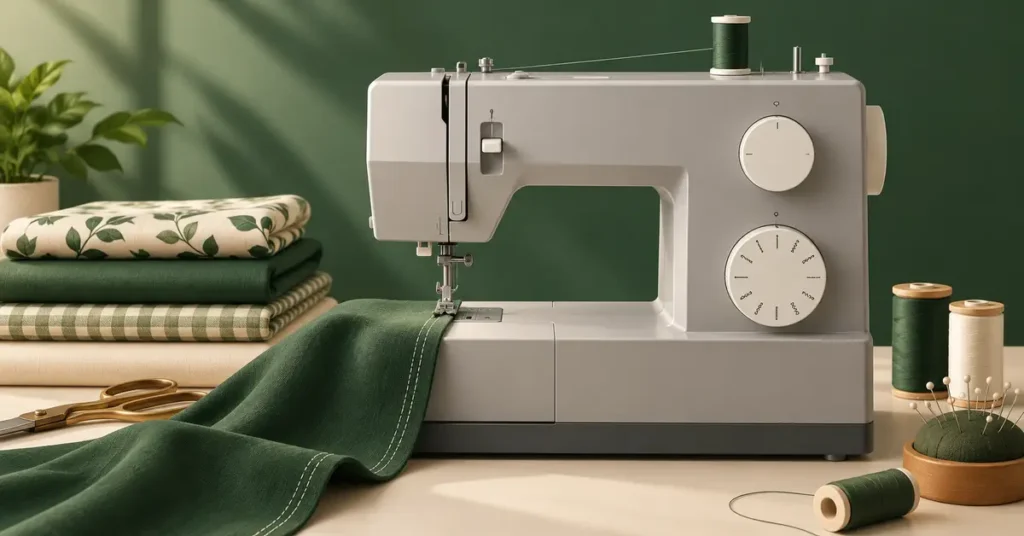
Singer HD500 Classic and Tradition 2277 sewing machine reviews should explain more than appearance and stitch totals. Both belong in a household sewing comparison, yet their controls, package details, and buying considerations deserve separate attention. This guide reviews each model, compares practical projects, and explains what to check before ordering, so you can choose a mechanical machine for your actual work without confusing vintage styling with vintage construction or capability.
As an Amazon Associate, Practical Textile earns from qualifying purchases. Product links may earn us a commission.
Quick Answer
Compare the HD500 Classic for its modern mechanical design, top-loading bobbin, and adjustable presser-foot pressure; compare the Tradition 2277 for a simpler utility-sewing purchase. Neither is an industrial walking-foot machine. Choose by sample seams, complete offer, and support, rather than expecting the black-and-gold finish or stitch count to determine performance.
This guide compares published specifications and project fit; it does not report hands-on testing.
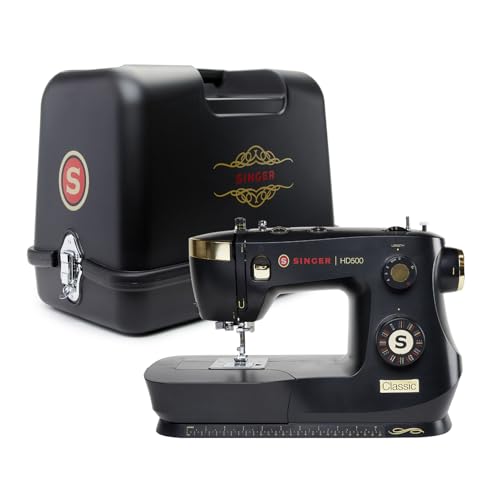
Singer HD500 Classic

A modern household machine; verify the exact US package.
Singer Tradition 2277

Check condition, accessories, and current offer before buying.
Singer Heavy Duty 4423
Compare the delivered package and handling on the same fabrics.
HD500 Classic vs Tradition 2277: Quick Comparison
| Decision | HD500 Classic | Tradition 2277 |
|---|---|---|
| Operating approach | Mechanical household sewing | Mechanical household sewing |
| Stitch count | 23 built-in stitches | 23 built-in stitches; 97 applications |
| Buttonhole | One-step | One-step |
| Notable distinction | Adjustable foot pressure and top-loading bobbin | Direct dial selection and basic utility focus |
| Best purchase test | Actual layered seam and controlled starts | Ordinary seams, buttonhole, and condition inspection |
Identical stitch totals do not mean identical machines. Controls, bobbin access, physical handling, and seller support can matter more than the number printed on the carton. Start by listing your regular work: mending woven trousers, making pillow covers, sewing simple clothing, or working through occasional denser seam crossings. Then compare how each machine handles those tasks at a pace you can control.
Singer HD500 Classic Review: Modern Function With a Traditional Look


The HD500 Classic uses a black-and-gold visual style, but it is a modern electric household machine. It should not be evaluated as a restored antique Singer, and accessories or operating assumptions from an old family machine should not be transferred automatically. Check the HD500 manual for its correct bobbins, needle system, threading path, and care instructions.
Useful published features include adjustable presser-foot pressure, a top drop-in bobbin, drop feed, a needle threader, and a one-step buttonhole. The pressure control is worth understanding: it changes the downward force of the foot on the material. It is not the upper-thread tension control, and it does not transform the feed mechanism into industrial compound feed.
Pressure adjustment can be useful when experimenting with fabrics that respond poorly to a fixed setting. Still, there is no universal number for every cotton, lining, or denim. Begin with the manual’s recommendation and a representative scrap. Record any change, inspect the finished seam, and return to the original setting when switching to a different project.
The top-loading bobbin makes thread supply visible through its cover. That convenience does not remove the need to insert the bobbin correctly or guide the thread into the tension path. Incorrect loading can produce loops and inconsistent stitches even when the machine itself is functioning normally. Learn the route before using an expensive garment as a test piece.
The classic finish is a legitimate preference if it makes a permanent sewing station more appealing. It should be a deciding factor only after practical fit is established. A machine that looks attractive but is difficult for you to start slowly is a less useful purchase than a plainer model you can operate confidently.
Five HD500 advantages:
- Direct mechanical operation avoids navigating a large stitch menu.
- Adjustable presser-foot pressure adds a useful fabric-handling control.
- Top-loading bobbin access makes checking supply convenient.
- A one-step buttonhole supports ordinary clothing projects.
- Modern classic styling suits buyers who value the appearance of their sewing station.
Two HD500 limitations:
- It does not provide industrial unison feed for heavy production sewing.
- Its appearance does not establish compatibility with vintage machine parts or cabinets.
Singer Tradition 2277 Review: Basic Mechanical Utility

The Tradition 2277 offers 23 built-in stitches, adjustable stitch length and width, a needle threader, and a one-step buttonhole. Singer’s 97 stitch applications describe uses of the stitches rather than 97 separate selections. This distinction matters when comparing listings that emphasize whichever number sounds largest.
Its appeal is straightforward household work: a utility stitch, a suitable seam allowance, and direct control over stitch settings. A new sewer can learn how changing stitch length affects a sample instead of relying entirely on an automatic preset. That learning still takes time. Mechanical operation is simpler in one sense, but it does not automatically make threading or speed control easier for every person.
The free arm is useful for accessible tubular sections such as some trouser hems and sleeves. Compare the circumference of your actual project with the machine, because a free arm is not a promise that every tiny cuff will fit. Small openings sometimes need to be sewn from the inside or assembled before the tube is closed.
Condition matters especially when comparing older or refurbished offers. A low advertised price is less persuasive if the correct controller, bobbin cover, buttonhole foot, or manual is missing. Ask the seller to identify what is included and whether the machine has been inspected or merely powers on.
Five 2277 advantages:
- Direct stitch selection suits a utility-focused workflow.
- Adjustable length allows ordinary basting and seam changes.
- Adjustable width supports suitable zigzag and decorative work.
- The one-step buttonhole is useful for simple garments.
- A needle threader can reduce a repetitive setup task.
Two 2277 limitations:
- Buyers wanting electronic speed limiting or automatic thread cutting should compare other models.
- Older, refurbished, and third-party offers require careful condition and accessory checks.
Which Machine Makes More Sense for Your Projects?
For woven repairs, begin with the seam you make most often. A basic straight stitch and controllable feed may matter more than an extensive decorative menu. Our pants repair guide helps identify whether you need simple seam repair, a patch, or a different construction method. None of those tasks requires buying a machine solely because it has a particular color or marketing label.
For buttoned clothing, test the buttonhole in the actual fabric and interfacing. Make several, not just one, and check consistency after opening the sample. The automatic sequence does not choose the correct reinforcement or guarantee an attractive result on unsupported lightweight fabric. The operator still controls placement, preparation, and the final cut.
For occasional denim, distinguish a flat seam from a folded waistband or intersecting hem. Those areas create different stacks. Use a suitable needle and thread within the machine’s instructions, then check a representative crossing at controlled speed. If the machine stalls or the needle deflects, stop and reconsider the setup instead of treating force on the fabric as an upgrade.
For stretch garments, neither machine replaces a serger or coverstitch machine in every operation. A suitable zigzag or stretch stitch may construct some seams, but the fabric and required recovery determine success. Test the seam after gently stretching it. Our clothing machine guide explains why the fabric matters more than a generic garment-sewing promise.
Singer 4423: Compare a Related Mechanical Alternative
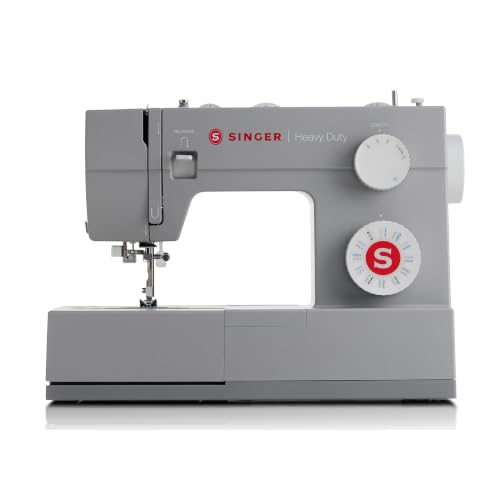
The Singer 4423 is a useful third comparison because it occupies a familiar mechanical household role. It offers a one-step buttonhole and adjustable foot pressure, but it should still be assessed on your samples. Similar feature names do not establish identical pedal feel, noise, ergonomics, or accessory contents.
Our Singer 4423 review explains its controls and limitations. Also compare the Singer 4411 if a simpler selection interests you, remembering that its four-step buttonhole differs from the one-step systems discussed here. This is a practical difference for someone planning many buttoned shirts.
If you want a speed slider, needle stop positioning, or automatic cutting, broaden the comparison to computerized machines. These functions should be verified model by model. Our computerized versus mechanical guide explains the operating tradeoff without assuming either approach is always better.
A Useful Demonstration Takes More Than One Straight Line
Bring three samples: an ordinary woven seam, a supported buttonhole, and the thickest realistic seam crossing from your work. Ask to thread the machine yourself and wind a bobbin. A demonstration performed entirely by an experienced seller may show what is possible without revealing whether you understand the controls or find the machine comfortable.
On the woven sample, begin slowly and stop close to a marked point. Reverse to secure the seam and examine both sides. Notice whether you can guide the edge without reaching awkwardly around the machine. Do not judge solely by a high-speed run; most repairs involve short seams, corners, and repositioning.
On the layered sample, support the work so it does not drag. Approach the crossing gradually, following the manual and any suitable leveling method. Check stitch consistency before and after the raised area. A successful straight seam on two flat pieces does not establish the capacity of a folded stack.
Keep the same material, thread, needle suitability, and seam design when comparing machines. Otherwise, a better-prepared sample can make one machine appear superior for reasons unrelated to the mechanism. Write down what changed and compare finished results after removing the fabric from the machine.
Compare the Complete Purchase
Record the delivered cost, condition, controller, cover or case, feet, bobbins, and any lesson included. A bundle can be worthwhile if it contains accessories you will use, but a large accessory count may include inexpensive duplicates. Price the missing essentials separately before deciding which offer is actually less costly.
Confirm that the exact machine is intended for the US electrical supply and that the seller’s warranty description applies to the offer. Manufacturer coverage, retailer returns, and refurbishment guarantees are separate arrangements. Ask who handles a fault, where the machine must be shipped, and whether return postage or inspection charges apply.
During the return period, complete a modest project from setup through finishing. That checks more than a few stitches in packing material. Save the successful sample and its settings. If trouble appears later, rethread, replace a questionable needle, and consult the manual before assuming the machine needs repair or changing multiple adjustments together.
For a wider household comparison, see our Brother machine guide. Cross-brand comparison is useful when it addresses a specific issue such as control layout, local instruction, or a needed foot. It is less useful when it simply adds another brand name without changing the sewing decision.
A Project Check Before You Commit
If the machines will be stored between sessions, test the whole setup routine: carrying or moving the unit, placing it securely, connecting the correct controller, and arranging the work. A convenient machine should suit the room and the person using it, not only the demonstration table.
Frequently Asked Questions
Is the HD500 Classic an antique sewing machine?
No. Its styling recalls older machines, but the HD500 Classic is a modern electric household model. Use its own manual and specified parts. Do not buy vintage bobbins, cabinet fittings, or attachments on the assumption that the appearance establishes compatibility.
Does the Tradition 2277 have 97 built-in stitches?
Singer identifies 23 built-in stitches and 97 stitch applications. Applications describe different uses of the stitch selection. Compare the actual available stitches and controls instead of treating the two counting methods as interchangeable.
Which model is better for a beginner?
The better choice is the one the learner can thread, start slowly, and operate with suitable support. Compare the controls in person where possible. A simple mechanical layout can be helpful, but clear instructions and a practical lesson may matter more than the model name.
Can either machine replace an industrial leather machine?
No universal replacement claim is justified. Household sewing capacity depends on the complete material stack, thread, needle, and feed requirements. Repeated heavy leather work may require an appropriate industrial machine and a sample-based dealer recommendation.
Should I pay extra for the HD500’s styling?
Only after it meets your sewing requirements and complete budget. Appearance can matter in a permanent sewing space, but it does not replace controlled starts, useful accessories, support, and acceptable results on your actual fabrics.
Final Recommendation
Choose between the HD500 Classic and Tradition 2277 through practical comparison. The HD500 merits attention for its pressure control, accessible bobbin, and visual design; the 2277 merits consideration for straightforward utility work at a suitable offer. For either, confirm the exact machine, inspect the package, and test the seams you expect to sew regularly.