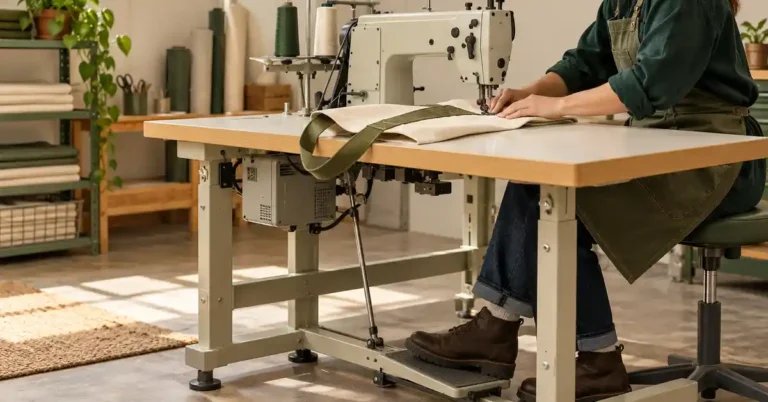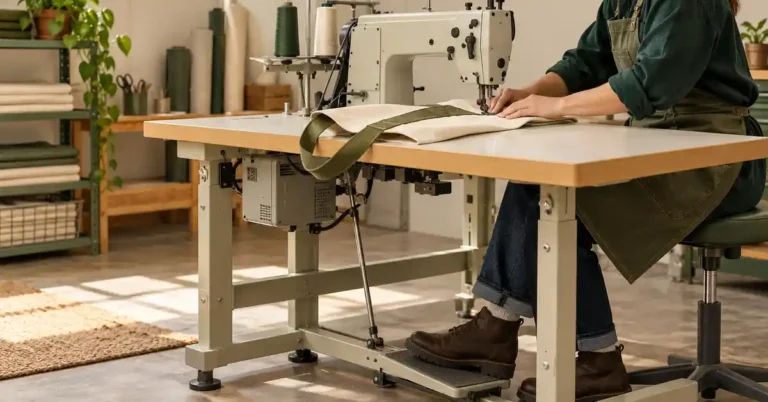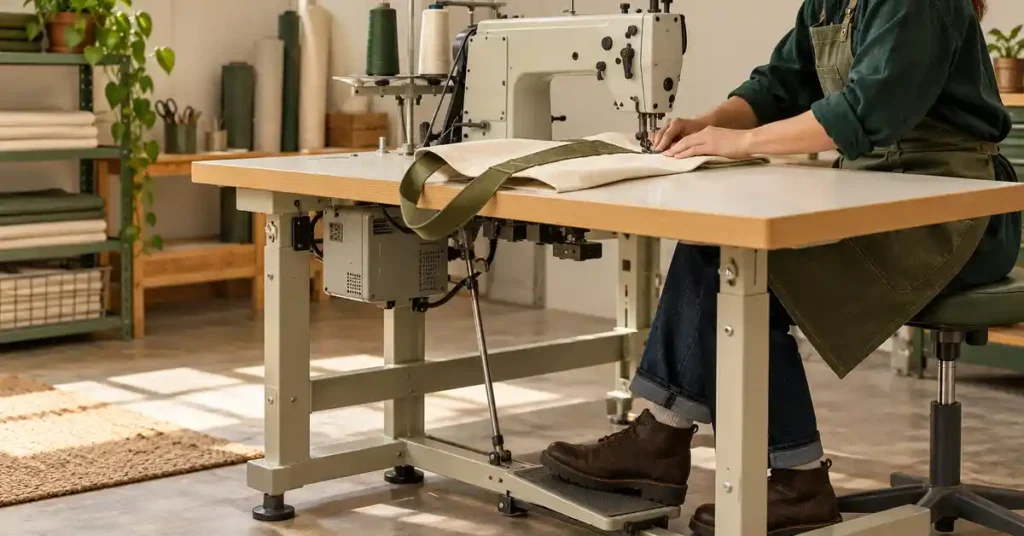
The best sewing machine for upholstery must match the seam construction, material surface, and amount of repeated work. Sewing a cushion cover is different from guiding dense intersections or assembling a shaped cover with piping. This guide compares industrial and portable approaches, explains where household alternatives stop being suitable, and connects the choice to parts and workstation planning so you can evaluate an upholstery setup rather than a motor claim.
As an Amazon Associate, Practical Textile earns from qualifying purchases. Product links may earn us a commission.
Quick Answer
Compare Juki DNU-1541 for a defined industrial unison-feed straight-seam role and Sailrite Ultrafeed LSZ when portable straight-and-zigzag walking-foot work is required. A household Singer 4452 is only a comparison for suitable lighter tasks, not an equivalent industrial machine. Test the actual material stack and visible finish.
This guide compares published specifications and project fit; it does not report hands-on testing.
Juki DNU-1541
No verified Amazon offer is linked for this model; read the buying checks below.
Confirm head versus complete station and exact model suffix.
Singer Heavy Duty 4452
Consider only work appropriate to its household limits.
Check Price on AmazonThis is a 4452 Holiday Bundle offer. Included accessories may differ from other 4452 packages.
Define the Upholstery Operation
| Work | What matters | Category to investigate |
|---|---|---|
| Repeated layered straight seams | Feed, thread range, and repeatability | Suitable industrial station |
| Portable canvas and related construction | Required stitch and transport | Compatible portable walking-foot setup |
| Light cushion covers and ordinary sewing | Actual material and seam limits | Appropriate household machine |
Juki DNU-1541: A Specialized Layered-Seam Station
The DNU-1541 uses industrial unison feed for straight stitching. It deserves comparison when the actual upholstery construction and repetition justify that mechanism. It does not supply general household zigzag or buttonholes, and its flat bed does not automatically provide access to every shaped assembly.
Confirm the exact suffix and included equipment. A head-only listing and an assembled station with motor, stand, table, and setup are materially different offers. Ask for the specified needle system, supported thread range, and a sample using your actual seam.
Inspect surface marking after sewing. A mechanically sound seam can still be unacceptable on a visible material. Use matching offcuts with the real backing and reinforcement rather than accepting a demonstration on an unrelated scrap.
Sailrite Ultrafeed LSZ: Portability and Required Stitch
The LSZ is a portable walking-foot straight-and-zigzag machine. Compare it when those functions and storage or transport are part of the requirement. Do not confuse it with the straight-only LS or transfer a current motor package to an older used offer.
A portable setup still needs a stable surface and enough support for large panels. Check the actual lifting and storage routine. Ask which feet, guides, binder, or case are included; a specialized bundle can be useful when its accessories match the construction, not merely when its advertised count is high.
No LSZ purchase code is presented here as verified. The named Juki and Singer boxes are different machines, not mislabeled Sailrite offers. Compare a written LSZ package directly with the complete alternative you would buy.
When a Household Machine Is Only a Limited Comparison
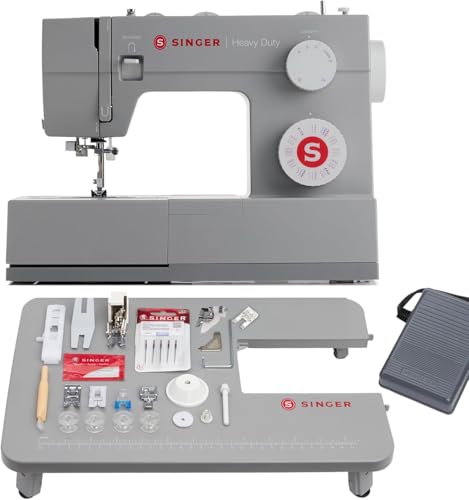

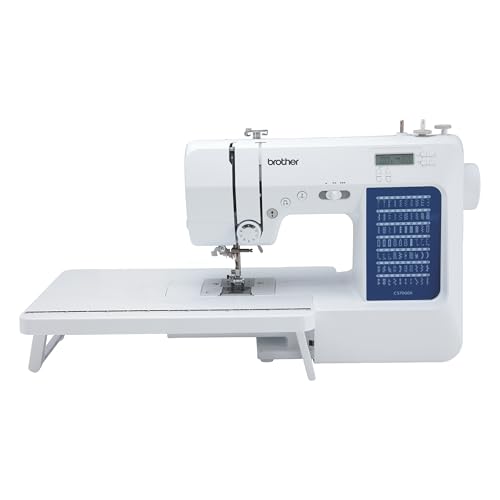
The Singer 4452 offers household stitch versatility and an advertised even-feed accessory. That can be relevant to an appropriate lighter project, but the attachment does not create industrial compound feed or approve every upholstery material. Define the actual stack and repetition first.
Try the most demanding seam crossing, not only the flat cover panel. If feeding, thread compatibility, or access is outside the machine’s documented role, keep comparing another category. Pulling hard on the fabric is not an acceptable way to manufacture capacity.
Five Buying Priorities and Two Category Tradeoffs
- Consistent feeding through the real seam transition.
- Suitable thread and needle within the documented range.
- Acceptable marks on the visible surface.
- Access for loading and turning final assemblies.
- A complete supported workstation.
Two tradeoffs require deliberate choice. Industrial straight-stitch specialization sacrifices general stitch variety, while portable equipment still needs lifting and panel support. Household versatility should not be mistaken for unrestricted heavy work.
Read our DNU-1541 guide, 4452 review, and household walking-foot guide. Our bag construction guide and leather assembly guide offer related access and seam-planning context.
Project Preparation and a Repeatable Sewing Setup
The complete upholstery setup includes compatible parts and a suitable operating surface. Apply the following checks to the exact station being considered; portable furniture suggestions and fixed industrial installations must still meet their respective documented requirements.
Basic Parts of a Sewing Machine
The basic parts of a sewing machine are crucial for its operation. Here’s a detailed look at each component:
The sewing needle is one of the most vital components of a sewing machine. It pierces the fabric and creates stitches. Needles come in various sizes and types, each suited for different fabric types.
The presser foot holds the fabric in place as it passes through the sewing machine. Different presser feet are available for various techniques, such as zigzag stitching or quilting.
Feed dogs are small metal teeth that move the fabric through the machine. They engage with the fabric to pull it forward as you sew, ensuring even stitches.
The bobbin holds the thread that forms the stitches on the underside of the fabric. It works together with the needle thread to create a balanced stitch.
This dial allows you to adjust the tension of the thread, which is crucial for achieving a uniform stitch. Proper tension ensures that the stitches are neither too tight nor too loose.
The stitch selector allows you to choose different stitch types and settings. It can be a dial, lever, or digital interface, depending on your machine model.
Maintenance Tips for Sewing Machine Parts
Proper maintenance of your sewing machine parts is essential for longevity and efficiency. Here are some tips to keep your machine in top condition:
Dust and fabric lint can accumulate in your sewing machine, particularly around the bobbin case and feed dogs. Regular cleaning helps prevent issues and ensures smooth operation.
Using a dull needle can cause skipped stitches and fabric damage. Change your needle regularly based on usage to maintain optimal performance.
Some sewing machines require oiling to keep the moving parts functioning smoothly. Refer to your machine’s manual for specific lubrication requirements.
Using high-quality thread can prevent many sewing machine issues, such as breaking and tangling. Invest in good thread for the best results.
Ask better questions when fabric will not feed
Confirm that the presser foot is lowered, the feed system is in the intended position, and the stitch length and technique are appropriate. Keep the garment’s weight supported so it does not pull sideways or backward. Check whether the problem occurs on all fabric or only at one thick intersection. Those observations help separate a setup issue from a material limit.
Inspect the foot and plate for an obvious incompatible arrangement. If the needle has struck metal, replace a damaged needle and check the clearance before continuing. Do not pull fabric through a stopped or struggling machine. Repeated force can damage the work and does not resolve a mismatch between the construction and the equipment.
If a correct basic setup fails repeatedly, consult the model-specific troubleshooting guidance or service provider. Explain the fabric, layers, needle, thread, foot, and symptom. Being able to name the parts helps communicate the problem, but it does not make internal timing or electrical repair an appropriate trial-and-error task.
Types of Sewing Machine Table Tops
Choosing the right type of sewing machine table top is crucial for your sewing setup. Here are some common types:
Portable sewing machine table tops are designed for those who need a space-saving solution. They are lightweight and can be easily moved or stored. These tables often come with folding legs and a compact design.
Fixed sewing machine tables offer a more permanent solution. They are typically sturdier and provide a larger workspace, making them ideal for quilters and those who frequently work on larger projects.
Adjustable height tables allow you to customize the height of your sewing machine for maximum comfort. This feature is particularly beneficial for individuals who sew for extended periods.
Multi-function tables can be used for various sewing tasks and often come with additional features such as storage drawers or built-in lighting. These tables are excellent for maximizing your sewing efficiency.
Key Features to Consider
When selecting a sewing machine table top, consider the following features:
The size of your table top should accommodate your sewing machine and provide enough workspace for your projects. Measure your sewing machine and consider how much space you need for fabric and tools.
Choose a table that offers stability to prevent vibrations while sewing. Look for durable materials that can withstand the weight of your sewing machine and regular use.
An ergonomic design can help reduce strain on your back and arms. Look for tables that allow for comfortable sewing positions and adjustable heights.
Many sewing machine tables come with built-in storage solutions. Having drawers or shelves can help keep your sewing area organized and tidy, making it easier to access your tools and materials.
Consider the overall design of the table top. A visually appealing table can enhance your sewing space and make it a more enjoyable place to work.
How to Measure for a Sewing Machine Table Top
Measuring for a sewing machine table top is essential to ensure a proper fit. Follow these steps for accurate measurements:
Start by measuring the dimensions of your sewing machine, including its width, depth, and height. This will help you determine the minimum size required for your table top.
Think about how much extra space you need for fabric and tools. It’s advisable to add at least 12 inches to both the width and depth measurements of your sewing machine to accommodate your projects.
Measure the area where you plan to place your sewing machine table top. Ensure you have enough room to move around comfortably and access your materials easily.
Essential Accessories for Your Table Top
To enhance the functionality of your sewing machine table top, consider adding these essential accessories:
A cutting mat protects your table surface and provides a grid for accurate fabric cutting. Look for a self-healing mat for durability.
An extension table provides additional support for larger projects, making it easier to handle bulkier fabrics.
Use storage containers to organize your sewing tools, threads, and fabric. This will help keep your workspace tidy and efficient.
Good lighting is essential for detailed sewing work. Consider adding a task lamp to illuminate your sewing area.
Maintenance Tips for Longevity
Proper maintenance can extend the life of your sewing machine table top. Here are some tips:
Dust and debris can accumulate on your table top. Use a soft cloth to wipe it down regularly. For wooden surfaces, consider using a wood cleaner.
Do not overload your table with items that exceed its weight capacity. This can cause damage or instability while sewing.
If you have a portable table, store it in a dry place to prevent moisture damage. Avoid placing heavy objects on top of it while in storage.
Regularly inspect your table top for any signs of wear and tear. Address any issues promptly to prevent further damage.
For a bulky station, confirm delivery access and the cost of returning equipment before ordering. Measure doorways and the assembled position, and ask whether installation or transport inside the workspace is included. Freight arrival alone does not establish a ready-to-sew setup.
Frequently Asked Questions
Is every walking-foot machine industrial?
No. Household attachments, portable mechanisms, and industrial unison feed are different arrangements. Check the exact model and intended operation rather than applying the term universally.
Does more wattage prove upholstery capacity?
No. Feed, access, needle and thread compatibility, controller behavior, and finished appearance also matter. The real seam sample is more useful than an isolated motor figure.
What should the sample include?
Use the actual backing, reinforcement, piping, and folded seam where relevant. Test transitions and visible marks, then inspect both sides away from the machine.
Should I choose a portable or fixed station?
Compare the required stitch, repetition, space, lifting, storage, and material support. Each format has practical costs beyond the machine’s listed price.
Can this guide validate vehicle safety-related upholstery repairs?
No. Airbag and restraint-related work requires the applicable qualified procedures. Equipment penetration alone does not establish an appropriate repair method or safety performance.
Final Recommendation
Choose upholstery equipment for the whole construction. Investigate DNU-1541 for a justified industrial straight-seam station, LSZ for an appropriate portable straight-and-zigzag workflow, and household alternatives only within suitable limits. Confirm access, appearance, support, and complete cost before buying.