

A sewing machine that quilts should be chosen for the quilting stage you plan to perform. Piecing accuracy, walking-foot work, free-motion control and handling space are different requirements. A table and quilting label do not make a household machine move the quilt automatically. Its purpose is to support an informed comparison of suitable equipment, not promise universal results. Use a real project sample when comparing controls, access and suitable materials.
How this guide helps you choose
A quilting comparison separating piecing, layered stitching and large-quilt handling.
Options organized by use
| Option | Reason to compare | Practical selection note |
|---|---|---|
| Brother CS7000X | Computerized starter quilting | Compare its controls and supplied quilting accessories on a small sandwich. |
| Brother XR3774 | Mechanical quilting package | A useful comparison for the included table and feet when mechanical controls are preferred. |
| Brother SQ9285 | Computerized package | Assess the accessory set and control interface rather than buying for the total stitch number. |
| Brother XR9550 | Mixed sewing and quilting | Consider when ordinary sewing remains a major part of the workload. |
| Juki TL-2010Q | Dedicated straight-stitch approach | A distinct comparison for piecing and quilting; it is not a zigzag or embroidery machine. |
| Singer 4452 | Household attachment option | Evaluate its walking-foot attachment with the correct operating restrictions. |
| Janome HD3000 | Mechanical dealer comparison | Use a dealer demonstration for actual feeding and control rather than inferring quilting performance from branding. |
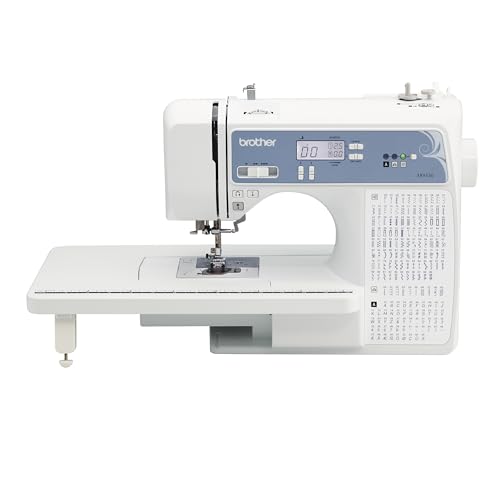
Amazon boxes cover only the specifically verified listings above. Manufacturer and dealer options without a verified ASIN are discussed separately. Bundle contents, condition and availability need checking in the current offer.
Piecing and quilting are different tests
Piecing joins the fabric shapes that make the quilt top. Quilting stitches the top, batting and backing together. A machine can be comfortable for accurate patchwork while feeling awkward when a bulky sandwich needs moving through the opening.
For a useful demonstration, bring both a piecing strip and a small layered sandwich. Check the measured seam after pressing, then assess how the layers behave during stitching. Do not accept one attractive straight seam as proof of comfort through every quilting stage.
Compare the relevant equipment categories using the sewing machine buying guide.
Throat space and support surface solve different problems
Throat space affects how much quilt bulk can move beside the needle. An extension table supports the material outside the machine. A larger table does not enlarge the machine opening, and a large opening does not prevent unsupported fabric from pulling off a small desk.
Measure your intended workspace and plan support for the quilt’s weight. For a large project, consider how the bulk will be rolled or managed. Practice on a smaller quilt before committing to a bed-size piece. Handling technique can become the limit before the machine’s stitch menu does.
For related sewing preparation and problem-solving, see the sewing techniques and troubleshooting.
Walking-foot and free-motion workflows
Walking-foot quilting uses an attachment appropriate to the model and operation. Free-motion quilting changes how the operator controls movement and stitch length. Use the exact foot instructions and machine manual; restrictions can differ between accessories.
Test a short path with straight sections and a change of direction. Watch for layer shifting, puckering and inconsistent stitches. A successful setup should be understandable and repeatable. If the seller performs several unexplained changes before the sample works, ask for the procedure rather than relying on the result alone.
Explore accessory categories in our sewing machine parts and accessories; use the exact manufacturer manual for compatibility and maintenance.
Brother versus Juki is a category comparison
A Brother household sewing-and-quilting model may provide varied utility stitches for garments as well as quilting. A Juki TL straight-stitch model is a more specialized approach. The correct comparison is your proportion of piecing, quilting and other household sewing.
If a machine must also make zigzag seams or buttonholes, confirm those functions before selecting a specialized straight-stitch category. If quilting dominates, its controls and working arrangement may justify a separate machine. Brand names alone do not define the appropriate workload.
Build a small repeatable quilting test
Piece several strips with marked seam allowance, press them, and check the accumulated size. Then prepare a small sandwich using the batting and backing you expect to use. Stitch one controlled path and inspect it after releasing any basting support.
Record needle, thread, foot, stitch setting and preparation. The aim is a reliable process, not an invented performance score. A machine purchase should make that process comfortable while leaving budget for instruction, basting, cutting, pressing and a suitable work surface.
Five advantages and two limitations
Advantages
- Stage-based selection clarifies the required features.
- Suitable support improves quilt handling.
- Computerized controls can assist deliberate starts and pivots.
- A specialized straight-stitch category provides a distinct option.
- Repeatable samples reveal handling and layer-control needs.
Limitations
- Quilting accessories do not provide automatic quilt movement.
- Large-quilt bulk can remain difficult on a small household opening.
Check the exact listing and documentation
Brother CS7000X: No products found.
Brother XR3774: No products found.
Brother SQ9285: Manufacturer information for Brother SQ9285
Brother XR9550: Check Brother XR9550 listing
Juki TL-2010Q: Manufacturer information for Juki TL-2010Q
Singer 4452: No products found.
Janome HD3000: No products found.
Frequently asked questions
Can an ordinary sewing machine quilt?
Many can perform appropriate piecing and quilting techniques with the correct setup. Assess the exact model and project rather than assuming every machine is suitable.
Does an extension table add throat space?
No. It supports fabric outside the machine.
Is Juki TL-2010Q an all-purpose multi-stitch machine?
It is a straight-stitch sewing-and-quilting category. Check whether you need separate zigzag or buttonhole capability.
What is the best Brother sewing machine for quilting?
Choose by controls, working space, accessories and your quilting stage. The comparison here is not a hands-on ranked test.
Should a beginner start with a large bed quilt?
A small practice sandwich and a modest first quilt make it easier to learn handling and identify setup problems.
Related Practical Textile guides
Explore sewing, embroidery, dyeing, printing and other fabric topics at Practical Textile.
Sources and research method
Manufacturer pages, product documentation and exact listing identities were checked on 2026-10-13. Feature-based recommendations are editorial judgments; they are not measured performance results. Availability, software requirements, packages and lifecycle can change.
- https://www.brother-usa.com/p/sewing/XR3774
- https://www.brother-usa.com/p/sewing-embroidery/SQ9285?Condition=New
- https://www.jukihome.com/products/sewing/tl-2010q.html
- https://www.jukihome.com/media/catalog/product/t/l/tl-2010q_instructionmanual.pdf
- https://www.brother-usa.com/p/sewing-embroidery/CS7000X
- https://www.brother-usa.com/p/sewing-embroidery/XR9550
- https://www.singer.com/products/singer-heavy-duty-4452-sewing-machine
- https://www.janome.com/product/hd-3000/
