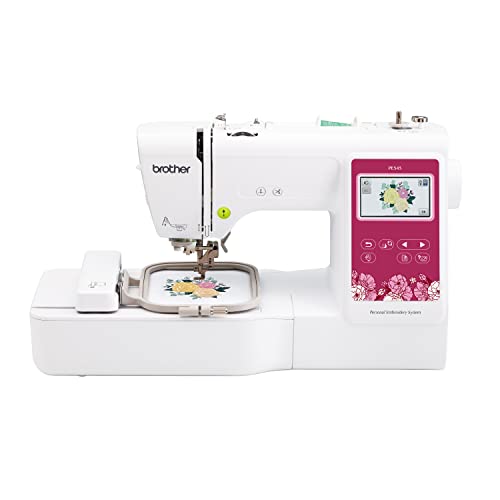
The PE545 is worth considering when small designs and convenient transfer are enough for your home embroidery. Wireless delivery changes the file route; it does not enlarge the 4 × 4 field or remove the need for suitable digitized files. Choose a purchase that fits your actual project and support needs. This review uses manufacturer information and clearly identified editorial analysis. Keep the current manual available when checking features and compatibility.
Who should consider it?
A beginner or home embroiderer who plans compact motifs and already has separate sewing capability.
Documented features and important limits
| Item | Documented detail |
|---|---|
| Maximum field | 4 × 4 inches |
| Built-in designs | 135 |
| Fonts | Ten |
| Transfer options | Wireless and USB |
| Machine function | Embroidery only |
| Software caution | Check current operating-system and app requirements |
Confirm the exact model’s features and accessories in the manufacturer information.

- WIRELESS LAN ENABLED: Transmit embroidery files from your PC to your embroidery machine...
- ARTSPIRA MOBILE APP: Make custom embroidery patterns by drawing on your mobile device, or...
- 4" x 4" EMBROIDERY FIELD: This Brother embroidery machine is built with a 4" x...
- LARGE 3.7” TOUCHSCREEN: The 3.7-inch LCD color touchscreen allows you to drag and drop...
- 135 BUILT-IN DESIGNS: The PE545 features 135 built-in embroidery patterns including kids...

The field size should decide before wireless features
Start with the largest design you expect to stitch regularly. Check its actual stitch dimensions and allow for placement constraints on the item. If your main motif is too large, wireless transfer cannot solve the problem.
Small motifs can be very useful for gifts, patches, and modest personalization. They also let a learner practice setup without committing to a long production run. The limit becomes a problem when the buyer’s project list already includes designs outside the field. Resolve that before comparing apps or the number of onboard motifs.
Compare the relevant equipment categories using the embroidery machine buying guide.
A sensible Windows file-transfer workflow
For computer transfer, verify the current supported operating systems and the exact software listed by Brother. Your desktop’s hardware specifications were not supplied, so no claim of verified compatibility with your own computer is made here. Use the current system requirements, not an old tutorial’s screenshot.
Keep a known-compatible USB workflow available if the wireless setup is inconvenient. Store original design files separately from edited versions and give working copies meaningful project-and-size names. That simple organization reduces mistakes when several files have similar thumbnails but different dimensions or stitch sequences.
Plan design files and project sizes with the embroidery designs and file guide.
Apps, digitizing, and subscriptions are different things
A companion app may provide designs or specific creation tools. That does not establish unrestricted conversion of any image into a production-ready embroidery file. Check which functions are included, which require an account or subscription, and what device is required.
For a logo, consider the full digitizing process: stitch type, underlay, density, sequence, and the fabric it will be stitched on. File transfer is only the last step before sewing. A design that opens successfully can still stitch poorly if its preparation is unsuitable for the project.
Connect construction and decoration steps using the sewing and embroidery project guide.
Compare PE545 with SE700 and PE900
Choose the SE700 comparison when you need ordinary sewing in the same machine. Choose the PE900 comparison when larger motifs are the important difference. This creates a decision around two separate requirements: machine function and field size.
If you own a satisfactory sewing machine already, dedicated embroidery can avoid changing modes each time a seam needs sewing. If storage space is tight, a combination machine may be more convenient. Think through a complete project from blank preparation to finishing before deciding which arrangement actually saves work.
Five advantages and two limitations
Advantages
- Wireless transfer offers an alternative to physical file delivery.
- USB remains a practical supported transfer route.
- Compact motifs suit many home personalization projects.
- Built-in fonts provide an initial lettering option.
- Dedicated embroidery can complement an existing sewing machine.
Limitations
- The 4 × 4 field can become limiting for larger motifs.
- It cannot perform ordinary seam construction.
Buying and demonstration checklist
| Step | What to check |
|---|---|
| 1 | Measure the largest intended design. |
| 2 | Check the current Windows and app requirements. |
| 3 | Try a suitable USB design as well as wireless transfer. |
| 4 | Budget for backing, thread and test blanks. |
Named alternatives to compare
Brother SE700 is a separate comparison model. The link below is not represented as the reviewed machine.
Brother PE900 is a separate comparison model. The link below is not represented as the reviewed machine.
A cached Amazon listing confirms product identity for this draft. It does not confirm current stock, price, seller, warranty or the present AAWP data response.
Frequently asked questions
Can the PE545 sew a hem?
No. It is an embroidery-only machine; ordinary garment construction requires a sewing machine.
Will wireless transfer let it stitch a larger design?
No. Its maximum embroidery field remains 4 × 4 inches.
Will it work with my computer?
Check Brother’s current supported operating systems and software requirements. Your specific computer was not tested for this draft.
Does a companion app replace all digitizing software?
Do not assume that. Check the specific creation functions, file support, accounts, and subscription requirements.
When is SE700 a better comparison?
When you need both ordinary sewing and small-field computerized embroidery in one machine.
Related Practical Textile guides
- Brother sewing and embroidery comparison
- machine parts, needles and accessories
- embroidery machine category
Explore sewing, embroidery, dyeing, printing and other fabric topics at Practical Textile.
Sources and research method
Manufacturer pages, product documentation and exact listing identities were checked on 2026-10-13. Feature-based recommendations are editorial judgments; they are not measured performance results. Availability, software requirements, packages and lifecycle can change.