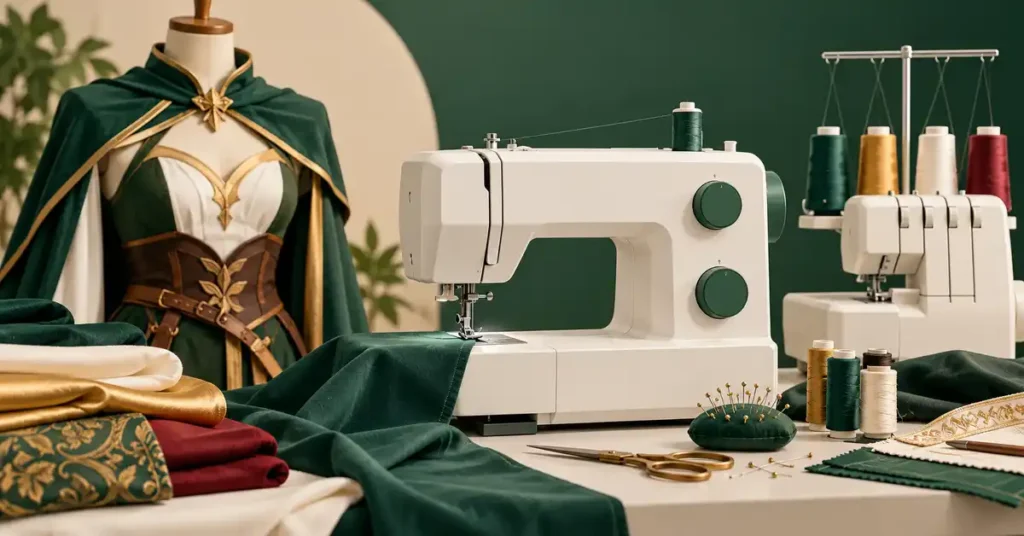
The best sewing machine for cosplay should match the fabric construction behind your costume, not just the character you want to recreate. Stretch garments, lined coats, decorative panels, and heavy accessories ask for different controls and techniques. This guide compares three household machine options, separates garment sewing from materials that need another method, and helps you plan samples, accessories, and workspace before committing to a demanding costume build at home.
As an Amazon Associate, Practical Textile earns from qualifying purchases. We may receive a commission from purchases through our product links.
Quick Answer: Which Cosplay Sewing Machine Should You Consider?
Start with the Brother XR9550 for a versatile computerized sewing shortlist, compare the Singer 4423 if mechanical controls and foot-pressure adjustment matter, and investigate the Brother ST371HD as another mechanical option. Choose around the actual fabric and seam stack. A domestic machine is not a universal tool for rigid armor materials, thick structural leather, or every coated specialty fabric.
These are feature-based candidates for appropriate home costume sewing, not hands-on test winners. We have not sewn comparative cosplay samples or established maximum layer counts.
Brother XR9550
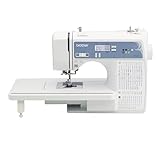
Compare its controlled-speed workflow for varied costume construction.
Singer Heavy Duty 4423
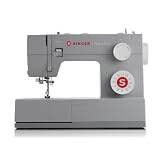
Assess pedal feel and material handling on the intended seam construction.
Brother ST371HD

Compare utility functions and compatible feet without assuming unlimited material capacity.
Translate the Costume into Actual Sewing Requirements
A costume reference image shows the appearance, not the seam construction. Divide the project into parts: base garment, lining, stretch sections, closures, decorative panels, and accessories. Identify which parts can be sewn with a household machine and which need another construction method.
List the fabrics and the difficult intersections rather than only the overall costume category. A lined coat can be manageable in many places and challenging where several allowances meet a closure. A stretch bodysuit asks for seam flexibility rather than the same setup used on a woven cape.
Also decide whether you need one machine for the whole sewing routine or a new specialized station beside another machine. A straight-stitch-only model may be useful for some work but lacks functions that varied costume construction can require. Buy around the operations you need to retain.
Compare the Three Household Options
| Model | Control approach | Reason to investigate | Main buying caution |
|---|---|---|---|
| Brother XR9550 | Computerized | Speed limitation and a varied sewing menu | Computerized controls do not establish heavy-material capacity. |
| Singer 4423 | Mechanical | Direct controls and adjustable foot pressure | No independent speed slider on the standard model. |
| Brother ST371HD | Mechanical | Utility sewing with a listed nonstick foot | A nonstick foot addresses surface behavior, not every dense construction. |
The table describes roles, not tested superiority on costume materials. Ask to try relevant fabrics and a real seam stack. A demonstration on two easy layers will not establish how a coated panel, stretch seam, or dense accessory junction behaves.
Brother XR9550 Review: Versatility and Controlled Speed
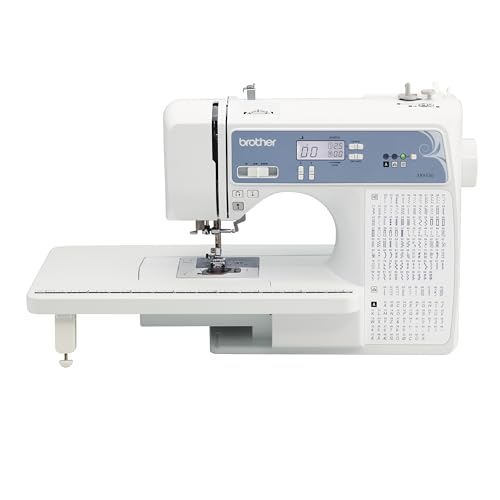

The XR9550 is relevant when varied costume sewing and speed control are priorities. A manageable pace can help with visible curves, small details, and planned stopping points. Its broader sewing functions also let you investigate different suitable seam and finishing methods without moving immediately to a specialized machine category.
Do not choose it mainly for the advertised selection total. That total includes lettering, and lettering selections are not imported hoop embroidery designs. For cosplay, the useful questions are whether the required stitches, controls, and compatible feet serve the actual garment construction.
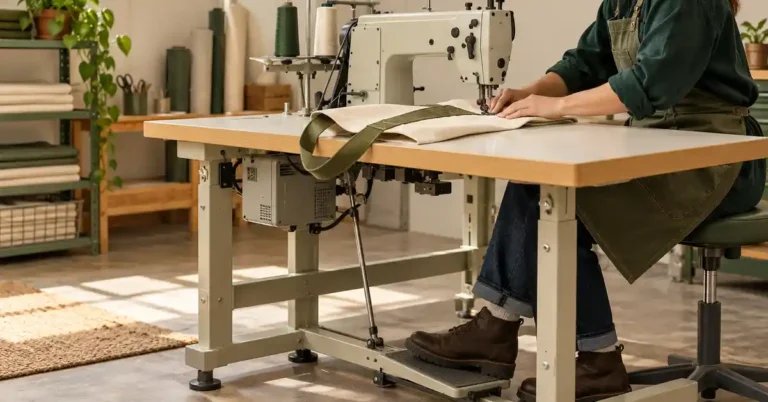
The included table can support panels, but it does not enlarge the arm opening. Large coats or capes still need space around the machine so their weight does not pull against the seam. Arrange the work before sewing a visible section rather than trying to overcome drag with your hands.
Our Brother machine guide separates general sewing from straight-stitch and embroidery roles. Choose the right process before selecting a model for a costume’s decorative appearance.
Singer 4423 Review: Mechanical Control and Fabric Adjustment
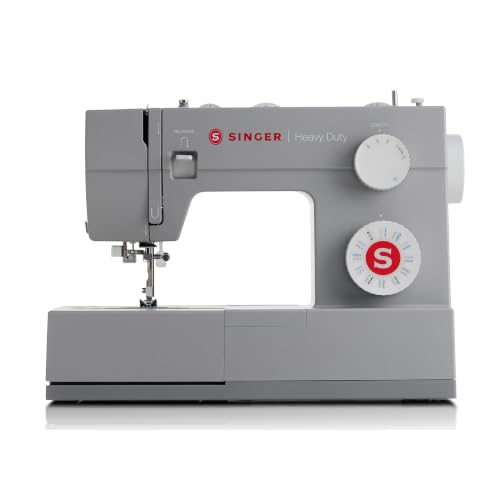
The 4423 is a candidate if you prefer physical stitch controls and want to investigate presser-foot pressure adjustment for varied fabric handling. Those functions can be useful, but settings still need to be tested on the actual costume material rather than borrowed from an unrelated project.
The lack of a separate maximum-speed slider deserves attention when you work on small decorative details or tight curves. Try the pedal at a comfortable pace. If you struggle to maintain slow control, compare a different arrangement instead of assuming a higher advertised speed is an advantage.
Heavy Duty naming should not determine the material plan. A folded garment seam and a thick structural accessory are different tasks. Do not infer that a domestic machine can sew every synthetic leather, webbing junction, or rigid element used in a costume.
Our Singer 4423 buying review discusses those limits. The related Singer 4432 review explains the stitch-menu question if you want to compare additional patterns for decorative sewing.
Brother ST371HD Review: Another Mechanical Configuration

The ST371HD offers another mechanical home-sewing configuration with utility stitches and a listed accessory set that includes a nonstick foot. That inclusion can be relevant to a surface-feeding problem on a suitable material, but it should not be treated as a blanket recommendation for every coated costume fabric.
Check the actual material’s instructions and test an offcut with the intended needle, thread, and seam. A slippery top surface, stretchy base, and dense layer stack create different problems. The same accessory is unlikely to resolve all three merely because a listing mentions a difficult-looking fabric.
Consider whether this model would improve the limitation you already have. If your current machine is a similar mechanical home model, changing brands or names may add less than a compatible accessory, improved support, or suitable service. Buy a new machine because the required capability is clear.
Choose the Setup for the Fabric, Not the Character
Stretch garments
For a close-fitting stretch costume, the seam must tolerate the movement required to put on and wear the garment. Test stretch and recovery on a full seam sample. A line that looks neat while flat may still break when a cuff, neckline, or body section is stretched.
Use an appropriate needle and seam method, and avoid pulling the fabric as it feeds. A serger or coverstitch machine can serve distinct finishing roles, but an ordinary zigzag sewing machine is not automatically a substitute for every operation those machines perform. Identify the required finish before adding equipment.
Slippery or delicate fabrics
Prepare a sample using the intended layers, lining, and any appropriate stabilization. Check puckering, seam movement, and the appearance after pressing according to the fabric’s care requirements. Handle curved or bias edges carefully so the preparation does not distort them before stitching begins.
Support long panels beside the machine. A cape hanging over a table edge can pull on a delicate seam even when the settings are appropriate. More motor power does not solve that handling problem; an organized surface and controlled movement are more relevant.
Coated and bulky materials
Verify that the material and seam are suitable for the machine. Holes can remain visible in some surfaces, so test positioning and stitch method on an offcut before sewing the finished panel. Check the compatibility of any specialized foot rather than assuming a generic accessory fits safely.
At dense intersections, reduce unnecessary bulk where the construction permits and stop if the machine struggles. Material fitting under the foot is not proof that it can be sewn. For rigid armor components or thick structural assemblies, evaluate another construction method or specialized equipment.
Closures, Decoration, and Construction Sequence
Plan how the costume is worn
Closures need practical access and enough room for the wearer to move. A visually accurate fastening can still be inconvenient if it is placed where the wearer cannot reach it or if it carries more stress than the construction supports. Test the arrangement in a mockup before adding expensive fabric and decoration.
Check the stitch and foot needed for zippers, buttonholes, or hook-and-loop attachment. Practice the complete operation on the same layer arrangement. A buttonhole sewn through one flat layer does not verify the result through a lined and interfaced costume section.
Separate decorative sewing from hoop embroidery
Built-in decorative stitches can embellish suitable fabric, but they do not load arbitrary embroidered logos or character symbols. That requires a compatible embroidery process and properly prepared stitch files. Our Poolin embroidery review explains a dedicated category for that work.
Embroidering or attaching decorative pieces before final assembly may be easier when the pattern permits it. Think through access before closing a sleeve, lining, or bag panel. A machine cannot reach a restricted placement simply because the design looks small on the reference image.
Build a Sample Set Before the Final Costume
Make samples of the difficult operations: a stretch seam, a curved seam, a closure, a dense crossing, and any visible topstitching. Use the actual intended thread, needle, and fabric layers. Keep those samples with notes so a successful setup can be repeated later.
A wearable mockup can reveal fitting and construction problems before they become material problems. Check movement, sitting, fastening, and the way accessories interact with the garment. A new sewing machine cannot correct a pattern or fitting issue that was never tested.
If stitching becomes irregular, recheck threading, bobbin insertion, needle condition, and fabric support before changing every setting. Change one variable at a time. Stop for repeated breakage or resistance, and disconnect power as directed before clearing a jam around the needle.
For other machine categories, our Janome sewing comparison provides another control and workflow reference. The best purchase is the one that solves the known difficulty rather than adding a long unused feature list.
Advantages and Tradeoffs of This Shortlist
Useful strengths
- All three candidates retain ordinary garment-sewing functions.
- The shortlist compares computerized and mechanical workflows.
- Speed limitation is treated as a specific control choice.
- Compatible feet and setup can be assessed against real costume fabrics.
- The machines can serve other household projects between builds.
Important limitations
- No domestic model should be assumed suitable for every armor or structural material.
- Decorative stitch choices do not replace automatic hoop embroidery or fitting work.
Buying Checklist for Cosplay Sewing
- List actual fabrics, seam types, closures, and difficult intersections.
- Try the controller and relevant stitches on representative samples.
- Confirm foot compatibility and needle clearance.
- Check the whole garment’s access around the machine.
- Budget for suitable needles, thread, mockup fabric, and support space.
- Verify condition, included equipment, US electrical suitability, service, and returns.
Do not buy from a claimed layer count without knowing the fabric and construction behind it. Thin layers and dense seams are different. A relevant sample and clear support arrangement are better evidence than a generic demonstration of a machine sewing quickly.
Frequently Asked Questions
What sewing machine is best for a first cosplay costume?
Choose a versatile machine whose controls and required stitches suit the actual garment. Stable woven projects, stretch garments, and dense accessories need different assessments. Practice on samples and a mockup before buying around a character category alone.
Do I need a heavy-duty machine for cosplay?
Not automatically. The seam construction and material determine the requirement. Heavy Duty naming does not establish suitability for every coated fabric, leather assembly, or rigid element. Test the real stack and consider another method where necessary.
Can these machines make embroidered costume symbols?
They provide ordinary and decorative sewing, not automatic hoop embroidery. A custom embroidered symbol needs suitable equipment and a prepared stitch file. Plan decoration and construction as separate processes when required.
Is a serger necessary for stretch cosplay?
It depends on the seam and finish you need. A suitable sewing machine can handle some stretch constructions, while a serger serves a different role. Test seam stretch and appearance before deciding which equipment the project requires.
Why does my costume fabric pucker?
Investigate needle, thread, stitch settings, support, and handling on a representative sample. Slippery layers, stretching, and unsuitable setup can all contribute. Change one variable at a time instead of assuming a new machine is the only solution.
Final Recommendation
Begin with the XR9550 for a versatile computerized shortlist, compare the 4423 for mechanical control and adjustment preferences, and investigate the ST371HD as another mechanical configuration. Let the actual costume construction decide.
Make the difficult samples, plan access and closures, and reserve specialized methods for specialized materials. A machine earns its place by helping you finish the garment safely and accurately, not by matching a character’s name in a product description.