As an Amazon Associate, Practical Textile earns from qualifying purchases.
A tree skirt can finish the base of a decorated tree, soften the transition to the floor and provide a visual area for presents. It should not interfere with the stand or make everyday care awkward. The most successful design looks intentional while remaining easy to lift, adjust and clean.
This is a design and selection guide, not a downloadable sewing pattern or a test of particular products. It explains useful measurements, material choices and layout ideas. If you intend to sew your own, make the design decisions first and then use appropriate construction instructions for the chosen fabric.
Measure the Stand and Available Floor Space
Measure the widest part of the installed stand rather than the trunk alone. Include any feet or support structure that you want the skirt to cover. Next, measure the free floor area around the tree and identify nearby doors, furniture and regular walking routes.
For a circular skirt, radius is half the finished diameter. If you want a specific amount of fabric extending beyond the stand, add that amount on both sides when calculating diameter. For example, a stand measuring 24 inches across with a desired 6-inch extension all around calls for a 36-inch diameter before you consider the surrounding floor space.
That example is a measurement calculation, not a universal size recommendation. A compact room may not accommodate the extension you first imagined. Measure the intended circle on the floor with a tape measure and check the result from normal viewing positions before buying or cutting fabric.
Check the height of the lowest branches and how the skirt will sit beneath them. A very bulky surface can bunch when the clearance is small. Keep the stand stable on its proper supporting surface and follow its instructions; a decorative skirt should not be used to correct an uneven setup.
Choose Fabric for the Look and Cleaning Routine
Cotton woven fabric works well for a crisp print or patchwork look, but its care and shrinkage depend on the actual construction and finish. A quilted skirt may include batting and backing with different properties. Read the complete care information instead of assuming the top fabric determines everything.
Velvet provides a rich-looking pile that changes with light direction. Check the fiber content and whether the skirt can be cleaned as you intend. Deep pile and faux-fur surfaces can collect needles, dust or lint more readily than a smoother woven surface, making everyday upkeep part of the choice.
Felt can offer a flatter, structured appearance, while burlap or a burlap-like fabric gives a visibly rustic texture. Do not assume every rustic-looking fabric is natural jute. Check the actual composition, backing and edge finish, especially if loose fibers would be inconvenient around gifts or flooring.
| Material or construction | Visual effect | Practical check |
|---|---|---|
| Smooth woven fabric | Clear prints and relatively flat folds | Opacity, shrinkage and edge finish |
| Quilted layers | Soft structure and stitched detail | Backing, bulk and full-layer care |
| Velvet | Depth and directional sheen | Pile marks, composition and cleaning |
| Faux fur or sherpa | Deep, cozy-looking texture | Needle trapping, matting and storage bulk |
| Felt or rustic weave | Simple structure or natural-looking texture | Actual fiber, shedding and secure edges |
Christmas Tree Skirt Design Ideas That Start with Your Room
Look at the tree decorations and the surrounding furnishings before choosing a pattern. The skirt does not need to repeat every ornament color. It can act as a quiet background, introduce one accent or carry a deliberate patchwork design that remains visible around presents.
A Plain Skirt with a Contrasting Border
A solid center and contrasting edge create definition without a busy print. Choose the border width in proportion to the finished diameter and consider how much of it gifts will cover. A clean edge can be more effective than adding several layers of trim that complicate cleaning.
Radial Patchwork
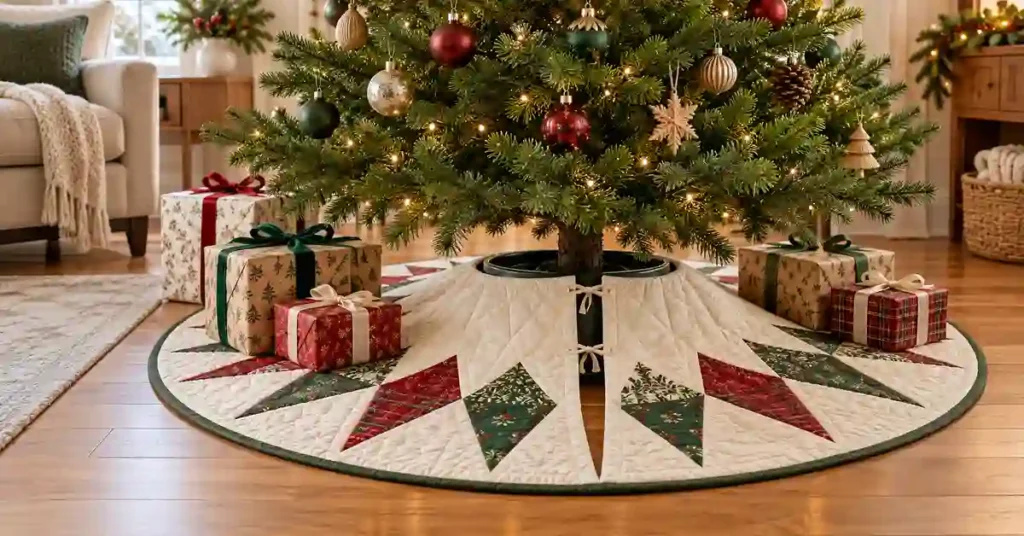
Wedge-shaped sections emphasize the circular form and let you repeat a small palette. Plan the section arrangement before sewing so the opening does not interrupt a feature you want at the front. Remember that every extra seam adds construction work and may affect how the skirt lies.
A Quiet Quilt with Visible Stitching
Use stitching to add texture while keeping the fabric colors restrained. Check how the quilting behaves across the opening and near the center. A densely stitched area may drape differently from a lightly stitched section, especially when several layers are combined.
Velvet with Minimal Decoration
Allow the pile to provide most of the visual interest. Lay fabric pieces with a consistent pile direction if you want a uniform effect; deliberate changes can create contrast but should be planned. Avoid choosing a complicated finish that conflicts with the care method the fabric needs.
A Reversible Skirt
A reversible design can provide two looks if both sides and all seams are properly finished. Keep closure placement and care compatible with either side facing upward. Reversibility is less useful if one side is uncomfortable to handle or the two fabrics require conflicting treatment.
A Neutral Base with Removable Seasonal Detail
A simple base can work with different ornament colors over several years. If you add removable decorations, make sure they attach securely and suit the household. Small loose components are not an appropriate choice where young children or pets may reach them.
Plan an Opening You Can Actually Use
A rear opening usually makes it easier to place a skirt around an existing tree without lifting the tree or dismantling the stand. Check that the opening reaches far enough from the outer edge to the center. A decorative seam without a usable opening may not solve your access problem.
Compare ties, hook-and-loop tape, buttons or overlapping edges according to how often you need to move the skirt. Ties can offer adjustment but leave loose lengths; exposed hook-and-loop surfaces may catch textured fabric. Think about the actual material rather than choosing a closure only because it is familiar.
Keep access to the stand and water reservoir straightforward. Plan where the opening faces and what needs to move during care. Do not bury access beneath presents or force the fabric against connections, controls or equipment that needs clearance according to its instructions.
Check Decoration without Losing Practicality
Look closely at pom-poms, tassels, beads and appliqués. They may be attractive at the edge but can catch during vacuuming, packing or gift handling. In a household with children or pets, avoid accessible small detachable pieces and choose a simpler construction when appropriate.
Check where the skirt meets the floor. Rolled edges and overlapping layers should not extend into a walking route. Do not treat an anti-slip claim as proof that every floor-and-fabric combination will remain stationary; assess the actual placement and keep the area tidy.
Keep textile decorations away from flames and heat sources. A tree skirt is decoration, not a protective barrier for candles or heaters. Follow the tree, lighting and stand instructions, and do not rely on a seasonal product name as evidence of flame resistance.
Clean and Store the Skirt for Next Year
Choose a cleaning method from the label or from the requirements of every material used in a handmade skirt. A washable top fabric does not make glued trim, batting or backing automatically washable. Test the intended routine on appropriate spare materials when planning a handmade design.
Remove loose needles and debris gently before putting the skirt away. Avoid aggressive brushing or a lint-removal tool that could catch the surface. If the skirt becomes damp from watering, remove it and follow the appropriate drying process instead of covering the damp area with gifts.
Store the skirt only when fully dry. Fold a flat woven design according to its construction, and avoid compressing a deep pile beneath heavy decorations. Keep closures secured so they do not snag other textiles. Label the storage bag with dimensions if you use different skirts for different trees.
Frequently Asked Questions
How large should a Christmas tree skirt be?
Start with the stand’s widest measurement and the amount of visible extension you want, then check available floor space. Tree height alone does not tell you what diameter will fit safely in the room.
Does a tree skirt need a center opening?
A usable opening makes placement around an installed tree much easier. Check the center size, rear opening and closure together rather than relying on a product photograph.
Is velvet better than cotton for a tree skirt?
Neither is automatically better. Velvet emphasizes pile and sheen, while a woven cotton fabric can suit prints or patchwork; cleaning, lining and construction determine the practical differences.
Can I use a blanket instead?
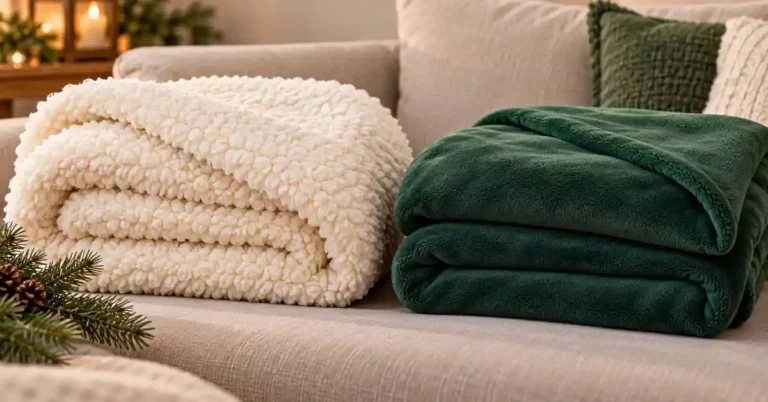
Only if its placement leaves the stand stable, preserves access and avoids walkways or equipment clearance problems. A blanket is not designed with a fitted center or opening, so check carefully rather than simply bunching it around the base.
Can the skirt stay under the tree during watering?
Keep the reservoir accessible and prevent fabric from becoming wet. Move the skirt as needed and dry any affected textile properly before replacing it.
Final Thought
Measure first, choose a manageable fabric and keep the opening easy to use. A thoughtful tree skirt design supports the whole display without getting in the way of everyday tree care.