As an Amazon Associate, Practical Textile earns from qualifying purchases.
The fun is in the deliberately over-the-top design, not in being uncomfortable all day. A simple sweatshirt with an amusing seasonal print can work as well as a heavily embellished knit when it fits the event. You do not need an expensive new garment or a complicated DIY project to participate.
This guide covers the date, planning, fabric selection and practical care. It does not rank particular sweaters or claim that novelty products have been personally tested. Use the ideas to enjoy the occasion while keeping the clothing wearable after the first photograph.
When Is Ugly Christmas Sweater Day in 2026?
The commonly observed US date is December 18, 2026. It follows the third Friday of December, rather than the same numbered date every year. Keep the year visible when sharing a calendar reminder so an old invitation or search result does not cause confusion.
That convention does not require every organization to hold its event on that Friday. Schools, workplaces and clubs may choose a date that suits their calendar. Other sweater or jumper fundraising events can have their own arrangements, so check the actual organizer rather than treating every holiday sweater event as the same occasion.
If you are organizing, communicate the date, location and participation expectations together. Explain whether it is a casual dress-up day, a contest or a fundraiser. Give people enough notice to reuse something they own rather than making a last-minute purchase feel compulsory.
Choose a Garment for the Entire Day
Think about where you will wear the garment and for how long. A thick knit that feels pleasant outdoors may be too warm in a heated office. A lighter sweatshirt can be easier to wear over an ordinary shirt, especially if you need a removable outer coat for the journey.
Check the neckline, sleeve movement and hem when you sit. Decorative weight can pull at a neckline or make one area hang differently. If the sweater must be worn during normal work or school activities, check that it does not interfere with those activities or conflict with the setting’s clothing requirements.
Try the complete outfit, including the shirt beneath it. An underlayer may reduce skin contact with a rough seam, but it should not be used to excuse a garment that remains uncomfortable. People experience wool and synthetic textures differently, so choose by your own comfort rather than a broad fiber stereotype.
What the Fabric Label Can Tell You
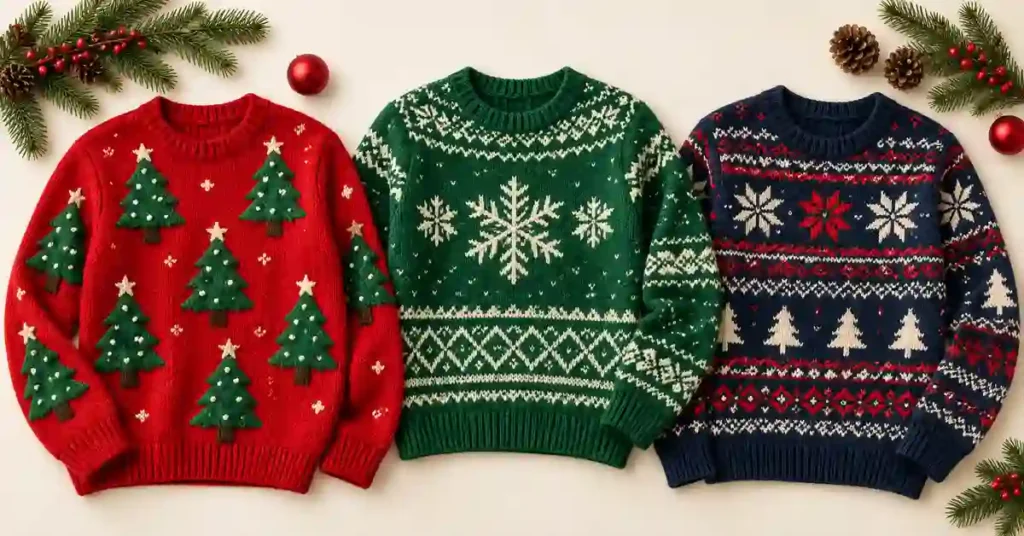
Acrylic often appears in novelty knitwear, while cotton and polyester are common in printed sweatshirts. Wool and cashmere-containing blends are also possible. The design category does not determine the fiber, and a garment sold as a sweater may actually have a sweatshirt construction.
Knit gauge, yarn thickness, stitch structure and fabric weight affect how a garment feels. A loose, bulky knit and a fine, dense knit can behave differently even when both have the same fiber composition. Read the label alongside the garment’s construction rather than deciding from the fiber percentage alone.
Cotton-containing garments can change dimensions during laundering, depending on their structure and finish. Synthetic fibers are not immune to damage, particularly from unsuitable heat. Follow the care instructions instead of automatically choosing a larger size or assuming the garment will retain its original fit under any washing method.
Pilling happens when loosened fibers tangle on the surface, often where there is repeated rubbing. Check areas such as underarms, cuffs and bag contact points. A printed design or embroidered decoration does not make the surrounding fabric pill-proof, and trimming pills will not fix an unsuitable washing routine.
| Option | Useful feature | Check before wearing |
|---|---|---|
| Printed sweatshirt | Usually a flatter decorative surface | Inside finish, print care and overall warmth |
| Patterned knit | Decoration integrated into the knit design | Snagging, recovery and inner floats |
| Appliquéd sweater | Raised, playful detail | Attachment strength and added weight |
| Electronic novelty garment | Light or sound effects | Component instructions and permitted care |
Make an Existing Top Festive without Overcomplicating It
Begin with a garment you are willing to alter, and decide whether the decoration should be temporary or permanent. Do not experiment on borrowed clothing or a valued knit without considering the result. Glue, stitching and pins can each leave marks or damage particular structures.
Keep decoration away from places that rub, bend frequently or need to stretch. A heavy object across the chest can change drape, while rough trim beneath the arms can become irritating. Try a small, lightweight arrangement before building an entire three-dimensional scene on the garment.
For a temporary idea, a separate removable accessory may be simpler than attaching pieces directly to the fabric. Check any fastening for security and comfort, and make sure it suits the wearer’s age and the event. Small detachable pieces should not be accessible to young children.
For permanent decoration, choose a method suitable for the garment and the materials being attached. Test on an appropriate scrap when possible. A product labeled fabric glue does not mean it will bond every pile, coating or stretch fabric successfully, nor that the finished garment can be washed normally.
Keep the design clear enough to work from a few steps away. One playful motif, a bold color contrast or a deliberately crowded pattern can be enough. Reusing a simple garment with a restrained change often creates less waste and fewer care problems than buying a top that cannot be comfortably worn again.
Plan an Event People Can Join Comfortably
Make participation optional and offer a low-effort alternative, such as a festive color or a small accessory. Some people may not own a novelty sweater, enjoy themed clothing or tolerate the same fabrics. A welcoming event does not require everyone to make the same purchase.
If you hold a contest, describe the categories in advance and keep the tone kind. Categories such as most creative reuse, funniest seasonal idea or best handmade detail can focus attention on the design. Avoid categories that encourage comments about a person’s body, size or spending.
For a fundraiser, follow the organizer’s stated process and communicate where contributions go. Do not imply that buying a particular sweater automatically supports a charity unless that arrangement is verified. Wearing a holiday garment and making a donation are separate actions unless the organizer explicitly connects them.
Consider practical details such as photographs, food and access around the room. Decorations that catch on chairs or shed loose materials can create inconvenience beyond the wearer. Choose a venue-appropriate plan and keep ordinary comfort requirements in place even when the theme is intentionally silly.
How to Care for an Ugly Christmas Sweater
Read the label before the first wash, including any separate instructions for lights, sound units or removable components. Do not assume an electronic part is washable or removable just because another garment uses a similar arrangement. Follow the instructions supplied for that exact item.
For ordinary washable garments, close appropriate fasteners and separate snag-prone decoration from delicate fabrics. Use the stated temperature and drying method. A knit that needs flat drying should be supported accordingly rather than hung while wet, when its own weight may distort the shape.
For a handmade decorated garment, the finished care method must suit the base and every attachment. If the requirements conflict, choose a different decoration or treat the project as unsuitable for routine washing. Do not rely on a short wear time to make an incompatible construction practical.
Store a clean, fully dry garment without crushing fragile decoration. Follow any instructions for electronic components during storage. Keep small detachable pieces organized, and inspect the garment again before next year’s event rather than assuming every attachment remained secure in the box.
Frequently Asked Questions
Is Ugly Christmas Sweater Day always December 18?
No. The commonly observed date follows the third Friday in December, which falls on December 18 in 2026. Your own event organizer may choose a different day.
Does an ugly Christmas sweater have to be knitted?
No. A printed sweatshirt or another suitable festive top can work when the organizer permits it. Check the event description rather than treating the name as a strict fabric requirement.
Can I decorate a sweater I already own?
Yes, but choose a method that suits the fabric and think about whether you want the change to be reversible. Adhesives, pins and stitching can each leave marks or alter the garment.
Can light-up sweaters go in the washing machine?
Only if the exact item’s instructions allow it and all required preparation has been completed. Never assume an electronic component is washable based on the main fabric label alone.
Do I need to spend money to take part?
Not necessarily. Reuse a garment, add a suitable accessory or ask whether a festive color is welcome. A good event makes the expectations clear without making a purchase compulsory.
Final Thought
Check the local event date, choose a comfortable garment and keep decoration manageable. The best sweater-day plan creates some holiday fun without turning one day’s outfit into a fit, care or shopping problem.