As an Amazon Associate, Practical Textile earns from qualifying purchases.
Product names make this choice sound more straightforward than it is. One listing may call a blanket fleece, another sherpa fleece, and a third describe a reversible blanket with both surfaces. Those labels can refer to related materials with different finishes rather than two mutually exclusive fabric families.
From a textile perspective, the useful questions are how the pile is formed, how much bulk the blanket has, what backs the surface and how you intend to wash it. This guide compares those practical differences without claiming a temperature rating or personal testing of specific products.
What Sherpa and Fleece Mean on a Blanket Label
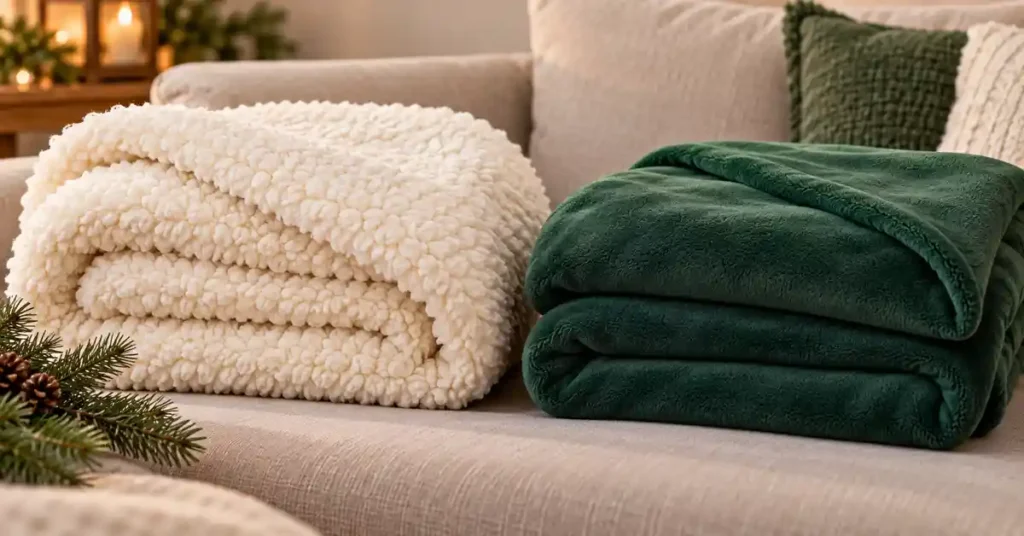
Fleece commonly describes a soft, raised textile surface produced from a knit base. Many everyday fleece blankets use polyester, although the word does not guarantee one exact fiber composition. Brushing or raising brings fibers toward the surface and creates the soft layer that gives the fabric its familiar feel.
Sherpa usually describes a deeper, curled or clustered pile intended to resemble a woolly surface. It is commonly made with synthetic fibers and may form one side of a reversible blanket. The appearance alone does not prove that the blanket contains sheep’s wool. Read the composition rather than interpreting the name as a fiber claim.
A blanket can therefore have smooth fleece on one side and sherpa-style fleece on the other. Other constructions add a separate backing, decorative stitching or bonding. These details affect flexibility, drying and the way layers move, so compare complete blankets rather than judging only their front surfaces.
Sherpa vs Fleece Blanket: Practical Differences
| Factor | Sherpa-style blanket | Smoother fleece blanket |
|---|---|---|
| Surface | Deeper, curly or clustered pile | Flatter, brushed or plush surface |
| Fiber | Often synthetic; check the label | Often polyester; check the label |
| Handling | May feel bulkier, especially with a separate backing | Often easier to fold and pack when lightweight |
| Warmth | Loft can trap insulating air; construction matters | Varies with weight, pile and layers |
| Surface upkeep | Curly pile can catch lint and become matted | Smoother surface may be easier to inspect and clean |
| Drying | Thick or multilayer pieces may take longer | Lightweight single-layer pieces may dry more readily |
| Best fit | Someone who values a deep, cozy texture | Someone who values simpler handling and less bulk |
These are tendencies, not performance guarantees. A heavy smooth-fleece blanket may be more substantial than a lightweight sherpa throw. Two products with the same surface name can differ in dimensions, fabric weight, backing and finish, which makes an exact side-by-side listing comparison worthwhile.
Compare Warmth, Breathability and Weight Separately
Blanket warmth depends partly on how much still air the structure can hold and how the blanket fits around you. A lofty surface can support insulation, but thickness alone does not establish a reliable warmth ranking. Open gaps, compression, backing and the room conditions also influence the experience.
Fabric weight is useful when the listing provides it clearly. GSM means grams per square meter and describes mass per unit area, not the total mass of the finished blanket. A larger blanket can weigh more overall even when its fabric is lighter. Check whether a quoted figure applies to one layer or the complete construction.
Do not treat GSM as a certified warmth rating. A dense, flattened fabric and a loftier surface can have similar area weights but feel different. If a seller omits weight or test details, avoid filling the gap with assumptions based on photography. Product photos show appearance better than they establish insulation.
Breathability also needs context. Fiber chemistry, knit openness, pile density and backing all matter. A double-layer blanket can feel warmer and less airy than a light single layer, even if both use polyester. People who tend to overheat may prefer an easily adjustable lighter cover rather than the deepest pile available.
For a sofa, consider how the blanket drapes over your legs without sliding away. For a bed, measure the area you want covered and decide whether you need side drop. Names such as throw, twin and queen do not replace the listed dimensions, particularly when comparing products from different sellers.
Pilling, Shedding and Matting Are Different Problems
Pilling occurs when loosened fibers tangle into small balls on the surface. Repeated rubbing during use and washing can contribute to it. Fiber length, yarn construction and finishing affect how readily it develops, so neither the word sherpa nor the word fleece guarantees a pill-free blanket.
Shedding means fibers are being released, while matting describes a pile becoming flattened or tangled together. A blanket may show one problem without showing the others. Inspect the surface after following the labeled care method and distinguish loose lint from actual loss of the blanket’s pile.
Curly sherpa can catch hair and lint because of its surface structure. Keep it away from exposed hook-and-loop fasteners and rough laundry items. A smoother fleece may be easier to check visually, but it can still collect lint or develop pills. Surface simplicity is useful without being a promise of effortless maintenance.
Avoid assuming a fabric shaver is appropriate for every pile. Tools that remove pills from one textile can cut or alter a deeper textured surface. Start with the manufacturer’s advice and a gentle method intended for that fabric. Once a heat-damaged pile changes structure, washing may not restore its original appearance.
Which Blanket Should You Choose?
Choose Sherpa When Texture Is the Main Attraction
A sherpa-style blanket suits someone who enjoys a deep, woolly-looking surface and wants a cozy throw for sitting indoors. Check how the pile feels against the skin, whether the reverse side suits you and whether the finished blanket fits your washing machine’s capacity. A reversible construction may offer two different surface feels.
It is less convenient if trapped lint or a flattened pile would frustrate you. A pale curly surface can show darker fibers, while dark blankets can highlight light lint. Choose the color with your normal clothing, sofa and laundry routine in mind rather than judging it only in a staged product photograph.
Choose Smoother Fleece When Easy Handling Matters
A lightweight smoother fleece can be useful for a chair, an extra indoor layer or a blanket that needs frequent folding. It may fit a smaller storage space more easily than a bulky multilayer throw. Confirm the thickness and dimensions, since fleece is a broad label covering many weights and finishes.
For frequent washing, look for clear care instructions and a construction you can dry thoroughly with the equipment you have. A blanket that is easy to wash but difficult to dry is not necessarily the practical choice. Do not infer commercial-laundry durability from a generic machine-washable claim.
Choose a Reversible Blanket When You Want Both Surfaces
A smooth face with a sherpa reverse gives you a choice of textures without owning two separate throws. Inspect the edges, quilting or bonding that hold the construction together. Check whether reviews you actually read mention layer movement or drying difficulties, but do not treat another buyer’s experience as a measured result.
When buying as a gift, prioritize the recipient’s habits. Someone in a warm home may value a light blanket more than a thick winter throw. Include the care label and check the delivery date on Amazon before ordering. A seasonal color or print does not change the need to verify dimensions and care.
How to Wash and Dry the Blanket
- Read the complete label. Check the main fabric, backing and any trim. The most restrictive component may determine the care method.
- Separate rough items. Avoid washing a soft pile beside exposed zippers, hook-and-loop fasteners or lint-heavy textiles.
- Use the stated wash settings. Follow the permitted temperature and cycle instead of assuming all synthetic blankets tolerate the same treatment.
- Do not overload the machine. The blanket needs enough room for the care method to work and for water to rinse through the construction.
- Follow the drying instruction. If tumble drying is allowed, use the label’s heat guidance. If air drying is required, arrange the blanket so its layers can dry fully.
- Check before storage. A surface that feels dry does not guarantee a thick edge or backing has dried. Store only once the entire piece is dry.
High heat can damage synthetic pile, so avoid guessing when the label is missing. Similarly, fabric softener is not a universal solution for a rough or matted blanket. Follow any manufacturer restrictions and avoid adding extra treatments simply because they worked on a different fabric.
Keep care claims realistic. Correct washing can reduce unnecessary wear, but it cannot promise that a blanket will never pill, shrink, shed or change texture. Poor construction and repeated abrasion can still affect appearance. Check return conditions before purchase if a particular surface feel is essential to you.
Frequently Asked Questions
Is sherpa the same as wool?
No. Sherpa generally describes a woolly-looking pile, and many sherpa blankets are synthetic. Only the fiber-content label can establish whether a particular blanket contains wool.
Is sherpa always warmer than fleece?
No. Sherpa may itself be a fleece surface, and warmth depends on the complete construction. Compare weight, loft, backing and intended use instead of relying on the name alone.
Which is easier to wash?
A lightweight single-layer fleece may be easier to handle and dry than a bulky multilayer blanket. However, the exact care label and your laundry equipment determine what is practical.
Why does a sherpa blanket become matted?
Friction, tangled fibers and unsuitable heat or care can change the pile’s appearance. Follow the labeled care instructions and avoid rough laundry items; damaged pile may not return to its original texture.
Can a blanket have both sherpa and fleece?
Yes. Many reversible blankets combine a smoother fleece face with a sherpa-style reverse. Check the fiber content and care instructions for the whole blanket rather than considering each surface in isolation.
Final Thought
Choose by texture, construction, size and laundry practicality. Sherpa favors a deep, cozy surface; smoother fleece often favors less bulk. Neither name replaces a clear fiber label or makes the blanket automatically warmer, more breathable or more durable.