As an Amazon Associate, Practical Textile earns from qualifying purchases.
A Christmas outfit party search can lead to glamorous dresses, novelty sweaters and matching family sets on the same page. Those are different dress codes, not interchangeable solutions. Begin with the type of gathering so the clothes support the occasion instead of making it harder to enjoy.
The twelve formulas below cover a range of settings and can be adapted to different genders, sizes and style preferences. They are clothing combinations rather than rankings of specific products. Fabric advice is based on construction and practical care considerations, without claiming personal wear tests.
Use the Invitation to Set the Level of Dress
Look for clear wording such as casual, cocktail, formal or a particular theme. If the wording is unclear, ask the host what they have planned. The location gives context, but a restaurant can host anything from an informal family meal to a formal work function.
Consider how long the event lasts and whether it includes a seated meal, standing conversation, dancing or time outdoors. A fitted outfit that feels fine briefly may become awkward across several activities. Treat movement, warmth and footwear as part of the dress decision rather than finishing details.
Work-related celebrations deserve the same thought about coverage and presentation that you would give any event with colleagues. A festive accessory or textured layer may provide all the change you need. At a private themed gathering, you may have much more freedom to be playful.
Start with Clothes That Already Fit
Choose a base outfit you can sit, bend and move in without repeated adjustments. Trousers, a dress, a skirt or a coordinated knit set can all serve that role. Judge the fit with the intended underlayers instead of assuming that adding a jacket will disguise discomfort.
Decide where you want the festive emphasis. It might be a rich color, velvet texture, a printed shirt or a small sequined detail. One clear emphasis is easier to coordinate than several competing elements, particularly when you also need a coat and practical shoes.
For online shopping, compare your measurements with the exact garment chart and read what the listed measurements represent. Body measurements and flat garment measurements are not the same thing. Check the delivery date on Amazon before ordering; a seasonal listing is not a guarantee of arrival before your event.
12 Christmas Party Outfit Formulas to Adapt
Use the dress code to choose a formula, then change the silhouette and fabric weight to suit your comfort. A party outfit can be repeated with a different layer or accessory. Familiar clothes often make planning easier because you already know how they behave during a full evening.
1. Dark Trousers with a Velvet Layer
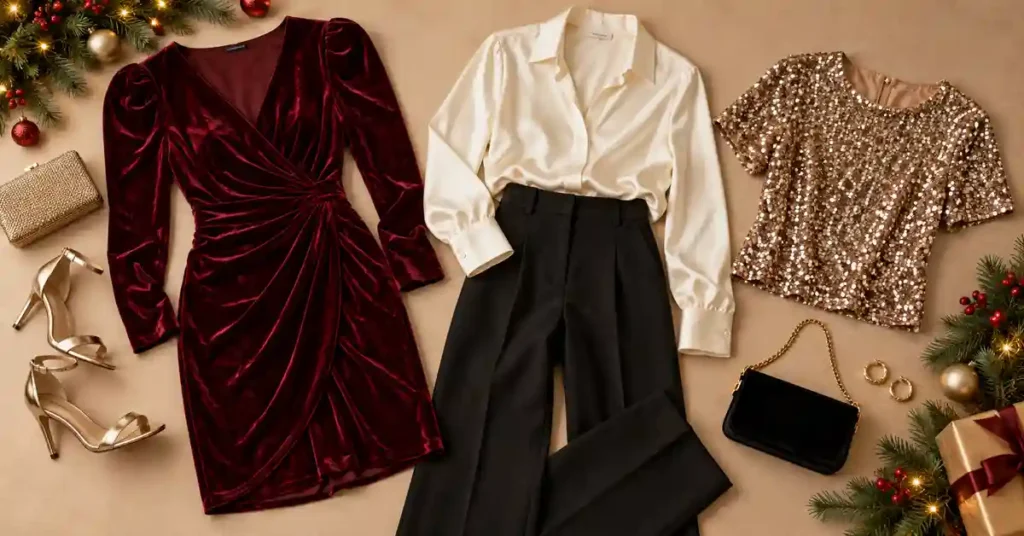
A velvet jacket or overshirt makes a simple base feel seasonal without relying on a novelty print. Check the lining and arm movement, especially if you will wear a knit beneath it. Keep the trousers comfortable at the waist when seated and check that the pile does not catch on rough bag straps.
2. A Plain Dress with a Textured Cardigan
This works for a relaxed dinner where you want warmth without a formal jacket. Choose a cardigan that sits comfortably over the sleeves and neckline of the dress. Check for shedding onto the dress, and avoid assuming two garments will layer well simply because each fits separately.
3. A Shirt and Tailored Trousers with a Festive Accent
Use a subtle patterned shirt, a seasonal tie or a pocket detail according to the setting. Check collar and cuff comfort before adding a jacket. If the shirt is new, follow its care instructions early enough to notice shrinkage or creasing before you need to wear it.
4. A Satin Top with a Quiet Lower Half
Let the top supply the light reflection while the skirt or trousers remain uncomplicated. Satin does not necessarily mean silk, so check fiber content and care. Inspect opacity and seam tension in ordinary light, then sit to see whether the fabric pulls at closures or across the body.
5. A Fine Knit with Dark Jeans
Choose this only when jeans fit the invitation. A smooth knit or restrained seasonal pattern can keep the outfit relaxed while still looking intentional. Inspect pilling around cuffs and side seams, and avoid stacking bulky layers if the venue is likely to be warm.
6. A Knit Dress with Practical Footwear
A knit dress can provide easy movement, but stretch is not the same as sufficient room. Check whether the fabric becomes sheer or loses its shape when stretched. Match the length and shoes to the route and venue, and make sure the coat layers over it without bunching.
7. A Sequin Accent with Smooth Separates
A sequined skirt, top or accessory works best when its backing and edges feel comfortable. Keep delicate knitwear away from rough decoration that may snag it. Try the outfit while moving your arms and carrying your bag; friction points are easier to discover at home than during the event.
8. Coordinated Family Colors without Identical Clothes
For a family gathering, choose a small shared palette and let everyone keep a suitable garment style. One person might wear burgundy knitwear while another uses a muted plaid containing the same shade. Prioritize children’s comfort and weather-appropriate layers rather than forcing the whole group into one matching set.
9. A Simple Jumpsuit with an Easy Jacket
Check torso length as well as waist and leg measurements. A jumpsuit should allow comfortable sitting and reaching without pulling at the shoulders or rise. Consider closures and restroom access, and choose a jacket that can be removed without turning those practical steps into a difficult process.
10. A Pleated or Fluid Skirt with a Plain Knit
This gives movement without requiring a fitted party dress. Check whether the skirt is lined and how the waistband feels after sitting. Read care instructions for pleats and finishes, since aggressive pressing or an unsuitable wash may change the surface you liked when buying it.
11. A Familiar Suit with a Seasonal Inner Layer
A well-fitting suit can work for another event with a different shirt, blouse or restrained accessory. Check the complete combination before deciding it is finished. An inner layer that bunches beneath the jacket or pulls at the neckline can undermine an otherwise comfortable fit.
12. A Novelty Sweater for an Explicit Theme
If the invitation asks for an ugly Christmas sweater, enjoy the idea without making comfort an afterthought. Check heavy appliqués, rough trims and any electronic components. A lighter garment can be more practical indoors than a thick sweater with several additional layers beneath it.
Compare Fabrics by Their Job in the Outfit
| Fabric or surface | What it adds | What to check |
|---|---|---|
| Velvet or velour | Depth and a soft-looking pile | Composition, lining, pile direction and care |
| Satin | Sheen and a fluid surface | Opacity, seam tension and actual fiber |
| Knitwear | Texture and adjustable layering | Recovery, pilling, neckline and warmth |
| Sequined fabric | A concentrated festive highlight | Backing, weight, rubbing edges and snagging |
Do not infer comfort from a fiber name alone. Fabric weight, construction, lining and fit all contribute. A cotton-containing garment can still be heavy, while a lightweight synthetic piece may work comfortably for a short indoor event. Check the entire garment rather than treating one label word as a verdict.
Clothes can also behave differently together. A rough decorated layer may catch on an open knit, and a pale fuzzy cardigan can leave visible fibers on dark trousers. Test the combination as an outfit, including the coat and bag, before deciding that every piece works.
Prepare the Outfit without Last-Minute Surprises
Check fasteners, hems and any detachable pieces before the event. Try the outfit with the intended shoes and underlayers, then spend a few minutes sitting and walking. If something repeatedly needs adjusting, change the fit or combination rather than planning to ignore the problem for several hours.
Follow each garment’s care label rather than washing all coordinating items together. A plain knit, decorated top and lined velvet jacket may require different handling. Avoid direct heat on unfamiliar decoration or pile, and allow enough time for garments to dry or return from professional cleaning.
Keep the journey practical. An indoor outfit still needs appropriate outdoor protection, and a long hem should not trail across wet ground. Carry an easy layer if the venue temperature is uncertain. The point is to arrive comfortable and remain that way as the evening changes.
Frequently Asked Questions
What can I wear if I do not want a Christmas dress?
Try tailored trousers with a textured jacket, a satin top or a refined knit. Choose the level of formality from the invitation rather than assuming a dress is required.
Can a Christmas party outfit include jeans?
Yes, when the event is casual and jeans fit the host’s expectations. Choose a comfortable pair and add one intentional festive element instead of relying on several accessories to change the dress code.
Do I need to wear red or green?
No. Navy, cream, black, metallic accents or other colors can work unless the invitation specifies a palette. Texture can communicate the season without traditional colors.
How can I avoid overheating in a party outfit?
Think about the complete layering system and the venue. A lighter indoor base with removable outerwear may be easier to adjust than several heavy layers you cannot take off.
Should family members wear identical clothes?
Only if they enjoy that look and the pieces suit everyone. Coordinating a few colors usually allows more choice in fit, comfort and garment type.
Final Thought
Choose the outfit for the event first, then add the Christmas detail. Comfortable fit, thoughtful fabric combinations and suitable layers will serve you longer than a look chosen only for a product photograph.