As an Amazon Associate, Practical Textile earns from qualifying purchases.
A Santa appearance often involves more movement than the costume photograph suggests. You may need to climb a small step, sit for pictures, carry a sack or spend time inside a heated venue. The right rental is the one that supports those tasks without constant adjustment.
This guide explains how to assess a rental before committing, including fabric, sizing and the agreement itself. It does not list unverified local providers or promise December availability. Use the checklist when contacting a costume shop, theatrical wardrobe supplier or event organizer in your area.
Santa Costume Rent or Buy: Start with the Actual Event
Renting can suit a single appearance when a local supplier offers the style, condition and size you need. Buying may be more practical for repeated events, especially if you want control over alterations and storage. Neither choice is automatically cheaper once fitting, collection, cleaning and accessories are considered.
Write down how long the wearer will be in costume and what the event involves. A short family visit differs from several hours of public photographs. Include travel and changing time rather than counting only the minutes when Santa is visible. A workable plan also needs somewhere to change and keep ordinary clothes.
Ask the event organizer about the intended look. A traditional plush suit, a simpler red coat and a themed theatrical costume can produce very different impressions. Confirm the venue’s requirements before reserving a dramatic cape or unusually bulky style that might complicate movement.
Find Out What the Rental Actually Includes
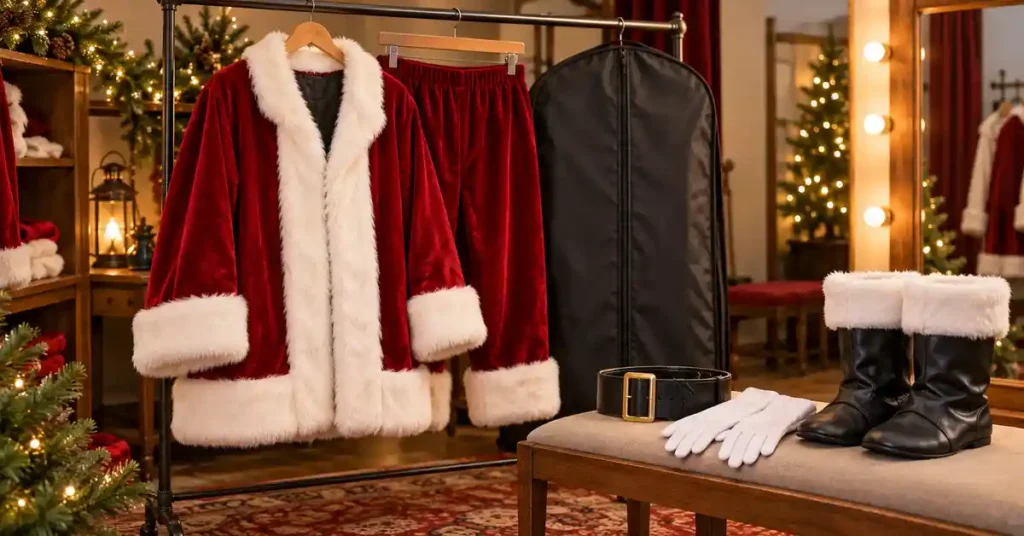
Ask for an itemized list rather than relying on the phrase complete Santa suit. The package might include a coat, trousers, hat and belt while excluding gloves, boot covers, footwear, beard or padding. Confirm every component needed for your event and whether its size can be adjusted.
Check whether a pictured sack, glasses or accessories are included or used only for styling. Ask how fragile pieces should be handled and whether replacements are available if something is missing at collection. An itemized handover makes the return simpler as well.
Hygiene deserves a direct conversation, especially for pieces worn near the face. Ask how the costume and any beard or wig are cleaned between users. Do not assume that the cleaning method suitable for the coat also suits synthetic hair, glued trim or a separate padded component.
Compare Fabric, Lining and Trim Before Choosing
Velour and velvet-like fabrics describe surface effects rather than proving a particular fiber. A polyester plush suit can look substantial while feeling quite warm indoors. Check the composition, backing and lining separately. The visible red surface alone cannot tell you how comfortable the complete outfit will be.
Ask whether the white trim sheds onto the red fabric or catches easily on accessories. Faux fur can flatten or tangle with friction, and pale trim can show makeup or food marks. Inspect the neckline and cuffs where skin contact and handling are most likely.
Look inside the coat as well as outside it. A smooth, secure lining can help the garment move over ordinary clothing, while rough seams or loose lining edges can create irritation. Check the closures, particularly when a belt or padded stomach will cover them and make adjustments harder.
Fabric thickness is not a reliable measure of costume quality. Dense pile, heavy lining and padding can add bulk without improving movement. Choose the construction that matches the length and conditions of the appearance instead of assuming the heaviest-looking suit is the best option.
Do a Fitting with the Intended Underlayers
Bring or describe the clothes and footwear that will be worn beneath the costume. Measurements taken over a thin shirt may not suit an outfit worn over heavier layers. If padding is part of the look, include it during fitting rather than trying to accommodate it afterward.
Check shoulder width, sleeve length, waist adjustment and the trouser rise. Sit in a chair, reach toward a table and walk at a normal pace. The coat should not pull sharply at the shoulders, and the trouser hems should stay clear of the floor.
Try the hat and any beard together. Confirm that the arrangement leaves vision and breathing unobstructed and that fastenings do not press painfully behind the ears. If the wearer uses glasses, test the full setup rather than discovering a conflict just before the appearance.
Boot covers are not a replacement for appropriate footwear. Check how they attach, whether they stay in place and whether they create loose fabric around the sole. Use the actual event shoes during the movement check. Ask the organizer about surfaces, steps and access routes.
For a seated appearance, check the costume in the chair that will be used if possible. Armrests and narrow seats can compress bulky sleeves or trim. Make sure the wearer can stand up smoothly without the coat catching, and plan breaks according to the person’s comfort and the event conditions.
Read the Rental Terms Before Reserving
Confirm the rental period in writing, including collection time, return time and how late returns are handled. A booking described as a day may not mean a full twenty-four hours. Check whether travel or venue timing makes the proposed window realistic.
Ask what happens if the reserved size is unavailable, damaged or unsuitable at collection. A substitute style may not meet your needs even if it is also red and white. Record the agreed size and major components so both sides understand what has been reserved.
Understand the cleaning instructions and responsibility before wearing the suit. Some suppliers include cleaning and prohibit customers from washing it; others give a particular return process. Do not improvise a wash, stain treatment or pressing method on a rental garment.
- Who may alter or pin the costume, if anyone?
- How should existing wear be documented?
- Which accessories must be returned in separate bags?
- What process applies to stains, damage or missing pieces?
- Can the booking be changed if the event date moves?
These questions are a practical checklist, not a description of every rental contract. Read the actual terms and ask the supplier to clarify anything uncertain. Do not assume another shop’s policy applies to the one you choose.
Inspect the Costume at Collection
Allow time for an inspection before leaving the supplier. Compare the contents with the agreed list and look for loose seams, damaged closures, stains or missing attachments. If photographs of existing wear are permitted, keep them with the booking information.
Try on any component that could not be fitted earlier. A belt, beard or hat can create a problem even when the coat fits well. Raise an issue while the supplier still has an opportunity to help rather than expecting an easy correction at the venue.
The purchase boxes in this guide are separate shopping options for readers comparing ownership with rental. They do not represent rental suppliers, and they do not establish availability in your city. Check the selected size and delivery date on Amazon before ordering anything for a scheduled appearance.
Transport, Use and Return It Carefully
Use the supplier’s garment bag or recommended packaging. Keep the costume away from food, damp surfaces and anything likely to transfer color. Do not crush a beard, wig or deep pile beneath heavy equipment, since their surfaces may need different handling from the coat.
At the venue, keep spare pieces together in a designated place. Avoid handing small accessories around unnecessarily or leaving them loose in a changing area. A simple packing list is useful when the event finishes and several people are clearing the room at once.
Follow the return instructions exactly. Do not hide a stain or repair damage without discussing it with the supplier. Explain any problem and return all components within the agreed window. Keeping the handover organized is more useful than trying an unapproved cleaning method at the last minute.
Frequently Asked Questions
Where can I rent a Santa costume?
Check local costume-hire businesses, theatrical wardrobe services and event suppliers, then verify that they serve your location. This guide does not confirm stock or booking availability for a particular provider.
Does a Santa suit rental normally include a beard?
It depends on the package. Ask for an itemized list and confirm the cleaning and fitting arrangements for anything worn near the face.
Should I choose a larger size for padding?
Fit the costume with the intended padding and underlayers instead of choosing a larger label automatically. The shoulders, trouser rise and hems still need to work for the wearer.
Can I wash a rented Santa suit?
Only follow the supplier’s written instructions. Washing or stain treatment can affect pile, trim, lining or attachments and may conflict with the rental terms.
Are the Amazon boxes rental options?
No. They are separate purchase listings for readers considering buying. Confirm the exact contents, size and delivery date on the selected Amazon listing.
Final Thought
Reserve a Santa costume only after checking its complete contents, practical fit and return terms. A clear agreement and a proper fitting do more for the appearance than a promising photograph alone.