As an Amazon Associate, Practical Textile earns from qualifying purchases.
Stage clothing needs to work while the performer turns, reaches and changes direction, not just while standing for a photograph. A sleeve, fastening or hem that seems harmless during a fitting can become distracting once the routine begins. Start with the dance rather than the decoration.
The twenty ideas here are adaptable design directions, not claims that any particular retail costume is performance-approved. Follow the instructor’s and venue’s requirements, especially for children’s groups. Ask about unfamiliar accessories before buying or attaching them to the costume.
Let the Choreography Decide the Costume Shape
Ask the instructor what movements the costume must accommodate. Floor work, high arm positions and partner contact place different demands on the fabric and fastenings. A costume designed for a short standing appearance may not allow the same movement as a dance base layer.
Clarify sleeve length, hem length and permitted accessories before shopping. Check whether the performance uses stage steps, a quick change or several performers moving close together. Those details affect how practical a cape, hat or loose decorative element will be.
Confirm footwear separately. Decorative boot covers and novelty slippers are not automatically suitable dance shoes. Use the footwear approved for the routine and floor, then adapt the visual costume around it. Do not alter a sole or add a loose cover without the instructor’s agreement.
Read Fiber Content and Test Movement
Velour, velvet-like plush and shiny stretch fabrics can all appear festive, but their behavior varies. Some constructions stretch; others mainly look soft. Check actual stretch direction, recovery and seam comfort rather than assuming a costume will move because the listing describes it as flexible.
Check the lining and any stiff backing used beneath decoration. These can restrict movement even when the outer fabric stretches. Reach, bend and turn while wearing the intended underlayers. Watch whether the garment pulls at the shoulders, waist or rise and whether the neckline moves unexpectedly.
Fabric weight also matters in a warm rehearsal room or beneath stage lighting. A bulky plush suit may be appropriate for a particular theatrical role but inconvenient for a more active routine. Choose based on the performance conditions rather than treating a thicker pile as a sign of suitability.
20 Christmas Dance Costume Ideas to Adapt
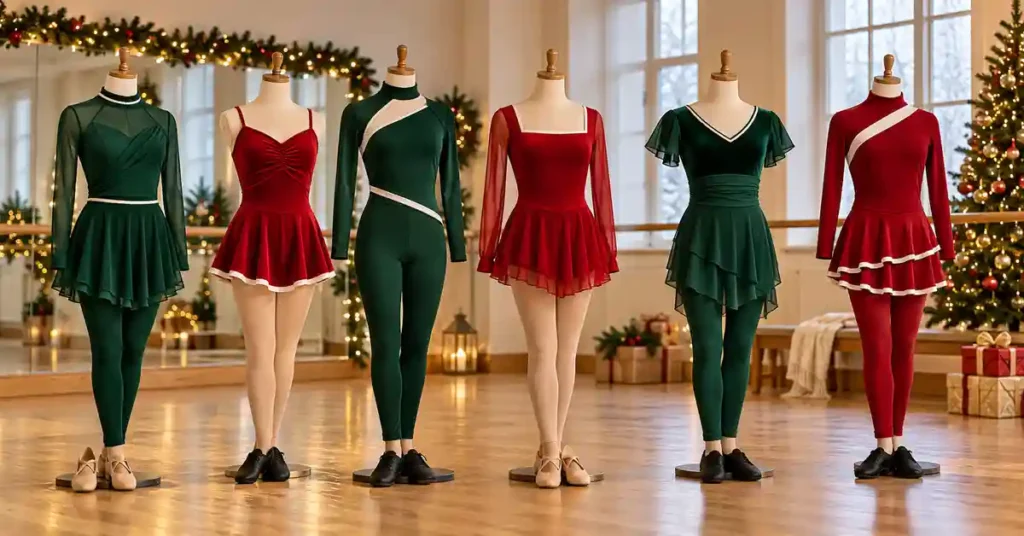
Keep the base appropriate to the routine and use these ideas for the festive direction. Not every idea suits every age, dance style or venue. The instructor’s approval and a complete rehearsal matter more than matching the example exactly.
1. Red and White Separates
A red top with a small white accent can suggest Santa without a full plush suit. Choose a secure neckline and a hem that remains in place during the routine. Keep any trim lightweight and away from areas that repeatedly rub against the body.
2. Green Elf-Inspired Layers
Use green with a contrasting waist detail or simple cuff treatment rather than long pointed pieces. Check that any waist layer remains stable during turns. The recognizable color direction can carry the theme without adding several moving accessories.
3. Candy-Cane Color Blocking
Combine red and white panels or coordinated separates. Large color areas are easier to plan than narrow stripes that must align across seams. Avoid loose ribbon winding around limbs; integrate the visual pattern into the garment or a securely approved detail.
4. Winter-White Texture
A pale outfit can suggest a winter theme through subtle texture rather than dangling snowflake decorations. Check opacity in the intended lighting and with the required underlayers. White fabric may show seams, marks or shadows differently from its appearance in ordinary daylight.
5. A Simple Reindeer Color Palette
Use brown with a restrained red accent. If headwear is proposed, ask whether it can be used during the actual choreography. A recognizable palette can avoid the need for antlers or other accessories that may move or interfere with spacing.
6. Toy-Soldier Color Details
A structured-looking front can be created with lightweight decorative shapes on an appropriate base. Avoid assuming a stiff costume jacket will allow the required arm movement. Test the base first, then add only details compatible with its movement.
7. Jewel-Tone Group Costumes
Coordinate red, green, blue or purple across the group using a shared garment shape or a shared accent. This can produce a festive stage picture without identical colors. Confirm that every performer has a comfortable fit rather than assigning sizes from appearance.
8. Festive Tops with Plain Leggings
A plain lower half can keep the look clear while the top carries the theme. Check waistband stability and fabric opacity during the actual movements. Ordinary fashion leggings may not meet a group’s performance requirements, so use the instructor’s guidance.
9. Matching Colors with Individual Fits
Choose a common color and allow approved adjustments in sleeve or torso fit. Identical sizing does not create a coordinated group when garments pull differently on each person. Check the complete lineup after individual fitting rather than forcing a uniform label size.
10. A Quiet Metallic Accent
Use one small reflective area if the venue and routine permit it. Check whether the material has sharp edges, sheds or catches on neighboring fabric. More shine is not automatically more effective, especially when lighting already creates strong highlights.
11. A Short, Secure Skirt Layer
A skirt can add movement when its length and attachment suit the choreography. Check the complete motion range and any interaction with other performers. Do not rely on a standing mirror check to decide whether the hem remains clear during the routine.
12. A Festive Vest Effect
A vest-style color block can be incorporated into a top rather than worn as a loose outer layer. This can reduce the number of separate pieces to manage. Check the fabric combination and seam flexibility instead of assuming sewn-on panels preserve all the base’s stretch.
13. Snowflake Motifs without Loose Pieces
Choose a printed or securely constructed motif when a snowflake theme suits the music. Small cut-out decorations need especially careful review for attachment and age suitability. The theme should remain visible without pieces that can detach onto the performance floor.
14. A Familiar Dance Base with Seasonal Color
Where appropriate, adapt a base the performer already uses successfully. A color choice or approved small detail may provide enough seasonal identity. Familiarity does not replace a rehearsal, particularly if the added material changes stretch, weight or surface friction.
15. Coordinated Cardigan-Style Appearance
If the routine calls for a cozy holiday look, create the impression using suitable lightweight construction. A loose ordinary cardigan can swing, slip or catch, so have the instructor assess it. The costume can suggest knitwear without requiring a bulky sweater.
16. A Gift-Box Color Scheme
Use contrasting panels to suggest gift wrapping rather than tying long ribbons around the body. Keep decorative shapes part of the costume design. Check that added panels do not create pressure points, restrict stretch or make the garment harder to put on correctly.
17. A Minimal Santa Hat Look
A hat may work for some routines and not others. Ask how it will be secured, when it will be worn and whether the choreography requires its removal. Do not improvise an attachment shortly before the performance without rehearsal.
18. A Red-and-Black Contemporary Look
A simple two-color scheme can suit a routine that needs less literal festive styling. Concentrate on clean lines, fit and movement rather than adding trim to every edge. This also gives the group more flexibility in sourcing suitable garment shapes.
19. A Green-and-Cream Folk-Inspired Direction
Use the palette or modest pattern detail as inspiration while following the dance’s actual costume requirements. Avoid presenting a generic retail costume as authentic traditional dress. Discuss any cultural or performance-specific expectations with the instructor.
20. A Reusable Neutral Costume with One Holiday Detail
A neutral base may be useful when the group performs several programs. Choose a removable detail only when it can be secured appropriately and removed without damaging the base. Plan storage so the detail remains organized for the next performance.
Do a Full Costume Rehearsal
Rehearse the complete routine in the intended garments, footwear and underlayers, with instructor supervision as appropriate. Check repeated movements, not just a single bend or turn. Pay attention to anything the performer keeps touching or adjusting; it may reveal a fit or attachment problem.
Check entrances, exits and changes as well as the dance itself. A costume that is difficult to fasten correctly can create a problem between routines. Label group pieces clearly and confirm which items belong to each performer before packing.
The shopping boxes are ordinary purchase listings, not certification that a costume is suitable for your routine. Confirm measurements, contents and the instructor’s requirements independently. Check the delivery date on Amazon before ordering and leave time for a fitting and any approved corrections.
Prepare and Care for the Costume
Follow the garment label and any construction-specific instructions. Trim, lining, prints and attachments may require different handling from a plain base fabric. Do not assume a washable costume can tolerate high heat or the care routine used for ordinary training clothes.
Inspect seams and decorations before each use. Pack the costume dry, keep snag-prone pieces separate and avoid crushing pile or fragile detail beneath heavy items. Keep any alterations within the instructor’s and garment owner’s approval, especially for borrowed or rented costumes.
Frequently Asked Questions
Can a regular Santa costume be used for dancing?
Only if it meets the routine’s requirements and the instructor approves it after a movement check. A costume made for photographs or short appearances may restrict movement or create excess bulk.
Which fabric is best for a Christmas dance costume?
It depends on the choreography, construction and conditions. Check stretch, recovery, lining and fit rather than choosing a fiber or surface name in isolation.
Should everyone in a group wear the same size?
No. Coordinate the design while fitting each performer appropriately. Size labels are not a substitute for measurements and a rehearsal.
Are hats and capes necessary?
No. Festive colors and secure details can communicate the theme. Any accessory should be approved and rehearsed rather than added only for appearance.
How early should the costume be tried on?
Leave enough time before the performance for a complete rehearsal and any necessary approved changes. Do not rely on a delivery date that leaves no opportunity to check fit and movement.
Final Thought
Let the routine lead the design. A comfortable, secure costume that supports the performer is more useful than elaborate decoration that competes with the dance.