The best sewing machine for stretch fabrics should help you make seams that move with the garment without distorting the material. Stitch choice matters, but needle selection, feeding, pressure, and support matter too. This guide compares three household options, explains when a serger or coverstitch serves a different purpose, and shows how to test stretch and recovery before choosing a machine for knit clothing, repairs, and comfortable everyday home projects.
As an Amazon Associate, Practical Textile earns from qualifying purchases. Product links may earn us a commission.
Quick Answer
Compare the Brother XR9550 for controlled computerized sewing, the Singer 4423 when adjustable presser-foot pressure and mechanical controls matter, and the Brother CS5055 for a focused computerized utility workflow. Choose around the actual knit and seam requirement. A stretch-stitch symbol does not guarantee a suitable result, and none of these ordinary sewing machines should be assumed to reproduce every serger or coverstitch finish.
This guide compares published specifications and project fit; it does not report hands-on testing.
Brother XR9550
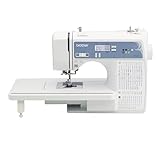
Evaluate the speed-control workflow on a representative stretch seam.
Singer Heavy Duty 4423
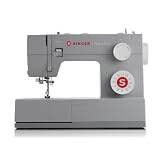
Compare its adjustment and pedal feel on the knit you actually use.
Brother CS5055
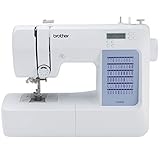
Check the required stitch and controls rather than assuming every convenience.
What Stretch Fabrics Need from a Sewing Setup
A knit seam needs to behave appropriately when the garment is worn. A seam that looks neat while flat may break when stretched over a shoulder or around a cuff. Evaluate stretch, recovery, appearance, and comfort rather than judging the first straight line on the table.
The fabric category alone is not enough. Lightweight jersey, a firmer knit, and a highly elastic performance material can behave differently. Choose the needle, thread, stitch method, and any stabilization for the specific material and construction.
A machine helps form the chosen stitch and move the layers, but it does not automatically identify a suitable garment seam. Start with the operation you need: joining, hemming, edge finishing, or attaching elastic. Different operations can justify different equipment or methods.
Compare Three Household Sewing Approaches
| Model | Reason to investigate | Relevant control question | What not to assume |
|---|---|---|---|
| XR9550 | Computerized utility sewing with speed limitation | Can you guide the seam comfortably at a chosen pace? | A speed slider is not differential feed. |
| 4423 | Mechanical sewing with pressure adjustment | Can you establish suitable feeding and pedal control? | Heavy Duty does not mean every knit needs more power. |
| CS5055 | Focused computerized stitch selection | Does the actual stitch chart meet your seam needs? | An LCD does not provide every advanced adjustment. |
This shortlist does not rank measured results on identical fabrics. Try the intended seam through the actual layer arrangement, then stress the sample as it will be used. A flat demonstration on woven cotton does not establish suitability for a stretchy neckline.
Brother XR9550 Review: Controlled General Sewing
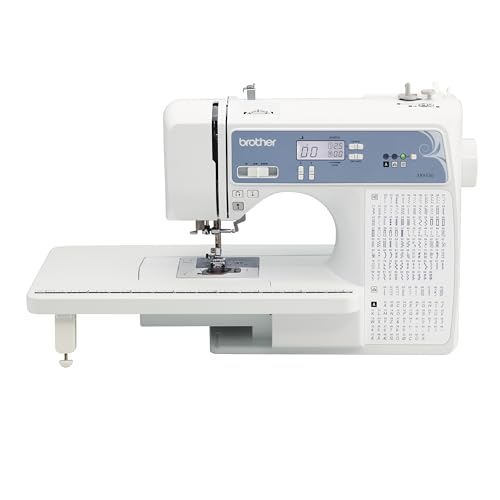

The XR9550 is worth comparing if you want a versatile computerized machine with speed limitation. A manageable pace can help you guide curves and small garment sections without rushing. It still depends on a suitable needle, stitch, and handling method.
Compare the stitch chart with your pattern’s required construction. A broader menu can provide choices, but the useful stitch is the one that gives the seam enough flexibility without an unacceptable appearance or stiffness. Decorative variety alone is not the buying criterion.
Check how the fabric moves through the entire operation. Support the garment and avoid pulling it to compensate for feeding trouble. A limit on operating speed does not synchronize separate layers or create the differential feed found on a suitable serger.
Our Brother sewing guide explains its role beside other household models. Choose it for the controls and functions you can use, not because a large selection count suggests automatic success on every knit.
Singer 4423 Review: Evaluate Pressure and Pedal Control
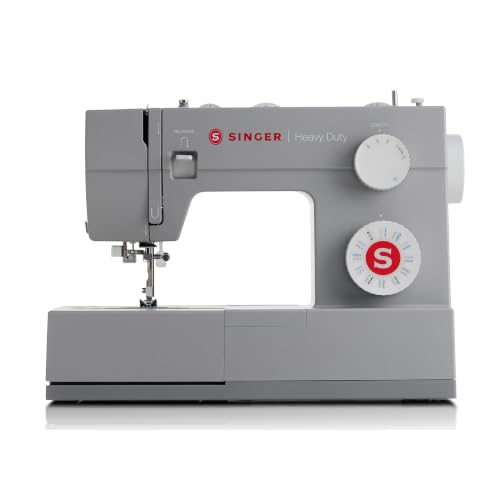
The Singer 4423 offers mechanical controls and adjustable presser-foot pressure. That adjustment can be relevant when investigating how a particular fabric feeds. Follow the model’s instructions and change one variable at a time rather than treating a pressure dial as a universal cure.
Try the pedal during controlled sewing. The standard 4423 does not provide a separate maximum-speed slider, so the way you maintain a comfortable pace matters. Small stretch-garment details are not a useful reason to prioritize an advertised top speed over controllability.
Also check the actual stretch-seam method you need. An appropriate needle and thread combination remains important even when the stitch is available. A powerful-sounding motor description cannot correct an unsuitable needle or a garment stretched out of shape while sewing.
Our Singer 4423 review gives the broader buying context. The Singer 4452 guide adds another accessory-package comparison to assess for the exact project.
Brother CS5055 Review: Keep the Required Functions Clear
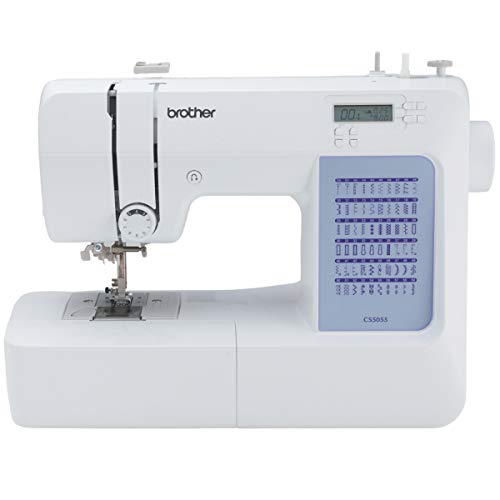
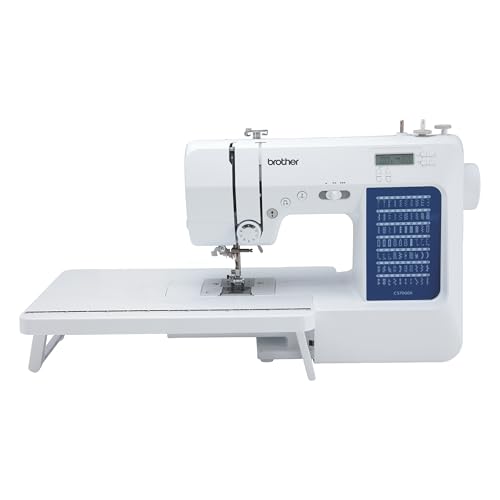
The CS5055 provides computerized selection for ordinary home-sewing functions. It deserves consideration when its actual stitch choices and controls cover the knit projects you make. Check the exact requirements rather than assuming that every computerized model includes the same convenience package.
In particular, do not infer adjustable presser-foot pressure from the LCD. Brother’s listed specification does not provide that adjustment on the CS5055. If varying that setting is central to your intended workflow, compare an appropriate model rather than expecting the screen to supply it.
For occasional suitable knit seams, a focused machine can still be worth evaluating through samples. The important result is a seam that stretches, recovers, and looks acceptable. Extra features are useful when they solve a demonstrated problem, not simply when they lengthen the specification.
Choose the Seam Method Before the Stitch Count
Joining seams
A suitable zigzag or supported stretch stitch may serve some knit constructions, depending on the fabric and pattern. Test the complete seam rather than assuming one setting works for every garment. Inspect both appearance and movement after sewing.
Consider the direction and amount of stretch required. A seam across an opening may need different behavior from one placed where little extension occurs. Follow the pattern or technique and evaluate the sample in that intended use.
Hems and visible finishes
A domestic-machine method and a coverstitch finish are different processes. A twin-needle setup, where supported, needs the correct machine configuration, needle, threading, and foot clearance. Do not assume it is suitable merely because another machine or tutorial shows it.
Test the hem’s stretch and appearance on the actual material. A neat visible line can still break under movement or produce an undesirable underside. Choose the finish consciously rather than promising an identical factory result from every sewing setup.
Needles, Feeding, and Avoiding Distortion
Brother’s stretch-fabric guidance recommends an appropriate ball-point needle and sewing without stretching the fabric. The exact needle and thread should follow the model and material guidance. A damaged or unsuitable needle can contribute to skipped stitches even when the chosen pattern is appropriate.
Prepare and position layers so the feed can move them normally. Basting can be useful when it suits the construction. Avoid pulling behind the needle or stretching the garment to make an uneven seam appear to feed faster.
On a machine with the relevant adjustment, presser-foot pressure is one setting to evaluate. It is not the same as differential feed. A compatible walking foot also serves a different mechanism and does not turn a domestic machine into a serger.
Use stabilization when the technique and material call for it, selecting a type appropriate to the finished project. Consider how it will be removed or remain in the garment. An unsuitable support can create another problem even when it temporarily makes the fabric easier to handle.
When a Serger or Coverstitch Is the Better Comparison
A suitable serger offers a different edge-finishing workflow, often including trimming and overlocking. Differential feed on an appropriate model addresses how material is transported. Those functions should be investigated when repeat knit construction makes them relevant.
A coverstitch machine serves another finishing role. Do not assume a basic serger automatically performs it, or that a sewing-machine overcasting stitch trims an edge in the same operation. Identify the actual finish you need before choosing a category.
You may still need an ordinary sewing machine for other operations in the garment. Buying a specialist is often an addition to a sewing room rather than a complete replacement. Compare the whole pattern and the jobs each machine will perform.
For another brand perspective, our Janome model comparison separates general control categories. Our computerized versus mechanical guide helps evaluate interface preferences without confusing them with specialized feeding.
A Sample Routine That Tests Real Suitability
- Use the actual fabric and intended layer arrangement.
- Fit an appropriate fresh needle and compatible thread.
- Select the planned seam method and correct foot.
- Sew without pulling the material through.
- Inspect both sides for skipped stitches, loops, and distortion.
- Gently stretch and release the seam as the garment requires.
- Record the setup and evaluate any appropriate care test before repetition.
When a result fails, change one variable at a time. Recheck threading, bobbin insertion, and needle condition before making broad setting changes. A skipped stitch and a broken seam under stretch can have different causes.
Stop for repeated breakage, a jam, or unexpected resistance. Disconnect power as directed before clearing material near the needle. Do not attempt to solve a physical obstruction by increasing speed or pulling the work harder.
Advantages and Tradeoffs of This Shortlist
Useful strengths
- The options retain functions for woven garments and other repairs.
- They let you compare computerized and mechanical interfaces.
- Speed limitation is a specific choice rather than a category assumption.
- Pressure adjustment can be assessed on the model that provides it.
- Each can be evaluated through a representative seam sample.
Important tradeoffs
- No selection guarantees every knit seam or specialized factory finish.
- Ordinary sewing controls do not replace differential feed or coverstitch equipment.
Buying Checklist
- Identify the knit, seam, and finish your project requires.
- Try a complete sample and inspect stretch and recovery.
- Verify the actual pressure, speed, and stitch controls.
- Confirm compatible feet, needles, and any twin-needle arrangement.
- Consider specialized equipment only for a defined repeated role.
- Check condition, included parts, electrical suitability, service, and seller terms.
For a used machine, request a relevant knit-sewing demonstration rather than a basic flat woven seam alone. A suitable sample and clear support arrangement are more useful than a generic claim that the machine sews all fabrics.
A Project Check Before You Commit
Keep the seam sample long enough to evaluate recovery rather than only appearance. After stitching, let the material relax and compare its length with an unsewn piece. Stretch it gently in the direction required by the garment. A tidy flat seam that pops during normal movement is not a successful construction sample, regardless of the machine’s advertised knit capability.
Frequently Asked Questions
Can a regular sewing machine sew stretch fabric?
It can handle appropriate knit constructions with a suitable stitch, needle, thread, and setup. Test the actual seam for flexibility and recovery. Do not assume a neat seam at rest will behave correctly when worn.
Do I need a serger for every knit garment?
Not automatically. Some constructions can use suitable sewing-machine methods, while a serger provides a different workflow. Choose around the required seam and finish, especially when repeat work makes specialized functions worthwhile.
Is adjustable foot pressure the same as differential feed?
No. They are different controls and mechanisms. Check what the exact machine provides and test the effect on the material. A pressure adjustment or walking foot does not turn a domestic sewing machine into a serger.
Why does my knit seam skip stitches?
Check needle suitability and condition, threading, bobbin insertion, and the selected method. Use a representative sample and change one variable at a time. Several setup issues can resemble a machine-capability problem.
Can a twin needle replace coverstitch?
It provides a different method on a compatible sewing machine, not the same mechanism. Verify the complete supported setup and test stretch, appearance, and clearance. Choose the finish according to the garment’s needs.
Final Recommendation
Compare the XR9550 for speed-controlled versatility, the 4423 for mechanical preferences and pressure adjustment, and the CS5055 when its focused feature set is sufficient. Let a complete seam sample decide whether the setup fits the knit.
Investigate a serger or coverstitch for the specific finishing roles that justify one. The right purchase supports the seam you need rather than promising that one stitch menu solves every stretch-fabric challenge.