
Best Industrial Sewing Machine Picks for Home Workshops
A domestic machine and an industrial machine solve different production problems. We compare four practical industrial models for home workshops, explain their limits, and show what to check before ordering.
On this page
Quick answer
The Juki DDL-8700 is the best industrial sewing machine for most home workshops that sew woven garments, because its single-needle lockstitch format is fast, common and easy to support. Choose the Consew 206RB instead for canvas, vinyl or layered work that needs compound-feed control.
Key takeaways
- Buy the feed system for the fabric, not the highest stated speed.
- A full industrial setup needs floor space, a table, a motor and correct electrical compatibility.
- The Juki DDL-8700 suits light- to medium-weight woven garment production.
- The Consew 206RB is the stronger choice for difficult layered materials, but it is slower and bulkier.
- Needle system, thread size and presser-foot parts must match the exact machine subclass.
Contents9 sections
An industrial sewing machine can be a major improvement for a home workshop that repeatedly sews the same type of seam, but it is not simply a faster domestic machine. For most people making woven garments in small runs, the Juki DDL-8700 is our best overall pick because it is a widely supported, single-needle lockstitch platform built for straight production seams.
Choose by material and seam construction first. A fast garment lockstitch will sew shirts, trousers and many bags efficiently; it will not feed several sticky, thick layers as reliably as a compound-feed machine.
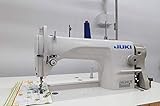
Juki DDL-8700
- Fast garment lockstitch
- Common parts ecosystem
- Good woven-fabric control
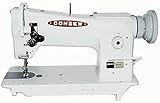
Consew 206RB
- Moves layered materials evenly
- Long stitch capability
- Useful for canvas work
Jack F4
- Direct-drive layout
- Suitable for garment seams
- Speed control on supplied setup
Industrial sewing machine options at a glance
These four machines divide into two useful groups: high-speed straight-stitch garment machines and a compound-feed machine for demanding layered materials.
| # | Photo | Product | Best for | Main drawback | Link |
|---|---|---|---|---|---|
| 1 |  | Juki DDL-8700 | Woven garment makers | No walking foot | View |
| 2 |  | Consew 206RB | Canvas and upholstery | Too much for shirting | View |
| 3 |  | Jack F4 | Small garment runs | Package details vary | View |
| 4 |  | Yamata FY5318 | Straight-seam production | Support may vary | View |
| Machine | Core mechanism | Strongest use | Think twice if |
|---|---|---|---|
| Juki DDL-8700 | Single-needle lockstitch | Woven garment seams | You need layered-material feed |
| Consew 206RB | Compound-feed lockstitch | Canvas, vinyl, upholstery | You mainly sew fine apparel |
| Jack F4 | Direct-drive lockstitch | Small garment production | Listing details are incomplete |
| Yamata FY5318 | Single-needle lockstitch | Repetitive straight seams | Local support is unavailable |
How we chose these industrial machines
We chose these models by construction, intended feed system, support practicality and suitability for a real home production space, not by marketing claims or a claimed test. An industrial head is only one part of the working system: table, stand, motor, belt or direct drive, needles, thread, feet and local repair support determine whether it becomes productive.
Feed system and fabric movement
Feed is the first engineering question. A standard lockstitch machine advances fabric with feed dogs while the presser foot holds it down. This works very well for stable woven cloth, but a slick top layer, foam, vinyl or a stack of canvas can lag behind the lower layer.
A compound-feed machine such as the Consew 206RB adds needle feed and walking presser feet. Those moving elements grip the stack from above as well as below, reducing mismatch at a long seam. The price of that control is a bigger, heavier mechanism, lower maximum speed and feet that can leave impressions on delicate surfaces.
- Best materials
- Lockstitch: Shirting and woven garments
- Compound feed: Canvas, vinyl, layers
- Fabric movement
- Lockstitch: Feed dogs move fabric
- Compound feed: Needle and feet assist
- Typical output
- Lockstitch: Fast seam production
- Compound feed: Controlled heavy seams
- Light fabrics
- Lockstitch: Usually more suitable
- Compound feed: May mark delicate faces
- Machine weight
- Lockstitch: Usually lighter head
- Compound feed: Usually heavier head
Feed type matters more than headline speed.
Stitch type and product workflow
All four picks are straight-stitch lockstitch machines. They make one durable line of stitching, which is the backbone seam for woven garments, bags, workwear and upholstery. They do not replace an overlock machine for edge neatening, a coverstitch machine for knit hems, or a zigzag machine for elastic applications.
For a small clothing label, a straight-stitch machine is often the first production purchase because almost every woven assembly passes through it. If you already have a straight-stitch machine and need parallel seams, consider the workflow before buying another head; our guide to a double-needle industrial sewing machine explains where two-needle construction makes more sense.
Speed that you can actually control
Industrial heads can run far faster than the speed needed for learning, curves, collars and short seam ends. A stated maximum of 5,000 stitches per minute is useful for long, straight production seams, not a target to reach on day one. The ability to limit speed at the motor or control panel matters more in a home workshop.
Clutch motors have a direct, mechanical feel but can be abrupt for beginners and may continue spinning once the pedal is released. Servo and direct-drive systems let many users set a lower top speed, making starts, stops and corners easier to manage. Verify what the seller supplies; the same model name can appear as a bare head, a head with a motor, or a complete mounted station.
Parts, needle system and service access
A machine is only economical when routine consumables are easy to find. Check the manual or seller documentation for the needle system, bobbin class, hook, belt, presser feet and oil specification. Do not order needles based only on their length or a photograph: industrial needle systems have precise shank and scarf geometry, and a nearly similar needle can cause skipped stitches or hook damage.
Also ask who handles damage in transit and whether the machine is inspected and timed before dispatch. Heads are heavy cast-metal assemblies. A bent needle bar, disturbed hook timing or cracked oil pan can turn a delivery problem into a long setup delay if parts support is weak.
Home-workshop constraints
A typical industrial station needs a permanent footprint rather than a cupboard shelf. Leave room behind the table for the motor, room at the right for fabric support, and a clear path for large panels. A 1.2 m by 0.6 m table footprint is common territory for a garment lockstitch setup, before allowing operator space and storage.
Noise, vibration and electrical supply deserve equal attention. Put the stand on a level floor, tighten stand bolts after initial use, and confirm the voltage, plug type and frequency for the motor sold in your region. Do not improvise electrical connections; follow the machine maker’s instructions or use a qualified installer where required.
Juki DDL-8700
Juki DDL-8700
Best for: Woven garment makers
This is the sensible first industrial machine for regular woven-garment construction. Its straight-stitch lockstitch platform has broad parts support, but it is not a substitute for a walking-foot machine or a serger.
- Stitch type: Single-needle lockstitch
- Max speed: 5,500 stitches/min
- Max stitch: 5 mm
What we like
- Fast garment lockstitch
- Common parts ecosystem
- Good woven-fabric control
- Straightforward mechanism
Watch out for
- Straight stitch only
- Needs dedicated table
- Not for thick seams
Skip it if: your main work is leather, thick canvas, webbing or bulky multi-layer assemblies.
The Juki DDL-8700 is the clearest starting point for a home workshop moving into repeated woven-garment work. It is a single-needle, straight-stitch lockstitch machine, so its job is simple: join two or more layers cleanly at production speed. Think shirt side seams, trouser inseams, aprons, light workwear and many bag components made from stable fabrics.
Its strength is the ecosystem around the machine. This format has commonly available standard feet, bobbins, needle sizes and technicians familiar with its mechanism. That matters when a project changes from poplin to twill: you can fit an appropriate needle and presser foot, adjust upper tension, make sample seams, and keep working rather than adapting an unsuitable household machine.
Check whether the listing is for a complete unit and which motor is fitted. A servo motor with an adjustable speed limit is generally easier to live with in a home studio than an uncontrolled fast setup. Confirm the supplied needle system, table cut-out, voltage and whether oil is included; use the manual’s oil grade and oiling schedule rather than guessing.
Compared with the Jack F4 and Yamata FY5318, the DDL-8700 is the pick where broad model recognition is most valuable. Compared with the Consew 206RB, it is the better garment machine but the wrong choice when thick, high-friction layers must advance evenly.
Consew 206RB
Consew 206RB
Best for: Canvas and upholstery
The 206RB earns its place when several layers must move together without one surface creeping ahead. Its compound-feed design is more capable on difficult assemblies than a garment lockstitch machine, although it occupies more space and does not suit every lig
- Stitch type: Single-needle lockstitch
- Feed type: Compound walking foot
- Max stitch: 9 mm
What we like
- Moves layered materials evenly
- Long stitch capability
- Useful for canvas work
- Handles heavier thread
Watch out for
- Large, heavy setup
- Lower sewing speed
- Can mark delicate fabric
Skip it if: most of your work is lightweight apparel, slippery lining or fine dressmaking fabric.
The Consew 206RB is the specialist in this group. Its compound walking-foot feed makes it suitable for assemblies where a conventional bottom-feed lockstitch machine can create creeping layers: canvas tote seams, marine-style covers, upholstery panels, vinyl trim and padded material stacks.
On a normal lockstitch machine, feed dogs push the lowest layer while the presser foot resists the top. Friction differs between layers, and the top can finish shorter or longer than the bottom. The 206RB’s alternating feet and needle feed move the work more positively, which is why this kind of machine is a staple format for heavy sewn goods.
Buyers should check the exact 206RB version, supplied motor, needle system, thread range and included feet. Thick-material capability is never a single number: it depends on material compressibility, seam crossings, needle size, thread, foot lift and the condition of the hook timing. Test the worst seam in your product, including webbing, foam or binding intersections, before committing to production.
The compromise is important. A walking foot can leave marks, and its feeding action is not as gentle or fast as a garment lockstitch on light rayon, silk-like fabrics or fine linings. For mainly shirts and dresses, buy the Juki instead; for layered goods where seam alignment affects appearance and strength, the Consew is the better tool.
Jack F4
Jack F4
Best for: Small garment runs
The Jack F4 is a direct-drive, single-needle lockstitch option aimed at practical garment sewing. It can make a compact home production station when sold complete, but buyers must verify the exact motor, voltage, control panel and table supplied by their deale
- Stitch type: Single-needle lockstitch
- Motor: Integrated direct drive
What we like
- Direct-drive layout
- Suitable for garment seams
- Speed control on supplied setup
- Less external motor hardware
Watch out for
- Specifications vary by seller
- Straight stitch only
- Requires assembly checks
Skip it if: you need guaranteed compatibility with specialized attachments before confirming the exact F4 subclass.
The Jack F4 brings a direct-drive arrangement to the familiar single-needle garment lockstitch role. With the motor integrated into the machine setup rather than hanging separately under the table, it can be a tidy choice for a small production station that needs straight seams, controlled starts and regular daily use.
Its best application is the same broad category as the Juki: woven garment construction and other medium-weight straight-seam work. A direct-drive layout does not change what the feed dogs and presser foot can handle. Do not assume that an electronic control panel makes it appropriate for stretch knit seams, leather or several layers of dense canvas.
Jack configurations can differ by market and dealer, so read the listing line by line. Confirm whether the unit includes stand and tabletop, the exact voltage, whether needle positioning is supplied, and how speed limiting is set. Ask for the model plate or manual if the listing does not state the needle system and oiling arrangement.
Choose it over the DDL-8700 when the supplied direct-drive configuration and nearby service support suit your space. Choose the DDL-8700 when its known parts ecosystem is the deciding factor. Neither replaces the Consew 206RB for compound-feed work.
Yamata FY5318

Yamata FY5318
Best for: Straight-seam production
The Yamata FY5318 is a basic high-speed, single-needle lockstitch format for repetitive straight seams. It can be a workable budget-conscious production choice where local parts and service are available, but the supplied motor and configuration deserve close
- Stitch type: Single-needle lockstitch
What we like
- Simple lockstitch format
- Useful for repeat seams
- Fits garment workflows
Watch out for
- Dealer support varies
- Configuration varies
- No zigzag stitch
Skip it if: you do not have a reliable local source for needles, feet, service and replacement parts.
The Yamata FY5318 is a straightforward single-needle lockstitch option for repetitive straight seams. It belongs in a home workshop only when the seller can clearly document its configuration and you have a dependable route to ordinary service parts. Simple mechanisms are practical, but only if needles, bobbins, feet and a technician are accessible.
For light- to medium-weight woven production, its basic format can handle the core job efficiently: sew a stable seam repeatedly with a correctly selected needle and balanced thread tension. It is not designed to finish raw edges, make decorative zigzag stitches or solve feeding problems in multi-layer upholstery work.
Before purchase, ask what is included and whether the head is assembled on a table. Check motor type, maximum controllable speed, voltage, oil pan, belt and needle specification rather than assuming interchangeability with another machine. A lower-cost head becomes expensive if a damaged part, a non-standard foot or absent local service stalls production.
It compares most closely with the Jack F4 and Juki DDL-8700, not the Consew. We would favor it when the dealer gives clear technical answers and has parts in stock; otherwise, the more widely recognized Juki platform is usually the lower-risk choice for a first workstation.
What should you check before buying an industrial sewing machine?
You should match the machine to your heaviest real seam, available space and local support before choosing a model. A few deliberate checks prevent the common mistake of buying a high-speed garment machine for heavy bags, or an upholstery walking-foot machine for delicate apparel.
Match fabric, seam and feed type
Bring the product back to its actual construction. A single layer of 300 GSM canvas is not the same challenge as a bound intersection containing four canvas layers plus webbing. Likewise, a slippery 80 GSM lining may be thin but difficult because it shifts, puckers and can snag with an oversized needle.
- Choose a standard lockstitch for most stable woven garments and straight seams.
- Choose compound feed when layers creep, surfaces are tacky, or seam crossings are bulky.
- Use an overlocker for edge finishing and knit seam construction.
- Use a coverstitch machine for stretch hems and cover seams.
- Make samples with actual fabric, interfacing and thread before setting production standards.
Needle size must suit both fabric and thread. A needle that is too fine can deflect or break at heavy intersections; one that is too large leaves a visible hole and can weaken tightly woven or coated fabric. Change a needle after a strike, a break, or when stitching starts to show unexplained skips or fabric damage.
Check the complete package, not just the head
Many listings use a model name while selling different packages. A bare head requires a table, stand, motor, belt, oil pan and installation work. A fully assembled package can be more convenient, but still inspect the details: tabletop size, stand stability, motor type, pedal linkage, thread stand and delivery method all affect the finished workstation.
- Measure the installation location, including operator chair clearance and fabric support.
- Confirm the motor voltage and plug match your electrical supply.
- Ask whether the head is mounted, oiled and timed before delivery.
- Confirm the needle system, bobbin type, feet and routine consumables.
- Find a parts source and a service technician before a fault occurs.
- Plan a first-day sample using scrap from your intended product.
- Confirm powerMatch motor voltage and plug.
- Build tableLevel the stand and fit belt.
- Oil correctlyFollow the manual oil points.
- Fit needleUse the specified system and size.
- Thread and testSew scrap at low speed.
- Set tensionBalance knots within fabric.
Do these checks before production sewing.
Choose controllable speed over maximum speed
High speed is useful only after seam handling is consistent. At 4,000 stitches per minute, a machine can sew roughly 67 stitches each second, leaving little time to correct a drifting edge. Start at a slow setting, learn pedal response, and increase speed only on long open seams where both hands can guide the work safely.
For home production, a speed limiter is valuable for training staff or switching between fine work and long seams. It also reduces the shock load from sudden starts. Keep fingers clear of the needle area, turn power off before changing needles or threading the hook area, and follow the manufacturer’s normal safety guidance.
Budget for thread, needles and maintenance
Industrial thread cones, bobbins, needles and oil are working consumables, not accessories to postpone. Use good-quality thread appropriate to the product and buy several needle sizes within the specified system. Old, fuzzy thread can create tension variation, while cheap bobbins with rough edges can catch thread and mimic a machine fault.
Most high-speed garment machines rely on regular lubrication. Check oil level daily where the manual specifies an oil pan, keep lint out of the hook and feed-dog area, and never run an oil-lubricated machine dry. Brush lint away rather than forcing it deeper with compressed air; if you use compressed air at all, use it cautiously and protect your eyes.
Machine cost is only one line in the setup budget. Our breakdown of the cost of an industrial sewing machine helps separate the head price from the table, motor, installation, consumables and service that make a station usable.
Use fault symptoms to guide setup
A well-adjusted lockstitch has the interlocking point, often called the knot, buried within the fabric layers. If the upper thread lies loose underneath, do not immediately tighten every screw. First raise the presser foot, rethread so thread enters the tension discs, inspect the needle, check bobbin insertion, then adjust one variable at a time on scrap.
Start with thread path and needle condition.
Do not pull the fabric through the machine to force a seam. That bends needles, changes stitch formation and can strike the hook. Let the feed system advance the material while you guide its direction; if it cannot move the stack reliably, change the machine, foot, seam method or material arrangement rather than overpowering it.
FAQ
Can I use an industrial sewing machine at home?
Yes, if you have a permanent space for a table-mounted machine, compatible electrical supply and tolerance for normal motor noise and vibration. Check the complete station footprint, motor voltage and delivery access before ordering. A servo or direct-drive setup with speed limiting is generally easier for home use than an abrupt high-speed configuration.
Is the Juki DDL-8700 good for beginners?
The DDL-8700 can suit a beginner who wants to learn one fast straight-stitch production machine, especially with adjustable speed control. It is not beginner-proof: it has no zigzag, automatic fabric selection or domestic-style free arm. Start slowly on scraps and learn threading, needle fitting, bobbin loading and tension balance.
What is the difference between a walking-foot and industrial sewing machine?
A walking-foot machine can be industrial, but walking foot describes the feed action rather than the whole category. The Consew 206RB is an industrial compound-feed walking-foot lockstitch machine. Standard garment industrial machines such as the Juki DDL-8700 use bottom feed and are better suited to many woven apparel seams.
Can an industrial sewing machine sew denim?
A standard industrial lockstitch machine can sew ordinary denim garment seams with the correct needle, thread, tension and seam construction. Very bulky jeans hems, flat-felled intersections or multiple layers may exceed the practical capacity of a light garment machine. Test the thickest crossing in your pattern rather than judging by fabric weight alone.
Do industrial sewing machines need oil every day?
Many high-speed industrial lockstitch machines need the oil level checked daily and rely on an oil pan or specified lubrication system. The exact schedule varies by model, so follow its manual. Remove lint around the hook and feed area regularly, and never substitute an unspecified oil without confirming compatibility.
Should I buy a bare industrial machine head or a complete setup?
A complete setup is usually simpler for a first buyer because the table, stand, motor, belt and pedal linkage are already matched. A bare head can make sense if you can install it correctly or are replacing an existing compatible head. In either case, confirm voltage, tabletop cut-out, motor compatibility and delivery responsibilities.
Final verdict
Final verdict
Buy the Juki DDL-8700 for a first dedicated woven-garment station, provided the supplied motor and electrical setup fit your workshop. Move to the Consew 206RB when layered canvas, vinyl or upholstery seams are central to the work; its compound feed solves a different and more demanding feeding problem.
