
We earn a commission if you buy through links on this page, at no extra cost to you. Picks are based on fibre chemistry and 14 years of hands-on dyeing work.
Quick answer
The best black dye for clothes depends on the fabric. For cotton, linen and rayon, a fibre-reactive dye such as Procion MX Jet Black gives the deepest, most permanent black. For mixed natural fabrics, wool or nylon, an all-purpose dye such as Rit All-Purpose Black is easier but less wash-fast. Polyester needs a disperse dye and heat, so none of the dyes below will turn it truly black.
Our top picks at a glance
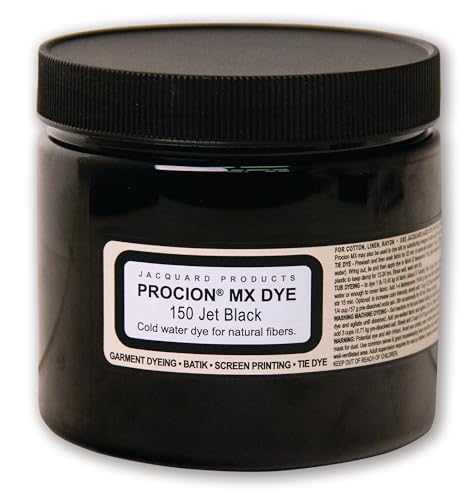
Jacquard Procion MX Fibre-Reactive Dye, Jet Black
Deepest, most wash-fast black on cotton, linen and rayon.
Buy on Amazon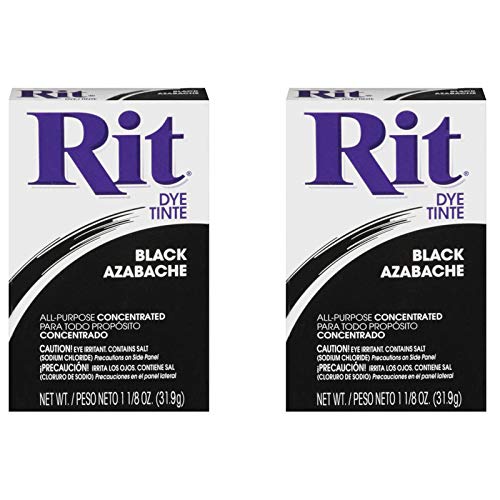
Rit All-Purpose Powder Dye, Black (2-Pack)
One dye for cotton, wool, silk and nylon. Easy stovetop or washer use.
Buy on Amazon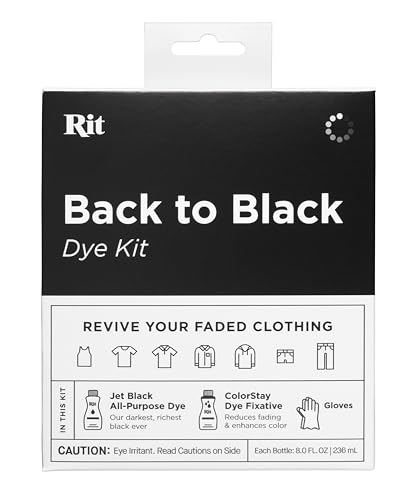
Rit Back to Black Dye Kit
A kit made for bringing faded black cotton and linen back to black.
Buy on AmazonDyeing polyester? See our guide to the best black dye for polyester, which needs a different dye type.
Comparison of the best black dyes
| Dye | Dye type | Best for | Typical wash fastness* | Water | |
|---|---|---|---|---|---|
| Fibre-reactive | Cotton, linen, rayon | 4–5 | Warm (30–40°C) | Buy on Amazon |
| All-purpose (union) | Mixed natural fabrics, wool, silk, nylon | 3 | Hot to near boiling | Buy on Amazon |
| Kit for natural fibres | Faded black cotton and linen | Depends on kit dye | Hot | Buy on Amazon |
 | All-purpose, bulk | Large batches, many garments | 3 | Hot to near boiling | Buy on Amazon |
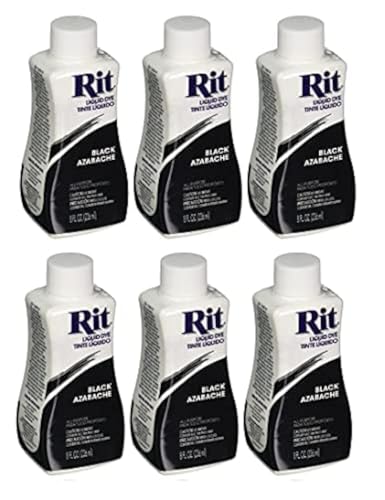 | All-purpose, liquid | Small jobs, washer dyeing | 3 | Hot | Buy on Amazon |
*Typical grade for this dye class on the right fibre, on the 1–5 grey scale used in textile testing (5 = no colour loss). Not a lab test of the specific product.
Why black is the hardest colour to dye
Black is the heaviest shade a dyer makes. It needs several times more dye than a medium colour, and every extra gram of dye that does not bond to the fibre stays in the fabric as loose colour. That loose colour is what turns a "black" shirt charcoal grey after a few washes, or rubs off onto your jeans and sofa.
From my lab data
In 69 rubbing tests on development fabrics, 20 of 31 black and dark shades graded only 2–3 on wet rubbing, the level where colour visibly transfers. Only 2 of 27 light shades did the same. Dry rubbing never failed. The difference was loose dye left in the fabric, and it was fixed by washing off longer, not by changing the dye.
The practical lesson for home dyeing is simple: choose the dye that matches your fibre, use the dark-shade quantity on the pack, and wash off thoroughly before the first wear.
Which type of black dye suits your fabric?
| Your fabric (check the label) | Dye to use | Result |
|---|---|---|
| 100% cotton, linen, rayon, viscose, hemp | Fibre-reactive (Procion MX) | Deepest, most permanent black |
| Wool, silk, nylon | All-purpose (Rit) with vinegar | Good black, moderate wash fastness |
| Cotton-polyester blend | All-purpose or reactive | Dark grey to heathered black; only the cotton dyes |
| 100% polyester, acrylic | Disperse dye for synthetics | See black dye for polyester |
The 5 best black dyes for clothes, reviewed
Jacquard Procion MX Fibre-Reactive Dye, Jet Black
Fibre-reactive · Fixer: soda ash · Warm water
Procion MX dyes form a chemical bond with cellulose fibres, so the colour becomes part of the fibre rather than sitting on it. That is the same chemistry dye houses use for cotton knits, and it is why this is the black that survives repeated hot washes.
Pros
- Deepest, most permanent black on cotton, linen and rayon
- Works in warm water, no stovetop needed
- Also suitable for tie-dye and low-water dyeing
Cons
- Won't dye polyester or acrylic
- Needs soda ash, salt and several hours to fix
Skip it if your garment is mostly polyester or acrylic, or you want a quick one-hour job.
Expert tip from Kamrul Islam
Black needs the dark-shade quantity on the pack. Too little dye is the main reason home-dyed black comes out charcoal grey.
Rit All-Purpose Powder Dye, Black (2-Pack)
All-purpose (union) dye · Hot water · Salt or vinegar
Rit All-Purpose is a blend of dyes for different fibres, which is why it colours cotton, wool, silk and nylon from one packet. The trade-off is wash fastness: the cotton part of the colour is not chemically bonded, so it fades faster than a reactive dye.
Pros
- One dye for many natural fibres and nylon
- Easy to find and simple to use
- Works in a pot, sink or washing machine
Cons
- Less wash-fast on cotton than fibre-reactive dye
- Won't properly dye polyester
Skip it if you want the most permanent black on 100% cotton. Choose Procion MX instead.
Expert tip from Kamrul Islam
Add salt for cotton and linen, and white vinegar for wool, silk and nylon. The right additive makes more difference to depth than extra dye.
Rit Back to Black Dye Kit
Kit · Natural fibres · Hot water
This kit is designed for restoring faded black clothes made from natural fibres such as cotton and linen. It is the simplest option when you want an old black T-shirt or pair of jeans back to a deep black without measuring separate products.
Pros
- Made specifically for re-blacking faded clothes
- Everything in one box
Cons
- Natural fibres only
- Polyester stitching on jeans stays lighter
Skip it if the garment is synthetic, or you are dyeing a light colour black for the first time.
Expert tip from Kamrul Islam
Wash the garment first. Old detergent and softener residue blocks dye and causes patchy results.
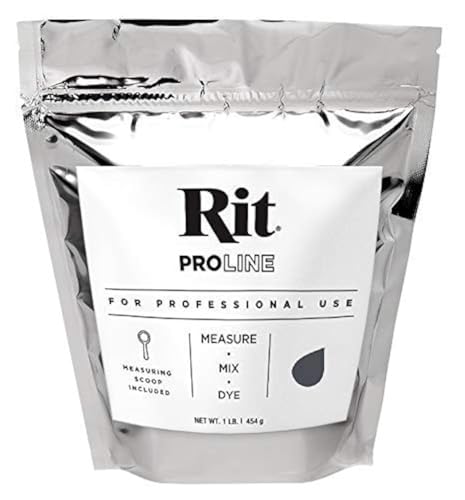
Rit ProLine Powder Dye, Black (1 lb)
All-purpose powder · 1 lb · Hot water
Rit ProLine is the bulk version of all-purpose black, sold by the pound. It suits dyeing several garments, curtains or bedding at once, where buying small packets would cost more.
Pros
- Bulk quantity for many garments
- Lower cost per wash load of dye
Cons
- Same wash fastness limits as all-purpose dye
- Overkill for one or two items
Skip it if you are dyeing just one or two garments.
Expert tip from Kamrul Islam
Dissolve bulk powder fully in hot water before it touches the fabric. Undissolved specks cause dark spots.
Rit All-Purpose Liquid Dye, Black (6-Pack)
All-purpose liquid · 6-pack · Hot water
The liquid version of Rit All-Purpose Black is already dissolved, so it is the easiest choice for washing-machine dyeing and small jobs. A multipack covers several projects or one very dark shade.
Pros
- No dissolving, so fewer spots
- Easy for washing-machine dyeing
Cons
- Same wash fastness as the powder
- Liquid is less concentrated per bottle
Skip it if you need the deepest permanent black on cotton.
Expert tip from Kamrul Islam
For black, use the full amount for dark shades. In a washing machine, keep the load small so the fabric moves freely.
How to get a true black at home
- Check the fibre label. Match the dye to the fibre using the table above. Blends only dye as dark as their natural-fibre share.
- Weigh the garment dry. Dye quantities are per weight of fabric. For black, use the dark-shade amount.
- Pre-wash without softener. Finishes and softener block dye and cause patches.
- Dye with enough water for the fabric to move. Crowded fabric dyes unevenly and shows crease marks.
- Fix the dye. Soda ash for fibre-reactive dye; salt or vinegar plus heat for all-purpose dye.
- Wash off thoroughly. Rinse cold until nearly clear, then do two hot washes with detergent before the first wear.
Expert tip from Kamrul Islam
In the dye house, dark shades get two soaping baths at 80°C and several hot rinses before they pass the wet rubbing test. At home, the equivalent is two hot washes with detergent. Skipping them is why new black clothes stain other laundry.
What to look for in a black fabric dye
Fibre match first. No black dye works on every fibre. Reactive dyes are for cellulose fibres like cotton, all-purpose dyes cover natural fibres and nylon, and polyester needs disperse dye with near-boiling heat.
Wash fastness. If the garment will be washed often, choose fibre-reactive dye for cotton. All-purpose dyes fade sooner unless you use a dye fixative.
Quantity. Black needs more dye than any other colour. Buy enough for the dark-shade amount for the full weight of your garments; running short is the most common cause of grey results.
Method. Liquid dye is easiest for washing machines, powder is cheaper per gram, and bulk packs make sense only for several garments.
Frequently asked questions
Why did my black dye come out grey?
Usually too little dye for the weight of fabric, the wrong dye type for the fibre, or a blend with polyester, which stays lighter. Use the dark-shade amount and a dye that matches your fibre.
Can I dye polyester black at home?
Only with a disperse dye for synthetics, kept near boiling for 30–60 minutes. Fibre-reactive and all-purpose dyes give little or no colour on 100% polyester.
What is the difference between Rit and Procion MX?
Procion MX is a fibre-reactive dye that bonds chemically to cotton and is very wash-fast. Rit All-Purpose is a blend that colours many fibres but fades faster on cotton.
Do I need a fixative?
Fibre-reactive dye is fixed by soda ash and needs no extra fixative. For all-purpose dye on cotton, a dye fixative improves wash fastness.
Why didn't the stitching change colour?
Most clothes are sewn with polyester thread, which cotton dyes cannot colour. The seams will stay lighter.
Can I dye black over another colour?
Yes. Black covers most colours, but very bright or dark original colours may show as a tint, so use the full dark-shade amount.
How much dye do I need for a pair of jeans?
Weigh the jeans dry and follow the pack's dark-shade amount for that weight. Adult jeans often weigh around 0.6–0.8 kg.
Will dyed black clothes bleed onto other laundry?
They can, if loose dye is not washed out. Do two hot washes with detergent and wash them separately for the first few washes.
Our verdict
For cotton clothes, choose a fibre-reactive black
Procion MX Jet Black gives the deepest black that lasts through washing. For mixed natural fabrics, Rit All-Purpose Black is the easier choice. For polyester, switch to a disperse dye.
Buy on Amazon


[…] 7 BEST BLACK FABRIC DYES FOR CLOTHES […]
[…] 7 BEST BLACK FABRIC DYES FOR CLOTHES […]