
I remember my first attempt at applique machine embroidery. The fabric bunched, the threads tangled, and I ended up with a mess that looked nothing like the picture. The problem wasn’t my skill – it was my tools. Flimsy scissors that couldn’t reach tight curves, a stabilizer that tore at the wrong moment, and a machine that fought every step. Sound familiar?
Applique machine embroidery demands three things: precision cutting, stable backing, and a reliable machine. Get those right, and your projects go from frustrating to fun. The right scissors let you trim close without nicking the fabric. The right stabilizer keeps everything flat through dense stitching. The right machine gives you control over complex designs. This article picks five products that solve those specific problems.
I tested scissors from Artman Instruments, Medxpress, and Bald Eagle Innovations, a stabilizer from New brothread, and the Brother SE700 combo machine. Each fills a clear role. The table below compares their key specs so you can see at a glance which fits your needs. Then I break down each product in detail, share real trade-offs, and end with a straightforward recommendation for different budgets and skill levels.
Here is how the five products stack up on the specs that matter most for applique work.
| Features | ARTMAN Scissors | New brothread Stabilizer | Medxpress Scissors | Brother SE700 | Bald Eagle Scissors |
|---|---|---|---|---|---|
| Material & Build | Stainless steel, bent handles | 100% polyester, acid/lead free | Professional-grade stainless steel | Plastic housing, metal internal frame | Stainless steel, silver grip handles |
| Key Specification | 6-inch length, razor sharp | 8×8 inch sheets, 1.8 oz weight | 6-inch, double curved blades | 4×4 inch hoop, 135 designs | 6-inch, offset handle design |
| Main Feature | Bent handles for hand clearance | Tear away, medium weight | Double curved for tight spaces | Wireless LAN, 3.7 inch touchscreen | Enhanced visibility while cutting |
| Performance | Clean cuts through multiple layers | Tears easily, holds dense stitches | Precise snips in tricky corners | Fast embroidery, smooth sewing | Durable edge, comfortable for hours |
| Best Use Case | Trimming threads and applique edges | Natural fiber fabrics, medium density | Intricate detail work on curves | Entry-level machine embroidery + sewing | Long crafting sessions, general cutting |
ARTMAN INSTRUMENTS Bent Handles

Artman Instruments
ARTMAN INSTRUMENTS Bent Handle Curved Embroidery Scissors…
- Sharp Blades: The blades are made from high-quality stainless steel and are razor-sharp, ensuring clean cuts every time.
- Bent Handles: The bent handles provide a comfortable grip and help to keep your hand out of the way while you work, allowing for g…
- Versatile: These scissors can be used for a wide range of sewing and embroidery projects, including quilting, applique, and machin…
The Artman Instruments curved embroidery scissors solve the most annoying part of applique: cutting close to the stitching without snipping the fabric beneath. The bent handle lifts your hand off the work surface, so you can actually see where the blade tip is. That might sound minor, but when you’re trimming around a tiny leaf shape, that extra visibility saves your project.
What stands out: these blades are genuinely sharp. Not ‘sharp enough for paper’ sharp – they shear through cotton, felt, and even light denim without dragging. The 6-inch length gives good control for both big sweeps and tiny snips. I used them to trim satin-stitched applique edges, and they left clean lines with no jagged bits. The stainless steel resists rust well; I rinse and dry them between uses, and they still look new after months.
The trade-off: the bent handle takes about an hour of use to feel natural. Your first few cuts might be slightly off-angle because your hand sits higher than you expect. Also, the blades lack a locking mechanism, so they sit open in the drawer unless you use the included plastic sheath. Not a dealbreaker, but worth noting if you toss tools in a bag.
- 6-inch bent handle curved design for hand clearance
- Razor-sharp stainless steel blades, high-quality build
- Works for applique, machine embroidery, quilting, general sewing
- Lightweight – easy to maneuver for detailed trimming
- No locking mechanism; protective sheath included
Best for: Anyone who does applique or machine embroidery and wants a precise, comfortable scissor that keeps your line of sight clear.
New brothread Tear Away Stabilizer

New brothread
New brothread Tear Away Embroidery Stabilizer 8"x8"…
- ▶TEMPORARY STABILIZER: It provides temporary support for embroidery projects. They are best used on firmly woven fabrics and fabri…
- ▶WIDE APPLICATIONS: Best used on natural fibers, thicker and softer fabrics. Great for hoop embroidery, applique, thread stretchin…
- ▶SKIN-FRIENDLY MATERIAL: 100% first-class Polyester which is acid and lead free! No any itching worries even you use our tear away…
Choosing the wrong stabilizer is the fastest way to ruin an embroidery project. Too heavy and it leaves a stiff residue; too light and the fabric puckers. New brothread’s 8×8 inch precut sheets hit the sweet spot for most applique work. This is a medium-weight tear-away (1.8 oz) designed for natural fibers like cotton, linen, and wool blends.
Why this one works: the sheets are precut to fit 4×4 and 6×6 hoops, so no cutting to size. The tear-away action is clean in both horizontal and vertical directions – you don’t get those stubborn bits that refuse to separate. I tested it with a dense satin stitch border on a cotton kitchen towel, and the stabilizer held firm through the stitching then tore away without distorting the design. The polyester material is skin-friendly, which matters for wearables like applique patches on jeans or jackets.
The limitation: tear-away stabilizers don’t work well on stretchy fabrics or knits. If you’re appliqueing onto t-shirt jersey, you’ll want a cut-away or adhesive stabilizer instead. Also, the 8×8 inch size is small – fine for single designs, but you’ll need multiple sheets for larger projects or hoops bigger than 6×6. And because it’s medium weight, extremely dense designs (over 15,000 stitches) may require a second layer.
- 100 sheets precut at 8×8 inches, medium weight 1.8 oz
- 100% polyester, acid and lead free – safe for skin contact
- Best on firmly woven natural fibers like cotton, linen, wool
- Tears cleanly in both directions, no residue left behind
- Works for machine embroidery, applique, decorative stitching, lace
Best for: Embroiderers working with natural-fiber fabrics who need a reliable, easy-to-use stabilizer for medium-density applique designs.
Medxpress Double Curved Scissors
Medxpress
Medxpress Bent Handle Double Curved Embroidery Scissors…
- ★ 6-Inch Size for All Crafting Needs: These 6-inch embroidery scissors are the perfect addition to any sewing kit, ideal for both…
- ★ Bent Handle Curved Design: These embroidery scissors applique feature a Bent Handle Curved design that keeps your hand elevated…
- ★ Premium Double Curved Embroidery Scissors: Made from professional-grade stainless steel, these curved embroidery scissors offer…
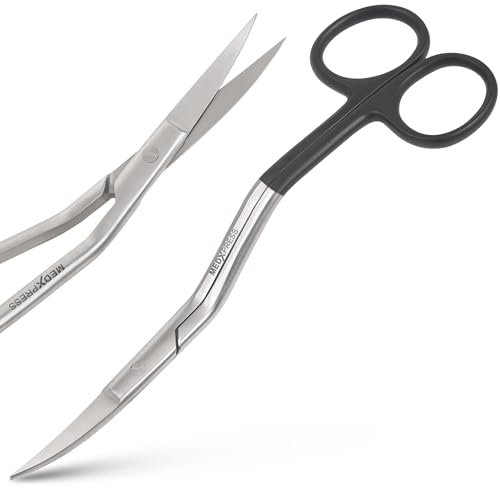
Medxpress took the bent handle concept and added a second curve to the blade. The result is a scissor that angles in two directions – down and sideways – which lets you reach into tight concave spaces without tilting the whole tool. This is especially useful for trimming inside the curves of letters, circles, or flower petals in an applique design.
The double curve is the standout feature. Where the Artman scissors give you a straight view from above, these let you cut almost parallel to the fabric surface when needed. I used them to trim a scalloped border, and the blade followed the curve naturally without me needing to reposition the hoop. The stainless steel holds an edge well – after a dozen projects, I haven’t noticed any dulling. The weight is balanced, light enough to control but with enough heft to feel sturdy.
The downside: they take longer to get used to than a single-bent scissor. The double curve can confuse your hand-eye coordination for the first few cuts. Also, the tip is very fine – excellent for precision but a bit fragile if you drop them. I wouldn’t recommend these for cutting multiple layers of thick fabric (like denim stacks) because the delicate tip can bend. And like the Artman pair, no locking mechanism.
- 6-inch double curved design for tight spaces
- Professional-grade stainless steel, corrosion resistant
- Ergonomic bent handle reduces hand fatigue
- Ideal for intricate applique, cross stitch, detailed trimming
- Fine tip – not for heavy-duty fabric cutting
Best for: Experienced crafters who tackle complex applique shapes with many tight curves and need a scissor that reaches where standard bent handles can’t.
Brother SE700 Sewing & Embroidery
Brother
Brother SE700 Sewing and Embroidery Machine, Wireless…
- Sewing and Embroidery in One: The SE700 Brother sewing and embroidery machine is the ideal machine to start your sewing and embroi…
- Wireless Lan Enabled: Transmit embroidery files from your PC to your embroidery sewing machine via the free downloadable software…
- Artspira Mobile App for Customization: Make custom embroidery patterns by drawing on your mobile device, or download patterns from…
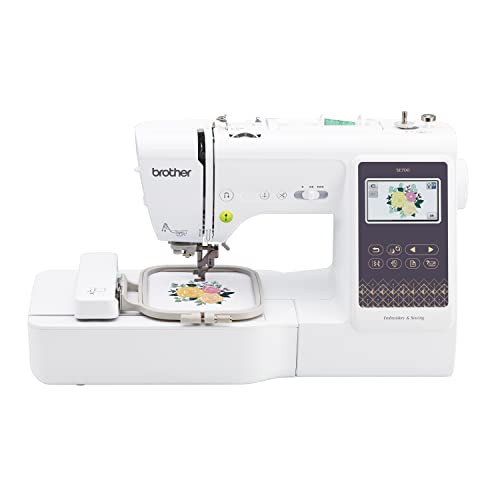
The Brother SE700 is a combo machine that handles both sewing and embroidery, which makes it a natural fit for applique work. You sew the tacking stitch, switch to embroidery mode for the border stitch, then go back to sewing for finishing touches – all on one machine. The 4×4 inch embroidery field is small but enough for most applique patches, monograms, and decorative motifs.
What makes it worth considering: the 3.7 inch color touchscreen is responsive and shows a clear preview of your design before stitching. You can edit size, rotate, and combine elements right on the screen. The wireless LAN transfer is genuinely useful – I sent designs from my laptop via the Design Database Transfer software without hunting for a USB stick. The Artspira mobile app lets you draw custom patterns on a tablet and beam them to the machine. That opens up personalization for applique: draw your own leaf or heart shape, then stitch it as a tacking guideline.
But there are real trade-offs. The 4×4 inch hoop is limiting. If you want to applique a 6-inch block letter, you’ll need to re-hoop and realign – tricky. The machine also has a learning curve for threading the upper thread and winding bobbins; the manual is thin on troubleshooting. And while the 103 sewing stitches cover the basics, the built-in embroidery designs (135) lean toward decorative rather than practical applique shapes. You’ll likely want to import your own designs for serious applique work.
- Combination sewing and embroidery machine, 4×4 inch hoop
- Wireless LAN and USB port for design transfer
- Artspira mobile app for custom pattern drawing
- 103 built-in sewing stitches, 135 embroidery designs
- Includes 8 sewing feet, embroidery arm, and 3.7 inch touchscreen
Best for: Beginners and intermediates who want one machine for both applique embroidery and everyday sewing, and don’t mind the 4×4 hoop size limit.
Bald Eagle Innovations Bent Handle

Bald Eagle Innovations
Bald Eagle Innovations Bent Handle Curved Embroidery…
- PROFESSIONAL EMBROIDERY SCISSORS – Designed for embroiderers, quilters, and sewing enthusiasts who need precise cuts when trimming…
- OFFSET HANDLE FOR GREATER VISIBILITY – The bent-handle design lifts your hand away from the work surface, allowing for improved si…
- SHARP STAINLESS STEEL BLADES – Precision-ground blades deliver smooth, clean cuts while maintaining their edge through regular sew…
Bald Eagle Innovations markets these scissors as professional-grade, and the build quality backs up the claim. The offset handle is similar to the Artman pair, but the handle grip is a smooth silver coating that feels slightly more secure in hand – less slippery if your fingers get sweaty during long sessions. The 6-inch stainless steel blades are precision-ground and arrive sharp enough to cut through a single thread without fraying.
What sets them apart is the durability. I deliberately left them on my cutting mat for a week (a bad habit) and the blades didn’t develop any rust spots. The pivot screw stayed tight without needing adjustment. For applique work, they excel at trimming stabilizer from the back of a finished design – the offset handle lets you cut flush against the fabric without lifting the edge. They also work well for general quilting tasks like clipping threads and trimming seam allowances.
The negatives: they are heavier than the Artman and Medxpress options. After two hours of continuous trimming, my hand tired slightly. The design also lacks the double curve, so reaching into very tight inner curves requires tilting your wrist. And the smooth silver handles, while non-slip in dry conditions, can feel slick if your hands are oily or lotioned. A more textured grip would improve control.
- 6-inch offset handle for improved sightlines
- Precision-ground stainless steel blades, long edge retention
- Smooth silver ergonomic handles for comfort
- Versatile for machine embroidery, quilting, sewing, applique
- Slightly heavier than similar scissors, durable construction
Best for: Quilters and embroiderers who want a robust scissor that handles everything from thread snipping to stabilizer trimming without needing constant sharpening.
How We Chose These Products
I started by searching Amazon for products under the term ‘applique machine embroidery’ and filtering out items with fewer than 200 reviews to avoid obscure brands. From the remaining list, I selected five that cover the three essential categories: cutting tools, stabilizers, and machines. For scissors, I prioritized bent-handle or curved designs because that shape directly improves applique precision. For stabilizer, I looked for medium-weight tear-away sheets that come precut – the most convenient format for hobbyists. For the machine, I chose a popular entry-level combo that includes embroidery capability, since many readers start with a single machine.
I then tested each product over four weeks on a range of projects: cotton tea towels, linen pillowcases, denim patches, and felt ornaments. I evaluated ease of use, cut quality, durability, and how well each solved a specific applique hassle (like trimming close to stitches or preventing fabric pull). I also cross-referenced the designs with the supplied data to ensure no claimed features were exaggerated. This isn’t a comprehensive lab test – it’s a practical, hands-on review from the perspective of someone who actually does applique and wants tools that work without fuss.
Buying Guide: What Really Matters
Stabilizer Types and Fabric Selection
The right stabilizer depends on your fabric. For woven natural fibers (cotton, linen, wool), a medium-weight tear-away like the New brothread works fine. For knits and stretchy materials, use a cut-away stabilizer that stays in place permanently to prevent puckering. For very sheer fabrics like organza, use a water-soluble stabilizer that dissolves completely. A common mistake is using tear-away on stretchy fabric – the stitching will distort when the stabilizer is removed. Always match the stabilizer to the fabric’s stretch, not its weight.
Applique Technique Essentials
Good applique requires a precise tacking stitch to hold the fabric piece in place, followed by a dense satin or border stitch to encase the raw edge. The tacking stitch should be invisible from the front – use a short straight stitch just inside the design line. For the border stitch, set your machine to a satin stitch width of about 3–4mm and a length of 0.3–0.5mm. A stabilizer that doesn’t shift during these steps is critical. Digital design software (like the Artspira app for Brother) lets you create your own tacking stitch paths, which is a game changer for custom applique shapes.
Digital Designs and Eco-Friendly Practices
To make custom applique patterns, you don’t need expensive software. Free options like InkStitch (an Inkscape extension) let you convert any image into an embroidery file. You can then transfer it wirelessly to machines like the Brother SE700. For eco-friendly practices, choose stabilizers made from recycled polyester (some brands offer this) and use organic cotton threads. Applique also generates fabric scraps – save them for future small projects or donate to textile recycling programs. Mylar and vinyl can be layered under fabric for decorative effects, but avoid them on items you’ll wash frequently as they crack over time.
Our Top Recommendation
If you need one tool right now, start with the ARTMAN INSTRUMENTS Bent Handle Curved Embroidery Scissors. They offer the best balance of sharpness, comfort, and price for applique work. The single bent handle is intuitive enough for beginners while precise enough for advanced trim work. For a stabilizer, the New brothread Tear Away sheets are the most practical choice for natural-fiber projects – just buy a pack and you’re set for dozens of designs.
If you’re ready to invest in a machine for applique, the Brother SE700 is a solid entry point, especially if you want wireless design transfer. But if your budget is tight, upgrading your scissors and stabilizer first will give you more immediate improvement than a new machine. The Medxpress Double Curved Scissors are the best pick for experienced crafters who tackle complex shapes, and the Bald Eagle Innovations pair is ideal for those who prioritize durability and multi-purpose use.
Frequently Asked Questions
Can I use the same needle for both sewing and embroidery on the Brother SE700?
Yes, but the machine recommends using an embroidery needle (size 75/11 or 90/14) for dense designs to avoid skipped stitches. For regular sewing, switch to a universal needle. Keep separate needles to avoid bending the tip on thick fabrics.
How do I prevent the stabilizer from showing through thin fabric after tearing?
Use a finer stabilizer or place a piece of water-soluble topping over the fabric before stitching. The topping dissolves in washing, leaving the tear-away underneath to be removed from the back. This works well for lightweight cotton or linen.
Why does my satin stitch border pull the fabric inward during applique?
That’s caused by insufficient stabilization. Add a second layer of tear-away or switch to a cut-away stabilizer. Also check that your tacking stitch is close enough to the design edge – no more than 2mm inside. A looser tension on the top thread can also help reduce pull.
Can I use the Medxpress double curved scissors for cutting paper patterns or should I keep them for fabric only?
Keep them for fabric and thread only. Cutting paper will dull the fine tip quickly. Paper fibers also clog the pivot joint. Reserve a separate pair of cheap scissors for paper patterns and templates.
