
Quick answer
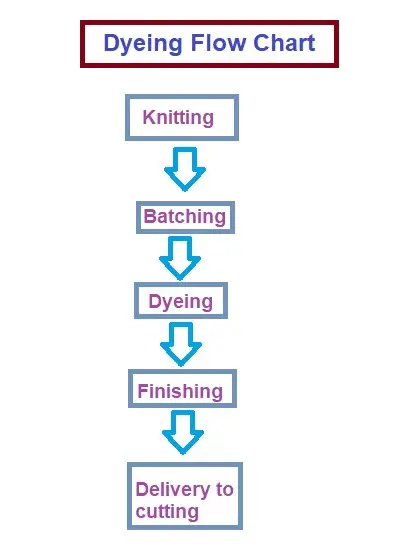
A typical knit dyeing and finishing flow is: grey fabric inspection, batching, pretreatment (scouring and bleaching), dyeing, soaping and washing, neutralising, softening, dewatering and slitting, drying, compacting or stentering, and final inspection before delivery. Polyester-cotton blends add a separate polyester dyeing stage.
Discover the essential steps in the knit dyeing and finishing process with our comprehensive flow chart guide. Whether you’re a textile professional or a curious learner, this resource explains everything you need to know about how knit fabrics are dyed and finished to achieve optimal quality, color consistency, and performance.

The knit dyeing and finishing process typically follows these main stages: greige fabric inspection → pretreatment (scouring & bleaching) → dyeing → washing → neutralization → softening/finishing → stentering/drying → quality control & packing. Each step ensures your knit fabric achieves the desired color, softness, and durability.
Table of Contents
- Knit Dyeing and Finishing Process Explained
- Types of Knit Dyeing Processes
- Step-by-Step Process Flow Chart
- Key Benefits
- Common Problems & Defects
- Effective Solutions
- Comparison with Other Fabric Dyeing Methods
- Essential Tools & Machines
- Expert Tips for Best Results
- Frequently Asked Questions
- Conclusion
Knit Dyeing and Finishing Process Explained
Knit dyeing and finishing transform raw knit fabrics (greige) into vibrant, soft, and functional textiles. Unlike woven fabrics, knits require careful handling due to their stretchy structure. The process includes several sequential steps to ensure color uniformity, minimal shrinkage, and excellent hand feel. This flow chart approach helps manufacturers maintain consistency, efficiency, and high product quality.
Over 65% of modern fashion garments use knitted fabrics—making efficient dyeing and finishing crucial for industry success.
Types of Knit Dyeing Processes
Knit fabrics can be dyed using different methods depending on fiber type, batch size, and end-use requirements:
- Piece Dyeing: Most common for knit fabrics; the entire fabric roll is dyed after knitting.
- Yarn Dyeing: Yarns are dyed before knitting for patterns like stripes or jacquard designs.
- Garment Dyeing: Used for ready-made knit goods such as t-shirts or sweaters.
- Dope Dyeing: Pigments added during fiber extrusion (rare in knits but used for some synthetics).
Step-by-Step Process Flow Chart
| Stage | Key Activities | Purpose |
|---|---|---|
| 1. Greige Fabric Inspection | Check for holes, stains, uneven knitting | Ensure only defect-free fabric enters the process |
| 2. Pretreatment (Scouring & Bleaching) | Remove oils, waxes; whiten fabric as needed | Prepare fabric surface for even dye penetration |
| 3. Dyeing | Add dyes under controlled temperature & pH conditions | Achieve desired shade and colorfastness |
| 4. Washing / Soaping Off | Remove unfixed dyes and chemicals | Prevent staining or fading in use |
| 5. Neutralization / Acid Correction | Balance pH after alkali or acid treatments | Protect fabric strength and color stability |
| 6. Softening / Finishing Treatments | Apply softeners, anti-pilling agents, or functional finishes (e.g., antimicrobial) | Enhance texture and add special properties as required by buyers |
| 7. Stentering / Drying / Heat Setting | Stretch fabric to width; dry at set temperature; fix shape & size | Control GSM (weight), shrinkage & dimensional stability |
| 8. Quality Control & Packing | Final inspection for shade matching, appearance, defects; pack rolls or cut pieces | Deliver only high-quality finished products to clients |
Simplified Flow Chart Diagram:
- Greige Inspection →
- Pretreatment (Scouring/Bleaching) →
- Dyeing →
- Washing →
- Neutralization →
- Softening/Finishing →
- Stenter/Drying/Heat Setting →
- Quality Check & Packing
Key Benefits of Proper Knit Dyeing & Finishing Flow Chart Implementation
- Consistent Quality: Systematic processes reduce shade variation and defects.
- Chemical Efficiency: Less wastage by optimized chemical dosing.
- Sustainability: Reduces water and energy usage with efficient workflow.
- Improved Productivity: Streamlined steps speed up bulk production.
- Satisfied Customers: Better colorfastness, feel, and appearance lead to repeat business.
- Easier Troubleshooting: Clear process helps locate issues quickly if defects arise.
- Adequate Compliance: Meets buyer standards and regulatory requirements more easily.
A well-maintained process flow not only improves quality but also boosts your factory’s reputation with global buyers.
Common Problems & Defects in Knit Dyeing & Finishing Processes
- Poor Color Fastness: Color washes out or fades quickly due to improper fixation.
- Pilling Formation: Small fiber balls develop on surface after finishing if not properly treated.
- Mottled/Shade Variation: Uneven color distribution across fabric width or length.
- Shrinkage Issues: Fabric shrinks more than allowed limits post-finishing.
- Chemical Stains/Spots: Unwashed chemicals leave marks on final product.
- Bowing/Skewness: Fabric becomes distorted during stentering or drying stages.
- Tenderness/Holes: Over-processing weakens fibers leading to holes or tears.
Effective Solutions to Overcome Common Issues
- Poor Color Fastness: Use compatible dyes; maintain pH/temperature; ensure thorough washing-off after dyeing.
- Pilling Formation: Apply anti-pilling agents during finishing; use proper mechanical action controls.
- Mottled Appearance: Ensure uniform pretreatment; avoid overloading dye baths; maintain liquor ratios properly.
- Shrinkage Issues: Set stenter parameters correctly; monitor moisture content before heat setting.
- Chemical Marks/Stains: Rinse thoroughly between all wet processing steps.
- Bowing/Skewness: Align fabric edges properly in stenter frames; adjust tension controls accurately.
Comparison with Other Fabric Dyeing Methods
| Aspect | Knit Fabric Dyeing | Woven Fabric Dyeing |
|---|---|---|
| Pretreatment Needs | Softer scouring/bleaching due to delicate loops | Tolerates stronger chemicals/mechanical action |
| Dye Penetration | Easier due to open structure | Tighter weave requires longer time/higher temp |
| Shrinkage Risk | Higher if not heat-set correctly | Shrinkage generally lower |
| Main Machines Used | Tubular jet dyeing machines, soft-flow machines | Paddle-dye baths, beam dye machines |
| Main Challenges | Pilling, uneven shrinkage, shade bars | Crocking, crease marks |
Essential Tools & Machines Used in Knit Dyeing & Finishing
- Tubular Jet Dyeing Machine – The most common machine for tubular knitted fabrics ensuring low tension processing.
- M/L Soft-Flow Dye Machine – A versatile option for both small lots and bulk production of open-width knits.
- Centrifugal Hydro Extractor – This removes excess water post-dye bath efficiently before drying steps.
- Squeezer/Padding Mangle – Aids in removing surplus water/chemicals while maintaining even application of finishes.
- Cylinder Dryer/Stenter Frame – Main device for drying and heat-setting fabric while controlling width/GSM/shrinkage.
- Avoid overloading dye baths—keep liquor ratio consistent throughout batches for even coloring results.
- Select specialty dyes compatible with intended fiber types (cotton, polyester blends).
- Befriend automation—modern PLC-controlled machines enhance reproducibility and minimize human error.
- Add enzyme wash at pretreatment step to boost softness without weakening fibers unnecessarily.
- If offering value-added finishes (anti-microbial/moisture management), test on small scale before full production.
- Keenly monitor pH at all stages—slight deviations cause major color shifts in knits.
- Sustainability alert—use eco-friendly auxiliaries when possible to meet both buyer demands and environmental regulations.
Frequently Asked Questions (FAQ)
What is the main difference between knit fabric dyeing and woven fabric dyeing?
Knit fabrics have a more open loop structure requiring gentler processes with lower tension compared to tightly woven fabrics that can withstand higher mechanical forces. This affects machine choices and chemical usage throughout the process flow chart.
How do I prevent shade variation in bulk production?
Avoid batch-to-batch variations by keeping liquor ratio constant, using automated dosing systems for chemicals/dyes, and running regular lab dips prior to bulk runs.
Which finishing agents are most effective for knit fabrics?
Cationic softeners offer superior hand feel while silicone-based finishes add lasting smoothness. Anti-pilling agents are highly recommended for fleece or single jersey destined for outerwear markets.
Can I use the same machines for cotton/polyester/spandex blends?
You can use similar machines but must adjust recipes (dyes/temp/pH) according to fiber blend specifics—especially when spandex is involved due to its heat sensitivity.
How important is water quality in the dye house?
Poor water quality introduces minerals/metals that interfere with dye uptake leading to unpredictable shades or patchy results. Always use softened/deionized water when possible.
Conclusion
The knit dyeing and finishing process flow chart is vital for ensuring flawless color application, consistent quality, and superior performance in finished knit textiles. By following a systematic workflow—from greige inspection through final packing—you minimize errors, boost efficiency, and produce knits that meet demanding market standards. Stay updated on new machinery, eco-friendly practices, and innovative finishes to keep your production competitive in today’s fast-moving textile world.
Expert Tips for Best Results in Knit Fabric Processing
Related Articles
- Cotton Linen Blend Fabric: The Ultimate Guide to Knitting, Dyeing, and Finishing Development
- The Ultimate Guide to Knitting, Dyeing, and Finishing CVC 60%+40% French Terry Fabric
- Knit Fabric Finishing Flow Chart (Open And Tube)
- Nylon Fabric Dyeing Process with Acid Dyes: Tips and Best Practices
- Exclusive Cotton Double Pique Knit Fabric Dyeing And Finishing
- Home Page
Related pick: Check today's price on Amazon
Expert tip from KAMRUL ISLAM
Most rework in knit dyeing is avoidable at batching. Mixing fabric from different yarn lots in one batch is a common cause of shade variation.

[…] for the cotton dyeing process. This dyeing mechanism occurs only in the dyeing portion of the dyeing process flow chart. which are given […]
[…] dyeing flow chart- with successful implementation practically 2021 […]
[…] dyeing flow chart- with successful implementation practically 2021 […]
[…] dyeing flow chart- with successful implementation practically 2021 […]
[…] dyeing flow chart- with successful implementation practically 2021 […]
[…] dyeing flow chart- with successful implementation practically 2021 […]