
Best Sewing Machine for an 8-Year-Old: A Parent’s Supervised-Learning Guide
The best sewing machine for an 8-year-old is a supervised learning setup, not simply the smallest machine sold with a child-friendly label. Readiness.

This guide has Amazon links. If you buy through them we may earn a small commission, at no extra cost to you.
The best sewing machine for an 8-year-old is a supervised learning setup, not simply the smallest machine sold with a child-friendly label. Readiness, the exact manual, adult instruction, and comfortable controls matter. This guide compares household options a parent can evaluate, explains workspace and lesson planning, and shows how to choose manageable first projects without assuming that age alone establishes suitability or that any machine can replace attentive adult supervision.
As an Amazon Associate, Practical Textile earns from qualifying purchases. Product links may earn us a commission.
What’s in this article14 sections
Quick Answer
Compare the Brother XR9550 when an independent speed limit is a useful priority, the GX37 for a mechanical interface, and the CS5055 for focused computerized selection. These are household-machine comparisons, not an age certification. An adult should check the exact manual, assess readiness with suitable instruction, and supervise every lesson. A miniature format or decorative color does not establish suitability.
This guide compares published specifications and project fit; it does not report hands-on testing.
Brother XR9550
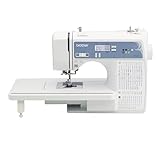
Evaluate the controls with an adult instructor and the exact manual.
Brother GX37
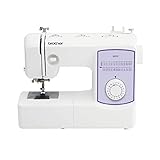
Compare dial operation and pedal control through a supervised demonstration.
Brother CS5055
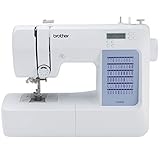
Check the actual controls; it has no independent speed slider.
Start With Readiness and Instruction, Not a Birthday
Two children of the same age can have different attention, coordination, confidence, and ability to follow directions. A product recommendation cannot assess those qualities for your child. Begin with the exact machine’s instructions and a knowledgeable adult who can teach the setup and supervise its use.
Sewing machines are working tools with moving parts and needles. A child-oriented color or compact size does not make one a toy. Choose a learning environment where the adult understands the machine, can remain attentive, and can stop the lesson when concentration or comfort declines.
Consider a supervised class before purchasing. A suitable instructor can help you observe which controls and working arrangement are manageable. If a class provides machines, learn what functions were useful without assuming that you must buy the most elaborate model used in the classroom.
| Option to evaluate | Why a parent might compare it | Important limit |
|---|---|---|
| Brother XR9550 | Independent speed control and ordinary household capability | A speed setting does not replace supervision |
| Brother GX37 | Direct mechanical selection | Pedal operation and all setup steps need instruction |
| Brother CS5055 | Focused computerized interface | No independent speed slider or start/stop sewing button |
Brother XR9550: Compare an Independent Speed Limit
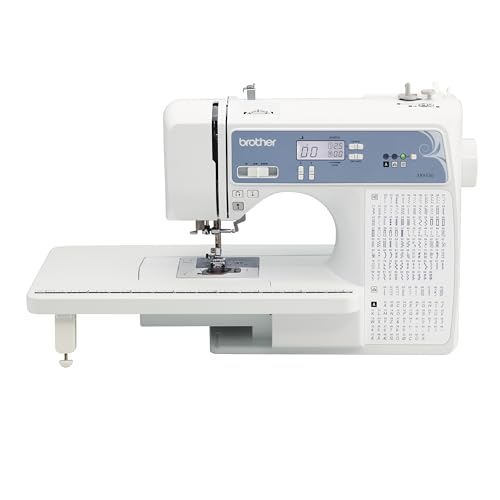

The XR9550 is worth evaluating when a parent or instructor wants a documented speed-control feature in the shortlist. A manageable maximum pace can help structure an early lesson. It remains an operating control, not a guarantee that a child’s hands will stay positioned appropriately or that the setup is suitable without adult attention.
Its ordinary utility sewing role also gives the household room for useful projects beyond the first lesson. Do not begin by exploring the entire stitch menu. Choose an appropriate simple operation and let the adult prepare the machine according to the manual while explaining what will happen.
The wide table can provide support for some projects, but check whether it helps the actual lesson and workspace. Extra accessories should not crowd the learning area. A clear view of the seam guide and enough room for the material are more relevant than displaying every supplied foot.
Our Brother machine comparison explains its broader household role. It is a candidate for adult evaluation, not a statement that a particular eight-year-old is ready to use it.
Brother GX37: A Mechanical Interface to Try
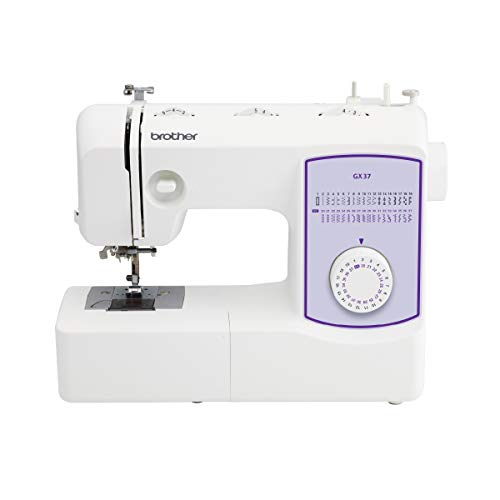
The GX37 provides mechanical stitch selection for families who prefer physical controls. Some learners understand a visible dial position readily, while others find computerized selection clearer. The useful comparison is the child’s supervised response to the actual interface, not a general claim that one category is always easier.
The adult should understand threading, bobbin insertion, needle changes, and the required setup before introducing a lesson. A machine with direct controls can still be set incorrectly. The parent needs enough familiarity to recognize an unsuitable sound, feeding problem, or threading error promptly.
Try the pedal and seating arrangement during a supervised demonstration. If the child cannot operate comfortably without shifting into an awkward position, change the learning arrangement or reconsider the equipment. Do not solve reach problems by improvising an unstable station.
Our control-system comparison offers background for the adult making the choice. It should complement the manual and instruction rather than become a substitute for either.
Brother CS5055: Understand What Computerized Does Mean
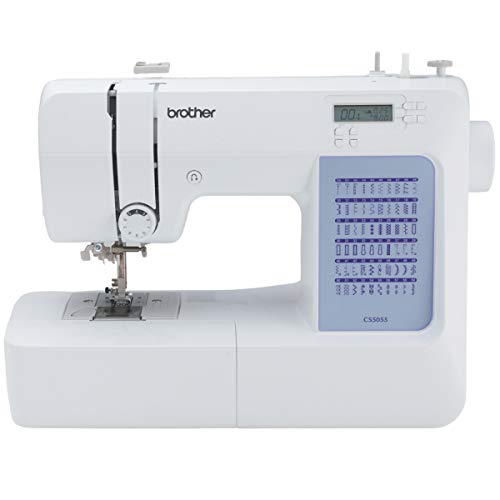
The CS5055 offers a focused computerized stitch-selection interface. It does not include an independent speed slider, automatic thread cutter, or start/stop sewing button. Parents should not assume that the word computerized supplies all of those conveniences.
It can be compared if the interface feels understandable in a supervised lesson and the required operations suit the household. Choose after seeing how setup, starting, stopping, and guiding are taught. A larger or smaller pattern count has little relevance to the first straight-seam exercise.
If an independent speed limit is a firm requirement, keep that requirement explicit and compare a model that actually provides it. Our computerized beginner guide explains why the exact controls matter more than the broad category label.
Five Useful Priorities for the Adult Buyer
- Instructions and supervision suited to the exact machine.
- A control layout that can be taught clearly.
- A stable, comfortable learning station.
- Real household operations for manageable projects.
- A deliberate trial before treating the purchase as suitable.
Two Limits to Remember
- Age, small size, and decorative styling do not establish readiness.
- Convenience features cannot replace attentive instruction and supervision.
Set Up a Comfortable, Stable Learning Station
The child should be able to sit comfortably, see the working area, and use the intended controls without stretching or leaning into moving parts. The machine belongs on a stable surface. Arrange the chair, pedal where used, lighting, and material support before the lesson begins.
Keep the workspace simple. Set out the current sample and the tools the adult actually needs rather than leaving a large assortment of sharp items and accessories within the project area. Manage cords so they do not interfere with movement or create a trip problem.
Use the model’s directions for turning off and isolating power during needle-area adjustments or other specified tasks. The adult should handle setup changes until the child has appropriate instruction and the manual permits the activity. Do not introduce an unfamiliar attachment in the middle of a beginner’s first lesson.
The Adult Should Practice Before Teaching
Thread the machine from the beginning, use the specified bobbin, install an appropriate needle, and sew several ordinary samples. Practice the stopping routine and learn how to respond to a tangle or poor stitch. A parent should not have to learn basic troubleshooting while simultaneously supervising an uncertain child.
Keep the manual accessible and explain controls using the exact model’s names. Avoid mixing advice from several different machines. Similar-looking parts and functions can differ, especially across mechanical and computerized models.
For relevant Brother setups, our needle guide provides context. The adult should still use the exact manual to determine compatibility. Do not let a child select a needle or bobbin by appearance alone.
First Lesson: One Clear Operation
Start with a stable woven fabric sample and a simple marked route. The adult should choose suitable needle, thread, and settings. Explain the start and stop sequence before movement begins and establish where hands belong during the operation.
Practice a short straight seam rather than a complete complicated object. Let the learner inspect the result and describe what happened. A brief successful exercise can be more useful than continuing until fatigue produces frustration or careless movement.
Introduce one new task at a time. A first lesson should not combine unfamiliar threading, a new foot, a slippery fabric, and a difficult project. Controlled progression makes it easier for the adult to identify which step needs more instruction.
Choose Projects With Visible, Manageable Steps
A small simple pillow cover can teach straight seams, corners, and turning. A flat fabric bookmark or another suitably designed practice item can introduce accurate guidance with limited material to manage. Select instructions that match the lesson and avoid unnecessary tight turns or bulky intersections.
For a tote or pouch, review the pattern first. Handles, closures, and reinforced junctions may introduce demands that are not obvious from the finished photograph. The adult can choose a simpler construction sequence or postpone that project until the relevant skills are established.
Be careful with projects intended for babies, pets, protective use, or other applications with special construction requirements. A beginner’s attractive sample does not establish suitability for every finished purpose. Choose early projects whose use fits the learner’s developing skills and the adult’s ability to evaluate the result.
Miniature Machines Are Not Automatically Easier
A small machine can look inviting, but evaluate its actual instructions, stability, stitch formation, control, and service. A novelty format may limit the projects that can be completed or create setup problems the adult cannot readily resolve. Small size alone is not evidence of a better learning tool.
Likewise, a full-size machine is not automatically suitable merely because it has more capability. The working arrangement and instruction must fit the learner. Compare a real supervised demonstration rather than using either size category as a shortcut.
Keep the budget connected to the whole setup: machine, appropriate supplies, instruction, workspace, and support. It can be sensible to use a suitable family machine or classroom equipment before buying a separate unit.
Stop the Lesson to Resolve a Problem
If the stitch changes, fabric jams, or the machine sounds wrong, stop and let the adult investigate according to the manual. Do not encourage the learner to pull material through a fault or keep pressing the controller to force progress.
Check ordinary setup systematically: threading, correct bobbin, suitable needle, and clear fabric movement. Our Brother tension guide explains why random tension changes should not be the first reaction. The adult should use model-specific support when basic checks do not restore reliable operation.
Treat pausing as a normal part of learning. A problem-solving routine teaches better habits than racing to finish an object. The lesson can resume another time after the adult has corrected the setup or obtained appropriate help.
Ask the Seller About Instruction and Support
Explain that the purchase will be evaluated for supervised learning and ask what orientation is available. Confirm the exact model’s instructions, condition, return terms, and service arrangement. Do not accept a generic age recommendation as a replacement for the manual and an informed assessment.
For a broader comparison of household equipment, our Janome guide adds another brand perspective. Choose the machine that the adult can teach and maintain comfortably, with a suitable learning environment already planned.
Frequently Asked Questions
Is every eight-year-old ready for a sewing machine?
No. Readiness depends on the child, instruction, supervision, and the exact machine’s guidance. Age alone is not a suitability test. A knowledgeable instructor can help a parent evaluate an appropriate learning arrangement.
Does a speed slider make sewing safe without supervision?
No. It is an operating control, not a substitute for attentive adult supervision or correct hand positioning and setup. Follow the exact machine instructions throughout the lesson.
Is a miniature machine the best starting choice?
Not automatically. Compare instructions, control, stability, actual capabilities, and support. A suitable family or classroom machine may provide a better supervised introduction than a novelty format.
Should the child thread the machine independently?
Follow the manual and instructor’s guidance according to readiness and training. The adult should understand and prepare the setup and handle adjustments appropriately. Do not make independence a requirement for an early lesson.
Which shortlisted model should a parent try first?
Compare the XR9550 if an independent speed limit is a priority, the GX37 for mechanical controls, or the CS5055 for computerized selection. Suitability must still be established through the exact instructions and a supervised trial.
Final Recommendation
Choose a supervised learning setup before choosing a machine. The XR9550, GX37, and CS5055 represent different household controls for an adult to evaluate. Put the exact manual, comfortable working arrangement, suitable first projects, and attentive instruction ahead of size, color, or stitch count. The right purchase supports a learning routine the adult can manage responsibly.
