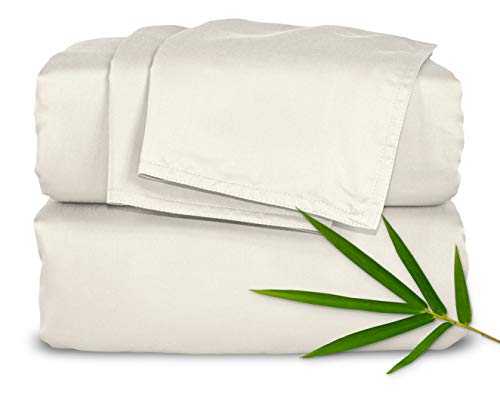
What Is Viscose Bamboo? How It Is Made Into Fabric
Viscose bamboo is regenerated cellulose fibre made by chemically dissolving bamboo pulp and spinning it into rayon filament or staple fibre. It can be soft and highly drapable, but it is not the same as mechanically extracted bamboo fibre.

Quick answer
Viscose bamboo is rayon made from bamboo cellulose. Bamboo is pulped, chemically dissolved into a spinning solution, then regenerated as soft textile fibre. The finished fabric can feel smooth, cool and absorbent, but its environmental impact depends heavily on the chemical process, recovery system and factory controls.
Key takeaways
- Viscose bamboo is regenerated cellulose, commonly called bamboo rayon.
- The bamboo plant supplies cellulose, but chemical processing creates the spinnable fibre.
- Bamboo viscose is usually soft, absorbent and drapable, but weaker when wet than many synthetic fibres.
- Read the fibre-content label: bamboo viscose may be blended with cotton, polyester, elastane or other fibres.
- For lower-impact claims, look beyond the word bamboo and check the manufacturing method and credible certification.
Contents8 sections
- What is viscose bamboo, exactly?
- How is viscose from bamboo made?
- How does bamboo viscose compare with cotton and lyocell?
- Is viscose bamboo sustainable?
- How can you identify quality bamboo viscose fabric?
- What sewing and care details do beginners miss?
- What common bamboo viscose mistakes cause problems?
- FAQ
Viscose bamboo is a regenerated cellulose fibre: bamboo supplies the cellulose, and a viscose process turns that cellulose into textile fibre. So, when people ask what is viscose bamboo, the short answer is bamboo rayon, not a strip of natural bamboo mechanically pulled into soft clothing yarn.
The distinction matters. Bamboo can be a fast-growing plant, but the route from stalk to smooth jersey, underwear or bedding uses chemicals, water, energy and careful effluent control. Below, we explain the process, the fabric behaviour, the environmental questions, and the checks that matter when buying or sewing it.
What’s in this article8 sections
What is viscose bamboo, exactly?
Viscose bamboo is rayon made by dissolving purified cellulose from bamboo and regenerating it as new fibres. The finished fibre is chemically cellulose again, like cotton and linen, but its structure has been rebuilt in a factory rather than grown as a cotton hair or flax stem fibre.
On product listings, you may see bamboo viscose, viscose from bamboo, bamboo rayon, or simply rayon. These terms often describe the same broad fibre family. The exact label language depends on the market, but US Federal Trade Commission guidance distinguishes rayon made from bamboo from mechanically produced bamboo fibre.
Most apparel described as bamboo is not made from long, natural bamboo strands. True mechanically extracted bamboo fibre exists, but it is much coarser and stiffer, closer in behaviour to other plant bast fibres. It is unusual in soft T-shirts, knit pyjamas, fitted sheets and underwear.
What does regenerated cellulose mean?
Regenerated cellulose means the original cellulose polymer was dissolved and then solidified again. At the spinneret, the liquid solution passes through very fine holes into a bath that reforms it into filaments. Those filaments can be wound as continuous yarn, cut into staple length and spun like cotton, or blended with other fibres.
This is why bamboo viscose can be very smooth despite its plant source. The producer controls filament thickness, staple length, twist, yarn count and fabric construction. A 180 GSM single jersey and a 300 GSM French terry may contain the same fibre but behave very differently in a garment.
- Chip bambooBamboo stalks become small chips for pulping.
- Make pulpProcessing separates and purifies cellulose.
- Make viscoseCellulose becomes a liquid spinning solution.
- Filter solutionFiltration removes particles that cause weak spots.
- Spin filamentsSpinnerets extrude solution into an acid bath.
- Regenerate celluloseThe bath reforms cellulose as continuous fibre.
- Wash and finishFibre is washed, cut or wound, then made into fabric.
The usual viscose route changes plant cellulose into regenerated textile fibre.
How is viscose from bamboo made?
Viscose from bamboo is made by converting bamboo pulp into a liquid cellulose compound and regenerating it in an acid spinning bath. This conventional viscose route is used for cellulose from several sources, including wood pulp, cotton linters and bamboo pulp.
- Prepare cellulose pulp. Bamboo is chipped and processed to separate cellulose from lignin, hemicellulose and other plant components. Textile-grade pulp needs consistent purity because remaining particles can block spinnerets or create weak filaments.
- Make alkali cellulose. The pulp reacts with sodium hydroxide. This swells the cellulose and prepares it for the next reaction.
- Form cellulose xanthate. In the conventional viscose process, carbon disulfide reacts with the alkali cellulose. The material is then dissolved in dilute sodium hydroxide to make the thick spinning liquid called viscose.
- Ripen, filter and remove air. The solution rests for controlled development, then is filtered and deaerated. This unglamorous stage is important: grit, gel particles or bubbles can cause filament breaks, streaks and uneven dyeing later.
- Wet-spin the fibre. Viscose passes through spinnerets into a bath generally based on sulfuric acid and salts. The cellulose regenerates as fine filaments while the process chemicals move into the bath.
- Wash, finish and convert. The fibre is thoroughly washed to remove residual processing materials. It may be cut into staple fibre, spun into yarn, knitted or woven, dyed and finished.
Conventional viscose therefore needs serious chemical management. Carbon disulfide exposure and air emissions are important worker and environmental concerns, while wastewater treatment also matters. A well-controlled producer can recover and manage a significant share of process chemicals; a poor one can shift substantial pollution into air and water.
Is bamboo lyocell the same thing?
Bamboo lyocell is also regenerated cellulose, but it is not conventional viscose. Lyocell uses a different solvent system, commonly N-methylmorpholine N-oxide, and is designed around solvent recovery in a more closed-loop process.
Do not assume that every fabric called “bamboo” is lyocell. Check the fibre-content label and the product description for the actual fibre name and the manufacturer’s manufacturing claim. “Bamboo” identifies a feedstock; it does not identify the whole chemical process.
How does bamboo viscose compare with cotton and lyocell?
Bamboo viscose is usually valued for softness, absorbency and drape, while cotton is generally more robust in everyday washing and lyocell often has better wet strength. Fabric weight, yarn quality, knit or weave, and finishing can outweigh fibre type in a real garment, so treat these as useful tendencies rather than guarantees.
| Material | How it is made | Typical handle | Wet behaviour | What to check |
|---|---|---|---|---|
| Bamboo viscose | Regenerated bamboo cellulose | Smooth, fluid, soft | Can lose strength and grow when wet | Fibre percentage and care label |
| Cotton | Natural seed-hair fibre | Soft to crisp, depending on yarn | Generally strong when wet | Staple quality, GSM and shrinkage |
| Lyocell | Regenerated cellulose by lyocell route | Smooth, soft, fluid | Usually stronger wet than viscose | Actual lyocell content and finish |
| Polyester | Synthetic polymer melt-spun | Varies widely by filament and finish | Strong and dimensionally stable | Breathability, pilling and blend ratio |
| Linen | Flax bast fibre | Crisp, textured, cool | Strong when wet | Softening finish and slub variation |
Bamboo viscose absorbs moisture readily, which can make it comfortable next to the skin. It can also show water spotting, take longer to dry than polyester, and become temporarily more fragile during washing. A high-twist yarn, a stable knit and a suitable finish help, but they do not make every bamboo viscose fabric behave identically.
Elastane changes the picture. A common stretch jersey may contain mostly bamboo viscose with a small elastane percentage. It will recover better than an all-viscose jersey, but it still needs handling that avoids stretching seams and necklines out of shape.
- Fibre form
- Bamboo viscose: Regenerated cellulose
- Raw bamboo fibre: Mechanical plant fibre
- Typical feel
- Bamboo viscose: Smooth and soft
- Raw bamboo fibre: Coarse and stiff
- Drape
- Bamboo viscose: High
- Raw bamboo fibre: Low
- Apparel use
- Bamboo viscose: Common
- Raw bamboo fibre: Uncommon
- Main process
- Bamboo viscose: Chemical regeneration
- Raw bamboo fibre: Mechanical separation
- Best comparison
- Bamboo viscose: Other viscose rayon
- Raw bamboo fibre: Other bast fibres
These materials start with bamboo but perform very differently in clothing.
Is viscose bamboo sustainable?
Viscose bamboo can be a better or worse environmental choice depending on how the bamboo was sourced and how the pulp and fibre were produced. The word “bamboo” alone is not enough evidence of low impact.
Bamboo can grow quickly and regrow from established root systems, which may reduce pressure to replant after harvest. However, feedstock claims should still cover land management, biodiversity, harvest practice, transport and pulp sourcing. Fast growth does not cancel out impacts from a poorly managed plantation or pulping operation.
The main production question is chemical control. Conventional viscose uses carbon disulfide, so responsible facilities need effective capture, recovery, worker protection and wastewater treatment. Lyocell has a different solvent route and can have high solvent recovery, but you should verify that a particular product is actually lyocell rather than relying on broad bamboo marketing.
What claims are worth checking?
Look for specific, traceable information rather than general phrases such as “eco bamboo” or “naturally sustainable.” A credible listing may state the fibre percentage, name the fibre process, identify a recognised chain-of-custody programme for the feedstock, or provide a product chemical certification. A product chemical certification can indicate testing or restrictions for harmful substances in the finished article; it does not automatically prove responsible forestry or a low-emission viscose mill.
- Check whether the label says viscose/rayon, modal or lyocell.
- Check the percentage of each fibre in a blend.
- Check whether a named certification applies to the fibre, the fabric, or only the finished product.
- Check care instructions, especially drying and ironing limits.
- Be cautious with unqualified antibacterial or biodegradable claims.
How can you identify quality bamboo viscose fabric?
Quality bamboo viscose has even colour, a consistent surface and stable recovery appropriate to its construction. You cannot judge every quality point from a photograph, but a sample, swatch or close inspection reveals a great deal.
Check the fabric before cutting
Hold the fabric at an angle under good light. Look for barré, which appears as long lighter or darker bands; it can come from yarn variation, uneven dye uptake or knitting differences. On jersey, also look for spirality: pull a side seam straight and see whether the courses twist around the body.
Stretch a knit across its width, release it, and watch whether it returns promptly. Some relaxed drape is normal for viscose, but excessive growth suggests the garment may lengthen in wear. For woven cloth, scrunch a corner in your hand and release it to assess creasing and recovery.
Check both sides. A fabric can look polished on the face while having loose loops, snag-prone floats or uneven brushing on the reverse. For a fuller framework covering fibre, yarn, weave, knit and fabric weight, use our fabric types and specs guide.
Prewash a sewing sample
Prewashing a sample is the best practical check for a washable project. Measure a 100 mm square or a 4 inch square, wash and dry it exactly as you plan to treat the finished garment, then measure again. Also note edge curling, colour transfer, surface fuzz and how the sample feels after drying.
Do not hang a heavy wet sample by one corner. Viscose can elongate under its own wet weight, giving you a misleading shrinkage result. Lay it flat or support it evenly while it dries.
What sewing and care details do beginners miss?
The details beginners miss are controlling stretch, supporting wet fabric and testing press settings on a scrap. Bamboo viscose often feels easy because it is soft, but its fluid surface can shift under the presser foot and its knit versions can grow during construction.
For a lightweight jersey, start with a fresh 70/10 or 80/12 stretch or ballpoint needle and test on two layers. Use a narrow zigzag, lightning stitch or overlock for seams that must stretch; a straight stitch can pop when the wearer pulls the garment over the head. The right setting depends on the fabric’s stretch percentage, so make a sample seam and pull it firmly before sewing the garment.
Support the fabric on the table rather than letting its weight hang off the machine bed. Reduce presser-foot pressure if your machine allows it, and use a walking foot only if it improves feeding on your sample. If a neckline or shoulder seam grows, apply an appropriate stabilizer, clear elastic or stay tape within the seam allowance.
For woven bamboo viscose, use a fine sharp needle, usually a Microtex type, and handle cut pieces gently. The cut edge may fray quickly. French seams, narrow overlocked seams, or a clean binding suit lightweight wovens better than leaving raw edges inside a garment.
Press with a press cloth and follow the garment or fabric supplier’s care label. Start at a low to medium setting, avoid crushing textured finishes, and do not leave a hot iron stationary. If you intend to dye a bamboo-viscose project, our guide to dyeing viscose explains why fibre content, dye class and careful washing matter.
What common bamboo viscose mistakes cause problems?
Most bamboo viscose problems come from treating a soft, moisture-sensitive fabric like a stable cotton poplin or polyester knit. The fix is normally a small sample test, better support during sewing, and care matched to the actual blend.
A frequent buying mistake is assuming “bamboo” means 100% bamboo-derived fibre. Read the composition line, not only the front-of-package description. A polyester blend may dry faster and hold shape better, while an elastane blend changes stretch and recovery; neither is automatically good or bad, but each needs different expectations.
Another mistake is judging durability only by initial softness. Very low-twist yarns and softener-heavy finishes can feel luxurious at first but may pill or lose surface smoothness sooner. Check fabric density, inspect the reverse side, and wash a swatch if the item is intended for frequent use.
Most problems come from stretch, slippery surfaces or moisture-sensitive handling.
FAQ
Is viscose bamboo the same as bamboo rayon?
In common textile use, yes. Bamboo viscose and bamboo rayon generally mean regenerated cellulose fibre made from bamboo pulp through the viscose process. Check the label because a product may also contain cotton, polyester or elastane.
Is bamboo viscose natural or synthetic?
Bamboo viscose is a regenerated cellulosic fibre. Its raw material comes from a plant, but the cellulose is chemically dissolved and spun into new fibre, so it is not a natural fibre in the same direct form as cotton, wool or linen.
Does bamboo viscose shrink in the wash?
It can shrink or change dimensions, particularly in loose knits and lightweight woven fabrics. Follow the care label, prewash fabric before sewing washable garments, and dry wet items with even support rather than hanging them from one point.
Is bamboo viscose breathable?
Bamboo viscose is moisture absorbent and is often comfortable in lightweight fabrics. Breathability also depends on fabric construction: an open 150 GSM jersey allows more air movement than a dense, heavy interlock made from the same fibre.
Is bamboo viscose better for the environment than cotton?
There is no universal answer. Bamboo cultivation and cotton cultivation have different impacts, while conventional viscose processing needs strong chemical recovery and wastewater controls. Compare specific sourcing and manufacturing evidence rather than relying on the feedstock name alone.
Can you iron bamboo viscose?
Yes, but use the care-label setting and begin with low to medium heat on a hidden area or scrap. A press cloth helps prevent shine and uneven marks, especially on dark colours, jerseys and fabrics with a smooth surface finish.
The one thing to remember: viscose bamboo begins with bamboo, but it is regenerated rayon made through an industrial process. Choose it for its soft handle and drape, then judge its quality and sustainability by the full fibre label, construction, manufacturing information and care requirements.