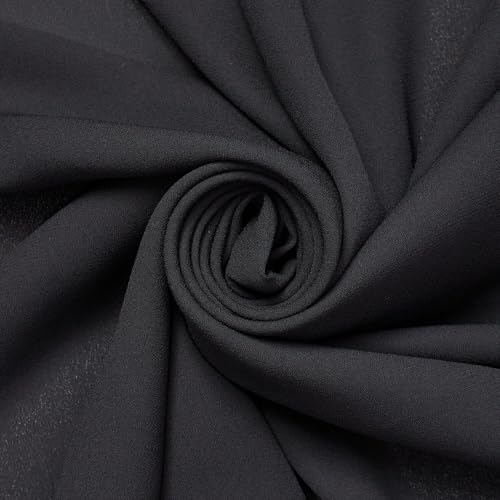
What Is Crepe Fabric? Types, Texture and Best Uses
Crepe is a broad fabric family recognised by a dry, pebbled, crinkled or slightly grainy surface. Its character can come from highly twisted yarn, weave structure, knit construction, chemical treatment or finishing.

Quick answer
Crepe fabric is a family of textiles with a crinkled, pebbled or grainy surface and a fluid-to-firm drape. The effect may come from high-twist yarns, a crepe weave, knitting, fibre choice or finishing. Crepe can be silk, wool, rayon, polyester or blends, so weight, care and sewing behaviour vary widely.
Key takeaways
- Crepe describes texture and construction effects, not one single fibre.
- High-twist yarns are a classic route to the characteristic pebbled crepe surface.
- Check whether a crepe is woven or knitted before choosing needles, seams and stabilisers.
- Lightweight crepes shift and fray easily, while heavier crepes may need seam grading.
- Care instructions depend first on the fibre content, dyeing and finish.
Contents9 sections
- What is crepe fabric made from?
- Why does crepe fabric have a pebbled texture?
- How is woven crepe fabric made?
- How can you identify good-quality crepe fabric?
- What are crepe fabric used for?
- How do you sew crepe fabric neatly?
- What details do beginners miss with crepe fabric?
- What are common crepe fabric mistakes and fixes?
- FAQ
What is crepe fabric? Crepe is a family of fabrics with a deliberately irregular, pebbled, crinkled or dry-looking surface. It is not one fibre or one weave: silk, wool, rayon, polyester and blends can all become crepe when their yarn, construction or finishing creates that characteristic texture.
The name covers very different materials, from sheer silk georgette to dense wool crepe and stable polyester crepe. Below, we explain what makes crepe look and behave differently, how to identify the main types, and how to cut, sew, press and care for it without damaging the surface.
What’s in this article9 sections
What is crepe fabric made from?
Crepe fabric can be made from natural, regenerated or synthetic fibres, and the fibre determines much of its comfort, care and durability. The crepe effect describes the surface and handle, while the fibre content tells you how the fabric absorbs moisture, reacts to heat and recovers from creasing.
Traditional luxury crepes were often silk or wool. Modern dressmaking crepes are commonly rayon or polyester because those fibres can produce fluid drape at a lower cost and can be engineered for more consistent wash care.
A label saying only “crepe” is incomplete information. Check the fibre percentage, whether the cloth is woven or knitted, its weight in GSM, width, opacity and any stretch percentage before planning a garment.
| Crepe family | Common fibre | Structure or effect | Typical character | Useful applications |
|---|---|---|---|---|
| Crepe de chine | Traditionally silk; also polyester | Fine plain weave, often with hard-twist weft | Soft, fluid, lightly pebbled | Blouses, linings, scarves |
| Georgette | Traditionally silk; also polyester | Fine plain weave with twist in both yarn directions | Sheer, springy, crisp-grainy | Overlays, dresses, scarves |
| Wool crepe | Wool or wool blend | Crepe yarn and woven construction | Resilient, matte, often medium weight | Trousers, dresses, tailoring |
| Crepe back satin | Silk, rayon or polyester | Satin face on one side, crepe face on reverse | One lustrous side, one matte side | Eveningwear, reversible details |
| Crepe knit | Polyester, rayon, blends | Knit loop structure with textured yarn or finish | Stretchy, textured, often opaque | Tops, dresses, skirts |
| Stretch crepe | Often polyester with elastane | Woven or knit crepe with elastic recovery | Flexible, smoother-fitting | Fitted dresses, trousers, jackets |
For a wider way to compare fibre content, construction and fabric weight, use our fabric types specification guide. It helps separate a marketing fabric name from the specifications that affect the finished garment.
Why does crepe fabric have a pebbled texture?
Crepe fabric has texture because yarn torque, an uneven structure or a finish prevents the surface from lying completely flat. In classic woven crepe, high-twist yarns try to untwist when they are relaxed in wet processing, creating small twists, loops and puckers across the cloth.
Spinners add twist by rotating fibres around the yarn axis. A standard apparel yarn needs enough twist to hold fibres together, but a crepe yarn receives much more. That stored twist energy is useful, but it must be balanced carefully or the yarn and fabric can skew excessively.
Manufacturers may alternate yarns twisted in opposite directions, commonly called S and Z twist, in the warp, weft or both. Alternating directions spreads the torque through the fabric instead of allowing the whole cloth to spiral to one side.
- Surface
- Crepe fabric: Pebbled or grainy
- Smooth plain weave: Flat and even
- Yarn
- Crepe fabric: Often high twist
- Smooth plain weave: Usually balanced twist
- Light reflection
- Crepe fabric: Soft, broken reflection
- Smooth plain weave: Clearer reflection
- Cutting
- Crepe fabric: May shift or distort
- Smooth plain weave: Usually easier to align
- Typical drape
- Crepe fabric: Fluid to springy
- Smooth plain weave: Depends on weight
Crepe texture comes from yarn torque, structure or finishing rather than fibre alone.
Weave, knit and finish can all create crepe
Not every crepe relies on traditional high-twist yarn. A crepe weave may use an irregular interlacing pattern that breaks up the smooth, regular appearance of plain weave, while a crepe knit uses loop structure and textured yarn to create a granular face.
Finishing can also alter the surface. Wet relaxation, controlled drying, heat setting for suitable synthetic fibres, or certain chemical finishes can make texture more visible or lock it in. A finish may fade after repeated washing, so do not assume every fabric sold as crepe has the same permanent texture.
How is woven crepe fabric made?
Woven crepe is made by combining fibre selection, yarn twist, fabric construction and finishing in a controlled sequence. The exact route differs by product, but the central aim is to create texture without producing unacceptable skew, streaks, holes or uneven shade.
On the factory floor, the difficult point is control. High-twist yarn has more liveliness than ordinary yarn, so winding tension, loom tension and wet-processing conditions need closer attention; excessive tension can suppress the texture, while too little control can cause barre-like variation or distortion.
- Choose fibreSilk, wool, rayon or polyester is selected.
- Add twistYarns receive substantially more twist than standard yarn.
- Balance directionsS and Z twist yarns are arranged strategically.
- Weave fabricConstruction controls weight, cover and drape.
- Wet processScouring and dyeing let yarn torque express.
- Set finishDrying or heat setting stabilises the surface.
A traditional route uses high-twist yarns and controlled wet processing.
1. Start with the end use
Choose the required opacity, drape, abrasion resistance and care method before selecting the construction. A blouse fabric may need low cover and fluid drape, while a trouser crepe needs enough weight and recovery that knees and seat areas do not bag out quickly.
Fibre choice follows that decision. Silk gives fine drape and a natural lustre; wool offers elastic recovery; rayon gives weighty fluidity but can lose strength when wet; polyester gives strength and easy-care potential but may retain oil-based stains and can develop heat shine.
2. Build texture through yarn and construction
High twist is one route, but it is not a guarantee of quality. The spinner must achieve reasonably even twist along the yarn, because thick-and-thin twist distribution can show up as irregular streaks after dyeing and finishing.
The weaver then controls thread density, yarn arrangement and weave. More open construction can make texture easier to see but may reduce opacity and make cut edges fray faster. A tighter construction may be more durable but can feel firmer and drape less freely.
3. Relax and stabilise the cloth
Scouring removes spinning oils and loom preparation materials so the fabric can wet out evenly. Dyeing, washing and drying then allow the yarns to relax; for thermoplastic synthetics, a controlled heat-setting stage can stabilise dimensions, but the correct temperature and dwell time depend on the fibre and finish.
Finished cloth should be checked under raking light, not only straight overhead light. Texture, skew, bow, thin places and colour variation show more clearly when light travels across the surface at a low angle.
How can you identify good-quality crepe fabric?
Good-quality crepe has intentional, reasonably even texture, a consistent hand and a stable surface appropriate to its type. It should not have random shiny streaks, harsh hard spots, needle holes, dye specks or texture that suddenly disappears across the width.
First, unroll or unfold enough cloth to inspect more than a small swatch. Compare the face near both selvedges and in the middle. A subtle difference can be normal on a textured fabric, but a clear stripe or shade shift can become obvious on a large garment panel.
- Check drape: Hold one corner and let the cloth fall. It should hang in a way that suits the intended pattern rather than springing into unexpected folds.
- Check recovery: Gently squeeze a section for a few seconds. Some fibres crease by nature, but permanent sharp marks may be unsuitable for a smooth garment front.
- Check opacity: Place the fabric over your hand or a contrasting surface. Sheer crepes may need lining, an underlayer or a doubled yoke.
- Check grain: Follow a yarn or wale where visible. Severe diagonal pull indicates skew and makes pattern placement harder.
- Check the reverse: Crepe back satin has deliberately different faces, while other crepes may have only a slightly less textured reverse.
- Check the label: Fibre content and care symbols matter more than the word “crepe” for washing and pressing decisions.
What are crepe fabric used for?
Crepe fabric is used where designers want soft drape, a matte or low-lustre surface, and visual interest without a printed pattern. The right type can suit anything from an airy scarf to a structured dress, but the weight and stretch must match the garment.
Lightweight crepe de chine and georgette work well for blouses, bias-cut skirts, scarves, gathered dresses and layered details. Their movement is attractive, but their low mass means they can reveal seams, facings and poorly finished seam allowances.
Medium-weight polyester or rayon crepe is common for dresses, skirts, wide-leg trousers and relaxed jackets. Wool crepe can suit more tailored trousers, dresses and jackets because wool’s natural elastic recovery helps the garment recover after wear.
Crepe back satin offers a useful design choice: use the satin face for shine or the crepe reverse for a quieter matte look. Before cutting, decide which side is the garment face and mark the wrong side consistently with removable tailor’s tacks or a method appropriate for the fabric.
How do you sew crepe fabric neatly?
To sew crepe neatly, stabilise the cut edges, use a sharp needle and avoid stretching or dragging the fabric as it feeds. Make a test seam from two scraps first, because one setting does not suit every crepe.
Lightweight woven crepes commonly sew well with a new fine sharp or Microtex needle, often size 60/8 or 70/10. Medium-weight fabrics may need a larger size, while crepe knits need a stretch or ballpoint needle; always confirm by testing, not by relying on the fabric name.
Cutting and marking
Cut slippery crepe in a single layer when accuracy matters. Lay it on tissue paper, a grippy cutting mat or a clean surface that prevents it sliding, then use pattern weights and a sharp rotary cutter or shears.
Keep grainlines accurate because textured cloth can hide distortion until the garment hangs. If the pattern has a bias section, let a test sample hang for several hours before hemming; bias panels can lengthen as yarns settle.
Seams, hems and pressing
Use a seam allowance that your pattern specifies, and select a seam finish early. French seams work well on many lightweight woven crepes because they enclose fraying edges, while an overlocked finish can be efficient on medium-weight fabric if it does not show through the face.
For most woven crepes, begin with a moderate stitch length around 2.0 to 2.5 mm and adjust after a test. If the seam puckers, first replace the needle, reduce upper tension slightly and support the fabric; pulling the fabric from behind the presser foot usually makes the problem worse.
Press with a press cloth and lift the iron rather than sliding it across the surface. Use the fibre-appropriate heat setting from the care label, test an offcut first, and follow product guidance in a ventilated space if you use spray starch, adhesive stabiliser or any finishing product.
What details do beginners miss with crepe fabric?
The details beginners miss are fabric direction, seam visibility and the difference between texture and stretch. Crepe can look forgiving because its surface is irregular, but light from a window or a fitting-room mirror can reveal every bulky seam and off-grain panel.
Check whether the fabric has mechanical give or true elastane stretch. A woven crepe may feel slightly flexible on the bias but still needs a zipper, button opening or enough ease; do not treat it like a knit merely because it gives when pulled.
Use fusible interfacing cautiously. Test the exact interfacing on an offcut because adhesive can strike through thin crepe, flatten its texture or create a visible stiffness line. A lightweight sewn-in support, organza stay or narrow seam tape can be cleaner in delicate areas.
Plan the garment interior. Dark seam allowances can shadow through pale or sheer crepe, and bulky pockets can telegraph to the outside. Choose narrow facings, lightweight pocketing and clean finishes that match the cloth’s drape.
What are common crepe fabric mistakes and fixes?
Most crepe problems come from treating a textured, mobile fabric like stable cotton poplin. Make small samples for cutting, stitching, pressing and washing before committing to the garment.
Small setup changes prevent most problems with lightweight crepe.
Avoid prewashing only when the supplier or care label specifically says not to wash. If home washing is permitted, prewash the fabric using the intended method before cutting, because shrinkage, dye bleed or surface change after construction is much harder to manage.
Do not use a hot iron to “smooth out” crepe texture. Heat, pressure and moisture can alter the face permanently, particularly on polyester and acetate-containing fabrics. Press from the reverse where possible, use a cloth barrier, and let the sample cool flat before judging the result.
FAQ
Is crepe fabric stretchy?
Some crepe is stretchy, but many woven crepes have no elastane and only slight mechanical give. Crepe knit and stretch crepe may have substantial stretch, so check the listing or label for fibre content and stretch direction before choosing a pattern.
Is crepe fabric good for summer?
Lightweight silk, rayon and some loosely woven crepes can work well in warm weather because they drape away from the body. Polyester crepe may feel warmer and manage moisture differently, so fibre content and fabric weight matter more than the name crepe.
Does crepe fabric fray?
Woven crepe can fray, especially lightweight, open constructions such as georgette. Use French seams, overlocking, binding or another enclosed seam finish, and handle cut pieces gently before construction.
Can you wash crepe fabric?
Whether crepe can be washed depends on its fibre content, dyes and finish. Polyester crepe is often washable, while some silk, wool and acetate crepes require dry cleaning or gentler handling; follow the care label and test an inconspicuous offcut if permitted.
What is the difference between crepe and chiffon?
Chiffon is usually a very lightweight, sheer plain-woven fabric with a fine transparent appearance. Georgette is a crepe-type fabric that can look similar, but its high-twist construction gives it a more grainy surface, slightly firmer handle and more spring.
Which needle should I use for crepe fabric?
For lightweight woven crepe, start with a new fine sharp or Microtex needle, commonly 60/8 or 70/10, and test on scraps. For crepe knit, use a ballpoint or stretch needle; change the needle if you see skipped stitches, holes or pulled threads.
The one thing to remember: crepe is a texture family, not a single standard fabric. Buy and sew it by its fibre content, weave or knit structure, weight, stretch and care label, then test the exact cloth before cutting the main garment.