The best sewing machine for clothes and quilting should support both garment operations and the quilting stages you actually plan to complete. Buttonholes, accurate piecing, layered stitching, and handling a large quilt are different requirements. This guide compares three practical roles and explains samples, feet, controls, and workspace so you can choose a versatile station or a useful specialist without assuming that a quilting label guarantees every function you need.
As an Amazon Associate, Practical Textile earns from qualifying purchases. Product links may earn us a commission.
Quick Answer
Compare the Brother XR9550 for a versatile household starting point, the Juki F600 when its controls and package justify the broader setup, and the Brother PQ1600S only for a dedicated straight-stitch role. If one machine must make clothes as well as quilts, keep zigzag, buttonholes, and relevant utility operations on the checklist. Piecing and quilting a sandwich require different tests.
This guide compares published specifications and project fit; it does not report hands-on testing.
Brother XR9550
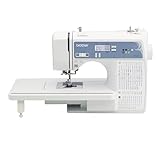
Compare garment utility sewing and a practical quilting setup.
Juki HZL-F600

Evaluate actual controls and the exact included equipment.
Check Price on AmazonThis is a specific HZL-F600 bundle. Confirm the seller’s included equipment and warranty.
Brother PQ1600S

Consider a dedicated role with other garment operations handled elsewhere.
A Shared Machine Must Meet Two Different Workflows
Garment construction asks for appropriate seams, closures, curves, and hems. Quilting can involve piecing, joining layers, free-motion work, and binding. A machine that performs one of those tasks well is not automatically the best choice for all of them. Decide which stages you will do at home and which, if any, will be handled by another service.
If you plan to piece quilt tops and have the layered quilting done professionally, the purchase should emphasize piecing and garment work. If you want to quilt large sandwiches yourself, handling space and support become more important. If your clothing is mainly knitwear, suitable stretch seams and finishes need separate attention.
This guide compares equipment roles rather than reporting a hands-on contest. Use it to prepare a meaningful demonstration with your materials. A familiar model name and a collection of quilting feet do not establish the result of a project you have not tested.
| Machine | Useful shared role | Main decision |
|---|---|---|
| Brother XR9550 | Varied household sewing and suitable quilting | Whether its controls and kit meet the actual projects |
| Juki F600 | Broader computerized garment and quilting station | Whether the additional functions and package earn their place |
| Brother PQ1600S | Dedicated straight stitching | How zigzag, buttonholes, and other operations will be handled |
Brother XR9550: Start With General Versatility
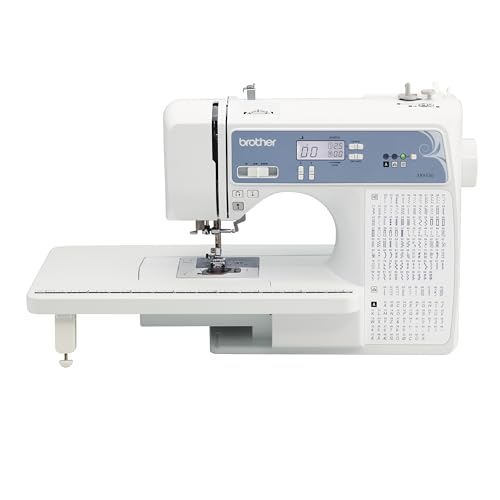

The XR9550 is worth comparing when one machine will support ordinary clothing, household repairs, and appropriate quilting work. Its utility-stitch role, independent speed control, and support table make it a practical starting point for that combined checklist. The useful question is whether those features meet your work, not whether the stitch menu is the largest.
For clothes, test a buttonhole and a suitable garment seam. For quilting, test the foot and needle setup you will use for piecing, then a sandwich if you plan layered stitching. A broad machine can be useful without producing the same result on every material or project size.
Its supplied spring-action quilting foot should not be mistaken for a supplied walking foot. Confirm any additional compatible attachment required by the method you intend to use. A kit description deserves careful reading rather than a general assumption that all quilting accessories are included.
Our Brother comparison places the model beside other household and specialist roles. Use the exact manual to confirm each foot and operation rather than borrowing instructions from a related model.
Juki HZL-F600: Evaluate a Broader Working Station
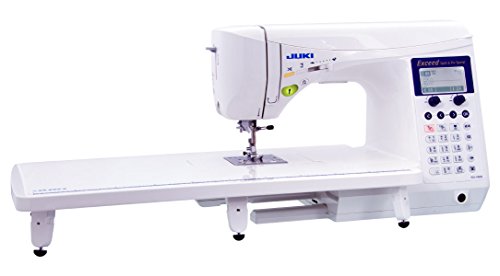
The F600 belongs on the shortlist when its computerized controls, garment operations, and equipment package have recurring value. Needle positioning, thread cutting, pressure adjustment, and the actual supplied tools can matter more to a shared sewing room than the decorative-pattern total.
Evaluate the box-feed system using your real materials. It is a household feeding mechanism, not industrial compound walking-foot feed. If the work involves dense reinforced bags or specialized upholstery, a different equipment class may be required even though the machine is well suited to other sewing.
Compare the complete seller offer, including the table, feet, knee lifter, condition, and support. A machine-only price and an equipped package are different purchases. Do not treat every online description as identical simply because it names the F600.
Try the interface yourself during a demonstration. Sewing experience does not automatically make an unfamiliar cutter or controller action intuitive. A short setup-and-sew exercise gives better evidence of daily comfort than watching a prepared decorative sample run quickly.
Brother PQ1600S: A Specialist, Not a Sole Garment Solution

The PQ1600S is relevant when you want a separate straight-stitch station for suitable piecing, layered work, or long garment seams. Its table, knee lifter, and thread cutter are features to evaluate within that role. A specialist can complement a versatile machine while remaining ready for a repeated operation.
It cannot supply zigzag or buttonholes. If your clothes need those functions, another machine or process must be part of the plan. A straight-only purchase should not be presented as an all-purpose replacement merely because it has a high advertised sewing speed.
Its pin-feed feature is also not compound walking-foot feed. Match the actual mechanism to the construction. The reason to choose this model is a clearly defined straight-stitch workflow, not an assumption that specialization means unlimited heavy-material capacity.
Five Ways to Make the Shared Purchase Useful
- List the garment operations before comparing quilting labels.
- Separate piecing from layered quilting and binding.
- Test both clothing fabric and an actual quilt sandwich.
- Compare included feet and working support accurately.
- Choose a specialist only when its missing operations are covered.
Two Common Limitations
- A larger table does not enlarge the machine’s throat space.
- A quilting package does not automate free-motion movement or supply every garment stitch.
Piecing Accuracy Starts With a Measured Sample
Use correctly cut fabric and the foot and needle position you intend to use. Sew several units, press according to the pattern’s method, and measure the result. The finished dimension is more useful evidence than the name of the quarter-inch accessory alone.
Keep the sample setup consistent while evaluating the machine. Changing the thread, pressing method, seam guide, and fabric at the same time makes it difficult to identify the cause of a difference. Record a successful setup so the next block starts from an understood reference.
Remember that piecing and quilting are different stages. A machine can be practical for accurate tops without being the most comfortable way for you to quilt a large finished sandwich. Decide whether both operations must happen on this station.
Layered Quilting Requires Its Own Test
Build a sandwich using the actual batting and fabrics. Use the compatible foot and settings for the technique and inspect the top and underside. Look for layer movement, puckering, unreliable stitch formation, and drag caused by unsupported weight.
For walking-foot work, confirm model compatibility and operating instructions. An accessory walking foot can help certain layer-control tasks, but it does not change the underlying equipment class. Our Brother walking-foot guide provides context for relevant models.
For free-motion work, practice movement and speed coordination on a manageable sample. A spring-action foot or dropped-feed setup does not by itself guarantee consistent stitch length. Build the skill gradually and follow the exact machine and accessory directions.
Clothing Needs More Than a Straight Seam
Choose one representative garment pattern and identify its operations before buying. Buttonholes, zippers, curves, and hems may matter more than decorative quilting patterns. Try the fabric with its interfacing and the complete folded intersections where appropriate.
A buttonhole should be evaluated using the actual button and fabric stack. A zipper operation needs the correct compatible foot and careful preparation. Machine capability cannot compensate for inaccurate placement or an unsuitable construction sequence.
For stretchy clothes, test the extension the seam needs during wear. A conventional straight seam can be too restrictive even when it looks neat flat. A suitable utility stitch, serging, and coverstitch are different methods with different equipment requirements.
Make Switching Between Projects Manageable
A shared machine may move from piecing cotton to sewing a different garment fabric. Change the needle, thread, foot, and settings as the new operation requires rather than carrying the old setup forward automatically. Keep supplies labeled so bobbins and accessories from another machine do not become mixed in.
Use a short test each time the material or operation changes. If stitch quality changes suddenly, stop and recheck setup. For compatible Brother machines, our needle guide and tension guide support a systematic approach.
A project note can record the settings and sample for each recurring task. This makes switching less dependent on memory. It also helps you identify whether a new machine is truly needed or whether organizing the existing workflow would solve the problem.
Plan the Whole Support Area
A quilt and a long garment panel can both pull against feeding if most of their weight hangs from the table. Support the material around the needle without crowding the operator. Leave enough room to turn a partly assembled garment or reposition a quilt.
The machine’s throat space and the surrounding table solve different problems. A support table can reduce drag but cannot create more distance between the needle and body. Test the project size and the way you will manage it rather than assuming a larger accessory surface resolves every handling issue.
Consider whether two stations are practical if you choose a specialist. Moving a project repeatedly between machines can save setup or create new inconvenience depending on the room. The useful arrangement is one that supports the actual construction sequence comfortably.
Compare Controls, Support, and the Complete Cost
Our control-system guide helps separate interface preference from specific capabilities. A computerized model does not automatically include every convenience, and a mechanical model is not automatically better for thick material.
For another brand perspective, read our Janome comparison. Our Singer 4423 guide adds a mechanical alternative. Compare the whole setup, including any compatible feet or support equipment needed for the intended projects.
Confirm training, warranty, return terms, and the service route for the exact seller. A machine that is easy to support and operate can provide more practical value than a larger menu with unclear ownership arrangements.
A Project Check Before You Commit
Choose one garment sample and one quilt sample for every shortlisted machine. The garment sample should include a seam or buttonhole in its actual fabric and support; the quilt sample should include the planned batting and backing. Compare the results separately. A machine may be comfortable for one workflow while needing another foot or better table support for the other.
Make the purchase decision around how often you perform each task. If most sewing is clothing with occasional small quilting, preserve the garment controls you need. If bulky quilt finishing dominates, internal space and project handling may outweigh decorative options intended for garments.
Frequently Asked Questions
Can one machine make clothes and quilts?
A suitable general-purpose machine can support many garment and quilting operations. Identify the stitches, feet, material limits, and handling space required. Some specialist quilting or garment finishes may still require different equipment.
Is a straight-stitch machine enough as my only clothing machine?
Only if your required operations are covered elsewhere or do not need functions it lacks. The PQ1600S does not provide zigzag or buttonholes. Decide how those tasks will be handled before choosing a sole station.
Does a quilting foot guarantee accurate piecing?
No. Cutting, needle position, seam guidance, thread, and pressing affect the finished dimension. Measure completed test units using the exact setup rather than relying solely on the foot’s name.
Does a wide table make large quilts easy automatically?
No. It helps support material but does not enlarge throat space or move the quilt. The surrounding workstation, project bulk, technique, and operator control remain important.
Which model should I compare first?
Start with the XR9550 for a versatile household role or the F600 when its controls and package have clear value. Consider the PQ1600S when a dedicated straight-stitch station solves a defined need and other operations remain covered.
Final Recommendation
Choose through two realistic tests: a garment operation and the quilting stage you plan to perform. The XR9550 and F600 offer different general-purpose comparisons, while the PQ1600S serves a narrower specialist role. Match the complete workstation, accessories, and support to the projects rather than treating clothes and quilting as one undifferentiated machine feature.