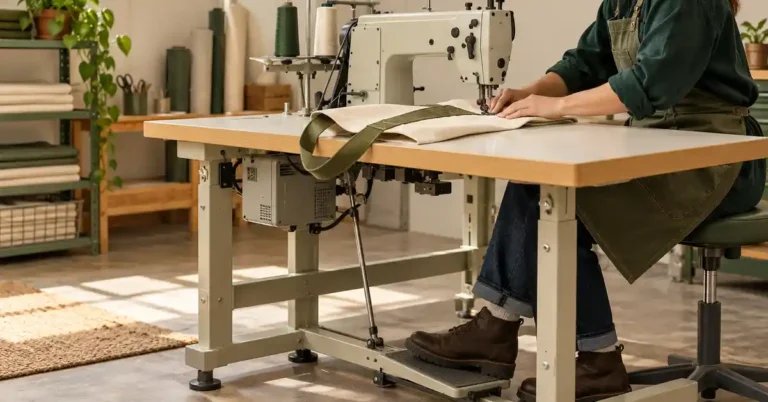
The best sewing machine for curtains should handle the fabric and heading construction while allowing long panels to move without drag. A curtain project often tests workspace and preparation more than decorative stitch variety. This guide compares three machine roles and explains lining, hems, bulky intersections, straight seams, and support so you can choose equipment for practical window treatments without assuming every heavy-looking fabric requires the same kind of machine.
As an Amazon Associate, Practical Textile earns from qualifying purchases. Product links may earn us a commission.
Quick Answer
Compare the Brother XR9550 for versatile computerized home sewing, the Singer 4423 when mechanical controls and pressure adjustment matter, and the PQ1600S only when a dedicated straight-stitch station fits your wider workload. Test the complete fabric, lining, and heading stack. Adequate support around the machine is essential; a larger stitch menu will not prevent a heavy panel from dragging off the table.
This guide compares published specifications and project fit; it does not report hands-on testing.
Brother XR9550
Evaluate controlled speed and panel support for varied curtain work.
Singer Heavy Duty 4423
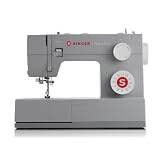
Compare foot-pressure adjustment and controller feel on the actual stack.
Brother PQ1600S

Consider a specialist when long straight work justifies a separate station.
Define the Curtain Construction First
List the face fabric, lining, header method, hems, and any difficult intersections. A sheer panel and a lined heavier curtain create different handling requirements. The phrase curtain fabric does not establish one universal needle, foot, or machine specification.
Inspect the complete stack where allowances fold or header material is attached. A machine that sews a flat sample may behave differently at that intersection. Bring the actual construction to a demonstration when density is a main buying concern.
Also decide whether this is one household project or a repeated sewing workload. A versatile domestic machine may cover occasional work, while a dedicated station deserves a different justification. Choose around the sewing you will continue doing after the curtains are finished.
Compare Three Sewing Roles
| Model | Role | Why investigate? | Main caution |
|---|---|---|---|
| XR9550 | Computerized general sewing | Controlled speed and versatility | An external table does not enlarge the arm opening. |
| 4423 | Mechanical general sewing | Direct controls and pressure adjustment | Heavy Duty naming is not a universal capacity rating. |
| PQ1600S | Dedicated straight stitching | A focused station for repeated long seams | No general zigzag or buttonhole menu. |
These are feature-based candidates, not measured winners on identical curtain materials. Test the fabric and construction, controller feel, and workspace. The most useful demonstration reproduces the task that would be difficult in your own room.
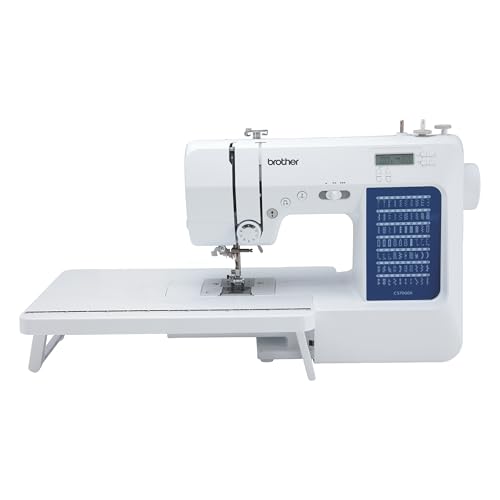
Brother XR9550 Review: A Versatile Home Option
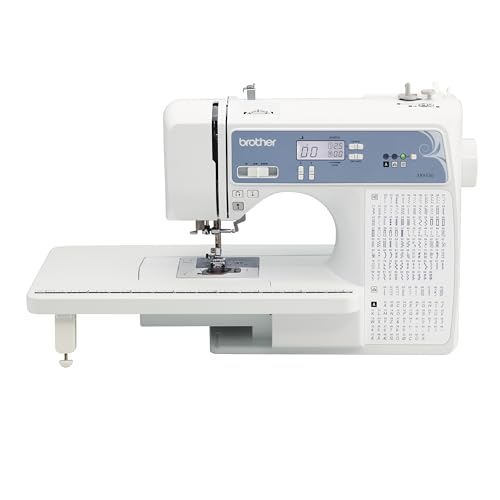

The XR9550 is relevant when curtain work shares the machine with clothing, repairs, and other home projects. Its computerized selection and speed-control arrangement can help establish a comfortable pace. The choice should still be based on the actual stitches and controls you use.
The included wide table can support fabric near the needle, but a large panel needs more than a small extension. Arrange adjacent surfaces or other suitable support so the curtain’s weight does not pull against the seam. Keep the path free of furniture and loose objects.
Check the appropriate foot and seam method for the header and hem. A large decorative menu contributes little to an ordinary long straight seam. Convenience becomes useful when it improves the repeated operations in your project.
Our Brother sewing guide explains its place beside other household and specialized models. Choose the complete role rather than the quilting or computerized label alone.
Singer 4423 Review: Mechanical Controls and Pressure Adjustment
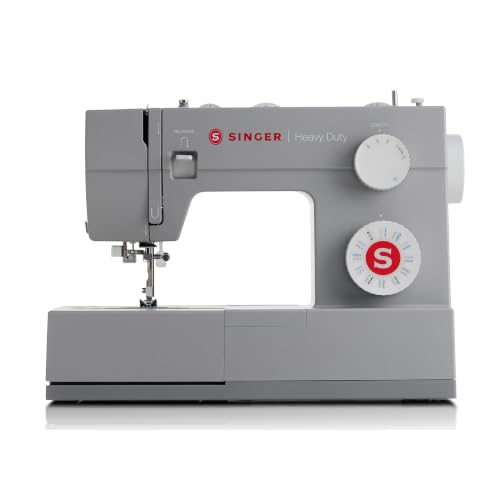
The 4423 is a candidate for someone who prefers mechanical operation and wants to assess presser-foot pressure adjustment with the chosen material. Follow the model instructions and evaluate the effect on a complete sample rather than copying one setting for every fabric.
Try slow operation and the approach to bulky intersections. The standard model does not provide a separate maximum-speed slider. A long curtain seam can tempt faster sewing, but maintaining alignment and normal feeding matters more than reaching a top speed.
Do not assume heavy-looking cloth requires or guarantees a Heavy Duty domestic machine. Density, surface behavior, lining, header material, and folded allowances determine the real seam. Stop if the machine struggles or the needle encounters resistance.
Our Singer 4423 review explains that distinction. The Singer 4452 guide provides another reference when comparing compatible accessories and packages.
Brother PQ1600S Review: A Dedicated Straight-Stitch Station

The PQ1600S is relevant when repeated straight stitching is a substantial part of the sewing workload. Its focused controls and external support arrangement can be evaluated for long seams. It is a specialist rather than a general machine with every stitch type.
That distinction matters if it will be your only unit. A curtain project may also need another finishing method, and your later clothing work may require zigzag or buttonholes. Retain another suitable machine or method when those operations remain necessary.
Try the actual material and seam stack before buying. A specialist’s name or advertised speed does not prove that every lining, coating, or dense header intersection is suitable. The complete sample and workstation should justify the purchase.
For another brand perspective on machine categories, our Janome comparison helps separate mechanical, computerized, and multi-process choices.
Support the Panel Instead of Pulling It Through
Plan the route across the table
Long panels can drag before the needle area looks crowded. Support the fabric’s weight beside and behind the machine, keeping it free to advance normally. A panel catching on a chair or falling off an edge can disturb an otherwise suitable seam setup.
Your hands guide direction rather than supplying pulling force. If feeding becomes difficult, stop and reorganize the work. More speed does not solve a heavy panel resisting movement, and pulling can distort alignment or stress the needle.
Keep preparation space separate when useful
Accurate measuring, marking, and pressing need room. Arrange a place to prepare long edges without stretching or folding them unpredictably. A crowded sewing surface can create mistakes that another stitch pattern will not correct.
Check lighting and your view of the edge or guide. For visible long seams, a comfortable position and consistent handling can matter more than an elaborate control display. Evaluate the whole workspace rather than the machine alone.
Face Fabric, Lining, and Dense Intersections
Choose a suitable needle and compatible thread for the actual material. A fine sheer and a denser lined construction should not automatically receive the same setup. Follow material care requirements and the machine’s needle guidance.
Test face and lining together where they will be joined. Layers can behave differently in combination than they do separately. Inspect alignment, puckering, and the way the finished sample hangs rather than judging only the first few stitches.
At folded hems or header intersections, assess the real stack. Reduce unnecessary bulk where the construction allows, and investigate an appropriate leveling method when needed. An accessory can improve a specific setup without increasing the machine’s underlying capacity.
For coated linings or unusual materials, follow their instructions and test before committing. Needle holes and pressing effects may not disappear. Do not assume a familiar curtain technique applies unchanged to every product.
Visible Hems, Blind Hems, and Heading Construction
Choose the intended finish
A topstitched hem and a domestic blind-hem method produce different appearances. Select the finish appropriate to the material and project. A specialist blind-hemming machine is another category rather than a function implied by every general sewing model.
For a supported blind-hem method, use the correct foot and test the fold and stitch placement. Singer’s guidance emphasizes practice and a sewing test. Do not copy a generic tension setting to a model with different controls.
Check matching and header alignment
Mark and prepare panel lengths consistently. If the fabric has a visible repeat, plan the layout before cutting and sewing. A straight accurate seam cannot correct mismatched pattern placement or an incorrectly measured panel.
Follow the chosen header construction and check that the machine can sew the complete arrangement. The method may create local bulk even when the face fabric itself is easy to handle. Test that difficult area rather than only a flat edge.
A Useful Curtain-Sewing Sample Routine
- Prepare the actual face fabric, lining, and header layers.
- Fit a suitable fresh needle and compatible thread.
- Select the required seam and correct foot.
- Test an ordinary section and a dense crossing.
- Inspect both sides for distortion and stitch formation.
- Evaluate the finished sample’s appearance and hanging behavior.
- Record the setup before sewing the full panels.
For irregular stitches, recheck threading, bobbin insertion, needle condition, and support before changing several settings. Change one variable at a time. A feeding problem caused by panel drag needs a different response from a missed thread guide.
Stop for a jam, repeated breakage, or unexpected resistance. Disconnect power as directed before clearing material near the needle. Follow the prescribed maintenance process and use qualified service for persistent mechanical trouble.
For more about interface preferences, our computerized versus mechanical guide compares the control question without treating either label as a universal quality ranking.
Advantages and Tradeoffs of This Shortlist
Useful strengths
- It separates general household sewing from a dedicated station.
- The choices compare computerized and mechanical preferences.
- Speed limitation and pressure adjustment are treated as specific controls.
- The machines can be assessed with the complete curtain stack.
- General-purpose options retain functions for later household projects.
Important tradeoffs
- No stitch menu can compensate for unsupported panel weight.
- A straight-stitch specialist does not replace every finishing operation.
Buying Checklist
- List the face, lining, header, and hem construction.
- Test the ordinary seam and difficult intersection.
- Try the controller at a comfortable pace.
- Verify feet, guides, and any finishing requirements.
- Plan support and preparation space around the machine.
- Check condition, included equipment, electrical suitability, service, and seller terms.
For used equipment, request a relevant material demonstration rather than an empty-machine speed test. Confirm the required controller and accessories. Compare the total usable setup with another supported offer rather than relying on an old deal price.
A Project Check Before You Commit
Measure the space needed to support a full curtain panel before choosing the machine location. A long hanging panel can pull at the seam even when the machine feeds a small sample evenly. Arrange support so the work approaches and leaves the needle without dragging on the floor or catching on furniture.
For lined curtains, test the face fabric and lining together along the intended seam. Mark corresponding points and inspect any shift after sewing and pressing. Check the finished drape as well as the stitch. A small change in preparation or support may solve the problem more effectively than changing machines, while a persistent mismatch can identify a specific feeding requirement for your shortlist.
Frequently Asked Questions
Do I need a heavy-duty machine to sew curtains?
Not automatically. The actual fabric, lining, folds, and header stack determine the requirement. Test the complete construction rather than buying from a heavy-looking material or a machine’s name.
Is a large extension table enough for curtain panels?
It can improve nearby support but may not hold the whole panel’s weight. Arrange the surrounding workspace so fabric advances without drag. External support and internal arm space solve different problems.
Can a regular machine make blind hems?
A suitable model and foot can perform a supported domestic blind-hem method. Test the fold and stitch placement on the actual fabric. It is not automatically identical to every specialized factory process.
Why do my curtain layers shift?
Check preparation, support, material behavior, the correct foot, and the complete setup. A lining and face fabric can feed differently together. Change one variable at a time and use a representative sample.
Should I buy a straight-stitch specialist for one curtain project?
Consider the wider workload and any functions you would lose. A versatile existing machine may be sufficient for suitable construction. A specialist deserves a clear ongoing role rather than a purchase based only on long seams.
Final Recommendation
Compare XR9550 for versatile controlled sewing, 4423 for mechanical preferences and adjustment, and PQ1600S when repeated straight work justifies a separate station. Test the difficult construction before choosing.
Support the panels, prepare measurements carefully, and match the setup to the real fabric. Those practical requirements matter more than decorative stitch totals when the goal is a well-finished curtain.