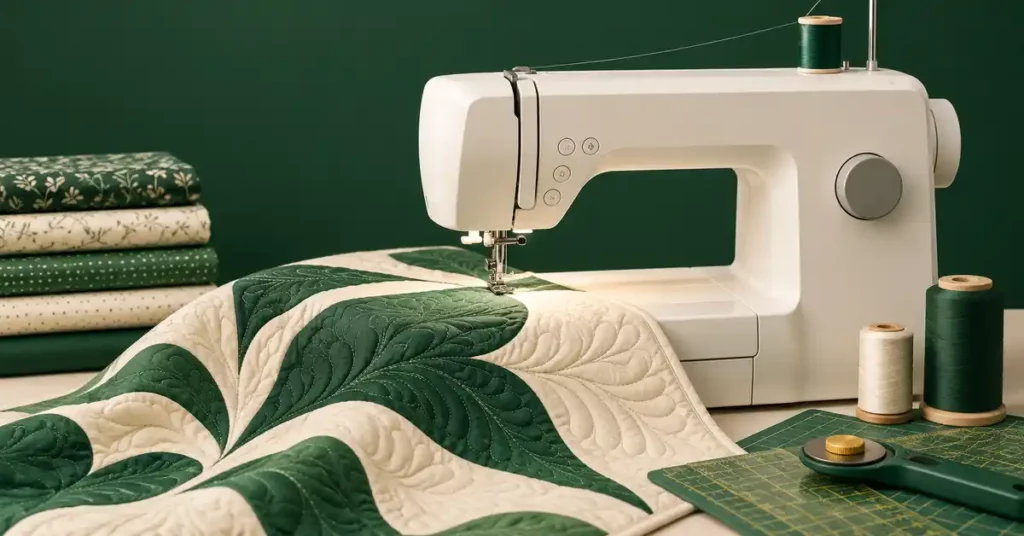
The best sewing machine for quilting under $500 should leave room in your budget for the tools and support that make quilting comfortable. A machine-only price can hide missing feet, a table, or basic supplies. This guide compares household options for piecing and smaller quilting projects, explains the compromises of limited working space, and helps you evaluate complete offers without assuming that every advertised quilting package includes the same accessories.
As an Amazon Associate, Practical Textile earns from qualifying purchases. Product links may earn us a commission.
Quick Answer
Start by comparing the Singer 7285Q and Brother XR9550 as complete computerized quilting packages, then consider the Singer 4452 if mechanical operation and its accessory kit suit your work. Keep the final delivered total below your chosen $500 limit. Prices change; confirm the specific offer, accessories, and tax before calling any package an under-$500 purchase.
This guide compares published specifications and project fit; it does not report hands-on testing.
Singer Patchwork 7285Q
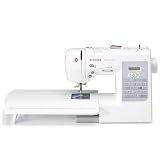
Check the table, feet, correct bobbins, and delivered offer.
Brother XR9550
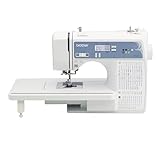
Compare its speed control and table, then check the actual feet.
Singer Heavy Duty 4452
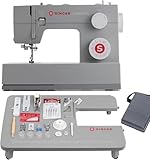
Compare the walking-foot package if electronic controls are unnecessary.
Check Price on AmazonThis is a 4452 Holiday Bundle offer. Included accessories may differ from other 4452 packages.
Under $500: Compare the Usable Setup
| Machine | Quilting reason to compare | Tradeoff to inspect |
|---|---|---|
| Singer 7285Q | Electronic quilting controls and listed accessories | Limited internal working space |
| Brother XR9550 | Speed slider and wide table | Included quilting foot is not automatically a walking foot |
| Singer 4452 | Mechanical sewing and advertised even-feed accessory | No independent electronic speed-limit slider |
The budget should buy a working quilting setup, not simply a machine in a box. Decide whether the $500 ceiling includes tax, delivery, a carrying case, a compatible foot, needles, and the first project’s supplies. A machine offered below the limit can exceed it after those essentials are added.
This guide is a shortlist to check against current offers, not a promise that every seller or condition qualifies. If a listing rises beyond the limit, do not describe it as under $500 because it once sold for less. Compare a suitable alternative or wait for a legitimate offer without sacrificing the functions you actually need.
Singer Patchwork 7285Q: Compare the Complete Quilting Package
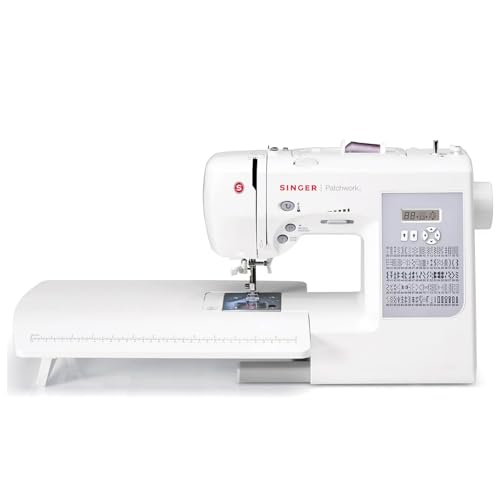
The 7285Q is worth investigating when needle positioning, electronic speed control, and a listed quilting accessory package address your needs. The useful question is whether those controls make your repeated operations easier. Decorative selections are secondary if you mainly join blocks, quilt straight lines, and attach binding.
Check the actual seller’s table and foot inventory. A package can be incomplete when sold used or open-box, even if the main model photograph shows all the original accessories. Ask for a written list and price any missing compatible item before deciding the offer is good value.
The manufacturer’s working-space measurement is a reminder that this is a household machine. A table supports the quilt outside the bed but does not make the internal space larger. If large, bulky quilts are your main projects, test handling before buying rather than assuming the Patchwork name resolves that constraint.
Five reasons to compare it:
- Electronic speed limiting supports controlled practice.
- Needle positioning helps with planned pivots.
- The listed table provides outside support.
- Quilting accessories can reduce separate purchases.
- Ordinary utility sewing broadens its role beyond quilts.
Two tradeoffs:
- Internal working space remains limited for bulky projects.
- The exact seller’s accessory inventory and correct bobbins require checking.
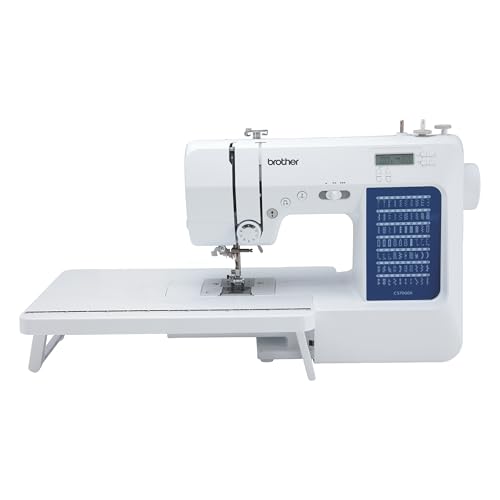
Brother XR9550: Speed Control and a Table
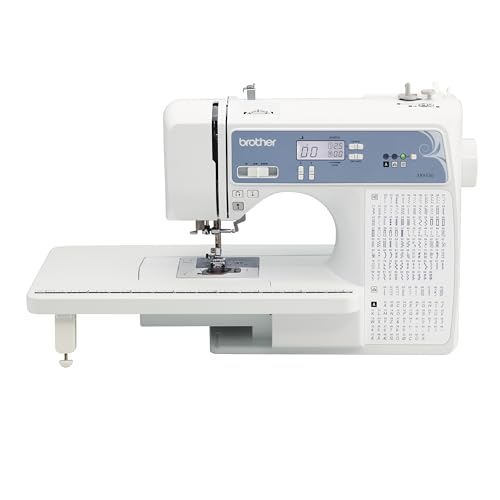

The XR9550 provides a computerized household comparison with a speed slider and table. Those are useful features to test for small pieces and repeated seams. Slow starts can be more valuable in patchwork than maximum speed, especially when a short seam needs to finish at a marked point.
Inspect the feet individually. A spring-action quilting foot is not the same as an even-feed walking foot. If you plan straight-line quilting through a sandwich, identify the compatible accessory and include its cost where necessary. Do not assume that any package described as sewing and quilting includes every foot used in both activities.
Our Brother comparison explains the model’s broader sewing role. Its lettering should not be confused with automatic hoop embroidery. If embroidered quilt blocks are the main goal, this shortlist concerns a different operation from importing and stitching an embroidery design.
Five reasons to compare it:
- A speed slider helps limit the sewing pace.
- The table supports material beside the needle.
- Computerized selection displays useful settings.
- Utility stitches support mixed household projects.
- The package provides a clear basis for accessory comparison.
Two tradeoffs:
- Additional compatible feet may be needed for the intended quilting method.
- A wide table does not turn a household machine into a longarm.
Singer 4452: A Mechanical Alternative With a Different Emphasis
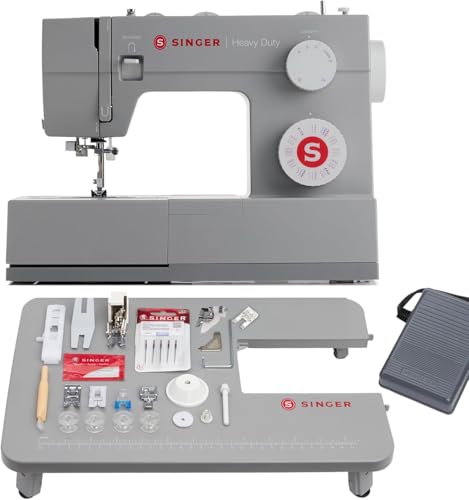
The 4452 is worth comparing if you prefer direct mechanical operation and will use its advertised even-feed accessory. A mechanical machine can piece quilts and perform suitable layered work, but the interface is different from a machine with a separate electronic speed limit and programmable needle stop.
Test the controller at low speed. A machine that runs smoothly on a long straight sample may still feel too quick for your preferred patchwork pace. The useful result is comfortable, repeated control near corners and seam ends. A high-speed demonstration alone does not answer that question.
Our 4452 review explains the accessory-focused comparison. If you do not need its particular kit, compare the complete cost with the Singer 4423 and any additional compatible feet. Do not assume the machine with the largest bundle is automatically cheaper for your projects.
Five reasons to consider it:
- Mechanical dials offer direct operation.
- The listed even-feed accessory is relevant to some layered work.
- Foot-pressure adjustment provides another handling control.
- Utility sewing supports repairs and home projects.
- A suitable complete offer may preserve money for work support.
Two tradeoffs:
- There is no independent electronic speed-limit slider.
- Its accessory does not provide industrial compound feed or large-quilt working space.
First Decide How Much of the Quilting Process You Will Do
A buyer who pieces tops and sends them out for longarm finishing has different needs from a buyer quilting every layer at home. For piecing, seam guidance, controlled starts, visibility, and consistent settings deserve priority. For finishing, handling the sandwich and supporting its weight become much more important.
Start with a strip set. Sew several pieces using the intended seam allowance, press them in the normal way, and measure the result. That checks the combined process rather than only the machine. Cutting accuracy, thread, pressing, and the foot’s guidance all influence whether a block finishes at the expected size.
For small projects, a household setup may provide a satisfying route into quilting without spending the whole budget on specialized equipment. Mug rugs, table runners, and pillow fronts also make useful acceptance projects. They reveal threading, control, layer handling, and finishing needs without requiring a large quilt as the first test.
A Walking Foot and Free-Motion Foot Serve Different Jobs
For suitable straight-line quilting, an even-feed walking foot can help move layers together. It does not decide the stitch length, support the quilt’s weight, or remove the need for preparation. Test it on the batting and backing you intend to use, not only the thin sample supplied at a demonstration.
Free-motion quilting uses a different setup and depends on the operator’s movement. Follow the specific machine and foot instructions. A machine advertised for quilting does not automatically regulate free-motion stitch length. Practice on small sandwiches and assess visibility, comfort, and repeatable control before planning a detailed full-size design.
Our quilting machine guide and walking-foot guide help distinguish these operations. Buying both feet can be sensible if you use both methods, but it is unnecessary to pay for a collection of attachments without a project-based reason.
Build a Realistic $500 Budget
Separate the machine cost from the remaining essentials. Include a correct needle supply, suitable thread, bobbins, necessary feet, and enough table support to avoid pulling the project. A small reserve is useful for a missing accessory or instruction. Do not spend the full amount on a machine and leave the workspace unusable.
Compare tax and delivery using your location. An online price without those costs is not the final total. A local offer including a lesson or useful foot may compare well with a lower bare-machine listing, but only if you value and can access those additions. Record the actual package instead of comparing promotional savings figures.
Used and refurbished offers need separate scrutiny. Check the controller, table, covers, feet, manual, and service history. Ask whether the return arrangement allows a sewing test. A low price that requires repair and several model-specific accessories can be worse value than a more complete supported machine.
Make the Workstation Comfortable
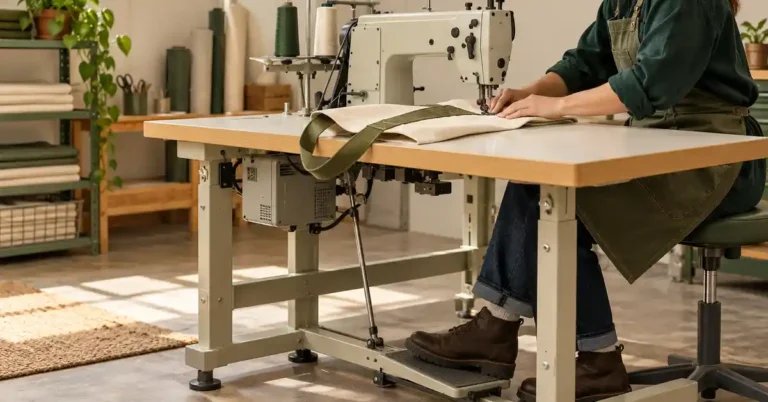
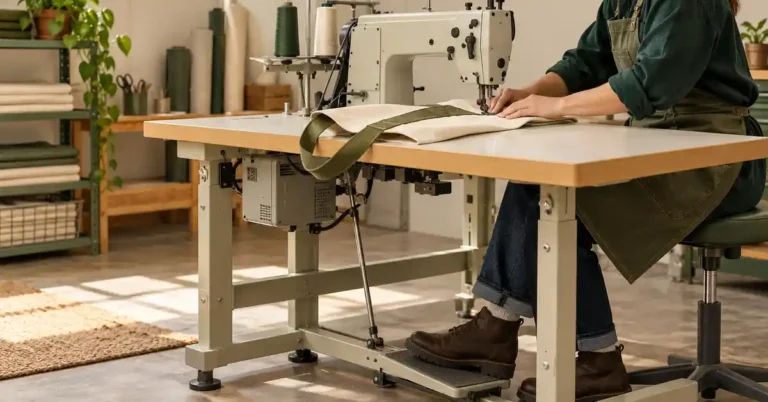
Place the machine where the quilt has support in front, beside, and behind the needle. Avoid letting the project pull over the edge of a small table. Adjust the chair so you can guide the work without lifting your shoulders. External support can improve handling, but it cannot change the machine’s internal clearance.
Try a representative sandwich and practice turning it. If the bulk repeatedly presses against the tower or falls off the table, identify whether better support solves the problem or whether the project requires a different machine size. This is a more useful assessment than relying on a photograph of a large quilt beside a small machine.
For another brand perspective, see our Janome comparison. If your preference is still unclear, the mechanical versus computerized guide explains the operating choices. Buy a control arrangement that suits you rather than assuming extra electronics or direct dials are automatically best.
Your First-Week Acceptance Test
Wind a bobbin, thread the machine yourself, piece a measured sample, quilt a small sandwich, and attach a short binding section. Use the controls and feet that justified the purchase. Keep the successful samples with notes on the needle, thread, stitch, and preparation so that later troubleshooting has a reliable starting point.
Check the table fit and controller response in your real sewing position. Ask about a persistent issue while the return or support terms still apply. Do not change several adjustments together to hide a problem. A clear description and sample make it easier to determine whether the issue is setup, technique, or a fault requiring service.
A Project Check Before You Commit
Before spending the remaining budget on accessories, finish one small quilted item with the basic setup. Note every actual limitation: inadequate support, a missing compatible foot, poor lighting, or an awkward controller position. Buy additions to solve those observed problems rather than collecting tools without a project.
Keep the receipt and inventory with the machine manual. If a bundle is missing a table or foot, resolve it while the offer and return terms are still clear. A budget purchase is strongest when the complete delivered setup matches the comparison you made.
Frequently Asked Questions
Can a machine under $500 make quilts?
A suitable household machine can support piecing and many smaller quilting projects. Large, bulky quilts introduce working-space and support challenges. Match the machine to the part of the quilting process you actually intend to do.
Are all three machines always under $500?
No fixed price or offer is guaranteed. Check the exact seller, condition, accessories, tax, and delivery. Only treat an offer as qualifying when its complete cost fits your chosen budget.
Do I need a walking foot for quilt piecing?
Not automatically. Piecing and layered quilting are different operations. A suitable quarter-inch guide may be more relevant to piecing, while an even-feed foot can be useful for particular straight-line quilting tasks.
Does a wide table mean more throat space?
No. It supports material outside the machine. The needle-to-tower measurement remains unchanged. Compare both outside support and internal clearance when handling a bulky sandwich.
Should I buy the machine with the most stitches?
Only if those selections address work you plan to do. For many quilters, controlled starts, accurate seam guidance, suitable feet, and comfortable support matter more than a large decorative stitch menu.
Final Recommendation
Compare the 7285Q and XR9550 for computerized quilting conveniences, and the 4452 for a different mechanical workflow. Keep the complete delivered setup within budget and test your intended quilting method. Choose usable controls and support before decorative totals or promotional bundle values.