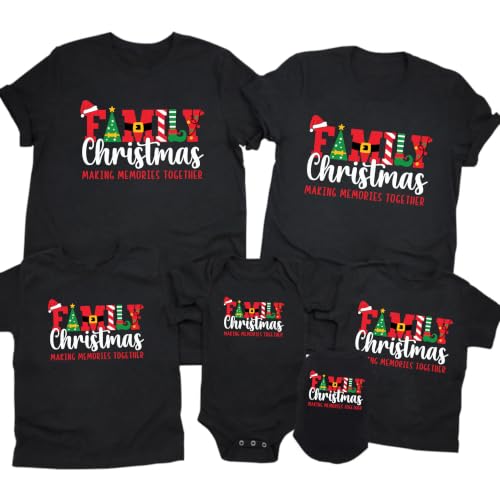
Family Christmas Shirt Ideas: 8 Designs, Fabric and Print Tips
Find a family Christmas shirt idea with eight adaptable designs, fabric comparisons and practical advice for print methods, sizing, orders and care.

This guide has Amazon links. If you buy through them we may earn a small commission, at no extra cost to you.
As an Amazon Associate, Practical Textile earns from qualifying purchases.
Family shirts can be useful for a gathering or photograph, but the design is only part of the decision. Adult and child variations may use different fabrics, and a graphic that looks balanced on an adult chest may overwhelm a smaller shirt. Review the actual sizes before placing a group order.
This guide combines eight design directions with fabric, print and order-planning advice. It does not promise a fixed wash life for an unspecified print or claim personal testing of the products shown. Retail boxes are separate affiliate placements.
Set a Design Brief That Fits the Family
Decide where the shirts will be worn and whether a photograph is a main purpose. A group meal, outdoor visit and casual portrait may call for different layers. Confirm that everyone wants to participate before ordering personalized garments that may be difficult to change.
Choose how closely the shirts should match. Identical artwork is one option, but a shared color or related small symbols may be more flexible. Let the shirt cut remain individual so the design does not require everyone to accept the same neckline or body shape.
Review names and wording carefully. Check spelling, punctuation and the intended size of any text before approving a personalized order. A digital proof should identify the selected design clearly; do not assume the seller will infer a correction from a separate message.
Compare Cotton, Blends and the Actual Jersey
A cotton jersey can be comfortable, but cotton content does not establish one universal softness or shrinkage result. Yarn, knitting, finishing and garment construction contribute to the feel. Read the exact composition and care information rather than assigning every cotton shirt the same behavior.
Polyester-cotton blends combine fibers in proportions that vary. A blend name does not tell you the precise ratio or how the surface will accept a particular decoration. Check the selected color as well as the style because some variations use different composition.
Tri-blend is not one fixed recipe. Read the fiber declaration and ask the decorator to confirm compatibility with the chosen process. Do not assume every blend is equally suitable for heat application or will produce the same print appearance.
Check garment weight, opacity and fit where reliable information is available. A styled photograph cannot establish these details. If the fabric information is missing, leave it unknown rather than estimating a weight from how the shirt hangs on a model.
Eight Family Christmas Shirt Ideas to Adapt
1. One Small Shared Symbol
Use a simple tree, star or other appropriate seasonal motif in a consistent position. Resize it for the garment rather than applying one adult-sized graphic everywhere. A small connection can leave the shirts useful beyond the photograph.
2. Related Symbols in One Palette
Give each wearer a different symbol while repeating the colors and visual style. This creates coordination without a strict uniform. Review the whole group proof so one design does not accidentally dominate through scale.
3. A Family Name with a Restrained Accent
Keep the wording clear and check the name exactly as supplied. Ask how text will be arranged on smaller sizes. A personalized design should not require a very large rigid print area to remain legible.
4. Initials Instead of Full Names
Use a smaller personalized element when full wording feels too prominent. Confirm each initial and its position in the order record. Keep the design intentional rather than letting the seller guess which letter belongs to which wearer.
5. A Shared Color with Different Garment Cuts
Coordinate through color and let the shirts differ in sleeve length or neckline. Compare actual samples where possible because matching color names do not guarantee identical shades. The family can look connected without identical fit preferences.
6. A Simple Border or Repeated Detail
A limited repeated element can connect several shirts without covering the chest. Check how it sits near seams and hems. Avoid placing the design where ordinary stretching makes it uncomfortable or visually distorted.
7. A Design Built around an Existing Shirt
Start with a garment someone already likes and build compatible designs for the others. Verify that the original shirt can tolerate the proposed decoration method before altering it. An existing favorite should not become a test piece for unfamiliar heat settings.
8. Separate Adult and Child Layouts
Keep the same idea while adapting spacing and scale for each size range. A child-sized shirt may need fewer elements rather than a compressed adult layout. Ask to see those versions before approving the full set.
Ask the Decorator Which Method Fits the Design
Screen printing, transfer processes, heat-transfer vinyl and sublimation are not interchangeable techniques. The garment fiber, color, artwork and chosen materials affect suitability. Ask the provider to identify the method and its care requirements rather than choosing from a broad durability promise alone.
| Method | Useful question |
|---|---|
| Screen printing | What ink system and curing process suit this exact fabric? |
| Direct-to-film transfer | Is the transfer compatible with this material, stretch and color? |
| Heat-transfer vinyl | Which film and application instructions apply to this garment? |
| Sublimation | Does the substrate and color support the intended dye process and appearance? |
For a home decoration project, follow the exact material maker’s instructions and test on a suitable sample. Different films can require different temperatures, pressure, peeling and laundering. Do not copy one generic setting across every fabric and transfer product.
Ask how the finished print will feel and where it will be placed. A large surface application can behave differently from a small detail during stretching and layering. A preview of artwork does not establish the hand or flexibility of the completed shirt.
Where practical, review a sample before approving a larger personalized order. Check the blank shirt, graphic scale, placement and feel as well as the artwork colors. A digital proof can establish wording and layout, but it cannot demonstrate fabric hand or the behavior of the applied decoration.
If a sample is unavailable, ask which details the seller can confirm and retain that answer. Clear uncertainty is more useful than assuming every shirt will match the idealized mockup. Keep the approved order record so a missing or incorrect variation can be identified precisely.
Prepare a Clear Order Record for Each Wearer
Record the selected shirt, size, color, wording and design version by person. Compare measurements with the correct chart rather than copying a familiar size from another brand. If an adult and child option share one listing, check each variation separately.
Confirm what each purchase includes. A photograph of an entire family does not establish that one order contains every shirt shown. Check quantity and customization fields before completing the order, then retain the approved proof and details.
Allow time for a fit check where the order process permits it. Personalized clothing may have different return conditions, so resolve the measurements before approval rather than relying on a later exchange. Keep a suitable existing outfit as a practical alternative.
Check the delivery date on Amazon for the exact selected variation before ordering. Do not promise guests that every size will arrive together unless the order information actually establishes that arrangement. Leave room for inspection instead of planning the first try-on immediately before the event.
Care for the Shirt and Decoration Together
Follow both the garment label and the decoration provider’s instructions. If they conflict, ask the provider for guidance before laundering. A plain shirt’s usual care does not automatically remain suitable after a print or transfer is added.
Observe any specified waiting period before the first wash. Handle washing orientation, temperature and drying according to the exact system rather than applying a universal printed-shirt rule. Avoid ironing directly over decoration unless its instructions expressly allow the proposed method.
Inspect lifting, cracking or distortion before attempting a repair. Repeatedly applying unfamiliar heat can damage the fabric or the design. Ask the maker about the particular issue instead of assuming more pressure or temperature is always the solution.
Store the shirts completely dry and keep order notes for any future replacements. A repeat purchase may use a changed blank or decoration material, so confirm details again rather than assuming the same design name guarantees an identical garment.
Frequently Asked Questions
Do family shirts need identical artwork?
No. A shared palette or related symbols can create coordination while allowing different layouts.
Are all colors in one listing made from the same fabric?
Not necessarily. Check the composition for the selected variation, particularly with blends and heathered colors.
Which print method lasts longest?
No universal answer applies without the specific fabric, materials, application and care. Ask the decorator about the exact system.
Can I use one graphic size for adults and children?
Review the layout for each size range. A smaller garment may need a simpler or differently scaled design.
Should I wash a custom shirt immediately?
Check the decoration provider’s instructions first. Some systems specify a waiting period and particular laundering requirements.
Final Thought
Choose comfortable shirts, adapt the artwork to each size and document the order clearly. A suitable fabric and compatible decoration process make the design more useful than a matching image alone.