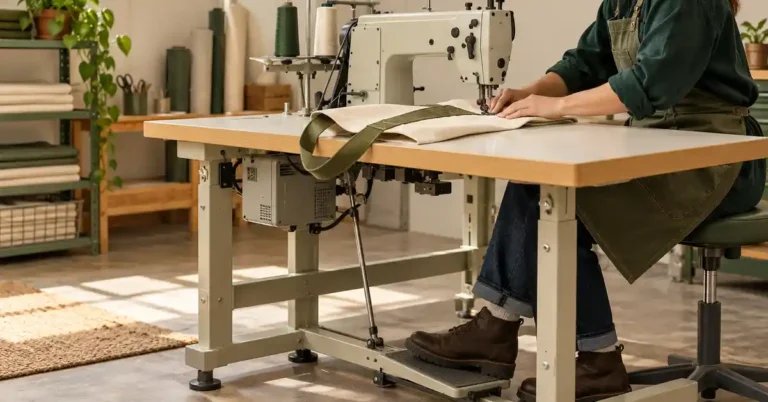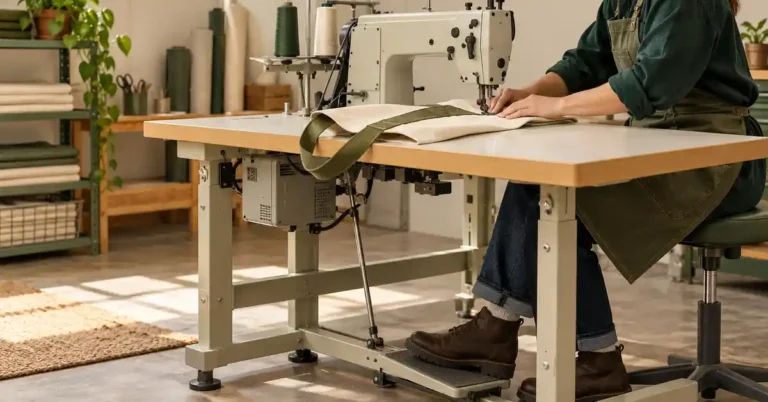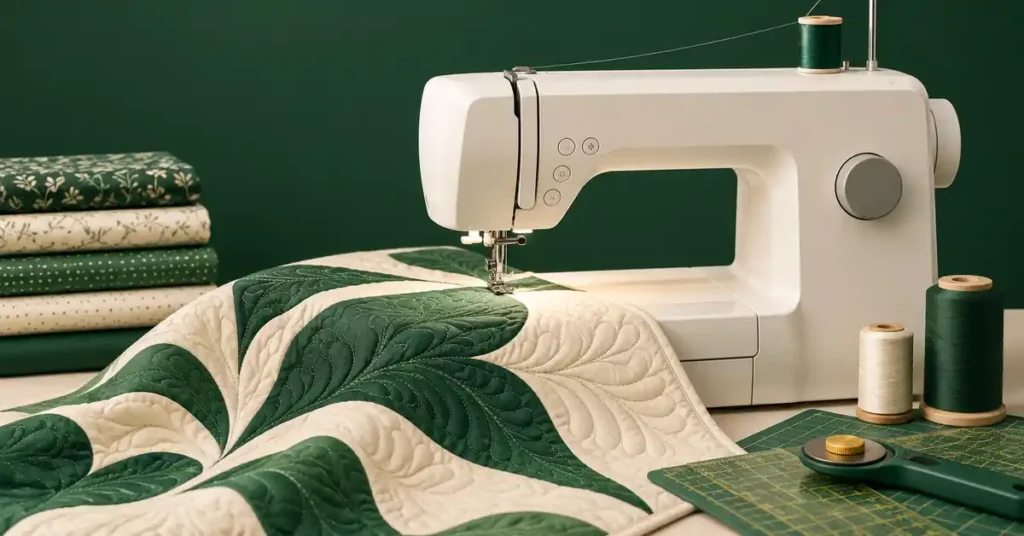
The Grace Company Little Rebel combines straight-stitch sewing with a regulated quilting role, making it a different purchase from an ordinary multipurpose household machine. Its value depends on how you plan to piece, quilt, and arrange the workstation. This review explains the modes, working space, frame questions, and useful demonstrations so you can compare the complete setup without assuming that an all-in-one quilting description includes every sewing stitch or accessory.
As an Amazon Associate, Practical Textile earns from qualifying purchases. Product links may earn us a commission.
Quick Answer
Consider Little Rebel when straight-stitch construction and its documented regulated-quilting workflow both have recurring value. Confirm the machine-only or frame-bundle configuration and try the mode changes yourself. In sewing mode it is straight-stitch-only; ordinary zigzag, buttonholes, hoop embroidery, and optional quilting automation are separate requirements.
This guide compares published specifications and project fit; it does not report hands-on testing.
Grace Little Rebel

Check the selected machine or frame-bundle variation and exact included equipment.
Juki TL-2010Q
Compare a different specialist role and verify any regulation requirement separately.
Check Price on AmazonThis is a TL-2010Q bonus-pack offer. Confirm the seller’s included accessories and US warranty.
Brother PQ1600S

Evaluate the controls and station rather than assuming all specialists are equivalent.
Choose It for a Defined Sewing-and-Quilting Workflow

Little Rebel deserves comparison when you want suitable straight sewing and a specific regulated free-motion quilting process in one machine. That is a clear equipment role. It is not the same promise as a household model offering zigzag, buttonholes, decorative sewing patterns, and hoop embroidery.
Start by describing how you will use it. Will you piece quilt tops while seated, quilt at a table, use a compatible frame, or alternate between those arrangements? The answer determines which accessories, furniture, and demonstrations belong in the purchase.
This review uses documented features and original workflow analysis rather than hands-on performance measurements. A maximum speed or a manufacturer’s mode-change description is not a measured result from Practical Textile. Try the exact arrangement and the parts supplied in your offer before deciding.
Straight Sewing and Quilting Are Different Modes
Grace describes changing the setup with the appropriate quilting plate and foot. Learn that sequence from the current manual and demonstrate it yourself. The practical question is whether changing roles feels manageable in your real sewing routine, not whether a promotional time sounds quick.
In sewing mode, Little Rebel is straight-stitch-only. A garment maker who needs ordinary zigzag or buttonholes will need another suitable machine or method. A quilter who mainly pieces stable woven blocks may find that narrower role appropriate.
The regulated quilting function uses a different operating setup. Do not treat the regulation feature as a reason to skip learning the controls, positioning, and movement. A documented capability still needs the intended mode, compatible parts, and operator instruction.
| Requirement | What to evaluate | What not to assume |
|---|---|---|
| Piecing or straight construction | Sewing mode and intended foot | That all-in-one includes zigzag and buttonholes |
| Regulated quilting | Sensor, controls, plate, foot, and movement | That a feature eliminates operator learning |
| Frame use | Exact frame compatibility and installed station | That a frame is included with every machine offer |
| Automation | Compatible optional hardware and software | That ordinary stitch regulation is automatic design motion |
13-Inch Throat Length Is Not an Embroidery Field
The manufacturer lists a 13-inch throat length and 8.5-inch throat height. These dimensions concern working clearance, not a hoop embroidery rectangle. They should not be used to claim that the machine accepts an arbitrary design file and stitches it automatically over that area.
For seated quilting, compare how the actual quilt can be supported and repositioned. A larger opening can help handling without removing the need for a table and controlled movement. The bulk of the quilt and the chosen technique still influence the working experience.
For frame use, examine the complete mounted arrangement and accessible quilting area. Frame dimensions, loading, take-up, and other equipment affect the usable workflow. Do not substitute a machine-throat measurement for a demonstration of the installed system.
Stitch Regulation and Automated Movement Are Separate
Regulation concerns how the machine responds in the supported quilting mode. Automated quilting adds a different question about how the machine or work is moved through a design. The existence of one function does not establish that the other is included.
Grace describes compatibility with particular optional automation arrangements. Confirm the current model, frame, hardware, software, computer requirements, and included licenses before purchasing such a setup. A general statement of compatibility does not identify everything required in the actual package.
Ask for two demonstrations if both functions motivate the purchase: one using the intended regulated manual workflow and one showing the exact optional automated configuration. Record which parts and software were used so the quotation matches the demonstrated result.
Evaluate Piecing as Its Own Operation
Use accurately cut fabric and the intended foot to sew several sample units. Press as the pattern directs and measure the result. A quarter-inch or scant-quarter-inch foot should be evaluated as part of the complete setup rather than treated as an automatic guarantee of finished dimensions.
Try starting near the edge, stopping at a marked point, and sewing across a suitable intersection. Record the thread, needle, guide, and settings that produced a satisfactory result. Those details help you reproduce the setup after a quilting-mode change.
For a mixed sewing room, list which tasks remain elsewhere. Edge finishes, stretch seams, buttonholes, and decorative embroidery may need different equipment. Keeping another machine can be a deliberate arrangement rather than evidence that the specialist was a poor purchase.
Use a Real Quilt Sandwich for the Demonstration
Bring the fabrics and batting you intend to use and prepare a manageable sandwich. Test the actual quilting mode, movement, and controls. Inspect both sides after sewing, including direction changes and starts and stops.
Check the finished result after the material is relaxed and supported appropriately. A sample that looks acceptable under tension may show a different issue once removed from the working setup. Observe what the operator does to achieve the result instead of judging only the final front surface.
Keep several samples and the settings record. A single successful demonstration is evidence about that particular setup, not every quilt you may make. Change one variable at a time when evaluating another thread, batting, or fabric.
Machine-Only and Frame Bundles Are Different Purchases
The Amazon product identity checked here names Little Rebel itself, while related marketplace variations can describe frame combinations. Verify the selected option at checkout. A photograph of a frame beside a machine does not establish that every offer includes it.
Compare the written inventory with the configuration you need: machine, controller, quilting controls, feet, plate, support base where supplied, frame if required, and any optional automation components. Confirm exactly what setup and training are included.
Plan delivery, assembly, access, storage, and the operator’s working area. A frame-based station creates a different room requirement from a machine stored on a shelf. Include the whole station in the purchase and floor-space comparison.
Juki TL-2010Q: A Different Straight-Stitch Specialist
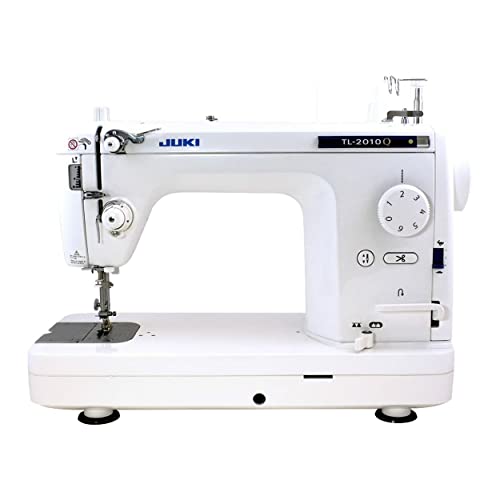
The TL-2010Q is useful to compare when the main requirement is a dedicated suitable straight-stitch station. It has its own controls, accessories, and operating routine. Do not assume every straight-stitch specialist supplies Little Rebel’s integrated regulated-quilting workflow.
Try the same piecing and appropriate layered samples, then compare the complete station and support. A buyer who mainly wants repeat straight construction may reach a different decision from someone buying specifically for the Little Rebel quilting mode.
Our Juki equipment-category guide provides additional context, with the exact model documentation controlling capabilities. Brand names and an industrial-sounding description should not replace a clear distinction between ordinary sewing, straight specialization, and embroidery.
Brother PQ1600S: Compare the Job It Would Do


The PQ1600S is another straight-only station to evaluate for suitable repeated work. Its table, knee lifter, thread cutter, and feeding controls can be relevant within that role. Compare them as operating tools rather than assuming all specialists are interchangeable.
Our Brother guide separates specialist and general-purpose models. If zigzag and buttonholes need to remain on another machine, include that arrangement in the workspace and budget.
For a wider general-sewing comparison, use our Janome overview and Singer 4423 review. Those roles are different from buying a regulated quilting setup.
Five Reasons to Consider Little Rebel
- A defined straight-sewing and regulated-quilting role.
- Documented working clearance to evaluate with real projects.
- Supported mode changes that can fit a planned workflow.
- A choice of suitable seated or compatible frame arrangements.
- An opportunity to compare optional automation as a separate configuration.
Two Limits
- Sewing mode does not supply ordinary zigzag or buttonholes.
- Frames, automation, and accessory inclusion must be confirmed for the exact offer.
Training, Consumables and Maintenance Need a Plan
Use the exact needle system, bobbins, thread guidance, cleaning, and lubrication instructions. Do not transfer consumables or maintenance assumptions from a household machine merely because the parts look familiar. Keep the manual and supplied-part inventory with the station.
Ask who provides training and how service is handled. Learn which changes are normal operator tasks and which belong to a qualified technician. A feature-rich specialist should have a clear support route before an important quilt depends on it.
Our control-system guide can help frame the broader sewing-room decision. Choose the machine because it improves a defined operation and fits the complete workflow, not because a specialist must automatically be better for every project.
Plan How the Two Roles Share Time
One machine cannot piece a new block while it quilts another project. If your usual routine overlaps those tasks, retaining a separate ordinary sewing station may be useful. If you complete a top before beginning the quilting stage, grouping the work can make mode changes less frequent.
Consider the physical changeover too. A seated setup, a mounted frame arrangement, and storage can involve more than exchanging a foot. Ask to see the actual movement and connections for the configuration you plan to own. Record which steps are expected of the operator and what assistance is needed.
Try the working posture for both tasks. Standing frame movement and seated fabric guidance place different demands on reach, visibility, and support. An arrangement that looks compact in a photograph can still need clearance for the operator and quilt. The best setup is one you can use comfortably through the complete project.
A Project Check Before You Commit
Compare the Little Rebel in the actual mode you intend to use. A straight-sewing sample does not demonstrate the regulated quilting workflow, and a quilting demonstration does not establish zigzag or buttonhole capability. Ask the seller to show the required plate, foot, control setup, and any mode change before discussing optional frame or automation equipment.
Measure the proposed station with the project in place. The machine’s working space is only one part of quilt handling; the table or frame, operator position, and support around the needle also matter. If automation is included in a quote, identify hardware, software, compatibility, and instruction separately. Keep a written inventory so a machine-only purchase is not confused with a complete frame-and-automation package or a demonstration setup containing optional equipment.
Ask to restore the normal sewing setup after the quilting demonstration. Understanding the return procedure matters when one machine will alternate tasks, and it helps confirm which accessories belong to each mode rather than leaving them unidentified in storage.
Frequently Asked Questions
Does Little Rebel sew zigzag?
In sewing mode it is a straight-stitch machine. Plan another suitable machine or method for zigzag, buttonholes, and other operations outside that role.
Is stitch regulation the same as automatic quilting?
No. Regulation and automated design movement are different functions. Confirm the exact optional configuration if automated quilting is required.
Does every offer include a quilting frame?
No assumption should be made. Check the selected machine-only or bundle variation and written inventory, including compatible controls, frame, software, and installation where relevant.
Is the throat measurement an embroidery field?
No. It describes working clearance. It does not establish ordinary computerized hoop embroidery or automatic stitching of arbitrary imported artwork.
What should I try before buying?
Test piecing, the actual regulated quilting mode, mode changes, and the complete station you intend to use. Inspect repeated samples and confirm the accessories and training used in the demonstration.
Final Recommendation
Choose Little Rebel when its straight-sewing and regulated-quilting roles solve requirements you can describe and demonstrate. Confirm the complete configuration and try the mode changes yourself. Compare TL-2010Q or PQ1600S when a different straight-stitch station would meet the work, and keep missing general-sewing functions and optional automation explicit in the plan.