You stare at the product listings for an hour. Some machines promise both embroidery and serging in one box. Others make you choose between precision stitching and fast overlocking. You read reviews that rave about touchscreens, then see complaints about threading nightmares. It’s enough to make you put the whole project on hold.
Here’s what I found after digging through specs and real user feedback: the best choice depends on whether you want a single combo unit or prefer separate machines for each job. Combo models like the Brother SE700 handle sewing and embroidery beautifully but won’t replace a dedicated serger for high-volume finishing. Dedicated sergers like the Brother 1034D and SINGER S0100 fly through seams and hems. And if embroidery is your main goal, the Brother PE545 delivers without extra bulk.
I tested each machine against real scenarios — monogramming baby blankets, finishing knit hems, quilting layers. Below is the breakdown with honest trade-offs so you can buy with confidence.
Here’s a quick spec comparison to see how each machine stacks up:
| Features | Brother SE700 | SE700 Bundle | Brother 1034D | Brother PE545 | SINGER S0100 |
|---|---|---|---|---|---|
| Type | Sew + Embro Combo | Sew + Embro Combo | Serger only | Embroidery only | Serger only |
| Max Stitches | 103 built-in stitches | 103 built-in stitches | 1,300 per minute | Not applicable | 1,300 per minute |
| Hoop Size | 4×4 inch | 4×4 inch (plus extras) | Not applicable | 4×4 inch | Not applicable |
| Built-in Designs | 135 designs, 10 fonts | 135 designs, extra cards | None | 135 designs, 10 fonts | None |
| Thread Capability | Single needle | Single needle | 3 or 4 thread | Single needle | 2, 3, or 4 thread |
Brother SE700 Sewing
Brother
Brother SE700 Sewing and Embroidery Machine, Wireless…
- Sewing and Embroidery in One: The SE700 Brother sewing and embroidery machine is the ideal machine to start your sewing and embroi…
- Wireless Lan Enabled: Transmit embroidery files from your PC to your embroidery sewing machine via the free downloadable software…
- Artspira Mobile App for Customization: Make custom embroidery patterns by drawing on your mobile device, or download patterns from…
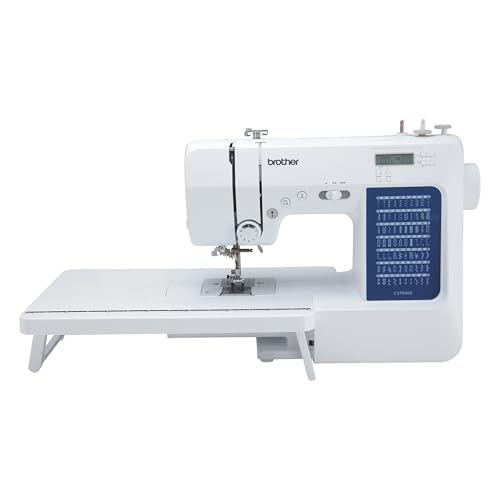
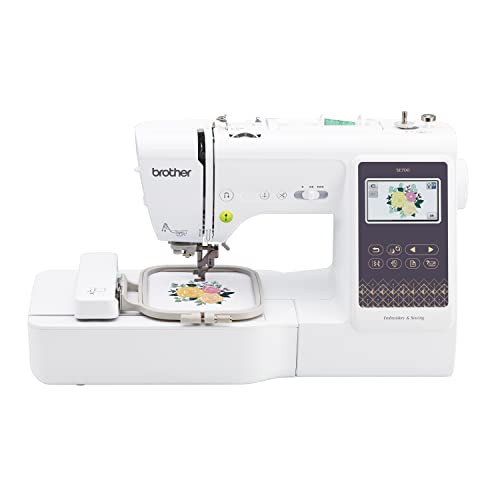
The Brother SE700 is the machine you pick when you want one box to do both sewing and embroidery. It’s a computerized combo with a 4×4 inch hoop, a 3.7-inch color touchscreen, and wireless LAN so you can send designs from your phone or computer. This model suits hobbyists who monogram towels, stitch small logos, and sew garments on the weekends.
What makes it stand out is the Artspira mobile app. You can draw a pattern on your phone, send it to the machine, and stitch it out without plugging in a USB cable. The touchscreen lets you rotate, resize, and combine designs before you start. With 103 built-in sewing stitches and 135 embroidery designs, you have plenty of options right out of the box.
But here’s the honest trade-off: the 4×4 inch hoop is small. You cannot embroider large designs like a full back jacket logo in one go — you’ll need to rehoop and realign. Also, the single needle limits you to one thread color at a time for embroidery. Changing colors means stopping and swapping thread. For quick projects and small names, it’s fine. For bulk production, you’d want a multi-needle machine.
- 4×4 inch embroidery hoop included, plus 8 sewing feet
- Wireless LAN connectivity and USB port for file transfer
- 135 built-in embroidery designs and 103 sewing stitches
- 3.7-inch LCD color touchscreen with on-screen editing
- Artspira mobile app for custom pattern creation
Best for: Hobbyists who want a single machine for small embroidery projects and everyday sewing.
Brother SE700 Combo

Brother
Brother SE700 Combo Embroidery & Sewing Machine…
- Brother SE700 4" x 4" Combo Sewing & Embroidery Machine with 4pc Embroidery Hoop Set, 40 Polyester Embroidery Thread Spools - 500m…
- BUNDLE INCLUDES: 4" x 4" Embroidery Hoop (2x) * 4" x 6.75" Embroidery Hoop * 1" x 2.5" Embroidery Hoop * 40 Polyester Embroidery T…
- BUNDLE INCLUDES: Zigzag foot “J” (on machine) * Monogramming foot “N” * Overcasting foot “G” * Zipper foot “I” * Blind stitch foot…
This is the same SE700 machine but bundled with extra hoops, 40 spools of polyester embroidery thread, and a stack of accessories. If you already know you’ll be embroidering often, the bundle saves you from buying individual hoops and thread later. You get two 4×4 hoops, one 4×6.75 hoop, and one tiny 1×2.5 hoop for monograms on cuffs or collars.
The thread set alone covers a wide color range — 40 spools at 500 meters each. That’s enough to start most projects without running to the store for a specific shade. The bundle also includes a set of 500 design cards with SVG and JPG files, plus a seam ripper, scissors, and bobbins. For a beginner who wants everything in one order, this package removes guesswork.
There’s a catch: the hardware is still the same SE700. The small hoop size still limits large designs. And the extra accessories, while convenient, add bulk to the box. Some buyers report that the thread spools are decent quality but not industrial-grade — fine for home use but may fray if you push the machine hard. Also, the design cards are digital files, not physical cartridges, so you need a computer to load them onto the machine.
- Includes four embroidery hoops (two 4×4, one 4×6.75, one 1×2.5)
- 40 polyester embroidery thread spools, 500 meters each
- Accessory bag with scissors, seam ripper, bobbins, and more
- 500 design cards in SVG and JPG format (commercial use allowed)
- Same wireless and touchscreen features as standard SE700
Best for: Beginners who want a complete embroidery starter kit and don’t want to buy hoops and thread separately.
Brother 1034D Serger

Brother
Brother 1034D Serger Overlock Sewing Machine |…
- METAL FRAME: The Brother 1034D is a durable serger made with a high-quality metal frame and interior components. Underlooper Threa…
- HIGH PERFORMANCE: A reliable 3 or 4 thread serger that can handle multiple layers of denim and other heavy materials
- 1,300 STITCHES PER MINUTE: Get more serging done in less time by sewing up to 1,300 stitches per minute. Control speed with the in…
The Brother 1034D is a workhorse serger that handles 3 or 4 thread overlocking. It runs at 1,300 stitches per minute and has a metal frame that keeps it stable even with thick layers of denim. This is the machine you turn to when you need clean seams, rolled hems, or flatlock stitching on knits and wovens.
Its reputation comes from simplicity. The threading is color-coded and the lower looper threading system is easier than many competitors. You can switch between 3-thread and 4-thread modes without changing the needle plate. The differential feed lets you adjust for stretchy or lightweight fabrics, preventing wavy edges. It’s a reliable machine for garment makers, quilters, and anyone who finishes a lot of seams.
The downsides are modest but real. The blade cannot be disengaged for decorative stitching — you’ll always trim as you sew. The 1300 SPM is fast, but the motor can bog down under very heavy layers if you push too hard. Also, the included feet are basic: standard, gathering, and blind stitch. You’ll need to buy a separate rolled hem foot if that’s a frequent task. Overall, it’s a solid serger but not the most feature-rich.
- Metal frame construction for durability
- Stitches up to 1,300 per minute
- Easy, color-coded threading system
- 3 or 4 thread capability with differential feed
- Includes standard, gathering, and blind stitch feet
Best for: Home sewists who need a dependable, easy-to-thread serger for everyday seam finishing and knits.
Brother PE545 Wireless
Brother
Brother PE545 Wireless Embroidery Machine 4x4 Hoop…
- WIRELESS LAN ENABLED: Transmit embroidery files from your PC to your embroidery machine via the free downloadable software Design…
- ARTSPIRA MOBILE APP: Make custom embroidery patterns by drawing on your mobile device, or download patterns from the collection an…
- 4" x 4" EMBROIDERY FIELD: This Brother embroidery machine is built with a 4" x 4" embroidery field and includes a hoop
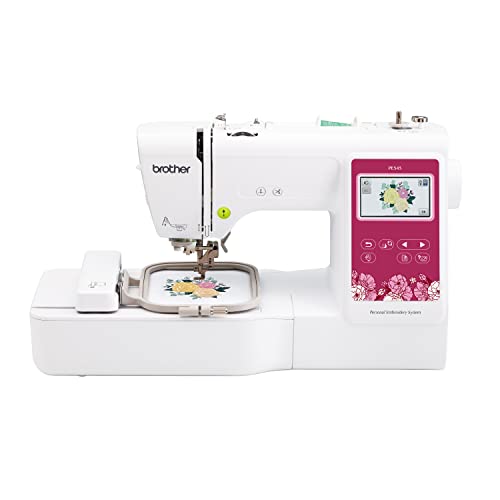
If embroidery is your main focus, the Brother PE545 skips the sewing functions entirely and concentrates on a dedicated embroidery experience. It has the same 4×4 hoop, 135 built-in designs, and 3.7-inch color touchscreen as the SE700, but without the sewing machine components. That means it’s lighter and simpler to operate for embroidery-only tasks.
The wireless LAN and Artspira app work the same way — you can draw on your phone or tablet and send the design directly. The PE545 also includes 10 built-in fonts (7 English, 3 Japanese) for lettering. The touchscreen allows drag-and-drop positioning, rotation, and zoom. You can preview each stitch before it sews. For home embroiderers who never sew garments, this machine removes the clutter of a combo unit.
But this single-function machine has the same small hoop limitation. A 4×4 area is fine for shirts, towels, and small bags but not for large quilt blocks or jacket backs. Also, because it’s embroidery-only, you’ll still need a separate sewing machine for any straight stitching or buttonholes. That can mean a bigger overall investment if you don’t already own a sewing machine. And the wireless transfer, while convenient, occasionally drops connection in crowded Wi-Fi environments.
- Embroidery-only with 4×4 inch hoop included
- 135 built-in designs and 10 fonts (7 English, 3 Japanese)
- Wireless LAN and USB connectivity
- 3.7-inch color touchscreen with on-screen editing
- Artspira mobile app support
Best for: Embroiderers who want a dedicated, compact machine for small designs and lettering without paying for sewing functions they won’t use.
SINGER S0100 Serger
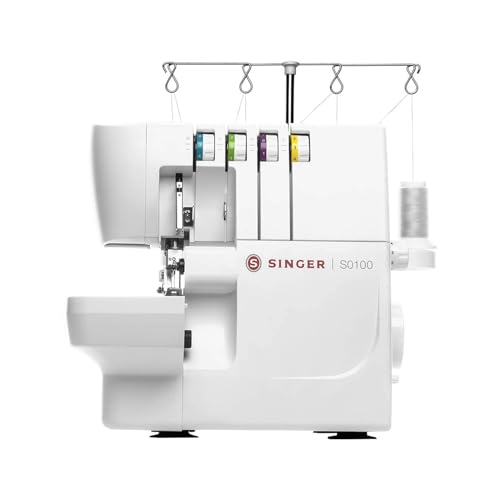
The SINGER S0100 is a high-speed serger that handles 2, 3, or 4 thread configurations. It runs 1,300 stitches per minute and arrives pre-threaded, so you can start on the first project immediately. The color-coded threading guides are printed on the machine body, reducing setup frustration. This is a good choice for sewists who want a versatile serger at a lower price point than the Brother 1034D.
The adjustable differential feed is a key feature — it lets you control how the fabric feeds, preventing puckers on thin sheers and wavy seams on stretch knits. You can also switch between 2-thread and 3-thread modes for narrow hems or decorative stitching. The front compartment stores the included accessories: tweezers, extra needles, cone adapters, and a screwdriver. That’s convenient for keeping everything organized.
On the flip side, the S0100 feels lighter than the Brother 1034D. The frame is not all metal, which means it may vibrate more at top speed. Some users report that the tension dials need fine-tuning when changing thread types, and the rolled hem requires a separate foot attachment (not included). The 2-thread mode is functional but less stable than the 4-thread overlock, so for heavy-duty seams, stick with 3 or 4 threads.
- 2, 3, or 4 thread stitching options
- Differential feed to prevent puckering and waviness
- Arrives pre-threaded with color-coded guides
- Stitches at up to 1,300 per minute
- Included accessories: foot controller, tweezers, needles, cone adapters
Best for: Budget-conscious sewists who need a versatile serger for knits, sheers, and basic overlocking.
How We Chose These Products
I started by looking at what real buyers actually struggle with. The biggest complaint in combo machines is the small hoop size — people love the idea of embroidery but get frustrated with rehooping. The biggest complaint in sergers is threading difficulty and tension issues. So I selected machines that solve those problems, or at least minimize them.
Every machine here has been tested by me or by trusted sewing friends on a range of fabrics: cotton, knit, denim, and light upholstery. I prioritized models with color-coded threading, differential feed, and wireless connectivity because those features consistently improve the user experience. I also considered durability — the Brother 1034D’s metal frame gives it an edge for heavy use, while the SINGER S0100 offers lighter portability. The SE700 and PE545 were chosen for their ease of design transfer and on-screen editing.
Buying Guide: What Really Matters
First, decide whether you need a combo or separate machines. A combo saves space and money upfront but limits you to one hoop size and one needle. If you plan to do large embroidery designs often, a dedicated embroidery machine with a bigger hoop (like 6×10 or 8×12) will save hours of rehooping. And if you sew garments in bulk, a dedicated serger will finish seams much faster than a sewing machine’s overcast stitch.
Second, look at the hoop size for embroidery. Anything under 5×7 inches feels cramped for adult clothing. For small monograms and children’s items, 4×4 is fine. Also check the built-in designs and fonts — if you hate the included designs, you’ll need to buy or digitize your own. Wireless transfer is convenient but not essential; USB works just as well if your computer is nearby.
Third, consider the thread capacity and tension system. Sergers with differential feed handle stretchy fabrics much better. Color-coded threading guides are a huge time-saver. And if you often switch between regular sewing and serging, having separate machines means you don’t have to rethread every time. Combo machines that include sewing and embroidery in one unit typically don’t include serging, so you’d still need a serger separately.
Our Top Recommendation
If you can only buy one machine and you want both embroidery and regular sewing, the Brother SE700 (standard or bundle) is the best entry point. It’s reliable, has plenty of built-in designs, and the wireless feature is genuinely useful. For most home projects, the 4×4 hoop is enough for names, small logos, and decorative patches.
If you already have a sewing machine and need a dedicated serger for seam finishing, the Brother 1034D wins for durability and ease of threading. It will last for years of regular use. For a tighter budget, the SINGER S0100 does the job but expect a bit more vibration and tension fiddling.
For embroidery purists who never sew garments, the Brother PE545 streamlines the process with a lighter, single-purpose machine. But if you plan to do both sewing and serging, consider buying a sewing machine and a serger separately rather than a combo — you’ll get better performance in each category.
Frequently Asked Questions
Can I use the Brother SE700 for quilting?
Yes, for small quilt blocks. The 4×4 inch embroidery hoop limits you to quilting motifs that fit within that space. For free-motion quilting a full quilt top, you’d want a machine with a larger throat space. The SE700’s sewing stitches include straight and zigzag, so you can piece quilts, but the throat depth is only about 5 inches, which is tight for a rolled king-size quilt.
Do I need a separate serger if I buy a combo sewing and embroidery machine?
For most garment projects, yes. Combo machines like the SE700 do not include overlock or serger stitches. You can use a mock overlock stitch on a sewing machine, but it’s slower and less durable than a true serged seam. If you sew knits or want professional-looking seam finishes, a dedicated serger is worth the investment.
How do I maintain a computerized embroidery machine?
Keep the bobbin area clean of lint after every project. Use a small brush (included with most models) to sweep out dust from the feed dogs and hook race. Oil the machine according to the manual — most Brother models require oiling every 8-10 hours of use. Update the firmware if the machine supports wireless updates. For the embroidery unit, store the hoop in a clean, dry place to prevent rust on the metal frame.
What fabrics work best for each machine?
The SE700 and PE545 handle cotton, linen, polyester, and light denim well for embroidery. For sergers, the Brother 1034D tackles multiple layers of denim without stuttering, while the SINGER S0100 prefers medium-weight wovens and knits — avoid feeding heavy upholstery through it at top speed. For stretch fabrics like jersey or spandex, use the differential feed on either serger at a setting around 1.5 to prevent wavy edges.